
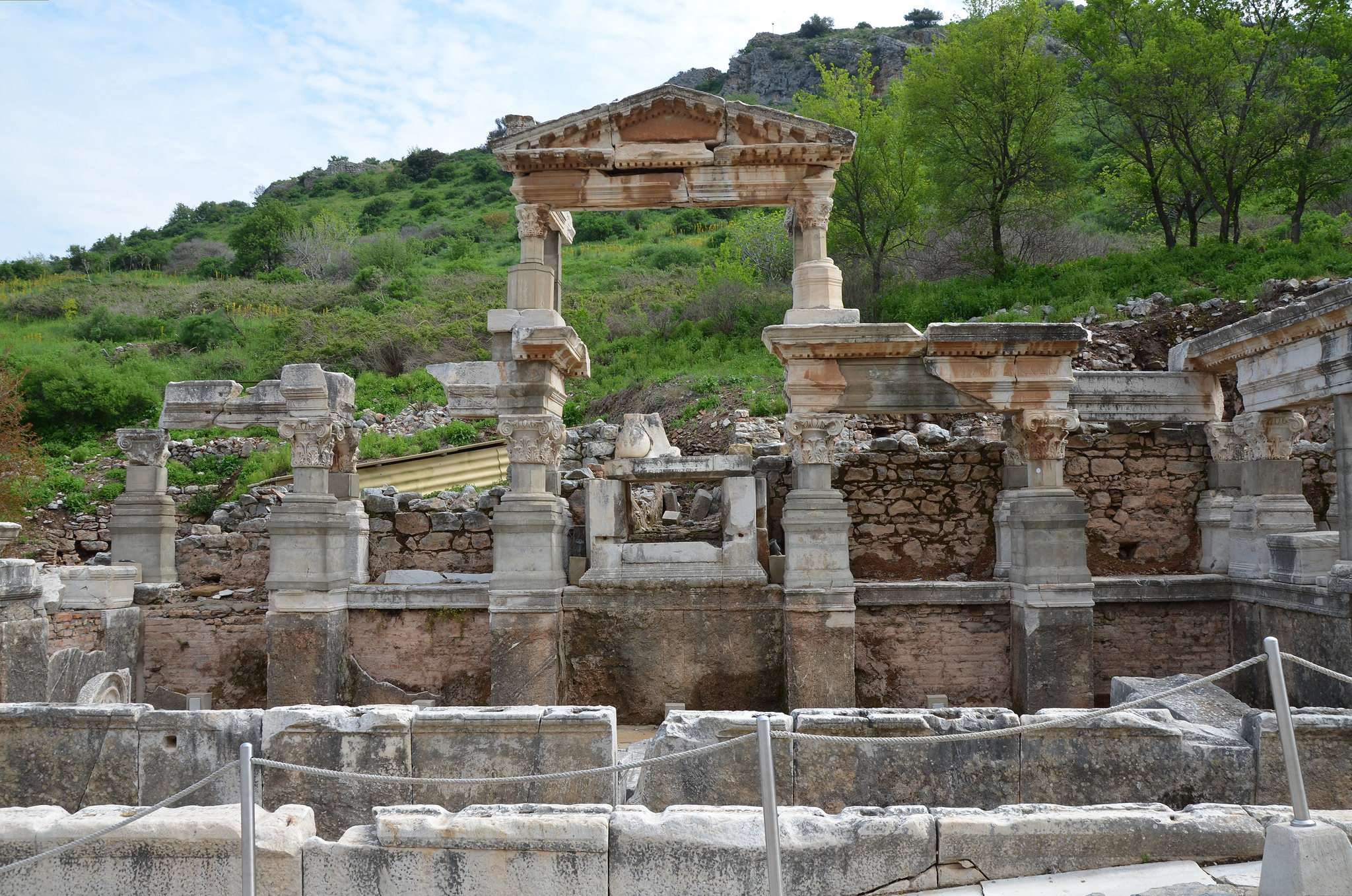
About Fountain of Trajan
The Fountain of Trajan in Ephesus, constructed in the 2nd century AD, stands as a splendid representation of Roman ingenuity and artistic magnificence. Commissioned by Emperor Trajan, this monumental fountain served both practical and aesthetic purposes in the ancient city. The structure features a striking façade adorned with Corinthian columns supporting a triangular pediment, creating an imposing yet elegant presence. Detailed reliefs on the pediment depict scenes from the imperial family's life, adding a narrative dimension to the fountain.
Functionally, the Fountain of Trajan was connected to the city's aqueduct, supplying Ephesus with a vital water source. The blending of architectural grandeur and practical utility exemplifies the Roman approach to civic infrastructure. The fountain's location in the city center made it a focal point for social gatherings and a testament to the city's prosperity.
Despite the passage of centuries, the Fountain of Trajan remains remarkably preserved, allowing modern visitors to appreciate its historical and aesthetic significance. Exploring this ancient marvel offers a vivid connection to Ephesus's past, revealing the sophistication of Roman engineering and the integration of art into everyday life in this thriving ancient city.





.jpg)


