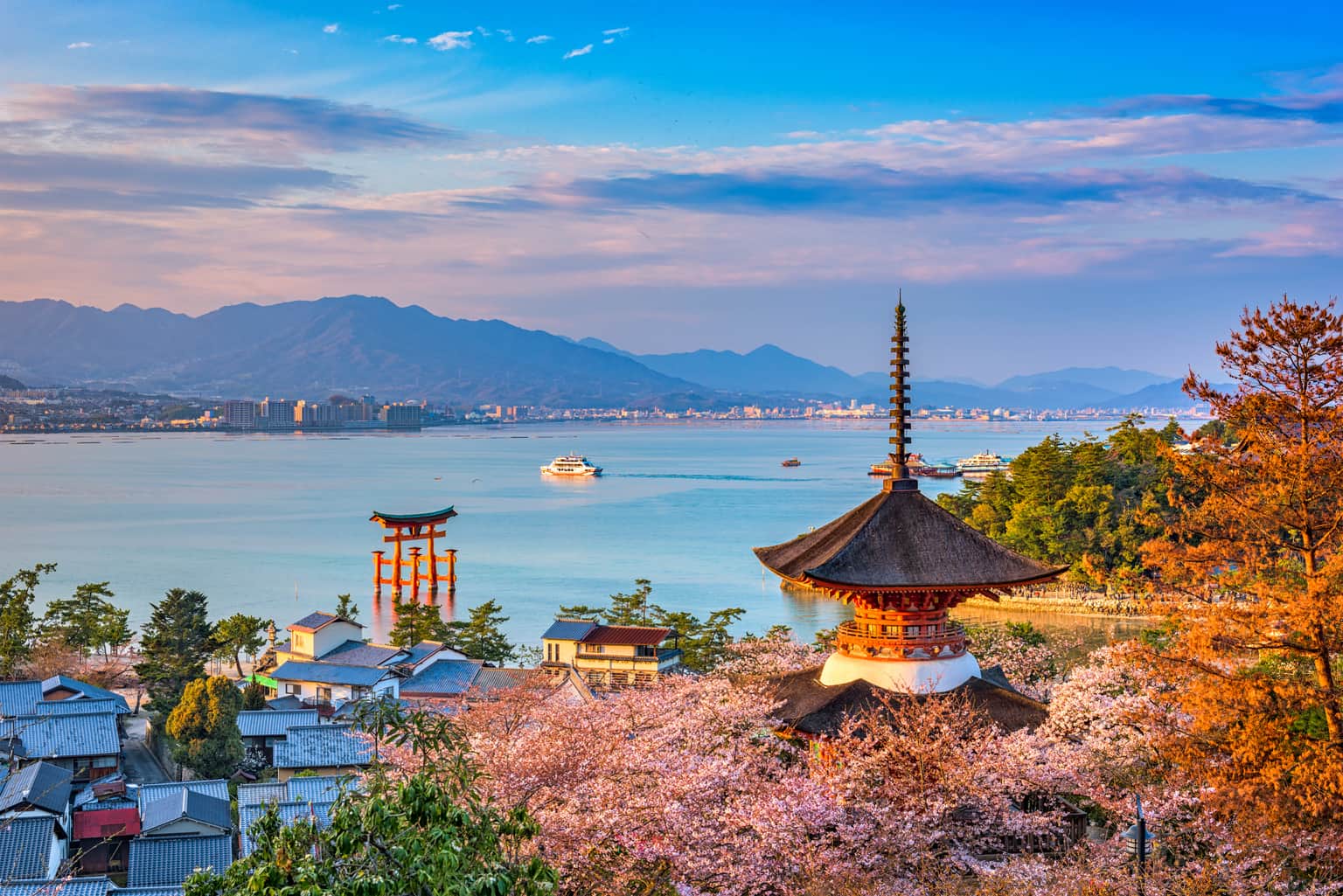
Hiroshima is a city where powerful history merges with natural beauty, cultural landmarks, and memorable food experiences, giving you plenty of meaningful things to do in Hiroshima. From walking through the Hiroshima Peace Memorial Park to exploring the sacred Miyajima Island, the city offers a wide variety of attractions suited for every kind of traveller. A visit often begins with the A-Bomb Dome and the Peace Memorial Museum, where you gain a deeper understanding of Hiroshima’s past.
For scenic and spiritual experiences, places like Itsukushima Shrine, Mitaki-dera Temple, and the summit trails of Mount Misen offer some of the most striking landscapes in western Japan. Food lovers can enjoy Hiroshima-style okonomiyaki in lively districts such as Okonomimura. People who are looking for quiet escapes can wander the spacious Hiroshima Botanical Garden overlooking the Seto Inland Sea. Modern viewpoints, such as Orizuru Tower, provide impressive panoramas of the city and its landmarks, especially at sunset.
If you are browsing Japan tour packages, Hiroshima fits effortlessly into any itinerary due to its nature and local beauty. This list of Hiroshima things to do highlights must-visit spots across the city and nearby islands. It will help you plan a trip filled with scenic discoveries and a deeper connection to one of the most resilient destinations in Japan.
Top Things to Do in Hiroshima
Here are some of the best things to do in Hiroshima
1. History and Learning Experiences
- Join a guided walk through Hiroshima Peace Memorial Park to understand the city’s past through stories and survivor narratives.
- Fold an origami crane and offer it at the Children’s Peace Monument as a gesture of peace.
- Attend an interactive session at the Peace Memorial Museum, where exhibits let you learn through audio guides and real accounts.
2. Cultural and Traditional Activities
- Take part in a calligraphy or tea ceremony workshop in Hiroshima’s cultural centres.
- Join a food-making class to learn Hiroshima-style okonomiyaki from local chefs.
- Experience a prayer ritual at temples like Mitaki-dera or Daishoin with a local monk guiding you.
- Watch a Kagura performance, a traditional dance drama popular in the region.
3. Nature and Outdoor Adventures
- Hike one of the Mount Misen trails for incredible views of the Seto Inland Sea.
- Go kayaking around Miyajima, paddling near the floating torii gate during high tide.
- Take a scenic ropeway ride to the Mt Misen summit for forest canopy views.
- Relax with a lakeside or riverside picnic at Hiroshima’s peaceful parks.
4. Food Experiences
- Try Hiroshima-style okonomiyaki at food villages like Okonomimura or at tiny local counters.
- Join a street-food tasting stroll around Hondori or Nagarekawa.
- Taste fresh oysters and local seafood at Miyajima’s grilled stalls.
- Try Momiji Manju making, the famous maple leaf pastry filled with red bean or custard.
5. Water and Island Activities
- Take a ferry ride to Miyajima Island, enjoying the coastal views along the way.
- Walk the torii gate sandbar during low tide, a unique experience only possible at certain hours.
- Cruise along the Motoyasu River for a relaxed urban sightseeing experience.
- Enjoy a sunset boat ride near the Seto Inland Sea, famous for its golden hues.
6. City Leisure Activities
- Ride the vintage Hiroshima trams for a slow and charming tour of the city.
- Go souvenir shopping for local crafts like carved wooden spatulas and Miyajima charms.
- Visit local sento hot baths for a true Japanese-style relaxation experience.
- Enjoy nightlife in Nagarekawa, known for bars, cafés, and themed dining spots.
10 Things to Do in Hiroshima
Here are the list of top 10 things to do in Hiroshima during your Hiroshima tour:
1. Explore Hiroshima Peace Memorial Park
Exploring Hiroshima Peace Memorial Park is one of the most meaningful things to do in Hiroshima, as it offers a powerful look into the city’s past. Set in what was once the busy heart of Hiroshima, the park now stretches across 1,20,000 square metres, filled with memorials and peaceful green spaces.
The popular attraction here is the Peace Memorial Museum, where personal artefacts and detailed exhibits explain the events of the 1945 bombing. Just a short walk away is the iconic A-Bomb Dome, a UNESCO World Heritage Site and one of the few structures that survived the blast. As you continue through the park, you will find the Cenotaph for the A-Bomb Victims and the Children’s Peace Monument.
Top Highlights:
- Atomic Bomb Dome
- Peace Memorial Museum exhibits (artefacts, stories, interactive zones)
- Cenotaph for the A-Bomb Victims
- Children’s Peace Monument
Did You Know?
- The Atomic Bomb Dome (A-Bomb Dome) is one of the few structures that survived the 1945 blast and now stands as a UNESCO World Heritage Site.
- At 8:15 AM on August 6 every year, sirens ring across the city to mark the exact moment the bomb was dropped.
- Inside the museum, you can see paper cranes folded by Sadako Sasaki and a pocket watch frozen at 8:15.
How to Reach
- By Tram / Streetcar: Take tram No. 2 or 6 from Hiroshima Station to Genbaku Dome-mae stop (near the Dome).
- By Bus: Use bus route that stops at “Peace Memorial Park-mae” and walk from there.
- On Foot: The park is walkable from many central points in Hiroshima.
Tips for Visitors
- Buy tickets online for the museum in advance to avoid long queues.
- Visit early morning or late afternoon for a more contemplative experience when it's less crowded.
- Respectful behavior: Speak softly, avoid eating inside the museum, and refrain from exuberant selfies.
2. Climb the towers of Hiroshima Castle
Climbing the towers of Hiroshima Castle, also known as “Carp Castle,” is one of the rewarding things to do in Hiroshima. This five-storey keep was first built in 1589 by feudal lord Mori Terumoto and later rebuilt after the 1945 bombing. Its moat, wooden exterior, and reconstructed Ninomaru Gate make the castle feel like a window into Japan’s samurai past.
Inside, you will find an engaging museum that explains the castle-town origins of Hiroshima and the architectural traditions of Japanese castles. People love to climb to the top floor, where wide city views stretch across the modern skyline of Hiroshima.
Top Highlights
- Historic samurai museum (floors 1–4)
- Observation deck on 5th floor with panoramic city views
- Moat & stone walls that survived / were rebuilt
- Hiroshima Gokoku Shrine inside the castle grounds
Did You Know?
- Hiroshima Castle is also called Carp Castle (“Rijō”) due to its shape and because carp swim in the moat.
- The current tower was rebuilt in 1958 after being destroyed in 1945.
- Inside the tower is a museum showing samurai culture, old documents, and restored artifacts, plus an observation deck on the 5th floor for 360° views over Hiroshima.
How to Reach
- By Tram / Streetcar: Take lines 1, 2 or 6 from Hiroshima Station to Kamiyachō-nishi or Kamiyachō-higashi, then ~10-15 min walk.
- By Bus / Sightseeing Loop: Use the Hiroshima Sightseeing Loop Bus (orange or lemon route) — there’s a stop near the castle.
- On Foot: It’s walkable from nearby central areas / Peace Park.
Tips for Visitors
- Try to go early or late afternoon to catch good light from the observation deck + fewer crowds.
- Combine this visit with Shukkeien Garden — they’re very close.
- Bring your camera: the 5th-floor views are especially photogenic, especially in cherry blossom season or autumn.
3. Unwind at Shukkeien
If you want to know about traditional Hiroshima things to do, you should visit Shukkeien Garden. Created in 1620 by feudal lord Asano Nagaakira, this “shrunken scenery” garden recreates miniature valleys, forests, and lakes within a compact and beautifully designed space.
As you follow the looping path, you will pass through the arched Koko Bridge and the elegant Seifukan Teahouse. There is also a calming bamboo grove that feels far removed from the busy city. The seasonal colours of the garden, from cherry blossoms to autumn maple, add beauty throughout the year. Its tranquil mood makes it a lovely inclusion in Japan couple packages for travellers looking for quiet and scenic moments together.
Top Highlights
- Central pond with miniature islands and winding paths
- Stone bridges, valleys, and small hills to evoke natural landscapes in miniature
- Historic tea houses (like Seifukan) where you can enjoy a traditional tea ceremony
- Seasonal beauty: cherry blossoms in spring, maples in autumn, plum blossoms in winter
Did You Know?
- Shukkeien means “shrunken-scenery garden” — it’s designed to recreate valleys, forests, and rivers in miniature.
- The garden dates back to 1620, built by Asano Nagaakira’s retainer and tea master Ueda Sōko.
- It was heavily damaged in 1945 by the atomic bomb but later restored, including its distinctive pavilions.
How to Reach
- By Tram: Take tram line 9 and get off at Shukkeien-mae stop.
- Japan Guide
- By Bus: Use the Hiroshima Sightseeing Loop Bus (Meipuru-pu) — get off at Shukkeien-mae.
- Matcha Japan Travel Guide
- On Foot: About 15-minute walk from Hiroshima Station.
Tips for Visitors
- Go during spring or autumn for the best views — the garden’s seasonal colours are stunning.
- If you want a very relaxed visit, skip the peak hours; early morning or late afternoon are more peaceful.
- Check if there’s a tea ceremony going on — Seifukan tea house holds seasonal ones.
- Carry a camera: the bridges, ponds, and teahouses make for very photogenic scenes.
- Bring cash — the garden’s entry is reasonably cheap, but some on-site activities / tea houses may prefer cash payment.
4. Marvel at Itsukushima Shrine
Located on Miyajima Island, the Itsukushima Shrine is a UNESCO World Heritage Site. It is one of the top things to do in Hiroshima, which is famous for its vermilion torii gate that appears to float on the sea during high tide. When the tide goes out, you can walk up to the gate for a closer look.
Its prayer hall and the noh theatre stage are all connected by elegant boardwalks supported over the water. You will also find the Marodo Shrine here, dedicated to five deities, and the main worship hall honouring three female Shinto goddesses.
Top Highlights
- Historic samurai museum (floors 1–4)
- Observation deck on the 5th floor with panoramic city views
- Moat and traditional stone walls
- Hiroshima Gokoku Shrine located inside the castle grounds
Did You Know?
- Hiroshima Castle is often called Carp Castle because its shape resembles a carp and because carp swim in the surrounding moat. The reconstructed tower from 1958 now houses artefacts, cultural displays, and a 360-degree viewing deck at the top.
How to Reach
- By tram or streetcar: Take lines 1, 2, or 6 from Hiroshima Station to Kamiyachō-nishi or Kamiyachō-higashi, then walk for about 10 to 15 minutes.
- By sightseeing loop bus: The Hiroshima Sightseeing Loop Bus (orange or lemon route) stops near the castle.
- On foot: It is walkable from central areas such as the Peace Memorial Park.
Tips for Visitors
- Check tide timings to see the torii gate floating or walkable up close
- Arrive early to avoid crowds and enjoy calm views
- Stay for sunset — the shrine and gate look stunning in golden light
- Wear comfortable shoes for boardwalks and the shoreline walkway
5. Hike through Mitaki-dera
Hiking through Mitaki-dera is one of the most peaceful things to do in Hiroshima, especially if you want a quiet escape into nature. This Shingon Buddhist temple on Mitaki Mountain was founded in 809 by the monk Kūkai and is surrounded by forests, waterfalls, and moss-covered stone paths. The temple is dedicated to the Bodhisattva Kannon and has beautiful landmarks like the 16th-century two-storied pagoda, the Ryujin-do Hall, and statues of four influential monks.
Many visitors continue past the temple on a short hike to the mountain’s summit for sweeping city views. Cherry blossoms in spring and fiery foliage in autumn make it one of the most scenic things to see in Hiroshima.
Top Highlights
- Three waterfalls flowing through a forested mountainside
- Red lacquered Tahōtō Pagoda relocated from Wakayama in 1951
- Moss-covered stone statues and Jizo figures lining the approach
- Quiet tea house overlooking the trees
- Scenic forest trails leading to the mountain’s summit
Did You Know?
- Mitaki means “three waterfalls,” and all three flow within the temple grounds
- The red pagoda was originally built in the 1500s and moved from Hiro Hachimangū Shrine
- After the 1945 bombing, waterfall water from Mitaki was used during memorial rites
- The temple’s natural setting is considered spiritually purifying in Shingon Buddhism
How to Reach
- By Train: Take the JR Kabe Line to Mitaki Station and walk for about 25 minutes uphill
- By Bus: Take Hiroshima Bus line 22 to the Mitaki Kannon stop (runs about once an hour), then walk uphill for around 5–10 minutes to reach the temple.
Tips for Visitors
- Wear comfortable shoes as the stone paths can be slippery
- Avoid rainy days since mossy stairs become unsafe
- Autumn is the best season for colourful foliage
- Carry water and snacks; limited facilities inside
- Visit early for quieter trails and soft lighting
6. Cruise through Miyajima Island
Cruising through Miyajima Island is a relaxing way to experience one of the most rewarding Hiroshima things to do. As the ferry approaches the island, you will spot friendly wild deer near the shore and see the famous floating torii gate of Itsukushima Shrine come into view.
Once on the island, a cruise gives you easy access to highlights like Daisho-in Temple, known for its 500 Buddha statues, and the ropeway that leads toward Mt. Misen. From the upper stations, you can enjoy sweeping panoramas of Hiroshima Bay. If you continue exploring the island on foot or admire the coastline from the boat, Miyajima offers a glimpse into nature and spiritual beauty.
Top Highlights
- Floating torii gate views from the water
- Friendly wild deer near the island shore
- Daisho-in Temple with its 500 Buddha statues
- Miyajima Ropeway stations leading toward Mt. Misen
- Scenic coastline and forested mountain slopes
Did You Know?
- Miyajima’s deer are considered sacred in Shinto belief and freely roam around the island.
- The floating torii gate looks completely different depending on the tide — cruising offers the best high-tide views.
- Some cruises circle the torii gate, giving angles that aren’t possible from the shore.
- Miyajima has been worshipped as a holy island for centuries, and many temples are built without disturbing the natural landscape.
How to Reach
- By Ferry: Take a ferry from Miyajimaguchi Port (JR Ferry or Matsudai Ferry). Both reach Miyajima Island in about 10 minutes.
- By Train + Ferry: From Hiroshima Station, board the JR Sanyo Line to Miyajimaguchi Station, then walk 2–3 minutes to the ferry terminal.
- By Tram + Ferry: Take Tram Line No. 2 from Hiroshima Station to Miyajimaguchi, then board the ferry.
- Cruise Options: Some sightseeing cruises depart directly from Hiroshima Peace Park Pier, offering a scenic ride to Miyajima.
Tips for Visitors
- Choose a mid- to high-tide cruise for the best floating torii views.
- Sit on the left side of the ferry when heading to Miyajima for shoreline and deer views.
- Book a sunset cruise if possible — the torii gate and mountains look incredible in golden light.
- Keep your belongings secure on the island — the deer may try to nibble bags or paper.
7. Gaze from the Orizuru Tower
Enjoying the panoramic views from the Orizuru Tower is among the best things to do in Hiroshima. This 50-metre tower beside the A-Bomb Dome has an open-air observation deck that lets you feel the breeze as you look out over Peace Memorial Park and Hiroshima Castle. You can ride the elevator or walk up the long and spiralling ramp lined with local artwork created by Hiroshima artists.
One floor below, the multimedia zone offers interactive exhibits and a clear view of ground zero. Many Japan group tour packages include this stop because it combines history, art, and reflection in one space.
Top Highlights:
- Open-air rooftop deck with 360-degree views of Hiroshima
- Clear sightlines of the Atomic Bomb Dome, Peace Memorial Park, and city skyline
- Orizuru Wall (you can fold your own paper crane and drop it into the glass wall)
- Spiral ramp walkway featuring local art and city-themed installations
- Interactive multimedia area overlooking ground zero
Did You Know?
- The “Orizuru Wall” contains thousands of paper cranes dropped by visitors from around the world.
- The tower's design emphasises openness and healing, with natural wood interiors and unobstructed views.
- The rooftop uses a mesh-style enclosure, so it feels almost like standing on an outdoor terrace.
How to Reach:
- By Tram / Streetcar: Take tram No. 2 or 6 from Hiroshima Station to “Genbaku Dome-mae” stop. The tower is right across the street.
- By Bus: Many routes stop at “Hiroshima Bus Center” or near Peace Memorial Park; both are a short walk away.
- On Foot: Easily walkable from Hondori Street and Peace Memorial Park.
Tips for Visitors:
- Clear days offer the best views of Hiroshima Castle and the surrounding mountains.
- The spiralling ramp offers great photo spots if you prefer a scenic ascent rather than taking the elevator.
- Fold an origami crane at the Orizuru corner — the experience is included in the ticket.
8. Wander through Hiroshima Botanical Garden
Wandering through the Hiroshima Botanical Garden is one of the most refreshing things to do in Hiroshima, as it offers a peaceful break filled with colour and nature. Spread across 18.3 hectares on a hill in Saeki Ward, the garden overlooks the Seto Inland Sea. It has around 2,00,000 plants from 10,000 varieties.
You can explore several themed greenhouses, including the Main Conservatory, the Cactus Display House, and the Tropical Water Lily House, here. A highlight of the garden is the massive Australian baobab, the largest in Japan, with its striking 2-metre-wide trunk. Families often enjoy the interactive nature programs, while travellers appreciate the relaxing walking paths and seasonal flowers.
Top Highlights:
- Over 2,00,000 plants representing 10,000 species
- Main Conservatory with tropical and subtropical exhibits
- Cactus Display House featuring rare desert plants
- Tropical Water Lily House with vibrant blooms
- Largest Australian baobab tree in Japan
- Scenic walking trails overlooking the Seto Inland Sea
- Seasonal flower displays: cherry blossoms, roses, camellias, hydrangeas, and more
Did You Know?
- The massive baobab tree was imported from Australia and is one of the rarest botanical sights in Japan.
- The greenhouses are engineered to mimic natural habitats, from deserts to tropical wetlands.
- The garden frequently hosts flower festivals and plant-themed events that attract locals and tourists alike.
How to Reach:
- By Bus: Take the Hiroshima Bus from “Hiroshima Station” toward “Botanical Garden Entrance.” It's a short walk from the bus stop.
- By Car: Parking is available on-site; it's about 40–50 minutes from central Hiroshima.
- By Train + Bus: Take the JR Sanyo Line to “Itsukaichi Station,” then board a local bus heading toward the Botanical Garden.
Tips for Visitors:
- Visit during cherry blossom or autumn foliage seasons for the best colours.
- The walking paths are spread out — wear comfortable shoes.
- The greenhouses can get warm; carry a water bottle, especially in summer.
- Don’t miss the baobab — it’s one of the garden’s most iconic sights.
9. Admire the Hiroshima Toshogu Shrine
Admiring the Toshogu Shrine is one of the amazing things to do in Hiroshima, Japan, as it honours Tokugawa Ieyasu, the first shogun of the Tokugawa Shogunate. Founded in 1648 by Mitsuakira Asano, it is only a short walk from Hiroshima Station.
The shrine sits along the Futaba-no-sato Historical Walking Trail, a route lined with temples, old residences, and scenic viewpoints. Its striking architecture, peaceful forest setting, and views over Hiroshima Castle make it one of the best things to do in Hiroshima for culture lovers. You can also explore nearby landmarks like the Peace Pagoda and the Tamahide Inari Shrine while enjoying the quiet mountain paths.
Top Highlights:
- Historic shrine dedicated to Tokugawa Ieyasu
- Founded in 1648 by Mitsuakira Asano
- Located along the Futaba-no-sato Historical Walking Trail
- Beautiful architectural details and vibrant colours
- Serene forest surroundings with peaceful walking paths
- Views overlooking Hiroshima Castle
- Easy access from Hiroshima Station
Did You Know?
- Toshogu Shrines across Japan honour Tokugawa Ieyasu, but Hiroshima’s is one of the oldest outside Toshogu’s main shrine in Nikko.
- The shrine’s carvings and paintings reflect Edo-era craftsmanship preserved for centuries.
- The Futaba-no-sato trail connects more than a dozen spiritual and historical sites in one loop.
How to Reach:
- By Train: Walk 10–15 minutes from Hiroshima Station (north exit).
- By Bus: Local buses running toward Futaba-no-sato stop near the shrine.
- On Foot: Easily walkable if you’re exploring the Futaba-no-sato Historical Trail or nearby areas like Hiroshima Castle.
Tips for Visitors:
- Visit early morning for peaceful photos and soft light over the forest.
- Combine it with the Peace Pagoda hike for a scenic cultural trail.
- The steps can be steep in some areas, so wear good walking shoes.
- Check out the smaller sub-shrines and lanterns hidden along the path.
10. Taste the local flavours at the Okonomimura
Tasting Hiroshima-style okonomiyaki at Okonomimura is one of the top things to do in Hiroshima for food lovers who want to experience authentic local cuisine. This four-story “Okonomiyaki Village” in Shintenchi in downtown Hiroshima is home to more than 20 stalls. These stalls serve the city’s signature layered pancake loaded with cabbage, noodles, egg, and your choice of toppings. Its lively atmosphere dates back to post-war days, when dozens of street stalls filled the area and helped rebuild community spirit.
Today, Okonomimura remains among the top Japan attractions for travellers, drawing locals, baseball fans cheering for the Hiroshima Carp, and visitors from across the country. Every counter has its own flavour, so wandering through the floors and picking a grill that feels inviting is part of the fun.
Top Highlights:
- Four-story building dedicated to Hiroshima-style okonomiyaki
- 20+ stalls, each offering its own flavour and cooking style
- Authentic layered okonomiyaki with cabbage, noodles, and egg
- Lively atmosphere inspired by Hiroshima’s post-war street-food culture
- Popular among locals, tourists, and baseball fans
- Centrally located in Shintenchi, easy to access from main shopping streets
Did You Know?
- “Okonomimura” means “Okonomiyaki Village.”
- Hiroshima okonomiyaki is layered, unlike the mixed style from Osaka.
- Many chefs have been cooking here for decades, passing recipes down through generations.
- The area originally grew from makeshift street stalls built after WWII.
How to Reach:
- By Tram / Streetcar: Take the tram to Hatchobori or Ebisu-cho; Okonomimura is a short walk away.
- By Bus: Several local buses stop near Shintenchi and Parco Hiroshima, both within walking distance.
- On Foot: Easily walkable from Hondori Shopping Street and the downtown entertainment district.
Tips for Visitors:
- Expect different flavours at each stall — explore before choosing.
- Sit at the counter to watch the okonomiyaki being cooked on the teppan grill.
- Some stalls offer English menus; don’t hesitate to ask.
- Try adding oysters, cheese, or spicy variations for a local twist.