Opening hours: Open daily 9 AM - 5 PM
Prime Day & Hours: Weekends and weekends, 9 AM - 12 PM
Suggested Duration: 2-3 hours
Tickets: Offline Ticket Counter
Nearest Railway Station: Awantipora railway station, about 28 kilometres away
Nearest Airport: Sheikh Ul-Alam International Airport (SXR), approximately 32.5 kilometres away.
Nearest Bus Stop: TRC Bus Station, approximately 28 kilometers away.
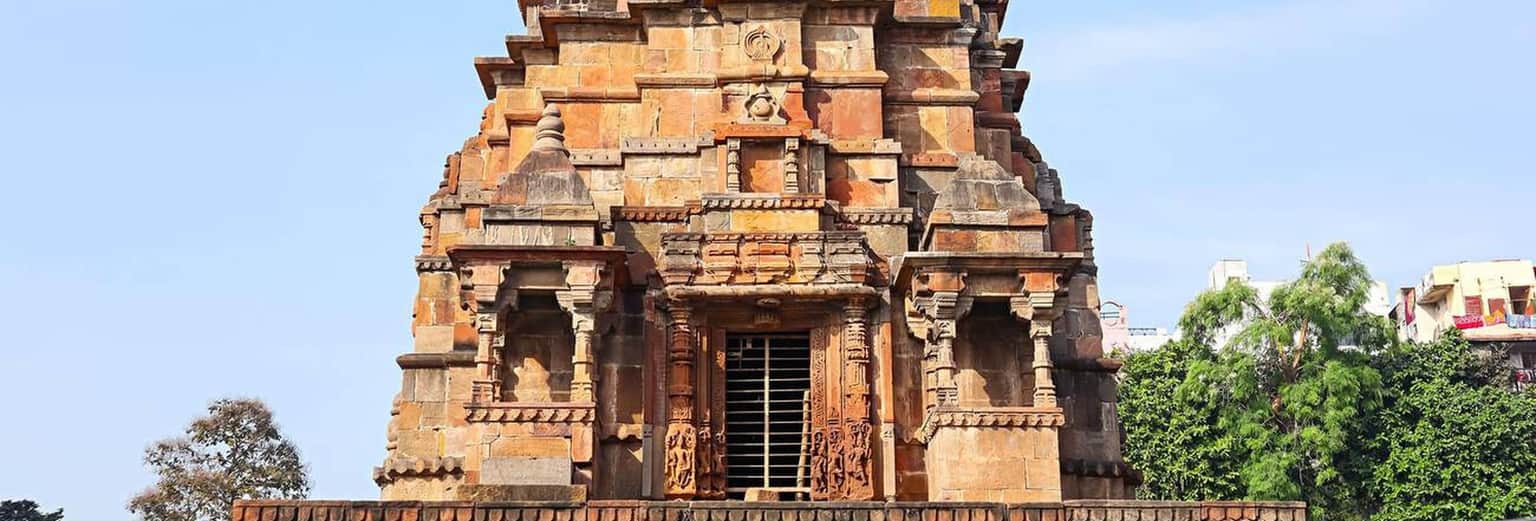
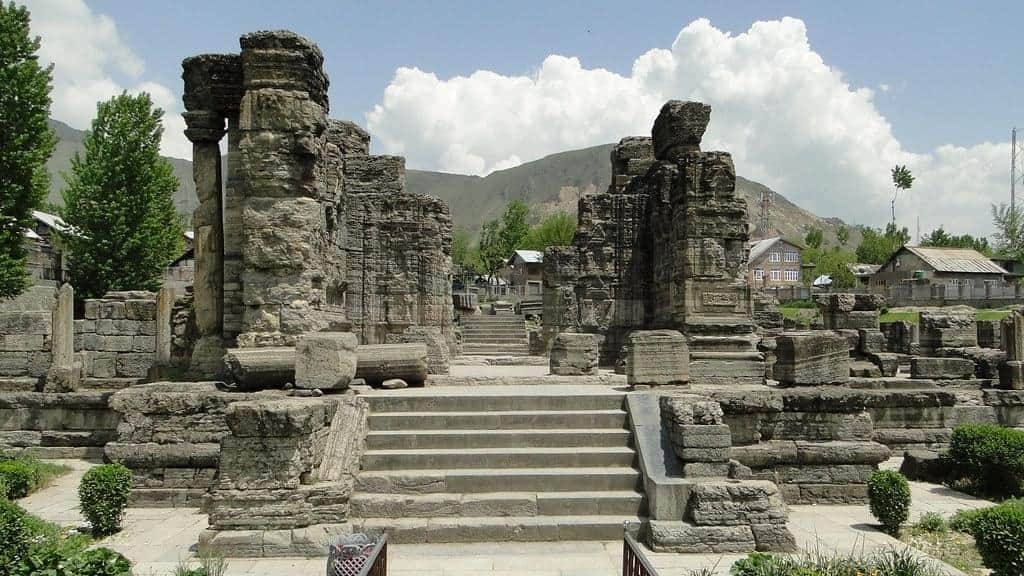
The 9th-century CE Avantipur Temple was constructed by King Avantivarman and is situated in Srinagar's Pulwama district. The temple complex is well-known for its detailed carvings and magnificent architecture. It is now in ruins, but the temple complex had two main temples, one for Lord Shiva (Avantisvara) and one for Lord Vishnu. Large stone walls with elaborate carvings and sculptures of Hindu gods and scenes from mythology make the architecture stand out.
Throughout the site, you can look at the remains of fluted columns, stone pilasters with animal and dancer carvings, and many architectural pieces. With its plain entrance and plain walls, the larger Shiva temple is situated inside a walled courtyard. Additionally, there are two smaller, now-ruined temples on the site that retain their old beauty. The peaceful surroundings are open for visitors to stroll through, making them ideal for meditation and self-exploration. This historic gem is often featured in well-designed Kashmir tour packages, especially for travelers interested in heritage and architecture.
• Discover the historic ruins of the 9th-century Avantipura Temple, which was constructed by King Avantivarman.
• Admire the exquisitely detailed stone carvings of Hindu gods and mythological scenes that adorn the walls and pillars.
• Take a tour of the enormous Shiva temple, whose high walls and spacious courtyard showcase its rich architectural style.
• Unwind in the beautiful settings of the temple grounds, which provide an escape from the busy outside world and are perfect for meditation.
By car/taxi: Avantipur Temple is located around 16.3 km away from Pulwama and can be reached easily by car within approximately 33 minutes via Pulwama Awantipora Rd.
Peak Season (April to June)
Weather Insights: Pleasant weather with temperatures ranging from 15°C to 25°C.
Things to Do: Explore the temple ruins, and admire the ancient carvings.
Moderate Season (July to October)
Weather Insights: Mild to cool temperatures (10°C to 20°C) with occasional rainfall.
Things to Do: Enjoy a serene temple visit, and observe post-monsoon greenery.
Low Season (November to March)
Weather Insights: Cold winters with temperatures dropping to -2°C, sometimes accompanied by snowfall.
Things to Do: Witness the temple ruins in a snowy landscape, and explore local heritage sites.
Explore the ruins of this temple constructed by King Avantivarman in the ninth century. Take in the elaborate carvings, collapsed pillars, and large stone platforms that still display Kashmiri artistry. You can observe the temple's design, which includes stairways leading to the main sanctum and little shrines at each corner.
You can pay close attention to the intricate carvings that are inspired by Gandhara art. Observe how Greek and Indian designs are combined to create geometric patterns, mythical animals, and floral themes. Witness divine beings, animals, and design elements depicted on the stone reliefs of the temple, which showcase Kashmir's artistic heritage.
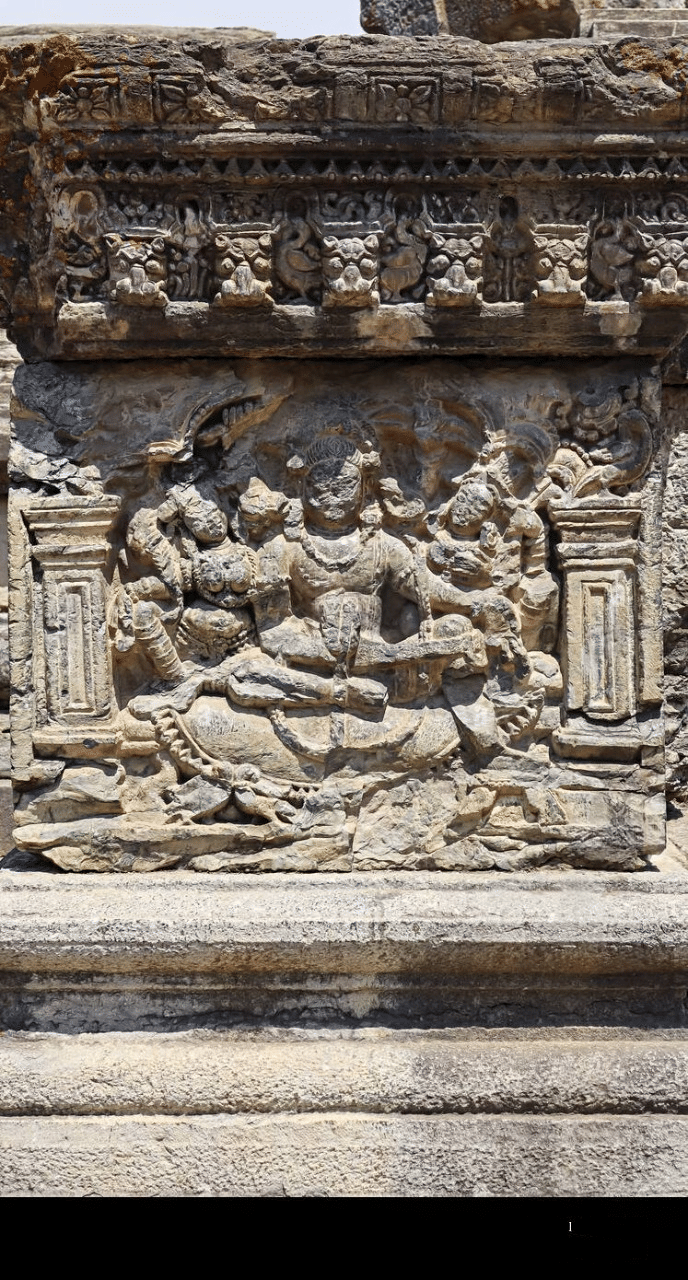
You can spot the Hindu god of love, Kamadeva, depicted in a striking carving on the northern wall alongside two jewelled companions. His floral arrows, bow, and lengthy garland display remarkable Kashmiri craftsmanship. A favorite among history buffs, this sculpture is among the site's best-preserved pieces.
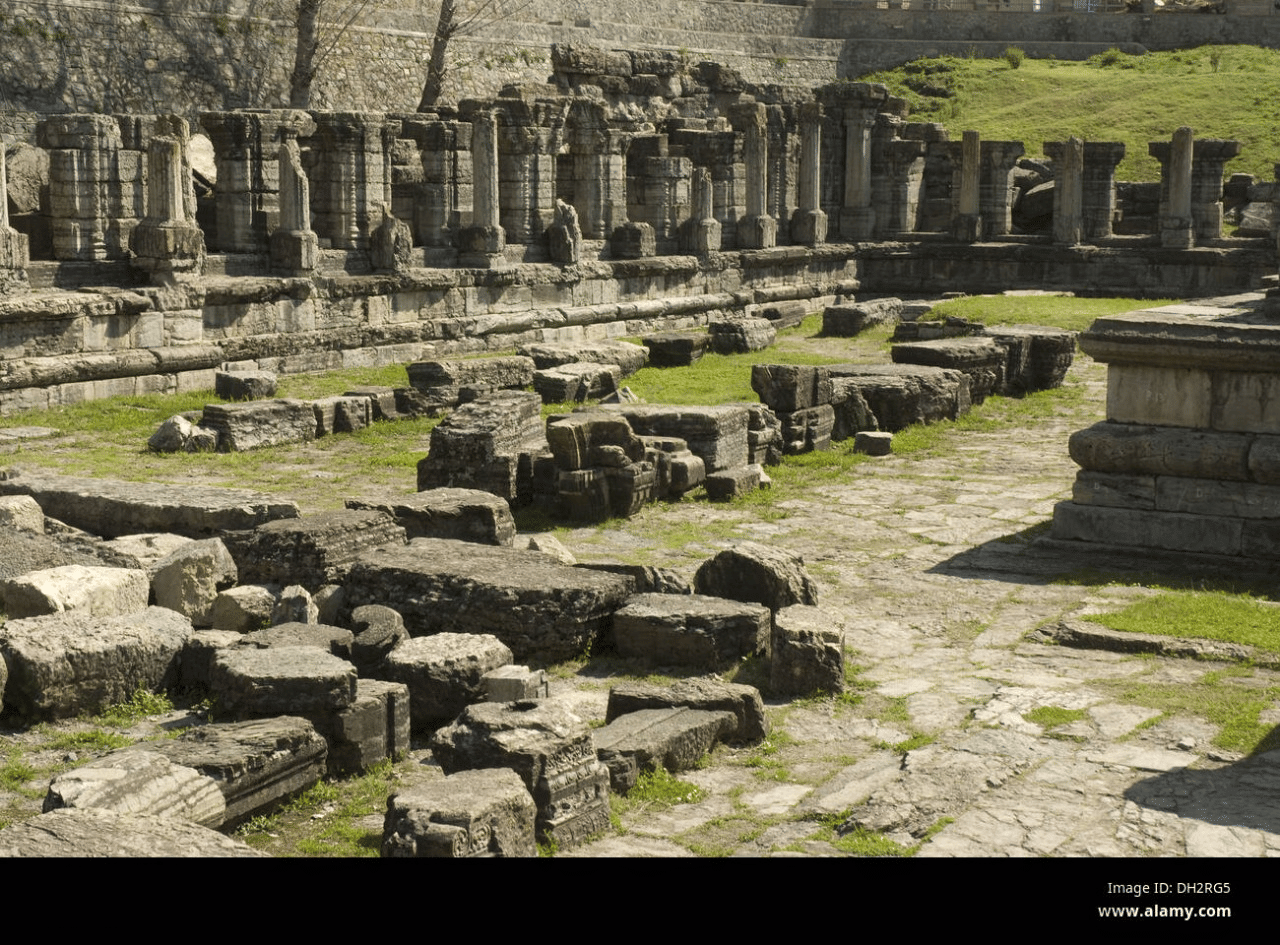
Enjoy a panoramic view of the entire site from the top of the temple's spacious staircase. You can visualize how it looked when it was at its best, with tall towers and a large sanctum. From the higher ground, you can see the plan and understand its historical importance better.
The Muslim ruler of Kashmir, Sultan Sikandar, destroyed the temples of Avantipur, notably the Avantiswami Temple, in the fourteenth century. He demolished the temple in order to spread Islam, perhaps under the influence of Sufi leader Mir Muhammad Hamadani.
King Avantivarman of the Utpala dynasty constructed the Avantiswami Temple in the ninth century CE. Although it is now in ruins, the location once housed two temples devoted to Shiva and Vishnu. The Archaeological Survey of India looks after it, and the locals refer to it as Pandav Lari, which translates to "house of the Pandavas."
The two temples that make up the Awantiswami Temple complex are one for Lord Shiva and another for Lord Vishnu. King Avantivarman, the first ruler of the Utpala dynasty, who governed Kashmir from 855 to 883 AD, constructed these temples in the ninth century CE.
Awantipora has two Hindu temples built by King Avantivarman. The Avantisvamin Temple was built for Vishnu before he became king. He later constructed the Shiva-devoted Avantisvara Temple during his rule. Both temples, which are now in ruins, were built in spacious, rectangular paved courtyards.