
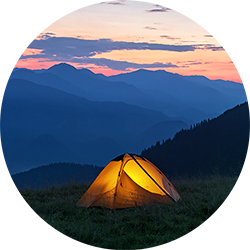


What's the Chadar Trek Altitude?
What is the Altitude of Chadar Trek?
The maximum altitude of Chadar Trek is at Nerak 11,100 feet high while the minimum is 10,400 feet high at Tsomo Paldar. Renowned as the toughest trek of India, Chadar Trek does not involve much of elevation differences but the temperature fluctuations and the broken trails exposing the ferocious Zanskar River beneath the thick ice sheet add to the thrills of this adventurous expedition. Proper acclimatization and preparation for withstanding the extreme cold will equip you just right for this ravishing opportunity.
Taking you away from the civilization amidst the flora and fauna, Chadar trek is one enthralling escapade you would want to decipher. It is an exciting chance to break away from your monotonous nine to five life and get indulged in something that challenges you to the core. Breakaway and get going if you wish to bring in a little tinge of excitement and weave everlasting memories for life.
Day Wise Trek:
Day 1: Reporting day at Leh (11,400 feet)
Day 2: Acclimatization Day
Day 3: Medical Test Day
Day 4: Leh to Shingra Koma then trek to Tsomo Paldar (11,400 feet to 10,400 feet)
Day 5: Tsomo Paldar to Tibb Cave (10,400 feet to 10,800 feet)
Day 6: Tibb Cave to Nerak (10,800 feet to 11,100 feet)
Day 7: Nerak to Tibb Cave (11.100 feet to 10,800 feet)
Day 8: Tibb Cave to Shingra Koma then drive to Leh (10,800 feet to 10,400 feet)
Common Altitude related issues:
1. AMS: Acute Mountain Sickness or AMS refers to the condition where a person suffers constant uneasiness at an elevated altitude due to low air pressure and lack of required oxygen levels. Though human bodies can adjust to the diverse conditions with the required time in hand, there is a limit to everything. An altitude beyond 26,000 feet is called the death zone by the mountaineers as no one can acclimatize to this elevation.
The body starts reacting after it reaches a height of 7,000 feet above sea level. Chadar trek is at an elevation 11,400 feet hence your body reacts and finds it difficult to adapt to the extreme situations that come with such high altitude. Giving your body to get used to the temperature and altitude is very crucial in such case and especially if you dwell in a place that experiences hot climate.
The acclimatization process starts from the day you reach Ladakh. It is advisable that you should come here one week or minimum 3-4 days prior to your expedition so that your body gets enough time before facing the harsh temperature and is well up for the exertion you are going to encounter the following week. You must not take part in any physical activity or anything that would tire your muscles as they can make you prone to the symptoms of AMS including headache, nausea, lack of appetite and dizziness.
Let your body get acquainted with the sub-zero temperature of the Himalayan terrain. Make sure you let your team leader know if these symptoms persist during the trek as it would be better to stop while they are on the lower pressing than if they become severe as it will take around 24 hours to get you medical assistance once you are on the trail.
2. Cold:
Though cold sounds too obvious and normal at such high altitudes, it has effects that can be very fatal, leading to your empty-handed return. While you are bound to struggle with the temperature fluctuations of the day and night, it makes the body more vulnerable to catch a cold. Ensure that you carry cold-related medicines like crocin along with inhalers to help you keep the cold in control.
Rightly said, prevention is better than cure, you should be well prepared with the required clothing and other essentials. The catch is to not let any skin exposed to the cold, not even your face. You must ensure that you’re in the five-layered clothing and also cover your face with a balaclava and ears with a beanie to let no cold air seep in. Not to forget your hands, make sure you wear two layers of gloves - one to prevent the cold and the other waterproof over it to prevent the inner layer from getting wet.
3. Cough:
The dry and cold air of the mountains has tremendous effects on your bronchial tube including irritation and pain as you advance the altitude. Sometimes it gets too severe to bear and hence you must keep cough drops and candies handy during the trek. Try not to breathe from your mouth as it worsens the condition.
Breathing humified air by covering your nose with a scarf, balaclava or mask is a good way to reduce the hurt and irritation. Make sure that you consume hot water and fluids which are soothing for your throat. Avoid consuming coffee and alcohol as they dehydrate your body turning the tables against you completely.
4. Breathing problem:
Chadar trek isn’t like the usual treks where you have to climb the rugged rocks but involves walking on the ice sheet surface of the frozen Zanskar river. The low oxygen level along with the atmospheric pressure will make breathing a daunting task for you. This may also increase because of walking fast at this high altitude or because of a lack of proper acclimatization. Acclimatization is a solution to major problems when it comes to high altitude, therefore it is considered a very crucial part of your expedition.
Also, trekking on Chadar Trek includes walking briskly as the ice below is too slippery and might not be as solid as you perceive, hence there is no use of moving fast. You may also avoid a lot of injuries that can happen because of your pace. Take a short break and inform the trek leader anytime you feel short of breath. This is something that needs immediate attention, do not take it casually. Sit for a while and let your breathing become normal, not strained and then only decide to walk.
The trek groups usually have oxygen cylinders and equipment like oxygen masks to handle such emergencies. Do not continue the trek if you still the breathing problem still persists. It might become severe as you proceed further in the journey and be a life hazard This trek should not be done in haste but cautiously, take your time and enjoy the journey.
How to deal with Altitude sickness on Chadar trek?
Though Chadar trek lacks elevation, the prevailing high altitude has its own perks. Acute Mountain Sickness (AMS) or Altitude Sickness arises when you cross a height 0f 7,000 feet above sea level. At the altitude of 11,400 feet above sea level, it is obvious that your body would react to the increased elevation. Acclimatization is the key to beat AMS, yet it requires a series of things to keep in mind.
You must reach Ladakh a week prior to your Chadar trek excursion so as to let the body get acquainted with the subzero temperatures. You must also avoid covering an altitude of 300-500 meters on the same day as it is an invitation to mountain sickness. Keep in mind the symptoms for AMS that include headache, dizziness, nausea, shortness of breath, cough, and tiredness, and look out for any other problem that you’ve started facing after arriving.
People usually consume medicines for AMS beforehand so as to avoid trouble yet it is no hard and fast rule. Some people face bearable issues whereas some face life-threatening ones too. Make sure you carry a first-aid kit with Diamox in it. You must consult a doctor prior to your trekking schedule and take the prescribed medicines for acclimatization and AMS.
How to get acclimatize with high altitude on Chadar trek?
The catch to acclimatize with high altitude on Chadar Trek is to reach Ladakh a week before your trek. In this period you must not take up any muscle exerting or tedious activity. You can go for sightseeing or walk along with the local market and let your body adjust to the subzero temperature. Try to avoid heaters while you are staying at your hotel as it won’t let you acclimatize to the prevailing weather conditions.
Let go of the quilts, body warming essentials and alcohol, as no matter, these are considered helpful, they actually increase the chances to fall into the pit of Acute Mountain Sickness or Altitude Sickness. Make sure you keep your body hydrated and supply it with hot water and hot fluids from time to time. Avoid trekking an elevation of more than 500 meters as it becomes difficult for the body to adjust a height difference beyond that. Though the human body can adapt to survive, there is a limit to adapting as well as time element involved too. Happy trekking!
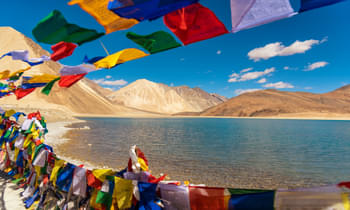
Pangong Lake
Heaven, Peace, Silence, and Tranquility at one place? Come and spend a few hours at Pangong Lake in Ladakh! A pristine place in Ladakh marked by subtle to high peaks around, crystal blue waters and the vast expansion catches the eye so much, so long as if a magic is happening right in front of the eyes. Let our Ladakh holiday packages transport you to this mesmerizing destination, where nature's grandeur unfolds in every corner.Pangong Lake, also known as Pangong Tso, lies calmly at a breathtaking elevation of 14,270 feet. Interestingly, the lake is 12 km long and marks itself between the laps of India and China. Rather, 60% of the portion is stretching in the neighboring nation and this excites every traveler to be here.The surreal clean blue waters are actually brackish or salty in nature and this feature doesn’t let any aquatic life survive in the same. Moreover, the temperature range between -30 to -10 degrees make even this salty lake freeze with thick ice sheets, which is quite opposite in case of salt ridden water bodies.This picturesque landscape location enhances its beauty with the arrival of migrating birds every year and attracts many travelers in search of adventure, photographs, bird-watching and chilling experience. Pangong has another unique and catchy feature; when it acts like a chameleon and changes its color from blue to green to even grey at times. The brackish water of Pangong attracts the migratory birds every year during winters in Ladakh.
Read More
Pangong Lake
Heaven, Peace, Silence, and Tranquility at one place? Come and spend a few hours at Pangong Lake in Ladakh! A pristine place in Ladakh marked by subtle to high peaks around, crystal blue waters and the vast expansion catches the eye so much, so long as if a magic is happening right in front of the eyes. Let our Ladakh holiday packages transport you to this mesmerizing destination, where nature's grandeur unfolds in every corner.Pangong Lake, also known as Pangong Tso, lies calmly at a breathtaking elevation of 14,270 feet. Interestingly, the lake is 12 km long and marks itself between the laps of India and China. Rather, 60% of the portion is stretching in the neighboring nation and this excites every traveler to be here.The surreal clean blue waters are actually brackish or salty in nature and this feature doesn’t let any aquatic life survive in the same. Moreover, the temperature range between -30 to -10 degrees make even this salty lake freeze with thick ice sheets, which is quite opposite in case of salt ridden water bodies.This picturesque landscape location enhances its beauty with the arrival of migrating birds every year and attracts many travelers in search of adventure, photographs, bird-watching and chilling experience. Pangong has another unique and catchy feature; when it acts like a chameleon and changes its color from blue to green to even grey at times. The brackish water of Pangong attracts the migratory birds every year during winters in Ladakh.
Read More
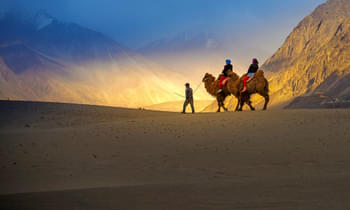
Nubra Valley
One of the most beautiful parts of the moonscapes of Ladakh, Nubra Valley is a deep-cut gorge created by the combined effects of Shyok and Nubra (Siachen) rivers. A high altitude cold desert, Nubra Valley is actually an extension of the Tibetan Plateau (Qing-Zang Plateau) that starts in China and extends up to Ladakh. This valley in the plateau separates the Ladakh Range from the Karakoram Range. But more than anything, Nubra Valley is the most beautiful region in all of Ladakh. Home to wonders like the Diskit Monastery,Hunder Sand Dunes, Samstanling Gompa, Yarab Tso Lake, and the villages of Turtuk and Panamik.Located about 160 km from Leh, the capital of Ladakh, Nubra Valley is a great attraction to all those who come here. The gateway to the upper reaches of the country, especially Siachen, Nubra Valley has an oasis of a town in the heart, Diskit, making a great place to stop you and reflect at the beauty around. And while you are at it, take a short detour to the famous white sand dunes of Hunder. The shapes and forms that these dunes take during different times of the year mesmerize every visitor who comes here. To make it further interesting, there are the double-humped Bactrian Camels, offering rides through the dunes.And when it turns dusky, head to the Diskit Monastery and visit the towering statue of Maitreya Buddha which looks over the entire valley and blesses it for another day to come.Planning a Trip to Ladakh, Experience of Chadar Trek - The Frozen River Trek
Read More
Nubra Valley
One of the most beautiful parts of the moonscapes of Ladakh, Nubra Valley is a deep-cut gorge created by the combined effects of Shyok and Nubra (Siachen) rivers. A high altitude cold desert, Nubra Valley is actually an extension of the Tibetan Plateau (Qing-Zang Plateau) that starts in China and extends up to Ladakh. This valley in the plateau separates the Ladakh Range from the Karakoram Range. But more than anything, Nubra Valley is the most beautiful region in all of Ladakh. Home to wonders like the Diskit Monastery,Hunder Sand Dunes, Samstanling Gompa, Yarab Tso Lake, and the villages of Turtuk and Panamik.Located about 160 km from Leh, the capital of Ladakh, Nubra Valley is a great attraction to all those who come here. The gateway to the upper reaches of the country, especially Siachen, Nubra Valley has an oasis of a town in the heart, Diskit, making a great place to stop you and reflect at the beauty around. And while you are at it, take a short detour to the famous white sand dunes of Hunder. The shapes and forms that these dunes take during different times of the year mesmerize every visitor who comes here. To make it further interesting, there are the double-humped Bactrian Camels, offering rides through the dunes.And when it turns dusky, head to the Diskit Monastery and visit the towering statue of Maitreya Buddha which looks over the entire valley and blesses it for another day to come.Planning a Trip to Ladakh, Experience of Chadar Trek - The Frozen River Trek
Read More
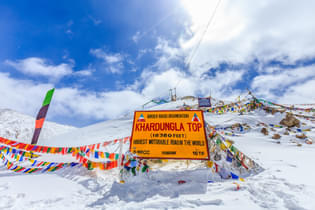
Khardung La
Khardung La pass is a gateway to some of the most enchanting and unexplored landscapes. This famed mountain pass is very popular amongst adventure seekers and regular tourists alike and it must be part of your Leh Ladakh tour packages. Located in the Leh district of the Indian Union Territory, Khardung La is situated at an elevation of 5,359 meters. It is hailed to be the highest motorable pass all across the globe. Historically speaking, Khardung La is quite significant as it lies on the major caravan route that links Leh to Kashgar in Central Asia. During the second world war, an attempt to transfer war well to China was made through this route. Khardung La was constructed in the year 1976 and was made accessible to public motor vehicles in the year 1988. The pass is maintained by the Border Roads Organisation and is of great strategic importance as it is used to carry goods to the Siachen Glacier.
Read More
Khardung La
Khardung La pass is a gateway to some of the most enchanting and unexplored landscapes. This famed mountain pass is very popular amongst adventure seekers and regular tourists alike and it must be part of your Leh Ladakh tour packages. Located in the Leh district of the Indian Union Territory, Khardung La is situated at an elevation of 5,359 meters. It is hailed to be the highest motorable pass all across the globe. Historically speaking, Khardung La is quite significant as it lies on the major caravan route that links Leh to Kashgar in Central Asia. During the second world war, an attempt to transfer war well to China was made through this route. Khardung La was constructed in the year 1976 and was made accessible to public motor vehicles in the year 1988. The pass is maintained by the Border Roads Organisation and is of great strategic importance as it is used to carry goods to the Siachen Glacier.
Read More
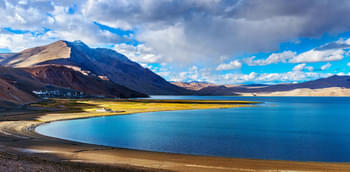
Tso Moriri Lake
Also known as the Mountain Lake, Tso Moriri is one of the two most popular lakes in the Ladakh region of the northern Indian state of Jammu and Kashmir. While Pangong Tso is the more popular out of the two, it’s Tso Moriri which manages to take the breath away of the visitors with its tranquil beauty.Located at an altitude of a whopping 4595 metres above the sea level, Tso Moriri is a calm and serene high altitude lake in Changtang Wildlife Sanctuary. It runs up to 28 km in length and is 100 feet deep on average. Since it is located in a wetland reserve, you cannot pitch your tent in the area but can choose an accommodation in the camps around Tso Moriri lake, giving you a mesmerising view of the lake.While the reflection of snow-clad mountains immersed in the pristine waters of the lake calm your soul, the exotic migratory birds flying above the majestic lake will make you fall in love with nature. The lake is surrounded by high mountains, making it a hidden gem in the cold desert land of Ladakh. It is an ideal travel destination for an offbeat traveller as well as those who wish to explore the untouched beauty of Ladakh.Witness the changing hues of the lake and fall in love with nature all over again with a trip to Tso Moriri. Pack your bags, pick up your camera and set off on your trip to Leh Ladakh to live and capture.
Read More
Tso Moriri Lake
Also known as the Mountain Lake, Tso Moriri is one of the two most popular lakes in the Ladakh region of the northern Indian state of Jammu and Kashmir. While Pangong Tso is the more popular out of the two, it’s Tso Moriri which manages to take the breath away of the visitors with its tranquil beauty.Located at an altitude of a whopping 4595 metres above the sea level, Tso Moriri is a calm and serene high altitude lake in Changtang Wildlife Sanctuary. It runs up to 28 km in length and is 100 feet deep on average. Since it is located in a wetland reserve, you cannot pitch your tent in the area but can choose an accommodation in the camps around Tso Moriri lake, giving you a mesmerising view of the lake.While the reflection of snow-clad mountains immersed in the pristine waters of the lake calm your soul, the exotic migratory birds flying above the majestic lake will make you fall in love with nature. The lake is surrounded by high mountains, making it a hidden gem in the cold desert land of Ladakh. It is an ideal travel destination for an offbeat traveller as well as those who wish to explore the untouched beauty of Ladakh.Witness the changing hues of the lake and fall in love with nature all over again with a trip to Tso Moriri. Pack your bags, pick up your camera and set off on your trip to Leh Ladakh to live and capture.
Read More
More Ladakh Attractions
Magnetic Hill, ladakh
Magnetic Hill, ladakh
Alchi Monastery, ladakh
Alchi Monastery, ladakh
Leh Palace, ladakh
Leh Palace, ladakh
Hemis National Park, leh
Spituk Monastery, ladakh
Spituk Monastery, ladakh
Hall Of Fame, ladakh
Hall Of Fame, ladakh
Chadar Trek, ladakh
Chadar Trek, ladakh
Mulbekh Monastery, ladakh
Mulbekh Monastery, ladakh
Tso Kar Lake, ladakh
Tso Kar Lake, ladakh
Phuktal Monastery, leh
Stakna Monastery, ladakh
Stakna Monastery, ladakh
Chang La Pass, ladakh
Chang La Pass, ladakh
Shey Monastery, ladakh
Chemrey Monastery, ladakh
Shey Monastery, ladakh
Chemrey Monastery, ladakh
Kongka La Pass, ladakh
Kongka La Pass, ladakh
Gurudwara Pathar Sahib, ladakh
Gurudwara Pathar Sahib, ladakh
Namgyal Tsemo Monastery, ladakh
Namgyal Tsemo Monastery, ladakh
Leh Post Office
Donkey Sanctuary, leh
Sakti Village, ladakh
Sakti Village, ladakh
Jispa, ladakh
Jispa, ladakh
Upshi, ladakh
Upshi, ladakh
Ladakh Bungee Jumping
Changthang Wildlife Sanctuary, ladakh
Karu, ladakh
Hunder Village, ladakh
Ladakh Bungee Jumping
Changthang Wildlife Sanctuary, ladakh
Karu, ladakh
Hunder Village, ladakh
Markha Valley, ladakh
Markha Valley, ladakh
Kargil War Memorial, ladakh
Zanskar Valley, ladakh
Basgo Monastery, ladakh
Lamayuru Monastery, ladakh
Dah Hanu, ladakh
Thiksey Monastery, ladakh
Indian Astronomical Observatory
Nyoma Leh, ladakh
Tanglang La Pass, ladakh
Shanti Stupa, ladakh
Leh Market, ladakh
Kargil War Memorial, ladakh
Zanskar Valley, ladakh
Basgo Monastery, ladakh
Lamayuru Monastery, ladakh
Dah Hanu, ladakh
Thiksey Monastery, ladakh
Nyoma Leh, ladakh
Tanglang La Pass, ladakh
Shanti Stupa, ladakh
Leh Market, ladakh
Losar Festival, ladakh
Losar Festival, ladakh
Lachung La Pass, ladakh
More Plains, ladakh
More Plains, ladakh
Tiger Hill ladakh
Tiger Hill ladakh
Basgo, ladakh
Ladakh Hot Springs
Puga Valley, ladakh
Shyok Valley, ladakh
Central Asian Museum, ladakh
Zorawar Fort, ladakh
Turtuk Village, ladakh
Shang Gompa, ladakh
Sangam Leh, ladakh
Hanle, ladakh
Umling La Pass, ladakh
Wanla Gompa, ladakh
Hundur Monastery, ladakh
Yarab Tso Lake, ladakh