

How Much Does a Trip to Bhutan Cost?
Bhutan’s trip cost to India for budget travellers can be around INR 34,500 to INR 61,000 for the entire trip, including flights and daily expenses. For mid-range travellers, the cost typically falls between INR 45,000 and INR 89,000. If you're a luxury traveller seeking premium accommodations in Bhutan, your 7-day trip could cost upwards of INR 79,000 to INR 145,000 or more, depending on your preferences.
Bhutan’s tour price from India can vary depending on your travel style.
Bhutan’s tour price from India can vary depending on your travel style.
- Budget travellers can expect to spend around INR 1,500 to INR 3,000 per day, staying in modest guesthouses and eating at local eateries.
- Mid-range travellers may spend INR 3,000 to INR 7,000 per day for more comfortable hotels and standard restaurants.
- For luxury travellers, the daily expenses can go up to INR 15,000 or more for premium hotels and fine dining.
Flights Cost From Bhutan to India
Flights for a trip to Bhutan cost between INR 24,000 and INR 40,000. There are only connecting flights available from India to Bhutan. The shortest journey takes about 10 hours with one stop, while cheaper options may involve multiple stops and take up to 18 hours.
Visa (Entry Permit) Cost For Bhutan
Indian citizens don’t require a visa for Bhutan, but an entry permit is necessary. This permit can be obtained at Paro International Airport or the Phuentsholing border. Permits can also be obtained online or through a tour operator for free.
Instead, Indian tourists have to pay a Sustainable Development Fee. A Bhutan trip from India costs an SDF Fee of INR 1,200/- per person per night. Children between the age of 6-12 years are given a 50% concession on SDF.
To apply for an entry permit, you’ll need to carry:
Instead, Indian tourists have to pay a Sustainable Development Fee. A Bhutan trip from India costs an SDF Fee of INR 1,200/- per person per night. Children between the age of 6-12 years are given a 50% concession on SDF.
To apply for an entry permit, you’ll need to carry:
- A valid passport or voter ID card (valid for at least 6 months from the entry date)
- Two recent passport-sized photographs
- The entry permit is valid for Thimphu and Paro; visiting other regions requires a special area permit.
Accommodation Cost For Bhutan
- 3-Star: Budget stays in guesthouses and standard hotels range from INR 1,000 to INR 3,000 per night.
- 4-Star: Deluxe hotel prices range from INR 3,000 to INR 6,000 per night.
- 5-Star: Luxury hotels range from INR 7,000 and can go up to INR 50,000 per night, depending on the amenities and location.
Food and Dining Cost For Bhutan
Dining costs range from 250 BTN (INR) to 2,000 BTN (INR) depending on whether you eat at local spots or fine dining establishments. Budget travellers can expect to spend around INR 1,500 per day on food, while those seeking upscale dining may spend INR 5,000 or more. A 0.5-litre beer costs around 80 BTN (INR) to 250 BTN (INR).
Transportation Cost For Bhutan
- Taxi: Taxis cost approximately Nu 25.81 (INR) per kilometre for city rides and Nu 23.31 (INR) per kilometre for inter-district travel.
- Bus: Buses charge Nu 3.63 (INR) per kilometre for shorter distances, with fares increasing based on distance.
- Car: Car rentals typically cost around Nu 2,500 to Nu 3,500 (INR) per day.
Currency Exchange in Bhutan
The Bhutanese Ngultrum currency (BTN) is almost equivalent to INR, with a conversion rate of 1 INR = 0.999937 BTN. Indian Rupees are widely accepted in Bhutan, so currency exchange is hassle-free for Indian travellers.
- 8D/7N
₹ 75,000
₹ 52,499
per adult
Send Enquiry
- 9D/8N
₹ 80,700
₹ 56,499
per adult
Send Enquiry
- 9D/8N
₹ 104,835
₹ 75,049
per couple
Send Enquiry
- 4H
₹ 10,200
₹ 8,500
per adult
Bhutan Tour Packages
Explore All (40)
- 7D/6N
₹ 63,900
₹ 45,950
per adult
Send Enquiry
- 6D/5N
₹ 55,999
₹ 42,990
per adult
Send Enquiry
- 8D/7N
₹ 69,000
₹ 48,299
per adult
Send Enquiry
- 8D/7N
₹ 190,699
₹ 165,000
per adult
Send Enquiry
- 8D/7N
₹ 69,900
₹ 52,990
per adult
Send Enquiry
- 7D/6N
₹ 69,623
₹ 49,350
per adult
Send Enquiry
- 6D/5N
₹ 46,690
₹ 39,290
per adult
Send Enquiry
- 6D/5N
₹ 60,500
₹ 38,990
per adult
Send Enquiry
Bhutan Top Attractions
Places To Visit In Bhutan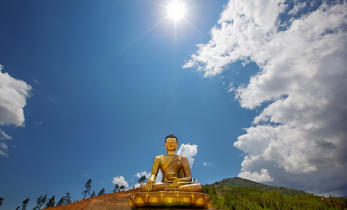
Buddha Dordenma
One of the largest Buddha statues in the world, Buddha Dordenma is a masterpiece of architectural wonder. The massive bronze statue is more than 50 meters in height and is gilded in gold. Apart from this it also houses 125,000 other Buddha statues that are placed surrounding the Buddha Dordenma statue. Sitting royally atop a great meditation hall, this Buddha statue exudes peace and tranquillity, so make sure to include on your Bhutan trip.The project has been believed to be prophesized as early as eight century in a sacred treasure kept by Guru Padmasambhava. It is a representation of manifestation of human faith and everlasting peace and happiness for all human beings.Traveling to Bhutan? Treat yourself to unparalleled luxury with Luxury Holidays To Bhutan.
Read More
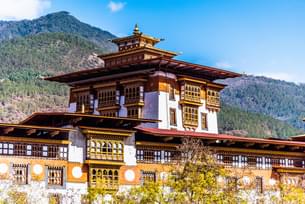
Punakha Dzong
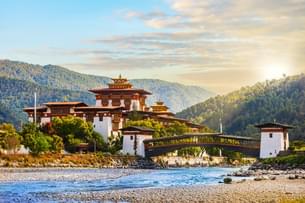
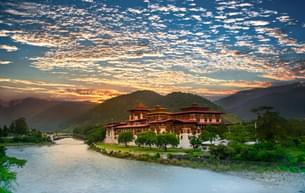
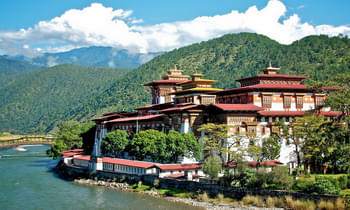
It is also the second oldest and second largest dzong in Bhutan. It is famous for showcasing the fine craftsmanship of Bhutanese artisans. The location of the dzong offers breathtaking views, especially in the spring season. This is when you can see the bloom of the jacaranda trees, adding a splash of bright purple to the landscape.The dzong also serves as a significant historical and religious centre. It houses many sacred relics of Tibetan Buddhism. It has also played a crucial role in Bhutan's history, serving as the main site of coronations and royal events. This is also where the royal wedding of King Jigme Khesar Namgyel Wangchuck and Jetsun Pema took place in 2011. Punakha Dzong's architecture features intricate woodwork, stunning murals, and a series of vast courtyards. These features reveal the depth of Bhutan's spiritual and cultural heritage. Its strategic position and the serene beauty of the valley also make it a must-visit for those touring Bhutan.History Of Punakha DzongConstructed in 1637 by Ngawang Namgyal, Punakha Dzong, known as Pungtang Dechen Phodrang, holds significant historical importance in Bhutan. It served as the seat of government until 1955 and is still the winter residence of the central monastic body. The dzong played a pivotal role in Bhutanese history, hosting the coronation of the first King in 1907. Strategically located at the confluence of the Pho Chhu and Mo Chhu rivers, it facilitated defense against invasions. Despite natural disasters and reconstructions, the dzong retains its grandeur, serving as a cultural and spiritual symbol of Bhutan's rich heritage and tradition.For a romantic escape, choose the perfect Bhutan Tour Package For Couple.
Read More
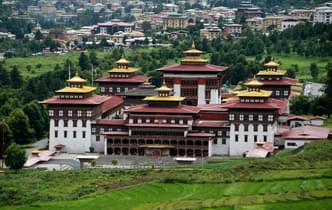
Tashichho Dzong
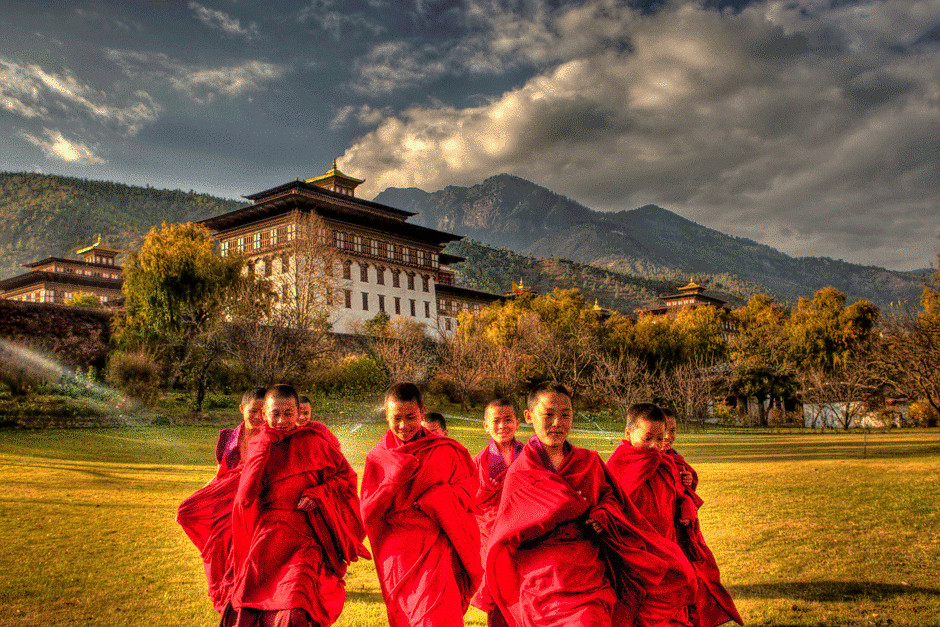
Tashichho Dzong lies on the northern edge of Thimphu, beside the tranquil Wang Chu River. It serves both as a majestic fortress and a Buddhist monastery. It is also known as the "Fortress of the Glorious Religion." Furthermore, the Dzong is an excellent example of Bhutan's architectural grandeur. It was built in 1216 by Lama Gyalwa Lhanangpa and later expanded. The Dzong embodies Bhutan's rich history and cultural depth. Today, Tashichho Dzong serves a dual purpose. It houses the nation's government and serves as the summer residence of the Chief Abbot.The Dzong's architecture is a sight to behold. It is characterised by its whitewashed walls, golden roofs, and intricate woodwork. As dusk falls, the fortress lights up, offering a breathtaking view against Thimphu Valley's backdrop. The Dzong is also an important site of Bhutanese culture and spirituality. It hosts the famous Thimphu Tshechu festival, which is a spectacle of colour, dance, and music.Visiting Tashichho Dzong offers you insights into the essence of Bhutanese life. Here, the past and present intertwine, offering a glimpse into the soul of Bhutan. Tashichho Dzong is a must-visit for anyone looking to learn about Bhutan's heritage.Dreaming of a honeymoon in Bhutan? Discover our tailored Bhutan Tour Package For Couple.
Read More
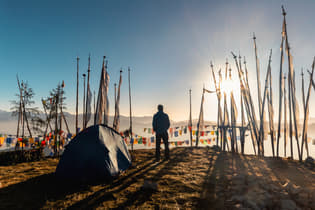
Chele La
Perched between the Paro and Haa valleys at 3,988 metres, Chele La Pass is Bhutan's highest motorable road. This scenic pass offers dramatic views of the Himalayan ranges, including the revered Mount Jomolhari. Built-in the 1990s, the narrow, winding road through Chele La is both thrilling and challenging. It is also primarily known for its sharp turns and steep drops. The pass is a vital link between two of Bhutan's most picturesque valleys and has been an important trade route for centuries.Chele La is also a destination that offers immersive experiences in nature and Bhutanese culture. Hikers and adventure seekers frequent this pass to enjoy the rich biodiversity, including rare alpine flora and fauna. The area is dotted with colourful prayer flags that add to its spiritual ambience, making it a popular spot for both meditation and photography. During the Bhutan tour, one can often see locals engaging in traditional practices and rituals, providing a deeper insight into the cultural heritage of Bhutan.
Read More
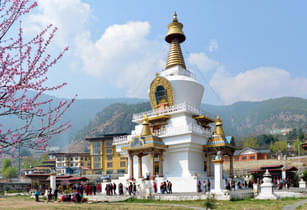
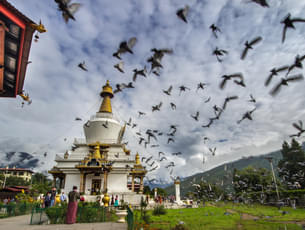
The National Memorial Chorten
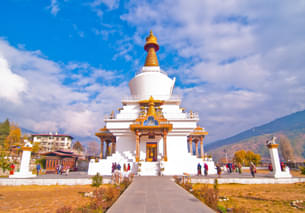
Built in the memory of the third Druk Gyalpo (Head of Kingdom) of Bhutan, the National Memorial Chorten is devoted to World Peace. The Chorten started gaining popularity amongst the localities when various major Buddhist religious festivals started taking place at the Chorten and it is one of the best places to see in Thimphu Bhutan. The word “Chorten” literally translates to “Seat of Faith”, and the structure itself has become an important part of the Bhutanese culture. You can spot various Buddhists circumambulating around the Chorten all throughout the day. The Memorial also attracts a lot of tourists from around the world due to its architectural and deep connection with Bhutan’s rich culture.Situated well within the capital city Thimphu. the Stupa was initially built in the year 1974 and thereafter, witnessed a massive renovation in the year 2008. The Chorten is also famous as the “most visible religious structure of Bhutan.” Unlike other traditional Stupas, this monument does not enshrine any of the human remains. It holds only one photo of Druk Gyalpo in traditional Bhutanese dress in the massive hall on the ground floor.
Read More
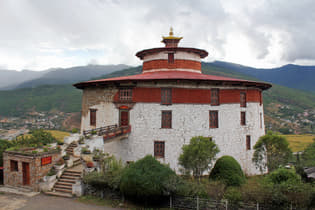
National Museum, Paro
Located in the town of Paro, the National Museum of Bhutan is one of the best places to witness the cultural history of Bhutan. The museum was built in the year 1968 and located in the city of Paro. The popular museum in Bhutan is a place where you can see all the memorable artefacts and historical objects of Bhutan. It is located above Paro Dzong and exhibits the country’s evolution from the Stone Age to becoming a modern Mahayanist Buddhist and multicultural kingdom. The cultural museum is a place which has in store a collection of artworks and some of the most fascinating specimens of Bhutanese bronze statues and paintings. The circular-shaped museum has six storeys which are divided into various art galleries. One of the star attractions of the National Museum of Bhutan is one of the fascinating events of nature when a mule laid down an egg which is kept here. The place is a must-visit for history lovers where you get to see the past of Bhutan in the most creative way of display.For a perfect getaway, choose the ideal Family Trip To Bhutan.
Read More
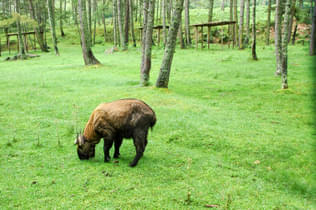
Jigme Dorji National Park
Explore the fascinating Jigme Dorji National Park, which is located in the far northwest of Bhutan and spans 4,316 sq km. As you go on your adventures, you are greeted with spectacular towering mountains that stretch from 1,400 to 7,326 metres in height.In this area, you can go on exciting hikes through lush woods, where you may spot rare animals like the clouded leopard or the famous Bhutan takin. Be on the lookout for the elusive snow leopard, which is said to wander these pristine mountains. See the historic fortifications of Bhutan, such as Lingshi Dzong and Gasa Dzong, and become engrossed in the country's rich cultural legacy. Bhutan tour packages offer a fantastic way to explore these wonders.Be captivated by the tranquil beauty of the park's many glacial lakes, which mirror the peaks in the distance. As birds like River Lapwing and Satyr Tragopan call out to one another while flying and nesting around the park, you may listen to their melodious calls.Bhutan awaits! Book your unforgettable Bhutan Honeymoon Packages From India today.
Read More
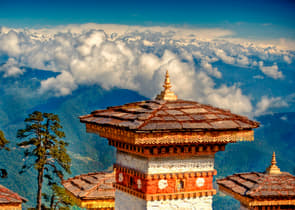
Dochula Pass
Dochula Pass is the highest mountain pass in the Kingdom of Bhutan. It is situated at an elevation of over 10,000 feet above sea level and forms a bridge between Thimphu and the historic town of Punakha. As you make your way up the winding roads to Dochula Pass, you will be surrounded by lush green forests and colourful prayer flags fluttering in the breeze. Here, you will also come across 108 Chortens or Buddhist stupas. Known as the Druk Wangyal Chortens, these stupas were built to honour the Bhutanese soldiers who lost their lives in battle. Adjacent to these Chortens lies the Druk Wangyal Lhakhang temple, an architectural marvel that complements the serene landscape. The temple and the Chortens together offer a glimpse into Bhutan’s traditions and spiritual culture. On a clear day, you can see the entire snow-capped Himalayan range from the Pass, including Mount Masanggang and Gangkhar Puensum. The surrounding cypress tree forests and mountains make Dochula Pass a perfect spot for photography. While you are here, watch for the wide variety of animals that call this place home, such as the mountain fox or the musk deer. Dochula Pass is a place where culture, history, and nature blend, making it a top destination in Bhutan.
Read More
More Bhutan Attractions
Gangtey Monastery, paro
Phobjikha Valley, paro
Royal Manas National Park, bhutan
Khamsum Yulley Namgyal Chorten, punakha
Drukgyel Dzong, paro
National Folk Heritage Museum, thimphu city
Simply Bhutan, thimphu city
Haa Valley, paro
Weekend Market, thimphu city
Changangkha Lhakhang, thimphu city
Bumthang Valley