

Quick Jumplinks to Navigate
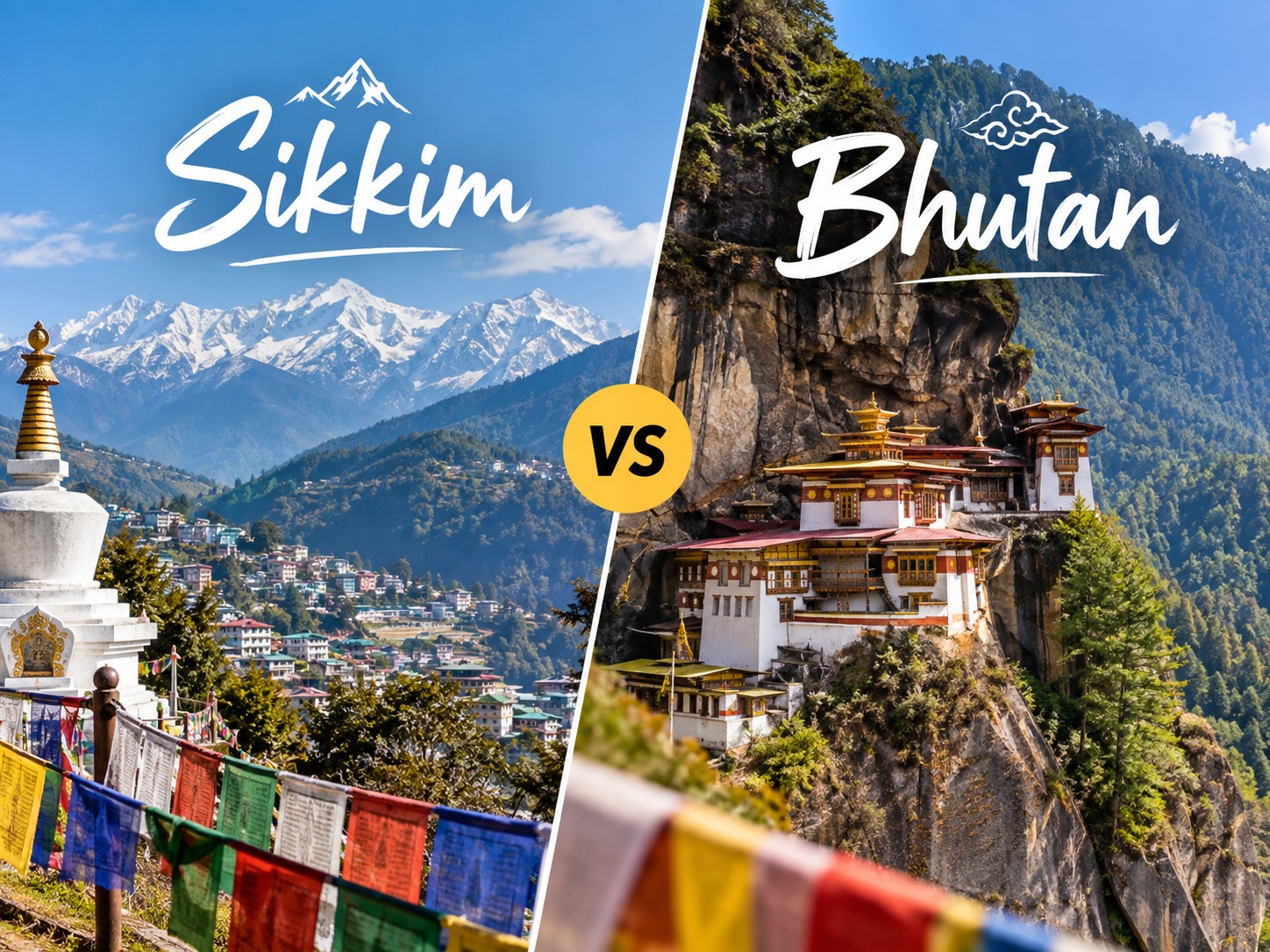
Choosing between two destinations like Sikkim and Bhutan can be a real task, especially when you can plan a combined trip together. But here is the catch: to plan a trip under budget, you need a single destination to plan at a time. Sikkim vs Bhutan are two gems of the Himalayas, offering similar cultures yet different experiences.
Sikkim and Bhutan are stunning Himalayan destinations featuring rich Buddhist cultures and dramatic mountain landscapes. Sikkim is an Indian state offering budget-friendly, flexible travel with high-altitude snow lakes. Bhutan is an independent kingdom providing an exclusive, deeply preserved cultural experience with a daily tourist fee.
Choosing between Sikkim and Bhutan depends on your budget, travel style, and goals. Sikkim offers budget-friendly, flexible mountain adventures and high-altitude lakes, while Bhutan provides a deeply preserved, peaceful cultural experience through a managed tourism fee. Moreover, picking any one of them would require detailed planning and a customised itinerary for a successful trip to either of the destinations.
Thrillophilia, with a 4.6 rating across 70+ countries, provides several detailed packages for both destinations, along with booking guides, customised itineraries, hand-picked inclusions, and 24/7 on-ground services for a relaxed and comfortable trip.
However, this article will guide you to understand how both destinations, even though they have similar features, act differently and which one to choose in what condition has been explained throughout the article.
Sikkim vs Bhutan: Quick Comparison
The Sikkim vs Bhutan comparison is a common one, as both destinations cover mountains with different vacation vibes. This quick comparison covers most of the factors that need to be considered when planning a trip. For weather planning for a Sikkim or Bhutan tour package, this table will guide you in picking your dream destination for your next trip.
| Parameter | Sikkim | Bhutan |
| Best For | For nature lovers, adventure seekers, and people who want to see the high Himalayas. | For slow, immersive cultural travel, spiritual reflection, and pristine Himalayan nature. |
| Budget | From INR 12,500 | From INR 28,500 |
| Accommodation | 3- to 4-star or deluxe hotels in Gangtok and Sikkim | 3- to 4-star or deluxe hotels in Thimpu and Paro |
| Ideal Trip Duration | 8 to 9 days (most booked circuit) | 8 to 9 days (most booked circuit) |
| Best Time to Visit | March to May (for blooming flowers and pleasant weather) and October to mid-December (for crystal-clear mountain views of Kanchenjunga) | The best time to visit Bhutan is during the autumn months of October to November and the spring months of March to May. |
| Ease of Travel | Directly to West Bengal via flight or train, then take a scenic mountain road into Sikkim | Fly directly to Paro International Airport from cities like Delhi or Kolkata via Druk Air or Bhutan Airlines. |
| Verdict | Sikkim is best for dramatic Himalayan landscapes, high-altitude alpine lakes, Buddhist spiritual retreats, and thrilling mountain trekking. | It is perfect for travellers who want untouched nature, ancient tribal cultures, and high-altitude adventures away from crowded tourist spots. |
Choose Sikkim for a budget-friendly, flexible adventure featuring high-altitude lakes and snow views. Choose Bhutan for a peaceful, deeply immersive cultural experience in an independent kingdom.
Know More About Sikkim and Bhutan
Before picking the ideal destination, travellers must know what each destination has to offer, turning your trip into a memory.
Sikkim
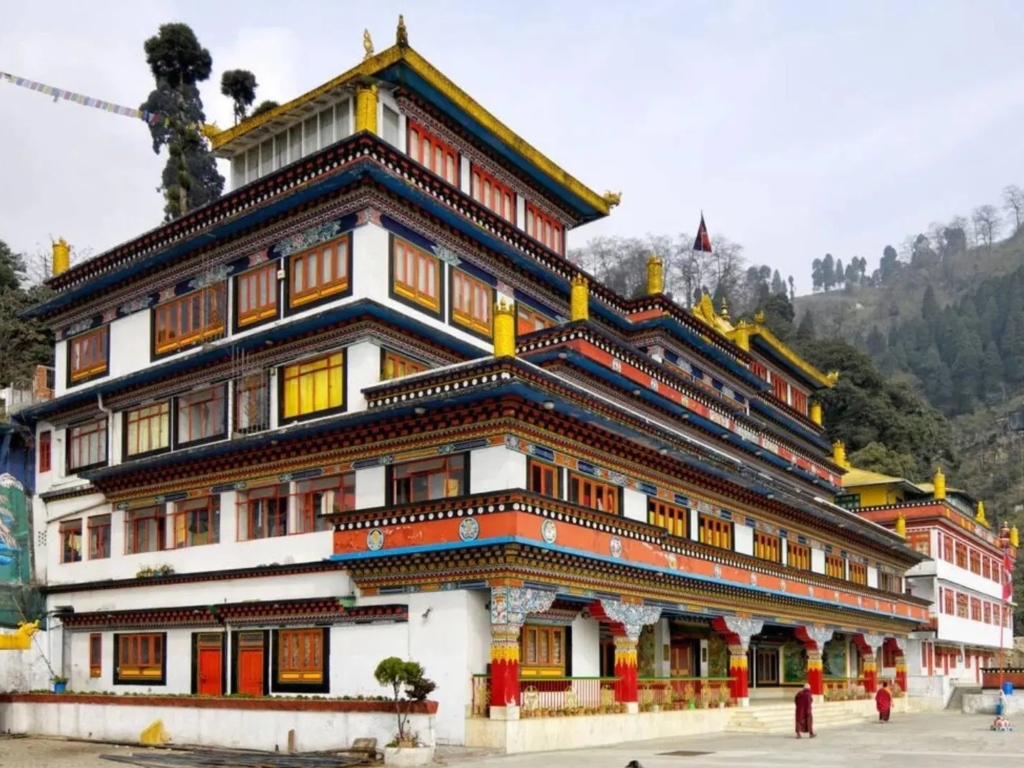
Sikkim is famous for its stunning mountain views, vibrant local culture, and rich plant life. It is home to Kangchenjunga, the third-highest mountain peak in the world. It features the historic Nathula Pass, which was part of the ancient Silk Route trade path. People travel here to see spectacular high-altitude lakes like Tsomgo Lake and Gurudongmar Lake. The landscape changes quickly from warm subtropical forests to freezing alpine heights. The state is also known for its deep valleys filled with flowers, such as the Yumthang Valley.
Travellers choose Sikkim for its great flexibility, affordable options, and amazing adventures. It is an ideal spot for trekking, mountain biking, and exploring. The capital city, Gangtok, offers a fun mix of modern markets, cafes, and lively nightlife. Visitors love the warm local hospitality found in cosy village homestays while exploring a Sikkim tour package. Moreover, Sikkim is India’s first fully organic state, growing all its food without chemicals.
Bhutan
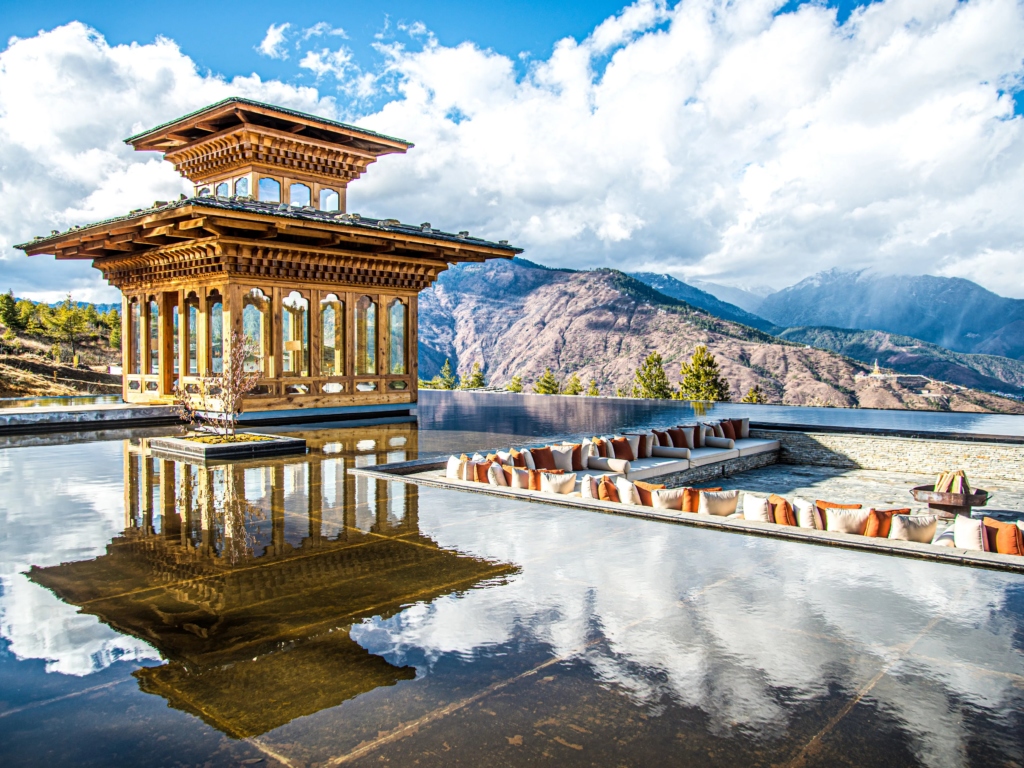
Bhutan is famous for its untouched Himalayan nature, grand fortress-monasteries called Dzongs, and deep spiritual heritage. Its most iconic landmark is the Tiger’s Nest Monastery, which clings to a high cliffside. The country is globally recognised for prioritising the happiness of its people over raw economic wealth.
Travellers prefer Bhutan because it offers a peaceful, highly organised, and calm escape from busy modern life. Tourism is carefully managed to keep the local culture pure and the forests pristine. All international visitors travel using fully curated itineraries that include a mandatory daily sustainable development fee to support local welfare. Visitors enjoy exploring historic towns like Thimphu, Paro, and Punakha in a relaxed, crowd-free environment. It is a carbon-negative nation that absorbs more greenhouse gases than it produces.
Sikkim vs Bhutan: Detailed Comparison
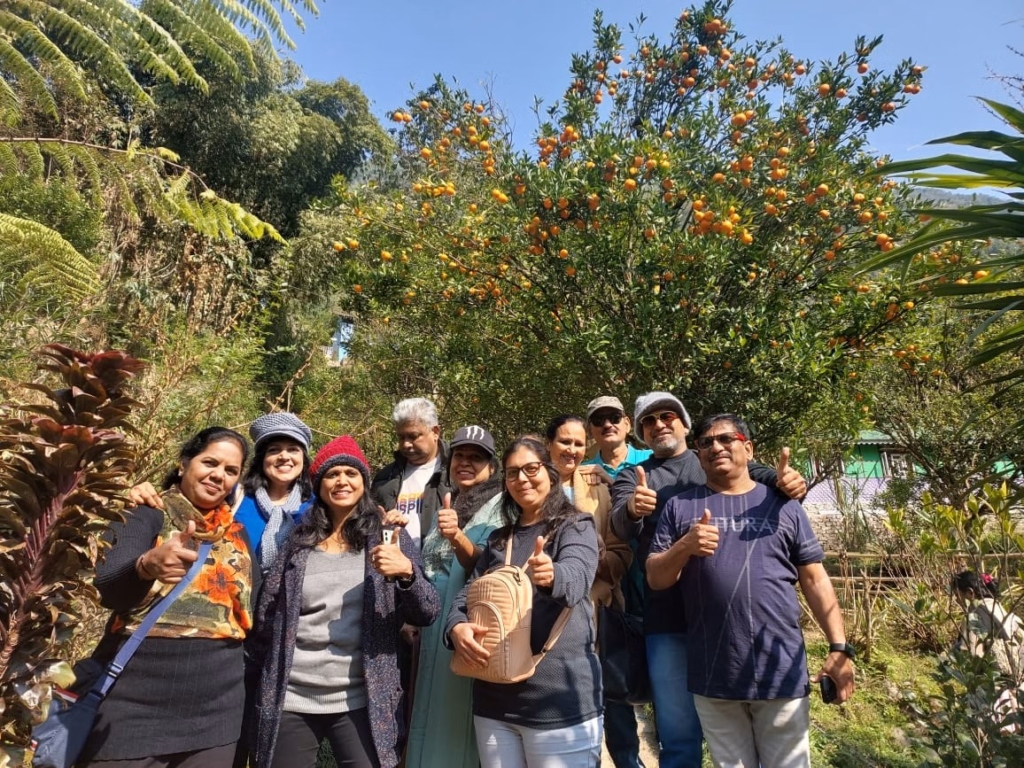
The Sikkim vs Bhutan comparison fundamentally comes down to cost and expenses. Based on accommodation, meals, travel, flights, inclusions, and itinerary, the prices differ between places. Thrillophilia provides complete customised itineraries for both destinations, covering the main expenses in their packages for a clear and transparent trip.
Cost & Budget
The cost of a Bhutan or Sikkim tour depends primarily on travel duration, hotel choices, transportation type (shared vs. private), and SDT fees. Here is the complete breakdown of both destinations.
| Cost Factor | Sikkim | Bhutan |
| Starting Package Price | From INR 12,500 | From INR 28,500 |
| Flight | Directly to West Bengal by flight or train, then take a scenic mountain road into Sikkim | Fly directly to Paro International Airport from cities like Delhi or Kolkata via Druk Air or Bhutan Airlines. Alternatively, take a train to a nearby West Bengal station (like Hasimara or NJP) and cross the border into Phuentsholing by road. |
| Return Flight Cost | INR 13,000 to INR 16,000 | INR 28,771 to INR 35,380 |
| Accommodation (Depending on the selected budget tier) | INR 2,000 to INR 4,000 | INR 1,000 to INR 5,500+ per night |
| Meals per Day (Depending on selected meal plan and budget tier) | INR 1,000 to INR 3,000+INR | 1,500 to INR 5,000+ |
| Internal Transport | INR 500 to 1,000+ (shared jeeps and privately reserved cars) | INR 1,500 to 4,000 (including houseboat) |
| Best For | For short or compact mountain trips | For remote destination lovers along with long mountain trips |
Verdict: Choose Sikkim if you want easy travel, snowy peaks, and comfortable hotels. Choose Bhutan if you love long road trips, different landscapes, and learning about unique culture and food.
Sikkim vs Bhutan: Experiences and Places
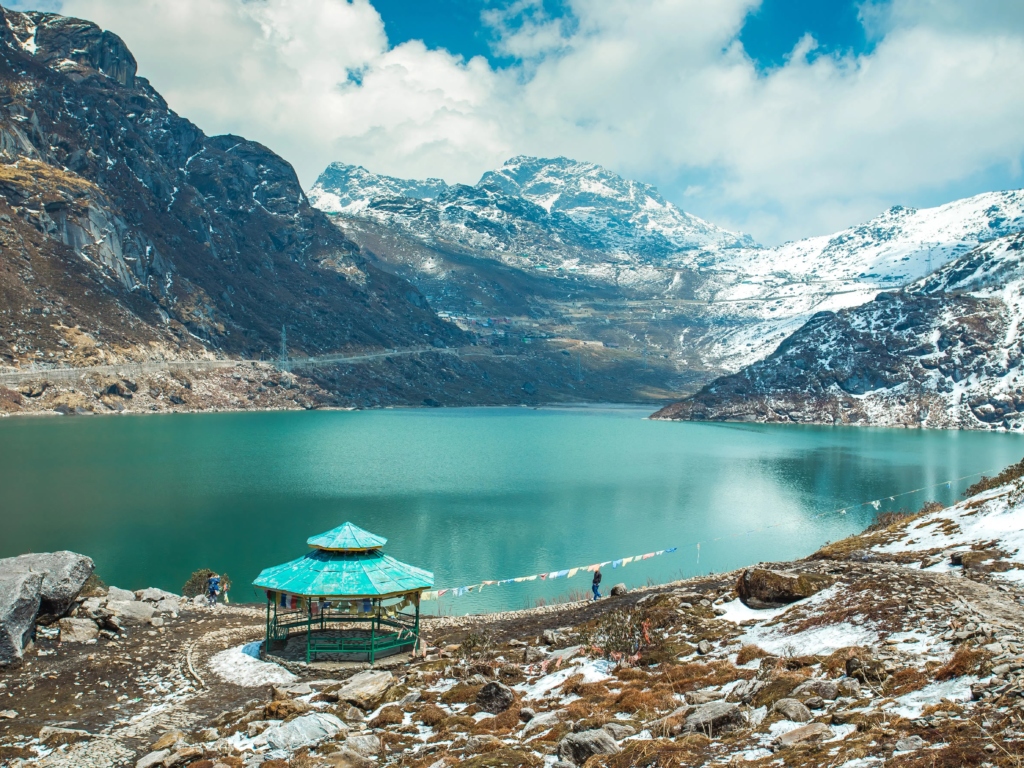
Sikkim focuses on raw, rugged, and high-altitude extremes. It delivers dramatic, snow-capped, jagged peaks dominated by Mount Kanchenjunga, the third-highest mountain in the world. Besides, Bhutan showcases dramatic, deep green valleys framed by gentler, heavily forested mountains.
Sikkim
- Tsomgo Chho: A breathtaking glacial lake surrounded by snow-covered peaks is one of the best places to visit in Sikkim. Ride a decorated yak along the lakeside, capture stunning snowy reflections, and visit the historic border outpost at nearby Nathu La.
- Yumthang: A spectacular meadow of vibrant flowers that gives way to a high-altitude wilderness above 15,000 feet. Walk through fields of blooming rhododendrons in spring or touch untouched snow even during non-winter months at Zero Point.
- Sky Walk, Pelling, Sikkim: Architectural marvels that blend modern thrills with spiritual heights. Walk across India’s first glass-bottomed skywalk suspended over the valley, climb the stairs to a giant 130-foot Buddha statue and view the panoramic Himalayan horizon.
Bhutan
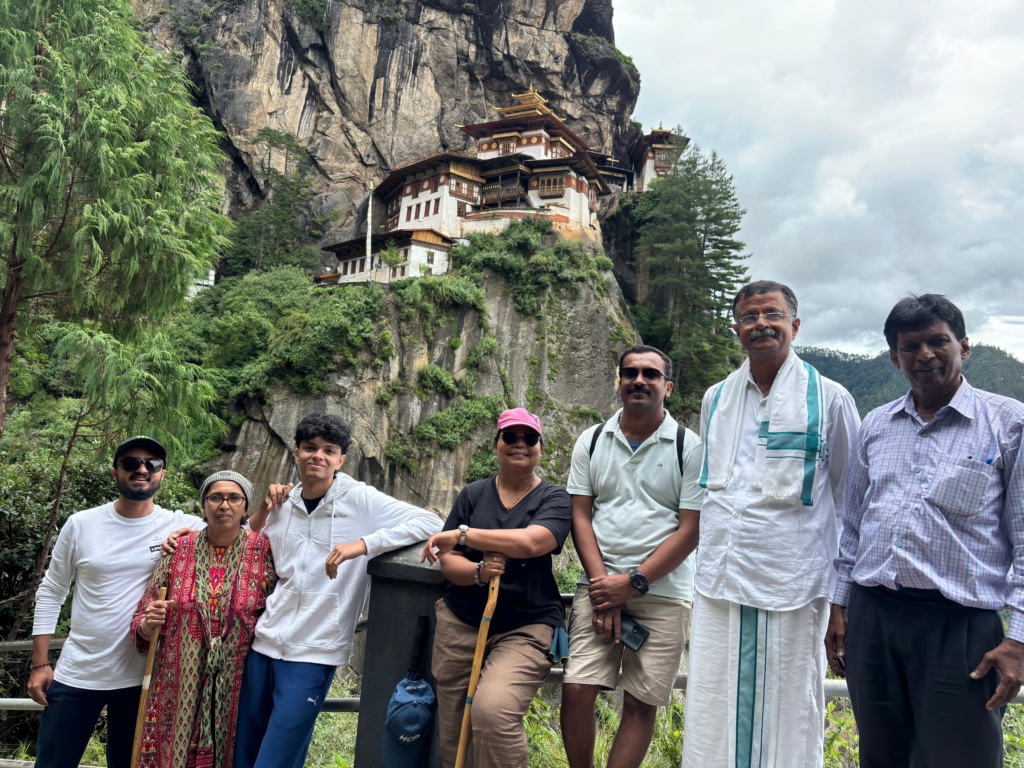
- Paro Taktsang: A world-famous, miraculous temple complex hanging onto a sheer cliffside 900 metres above the Paro Valley. Complete a challenging but rewarding mountain hike through pine forests, spinning sacred prayer wheels powered by rushing mountain streams along the way.
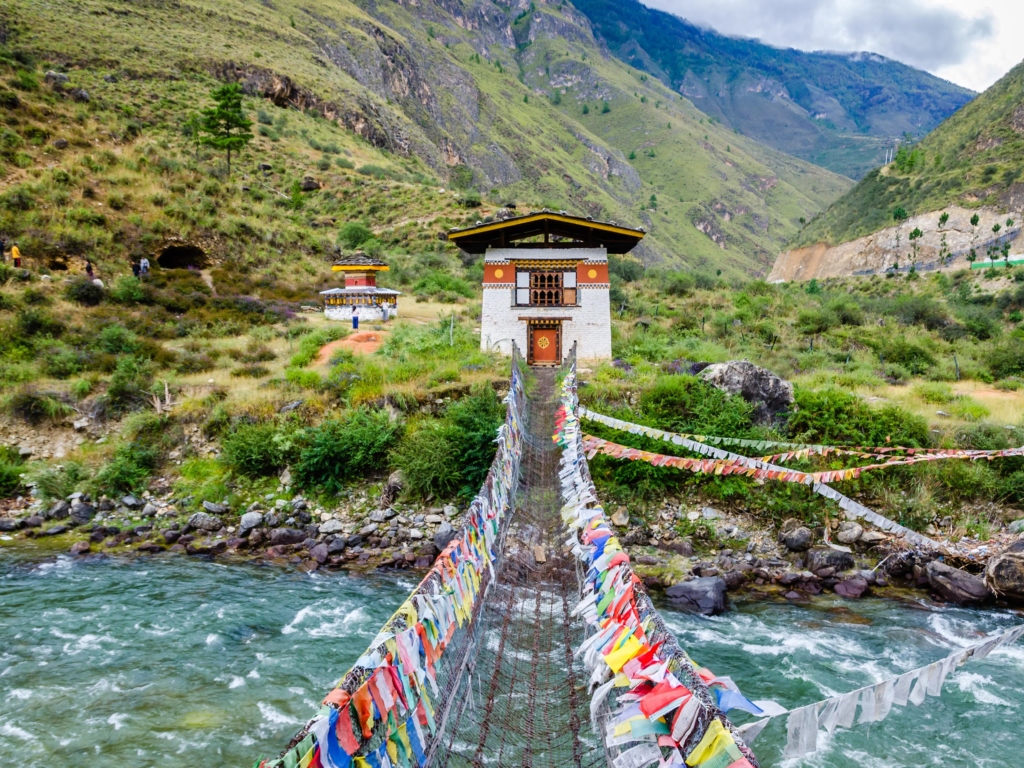
- Punakha Dzong: The historic “Palace of Great Happiness” sits at the majestic confluence of two rivers. Admire the intricate wood carvings, cross the longest suspension bridge in Bhutan decorated with colourful prayer flags, and try river rafting.
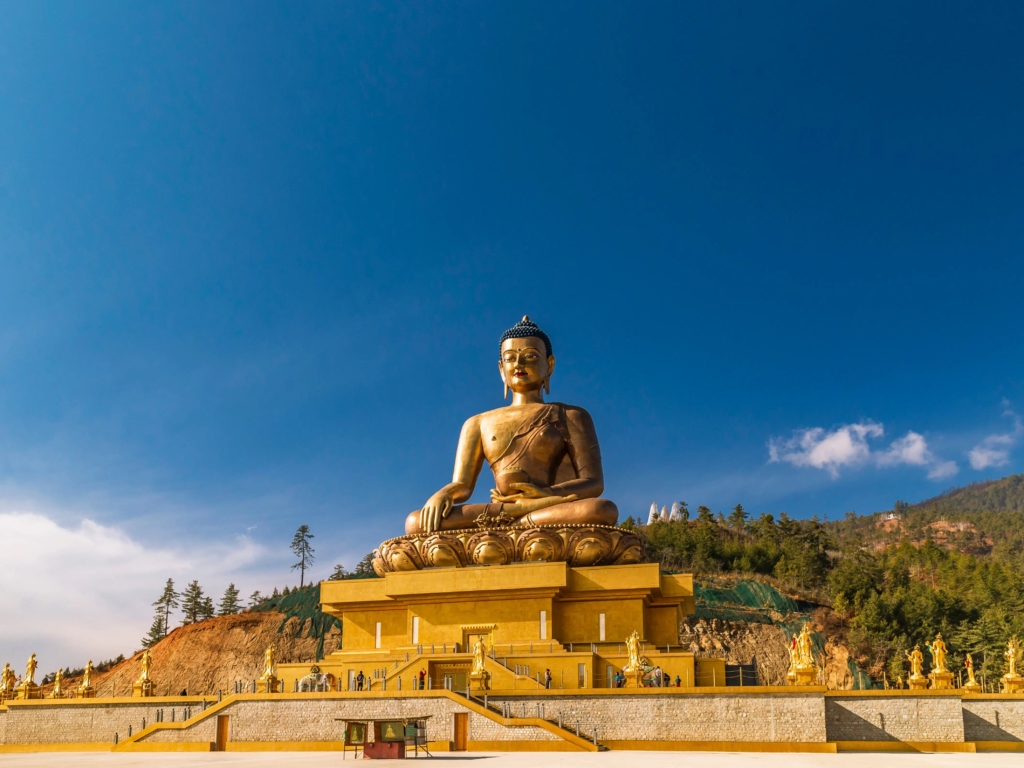
- Buddha Dordenma: A massive, gleaming bronze Buddha statue that overlooks the capital city from a high mountain peak. Step inside the monument to see over one hundred thousand smaller golden Buddha statues and hike the nearby nature trails while exploring the best places to visit in Bhutan.
Weather & Best Time to Visit Sikkim or Bhutan
Both Himalayan regions have distinct seasonal changes, but their unique geography shapes different weather patterns.
Sikkim
- Peak Season: Spring brings thousands of colourful blooming rhododendrons in the valleys. Autumn offers incredibly clear blue skies, making it the prime time to photograph the snowy peaks of Mount Kanchenjunga.
- Shoulder Season: Deep winter months are freezing, but they are great for travellers who want to see frozen high-altitude lakes and heavy snowfall.
- Months to Avoid: The summer monsoon months bring torrential downpours. Heavy rains regularly cause severe landslides that block major mountain highways and cut off entire towns.
Bhutan
- Peak Season: Spring and autumn feature the country’s world-famous Tshechu (monastic religious festivals). The weather is perfect for hiking up to the Tiger’s Nest Monastery under clear, sunny skies.
- Shoulder Season: Winter days stay surprisingly sunny and pleasant for sightseeing in the valleys, even though the nights get very cold. It is also less crowded.
- Months to Avoid: Summer rains wash out mountain trekking paths and cloud the spectacular views, though the rain is usually less disruptive than in Sikkim.
If you want the ultimate, hassle-free Himalayan vacation, choose October or November.
During these autumn months, both Sikkim and Bhutan experience their finest weather of the year. The heavy summer monsoon rains completely clear away, leaving behind crisp, clean air and bright sunny days. This window guarantees you the most spectacular, unclouded views of the giant Himalayan mountain peaks and offers the safest, mud-free conditions for road travel and valley hiking.
Food & Vegetarian Meal Options Availability
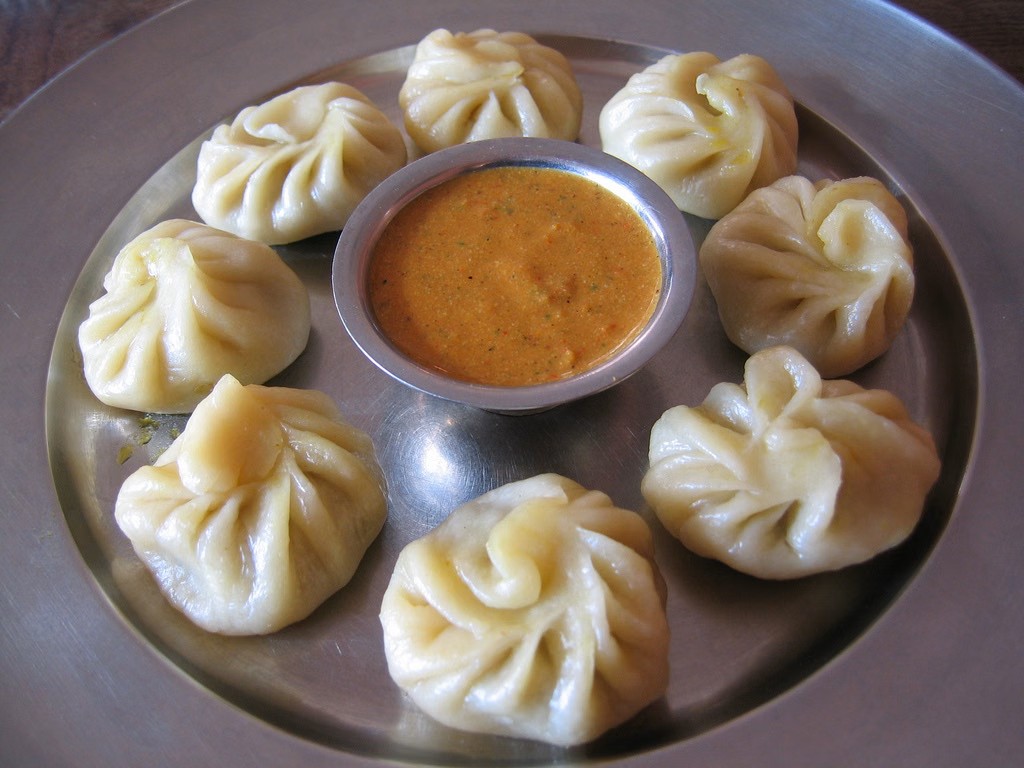
Sikkim’s food culture is heavily influenced by Tibetan, Nepalese, and Bhutia traditions. The cuisine relies on fresh, organic vegetables and warming soups designed to beat the mountain chill. Besides, Bhutan’s food culture is deeply rooted in uniqueness, is bold in flavours and is heavily centred around cheese and fiery hot chillies.
Thrillophilia’s destination experts across both destinations provide complete guidance with eating recommendations, Indian restaurants and popular eating spots as per their travellers’ recommendations. Moreover, with Thrillophilia’s tour packages for both destinations, travellers enjoy daily breakfast along with veg options and other meals as mentioned in the booked package.
Whether it’s Sikkim or Bhutan, Thrillophilia, with its years of experience in planning trips, keeps food preferences as a priority and builds them into their itinerary, including vegetarian meal requirements where available.
Sikkim
- Local Cuisine: The food features a wonderful mix of Tibetan, Nepalese, and native Lepcha flavours. Dishes are comforting, mild, and perfectly spiced for cold mountain weather.
- Vegetarian & Indian Food Availability: Indian food is widely available everywhere because Sikkim is an Indian state. You will easily find standard North and South Indian dishes, pure vegetarian restaurants, and Jain food options in almost every town.
- Nightlife: The capital city, Gangtok, has a bustling nightlife scene. MG Marg is packed with modern pubs, live music bars, and cafes that stay open late into the evening.
Bhutan
- Local Cuisine: The food is unique, bold, and heavily centred around cheese and fiery hot chillies. Locals treat chillies as a main vegetable rather than a simple spice.
- Vegetarian & Indian Food Availability: Most restaurants serve Indian staples like dal, rice, and mixed vegetables to tourists. However, finding pure vegetarian kitchens or authentic Indian tastes can be a challenge outside major cities like Thimphu and Paro.
- Nightlife: Nightlife is very quiet, calm, and limited. Thimphu has a few cosy lounges, bars, and traditional dance clubs, but most places close early, and the streets become peaceful after dark.
Sikkim vs Bhutan: Getting Around
Sikkim and Bhutan require very different logistics, costs, and styles of travel. While Sikkim offers budget-friendly, flexible independent transport through shared or private cabs, Bhutan requires structured, pre-booked itineraries with a licensed guide and vehicle, plus a daily Sustainable Development Fee (SDF).
Sikkim
- Transport Comparison: Relying on shared or private vehicles is the norm. The mountain terrain is rugged and steep. Roads are prone to sudden weather disruptions.
- Public Transport: Government buses are rare. Locals and budget travellers use shared Sumo jeeps to move between towns. They are cheap but get very crowded and do not run on fixed, reliable timetables.
- Car and Scooter Rentals: Self-drive car rentals are not allowed on most mountain routes. You can rent automatic scooters in Gangtok for local exploring, but you cannot ride them to high-altitude areas like North Sikkim.
- Connectivity & Ease of Exploring: Moving between attractions takes a long time. Major spots like North Sikkim, West Sikkim, and East Sikkim require you to drive back to the central hub of Gangtok first. You also need to apply for inner-line permits for protected border zones.
Bhutan
- Transport Comparison: Travel is highly structured, smooth, and predictable. Highways connecting major valleys are well-paved, wide, and well-maintained.
- Public Transport: Public buses exist only for locals travelling between major cities. Almost all tourists travel comfortably in private cars or SUVs that are pre-booked as part of their mandatory guided tour package.
- Car and Scooter Rentals: Self-drive car rentals are not available for international tourists. You must use a licensed Bhutanese driver and guide. Scooter rentals are practically non-existent for tourists due to strict safety rules.
- Connectivity & Ease of Exploring: Travelling is incredibly easy because the main tourist spots (Paro, Thimphu, and Punakha) are connected along one main national highway. Your guide handles all regional travel permits beforehand, so you never have to wait in line.
Bhutan is much easier to travel around. While Bhutan is more expensive, it removes all travel stress. You get a private car, a professional driver, and a local guide who manages your entire schedule. The roads are smoother, traffic is orderly, and there is no hassle of navigating crowded shared jeeps or figuring out complicated permit offices on your own.
Sample Itinerary & Ideal Trip Duration
8 Days, 7 Nights: Best of Sikkim & Darjeeling
Best for first-time visitors who want a balanced 8-day, 7-night Sikkim tour package covering the region’s major attractions along with Darjeeling.
- Day 1: Arrival and transfer to Gangtok – Arrive at Bagdogra Airport or NJP Railway Station and transfer towards Gangtok. Check in to the hotel and spend the rest of the day at leisure.
- Day 2: Gangtok sightseeing – Explore Gangtok’s key attractions, including monasteries and local landmarks, followed by time to explore the city at your own pace.
- Day 3: Tsomgo Lake and Baba Mandir – Take a day trip from Gangtok to Tsomgo Lake and Baba Mandir, with permits for the restricted-area attractions arranged as part of the package.
- Day 4: Gangtok to Pelling via Ravangla – Travel towards Pelling with a stop at Buddha Park in Ravangla. Continue to Pelling and check in to the hotel.
- Day 5: Pelling sightseeing – Explore Pelling’s mountain views, monasteries and surrounding attractions, with time to enjoy the quieter landscapes of West Sikkim.
- Day 6: Pelling to Darjeeling – Transfer to Darjeeling and check in to the hotel. Spend the evening exploring the town or relaxing after the journey.
- Day 7: Darjeeling sightseeing – Explore Darjeeling’s major attractions and viewpoints, with time for local shopping and leisure.
- Day 8: Departure – Transfer from Darjeeling to Bagdogra Airport or NJP Railway Station for your onward journey.
8 Days, 7 Nights: Experiential Bhutan: Valleys, Monasteries & Tiger’s Nest
Best for first-time travellers who want a well-rounded Bhutan experience covering Thimphu, Punakha, Gangtey and Paro without rushing through the country’s major cultural and natural highlights. This route follows an 8-day, 7-night Bhutan itinerary circuit and includes the Gangtey/Phobjikha excursion and Tiger’s Nest hike.
- Day 1: Arrival — Phuntsholing. Transfer from New Jalpaiguri Railway Station/Bagdogra International Airport to Phuntsholing, hotel check-in and leisure time. The package includes accommodation with breakfast and lunch or dinner.
- Day 2: Transfer to Thimphu. Complete the Bhutan travel permit formalities and drive to Thimphu. Check in and spend the rest of the day at leisure, with options to explore the city independently.
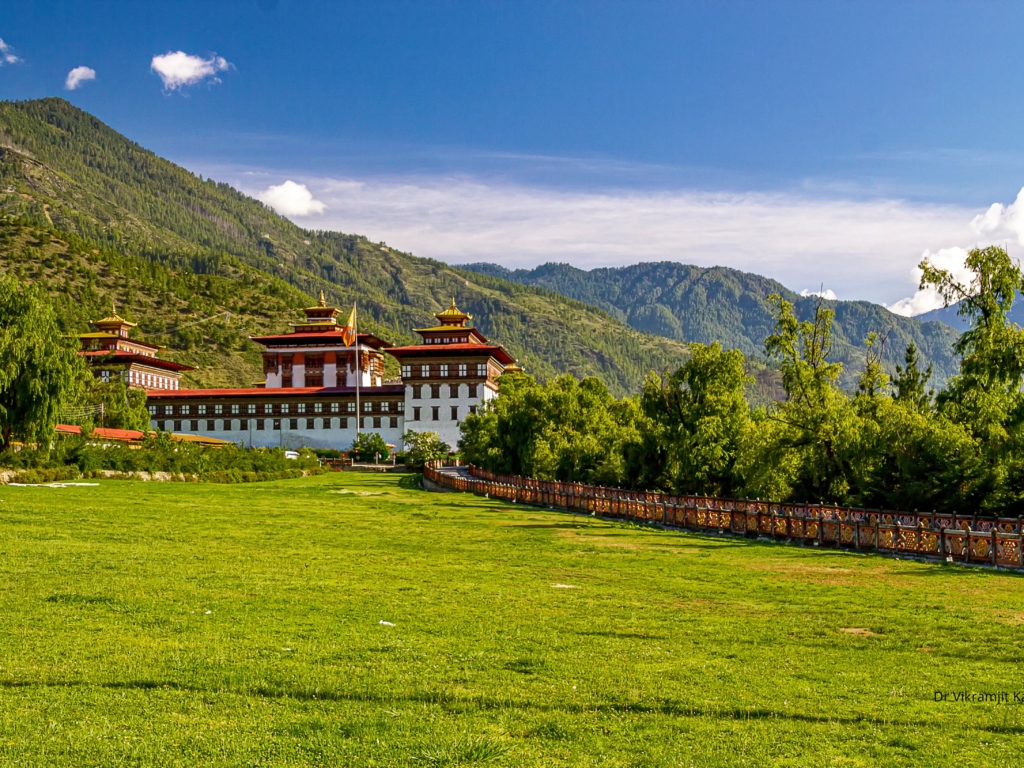
- Day 3: Thimphu sightseeing. Visit the National Memorial Chorten, Motithang Takin Preserve, Changangkha Lhakhang and Tashichho Dzong, followed by leisure time in the capital.
- Day 4: Transfer to Punakha. Drive towards Punakha through the Himalayan landscape and visit Punakha Dzong, one of Bhutan’s most important architectural and cultural landmarks.
- Day 5: Gangtey and Phobjikha Valley excursion. Take a scenic day trip to Phobjikha Valley, visit Gangtey Gompa Monastery and explore the surrounding Gangtey Valley before returning to Punakha.
- Day 6: Transfer to Paro. Travel through Bhutanese villages to Paro and visit Drukgyel Dzong and Kyichu Lhakhang, one of Bhutan’s oldest temples.
- Day 7: Tiger’s Nest and Paro. Hike to Taktsang Monastery (Tiger’s Nest), Bhutan’s iconic cliffside monastery, followed by leisure time in Paro.
- Day 8: Departure. Transfer towards the airport/exit point for the onward journey, concluding the Bhutan holiday.
Who Should Choose Which Destination?
Choose Bhutan if you want an internationally managed, peaceful, and culturally immersive experience. Choose Sikkim if you want flexible adventure, dramatic snow-capped peaks, and a budget-friendly holiday.
| Choose Sikkim If | Choose Bhutan If |
| You prefer scenic mountain landscapes, monasteries, lakes, viewpoints and a more developed tourist infrastructure. | You prefer peaceful valleys, ancient monasteries, traditional architecture and an immersive cultural experience. |
| You have a moderate budget and want more choices across hotels, restaurants and sightseeing experiences. | You have a moderate to higher budget and are comfortable paying for a more curated and regulated travel experience. |
| You enjoy sightseeing, short hikes, cafés, shopping, adventure activities and exploring popular Himalayan destinations. | You enjoy trekking, meditation, nature, spirituality, local culture and slower-paced travel. |
| You’re travelling for a family holiday, a couple’s getaway, your first Himalayan trip or a shorter vacation. | You’re travelling for a peaceful escape, cultural immersion, wellness, trekking or a meaningful couple’s holiday. |
Sikkim is the better choice if you want a more accessible and flexible Himalayan holiday with plenty of sightseeing, accommodation and dining options. Bhutan is ideal if you want a quieter, more culturally immersive experience where monasteries, traditional architecture, nature and a slower pace are central to the journey. For first-time Himalayan travellers, a Sikkim tour package for family offers greater convenience, while couples, culture seekers and travellers looking for tranquillity may prefer Bhutan.
Final Verdict
Sikkim and Bhutan both offer spectacular Himalayan scenery, but they cater to different kinds of travellers. Sikkim is more accessible and flexible, with scenic lakes, monasteries, mountain viewpoints, adventure activities and a wider choice of accommodation and dining. Bhutan offers a slower, more immersive experience, centred around Buddhist culture, traditional architecture, peaceful valleys and pristine landscapes.
You want a convenient and relatively affordable mountain holiday with plenty of sightseeing, adventure and flexibility. Sikkim is particularly suitable for families, first-time Himalayan travellers and couples who want to combine nature with comfortable travel.
You want a peaceful, culturally rich and slower-paced getaway. Bhutan is ideal for travellers interested in monasteries, spirituality, traditional Bhutanese culture, trekking and scenic valleys, making it especially appealing for couples, culture enthusiasts and wellness-focused travellers.
Why Choose Thrillophilia for a Sikkim or Bhutan Trip?
Explore Thrillophilia’s Sikkim and Bhutan tour packages and destination guides to compare itineraries, experiences and budgets. You can also explore customised packages and multi-destination trips to combine destinations and create a holiday around your preferred pace, interests and budget.
Planning a trip to Sikkim or Bhutan becomes easier when your accommodation, transfers, sightseeing and experiences are planned together. Thrillophilia offers a range of packages that can be adapted to different travel styles, budgets and trip durations.
- Curated Itineraries: Choose thoughtfully planned Sikkim and Bhutan packages covering popular attractions while maintaining a comfortable pace.
- Multiple Budget Options: Select packages across different price points to find an option that fits your travel budget.
- Handpicked Experiences: Add experiences such as monastery visits, mountain sightseeing, trekking and scenic excursions in Sikkim or fortress monasteries, cultural experiences and Himalayan valley excursions in Bhutan.
- Convenient Travel Planning: Bring accommodation, sightseeing, transfers and activities together to reduce the hassle of managing multiple bookings.
- Travel Around Your Interests: Build your trip around what matters most to you, whether that’s nature, culture, adventure, relaxation or photography.
- 24/7 on-ground experience: Whether you are stuck in creating itineraries, doing research or waiting for your vehicle during your trip, Thrillophilia provides you with round-the-clock service from planning to execution for a seamless trip.
Whether you choose Sikkim’s scenic Himalayan landscapes or Bhutan’s peaceful cultural heritage, Thrillophilia can help you create a trip around your budget, interests, preferred pace and travel style.
FAQs
Both Bhutan and Sikkim are great for families, but they offer different experiences. Bhutan provides a peaceful, culturally rich trip with grand fortresses and scenic valleys, though travel costs more due to sustainable fees. Sikkim offers an easy, budget-friendly mountain getaway with stunning lakes and snow views, perfect for a lively family vacation.
Neither destination is universally “better”; choice depends on your goals. Sikkim is better for budget-friendly, flexible, and adventure-heavy trips with alpine views. Bhutan is better if you want a peaceful, deeply cultural, and exclusive experience, though it is more expensive due to mandatory tourism fees.
Yes, Bhutan is more costly than India for both daily living and travel. Overall consumer prices and restaurant meals in Bhutan are noticeably higher than in India. For tourists, Bhutan enforces a mandatory Sustainable Development Fee (SDF), which adds a flat daily cost of ₹1,200 per night for Indian citizens and $100 per night for other international travellers.
Sikkim is generally considered a budget-friendly and affordable destination, especially when compared to Bhutan or Western India. While local transport and protected area permits can add to the cost, budget hotels and cheap local food are widely available. A comfortable trip can cost anywhere between ₹2,000 to ₹5,000 per person per day, depending entirely on your choice of stay and whether you book private cars or shared cabs.
The aerial distance between Sikkim and Bhutan is roughly 150 to 200 kilometres, but road travel requires driving through West Bengal. A road trip from Gangtok (Sikkim’s capital) to Thimphu (Bhutan’s capital) covers about 360 kilometres and takes around 10 hours of driving. Most travellers break up this long mountain journey by stopping overnight at the border town of Phuentsholing.