


What's the Everest Base Camp Trek difficulty?
How difficult is Everest Base Camp Trek for beginners?
As a beginner, the idea of hiking up to the mighty heights of Everest Base Camp may seem a bit daunting to you. But if you are determined to hike up to the base of the highest peak in the world and get a clear sight of the majestic Mount Everest, then you surely can fulfill this dream.
The difficulty level of this trek ranges from moderate to challenging. It depends on a lot of factors. The obvious ones are the temperature and altitude. You have to be aware of the fact that the acclimatization process before starting the trek as well as getting used to new altitudes during the trek is a must. Generally, there are a few days in between, set specially for acclimatization and are equally important for walking upwards.
Altitude sickness can affect even the fittest amongst the lot. So keep a lookout for symptoms like dizziness, lack of appetite, headache and breathlessness. As the trek starts, you will be walking through rocky terrains and ice packed trails with a lot of uphills and downhills. You will also encounter unpredictable weather conditions like heavy rains, hail, snowfall and even snowstorm, so plan and pack waterproof items of clothing which get dried up easily.
Although you don’t have to be a skilled hiker or mountaineer, you need to have a good amount of endurance as well as vigour to successfully complete this trek because you will be covering 15 Km per day, that is six to eight hours of trekking on average.
So we firmly recommend starting to build up your stamina by doing regular physical exercises like cycling, jogging, hiking and a lot of walking. Start a few weeks before you travel to Nepal so that during the trek you have enough tolerance level and don’t have much fatigue.
What difficulties one can face during the trek?
The difficulties along the breathtaking Everest Base Camp trek can be varied for every trekker. They depend on a lot of factors as well. These include firstly your preparation for it, the weather conditions, how well do you adjust to the altitude, how long you take to cover a particular distance, how steep are the trails, so on and so forth. The first thing to remember is that because of limited tourist infrastructure, there will be little or no phone signal, no WiFi and even zero power supply along your trek.
Every trek usually starts from Lukla which is at an altitude of 2800 meters. This point is in itself quite a high start for your trek. From here, as you ascend uphill, you may struggle with altitude sickness, medically known as Acute Mountain Sickness (AMS). Do not take this fatal condition lightly. Keep in mind that you cannot prepare for the altitude sickness beforehand and it can happen to anybody.
Yes, you should definitely carry medicines like Diamox for prevention but remember that if people are severely faced with this difficulty, they have to be choppered out to a lower altitude. There can also be minute problems due to the high altitude like fever, flu, low levels of oxygen intake, blisters, and frostbite. At such a high altitude, you can expect heavy snowfall which is another difficulty you will have to withstand during the Everest Base Camp trek.
As you go higher to the Khumbu region, you may start coughing and it can increase violently. This is due to the irritation from the cold dry air. To prevent this, any one out of the mask, buffer, scarf or a handkerchief will be useful to breathe in the humidified air.
Other than this, if you are going for the Everest Base Camp trek during a peak period (September to November and February to May) you will come across big crowds and it may be difficult and time consuming for you to proceed on your trail. Rocks falling off from mountains is another hazard of which you have to be careful. Similarly, the glacial areas also have the risk of icefalls which are quite dangerous.
What makes it difficult?
Sneaky weather, fatal altitude sickness, dangerous rockfalls and icefalls, hiking up and trekking down the jagged pinnacles on foot, and several such elements make the Everest Base Camp difficult to conquer. Even before you start your journey on foot to the Everest base, the flights from Kathmandu to Lukla may get canceled due to harsh weather conditions.
You may even have to wait it out for a few days. And mind you, Lukla comes in the list of top ten most dangerous airports in the world! After descending back to the starting point as well, there is no guarantee that the weather will be suitable for flights to take off. You may have to resort to the expensive helicopter ride to go back to Kathmandu.
Even after you reach the starting point (Lukla) for your trek on time, beginning your trek from a staggering 2800 meter high altitude turns out to be difficult for some people. The expedition in sub-zero temperatures is also one of the main reasons which makes this trek difficult. Along with it, a lot of people level up this challenging trek by carrying their own luggage instead of making the porters carry them.
As you trek upwards, the air becomes thinner and thinner and the level of oxygen reduces making it difficult to properly breathe. So it is of utmost importance that you get used to the altitude steadily or else trekking up too high too fast will be fatal for you. Basic commodities like water and food also become expensive and limited as you trek higher and higher.
As the Everest Base Camp trek is becoming more and more popular, there are a lot of tour operators taking a large number of people to this trek. This has made the trail a lot more crowded and as a result, it may become difficult as well as time-consuming to ascend to and descend from the Everest Base Camp.
Adventure
Explore All (30)
- 16D/15N
- Kathmandu
₹ 100,000
₹ 89,900
Send Enquiry
.jpg?w=305&h=230&dpr)
- 7D/6N
₹ 21,237
₹ 16,989
per adult
Send Enquiry

- Kathmandu
₹ 10,000
₹ 7,700
Send Enquiry
- 10H
- Kathmandu
₹ 7,290
₹ 5,832
Send Enquiry
.png?gravity=center&width=245&height=183&crop=fill&quality=auto&fetch_format=auto&flags=strip_profile&format=jpg&sign_url=true)
- 4H
- Kathmandu
₹ 6,000
₹ 4,732
Send Enquiry

- 4H
- Kathmandu
₹ 9,000
₹ 6,786
Send Enquiry

- 9H
- Kathmandu
₹ 5,765
₹ 4,900
Send Enquiry
- 10D/9N
₹ 41,000
₹ 36,500
per adult
Send Enquiry
Trekking
Explore All (23)
- 12D/11N
₹ 61,135
₹ 46,950
per adult
Send Enquiry
- 16D/15N
- Kathmandu
₹ 100,000
₹ 89,900
Send Enquiry
- 7D/6N
₹ 21,237
₹ 16,989
per adult
Send Enquiry
- 9H
- Kathmandu
₹ 5,765
₹ 4,900
Send Enquiry
- 10D/9N
₹ 41,000
₹ 36,500
per adult
Send Enquiry

- 20D/19N
- Annapurna
₹ 130,040
₹ 130,000
Send Enquiry

- 3D/2N
- Kathmandu
₹ 18,000
₹ 14,800
Send Enquiry
- 14D/13N
₹ 72,799
₹ 55,999
per adult
Send Enquiry
- 10H
- Kathmandu
₹ 7,290
₹ 5,832
Send Enquiry
- 4H
- Kathmandu
₹ 9,000
₹ 6,786
Send Enquiry

- 8H
- Kathmandu
₹ 6,736
Send Enquiry
- 4H
- Kathmandu
₹ 6,000
₹ 4,732
Send Enquiry
₹ 7,000
₹ 5,000
per adult

- 1D
- Kathmandu
₹ 2,382
₹ 1,838
Send Enquiry

- 5H
- Kathmandu
₹ 688
₹ 550
Send Enquiry
- 5H
- Kathmandu
₹ 688
₹ 550
Send Enquiry
Day Tours
Explore All (5)
- -2D/8H
₹ 1,000
₹ 700
per adult
- 7H
Rs. 15,928
Rs. 11,976
per adult

- 4H
- Kathmandu
₹ 3,000
₹ 2,800
Send Enquiry

- 5H
Rs. 14,866
Rs. 11,178
per adult
- 1D
₹ 5,500
₹ 5,000
per adult
Kathmandu Top Attractions
Places To Visit In Kathmandu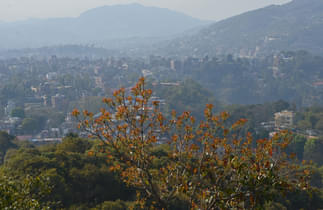
Kathmandu Valley
The Durbar Squares of each city showcase intricate architecture and centuries-old craftsmanship. Pashupatinath Temple and Boudhanath Stupa stand as spiritual landmarks, while Swayambhunath, the Monkey Temple, adds a mystical charm. The valley is a vibrant blend of spirituality, bustling markets, and rich heritage, offering a captivating glimpse into Nepal's cultural tapestry.
Read More
Chandragiri Hill
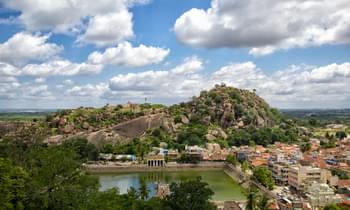
The fort was a pivotal seat of power during the Vijayanagara Empire. At its base lies the Raja Mahal, an exquisite palace with intricate carvings. Pilgrims ascend the hill to visit the revered Bhagwan Srinivasa Temple. The panoramic views of the surrounding landscape and the cultural richness embedded in Chandragiri Hill make it a compelling destination for history enthusiasts and spiritual seekers alike.
Read More
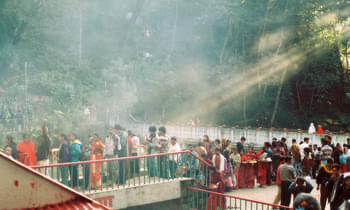
Dakshinkali Temple Nepal
The Dakshinkali Temple is a holy shrine which is dedicated to Goddess Kali. You will find the true goddess Kali with red eyes and protruding tongue. The goddess is beautifully adorned with necklace of skulls. Location: It is 22 km outside Kathmandu valley. On Saturdays you will find temple fair being conducted in Dakshinkali Temple where people are selling the best of clothes and you can have the best of tea stalls too. Highlights: You can have the most interesting hiking and trekking experiences too.Best time to visit: You can visit during anytime of the month, however Tuesdays and Saturdays are the best time to visit this place. Location: Bhimsen Marga, Kathamandu.Prices: Free of costAlso Checkout: 6 Nights 7 Days Nepal Tour Package
Read More
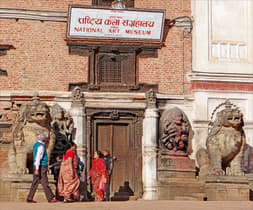
National Museum Of Nepal
If you are a hard core history buff, this place is for you, where you will find many age old things reminding you of how once olden Nepal was. It is a very old museum and has some historic collection of arts, culture and paintings too. However one would also witness Buddhist gallery which has all the important information pertaining to Buddhism. The complete past of Nepal is neatly wrapped in this beautiful museum. Highlights: You would also find some wooden antiques along with bronze and copper. And you can also spot some amazing sculpture too. Price: Rs 150 Location: Chhauni Road, Kathmandu. Best time to visit: Somewhere in October during evenings are the best time to visit.Checkout for Best Offers: 9 Days Nepal Tour Packages
Read More
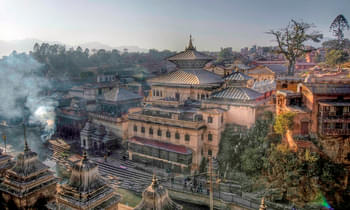
Pashupatinath Temple
Hinduism is the most widely followed religion in Nepal. The country has embraced this religion and respects it with several sacred places of interest, including Pashupatinath Temple. The sacred place is considered one of the most important temples in the world. The complex is on UNESCO World Heritage Sites’ list for decades. The extensive Hindu temple has a sprawling collection of images, inscriptions, ashrams, temples and images. Highlights:There are 12 Jyotirlinga in India and the one in Nepal is the head over this body. The temple has 275 holy abodes of Shiva as well. Temple architecture is quite intriguing as it is built in Nepalese pagoda style of architecture. The wooden rafters are carved to perfection whereas the overall foundation is like cubic constructions. The sacro sanctum here is that of s stone Mukhalinga, or a linga with a face.Location:Kathmandu.Timings:Open 24 hours.Price:USD 4-10.
Read More
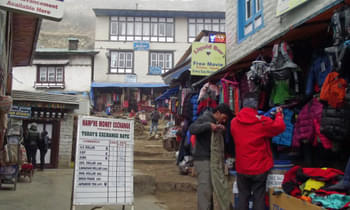
Namche Bazaar
It will leave you truly mesmerized with its absolute view. Most of the people reach this place by their trekking and hiking experience. There are several tea houses which will give you some of the most amazing experiences. Highlights: If you are in Namche on Saturday then don’t forget to visit the local streets which has some of the most amazing Chinese goods.Best months to visit: Spring is the best time to visit Namche Bazaar. Prices: All the hotels in the Namche Bazaar are quite reasonably priced.
Read More
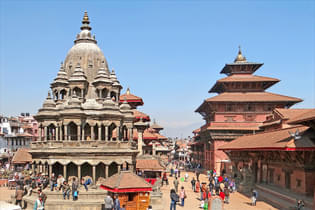
Durbar (Central) Square
Want to travel to an era bygone? Then Durbar Square is the place to be! The Durbar Square Central is a popular place among the tourists. It is well known for the ancient Royal Palace, which faces next to the square. Highlights:The concentrated mass of temples in this region is perhaps one of the biggest highlights of this place. It is here that you will find a stunning display of Newari architecture. The temple construction here happened from 14thto 18thcenturies, especially during the reign of King Siddhinarsingh Malla. The Durbar Central Square is one of the perfect places where you can wander around for hours, looking at magnificent buildings.Location: The Durbar Square is located in Patan Nepal.Timings: Entry is from 7 am to 7 pm. Price: For foreign travelers, the prices are from USD 3-8.
Read More
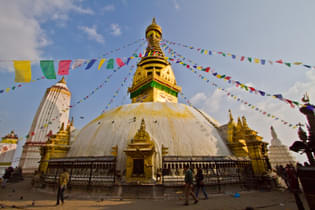
Swayambhunath Stupa
Swayambhunath stupa is an ancient religious architecture located atop a conical wooden hill in the Kathmandu valley. This golden spire is one of the most ancient and holiest of all shrines in the region. The temple complex is revered by both Buddhists and Hindus. Stupa located inside the Swayambhunath complex, includes several other shrines and temples. According to the Gopalarajavamsavali, the complex is believed to have been founded by King Vrsadeva, the great-grandfather of King Manadeva in 464-505 CE. Highlights:Eyes of Buddha are painted on the cubical structure sitting atop the dome. Pentagon Toran are present above each of the four edges and have statues engraved on them. Pilgrims require to climb 365 steps in order to reach the stupa.Location:Kathmandu Valley, Nepal.Timings:Everyday 07:00 am - 12:00 pm.Price:USD 3 per person
Read More
More Kathmandu Attractions
Boudhanath (Stupa), kathmandu
Chitwan National Park, kathmandu
Guhyeshwari Temple, kathmandu
Kumari House, kathmandu
Pilgrims Book House, kathmandu
Taleju Bell, patan
Temples In Kathmandu
Kathmandu Durbar Square
Bhaktapur, kathmandu
Dakshinkali Temple Nepal, kathmandu
National Museum Of Nepal, kathmandu
Pashupatinath Temple, kathmandu
Lobuche East Peak Climbing, kathmandu
Temples, kathmandu
Mount Parchamo, kathmandu
Ebc,Gokyo And Cho La Pass, kathmandu
Ashok Binayak, kathmandu
Helambu Trek, kathmandu
Chhauni Museum, kathmandu
White Monastery, kathmandu
Thamel, kathmandu
Swayambhunath Stupa, kathmandu
Boudhanath (Stupa), kathmandu
Chitwan National Park, kathmandu
The Casino Royale, kathmandu
Rara Lake Trek, kathmandu
Royal Botanical Gardens, kathmandu
Monasteries In Kathmandu
Kathesimbhu Stupa, kathmandu
Kirtipur, kathmandu
Casino Royale, kathmandu
Durbar Square, kathmandu
Asan, kathmandu
Guhyeshwari Temple, kathmandu
Kumari House, kathmandu
Kopan Monastery, kathmandu
Monasteries, kathmandu
Shivapuri Nagarjun National Park, kathmandu
Annapurna Base Camp Trek, kathmandu
Nagarkot, kathmandu
Three Passes Trek, kathmandu
Khawalung Monastery, kathmandu
Pilgrims Book House, kathmandu
Sagarmatha National Park, kathmandu
Kyajo Ri Climbing, kathmandu
Tamang Heritage Trail !, kathmandu
Island Peak Climbing, kathmandu
Dhaulagiri Circuit Trek, kathmandu
Everest Base Camp Trekking, kathmandu
Narayanhiti Palace, kathmandu
Hanuman Dhoka, kathmandu
Garden Of Dreams, kathmandu
Pashupatinath, kathmandu
Taudaha Lake, kathmandu
Temples In Kathmandu
Kathmandu Durbar Square
Bhaktapur, kathmandu
Indra Chowk, kathmandu
Saribung Peak Climbing, kathmandu
Shechen Monastery, kathmandu
Pharchamo Peak, kathmandu
Everest High Passes And Peaks, kathmandu
Rolwaling Trek, kathmandu
Phulchoki, kathmandu