

Quick Jumplinks to Navigate
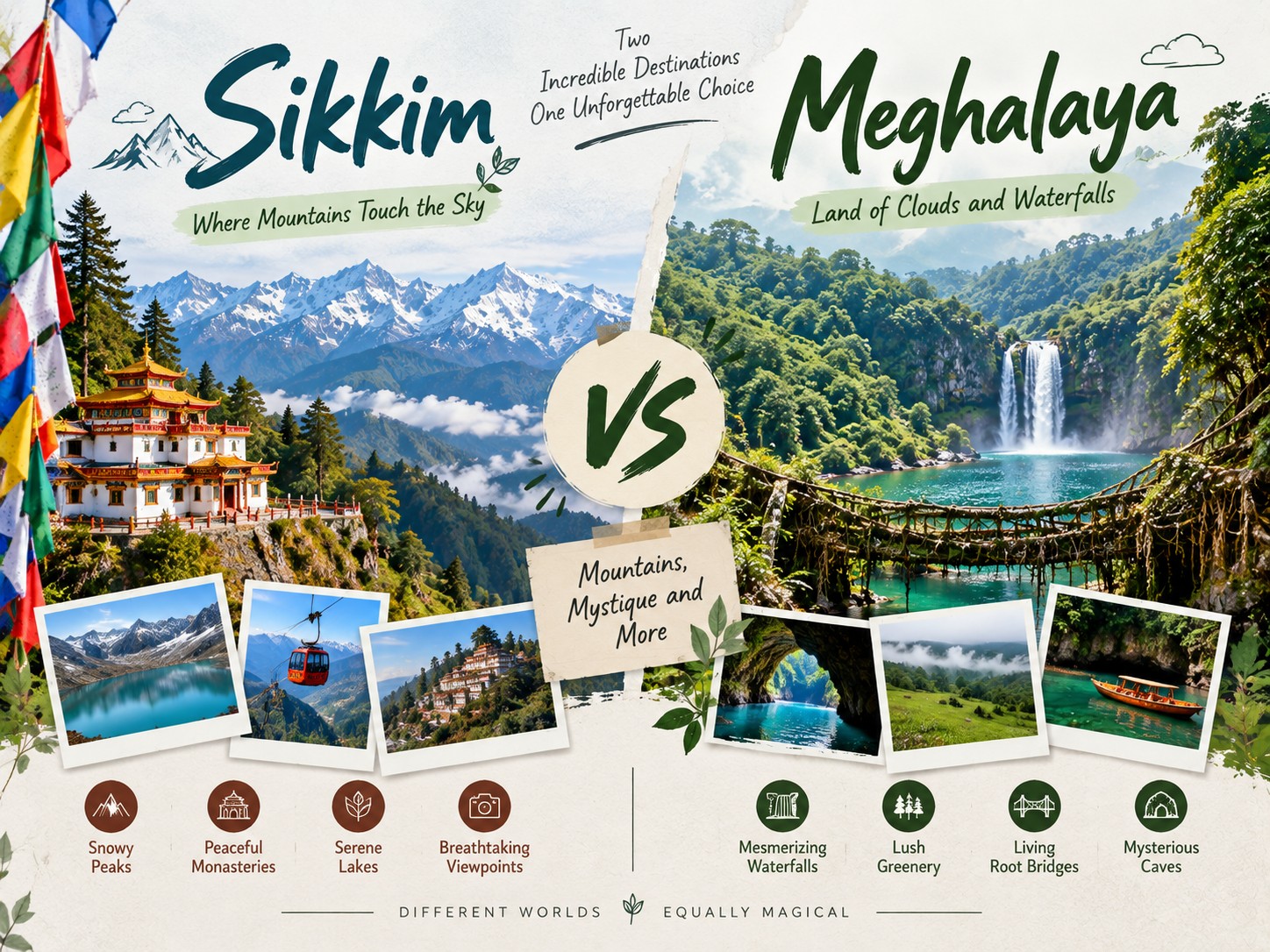
Usually right after you’re scrolling through your instagram and the algorithm keeps showing you mountains in one set of photos and waterfalls so fascinating in another. Sikkim or Meghalaya is the question that arises next.
Both states can be packed more into a week than most countries are managed in a month, yet the trips feel nothing alike once you land. Sikkim takes its way through Gangtok and then into Himalayan passes above 17,000 feet, while Meghalaya stays serene and greener, built around living root bridges and rivers so clear they look edited.
This detailed comparison breaks down cost, weather, permits and pace: the details that actually decide which trip suits you and which one waits for next year. Whether you’re leaning toward a Sikkim tour package for high-altitude lakes or Meghalaya tour packages for waterfalls and root bridges, the numbers below should make the choice a lot easier.
Sikkim vs Meghalaya: Quick Comparison
If you only have two minutes, this table is your quick go through answer to the questions that are surrounding your mind about both the destinations. It lines up Sikkim and Meghalaya across the factors from budget and season to how much planning each state demands.
| Parameter | Sikkim | Meghalaya |
| Best For | High-altitude lakes, monasteries and a proper Himalayan feel, perfect for couples chasing dramatic backdrops, families wanting a slower pace, and groups, up for an adventure-heavy circuit. | Waterfalls, living root bridges and an easy, green escape, ideal for couples for quiet riverside evenings, families who prefer shorter drives, and groups drawn to cliff jumps and caves. |
| Starting price of the tour | From INR 20,000 (6-Days/5-Nights) | From INR 17,000 (4-Days/3-Nights) |
| Accommodation | 3 to 4-star hotels in Gangtok and Pelling, wooden lodges in Lachen and Lachung | Hotels in Shillong and Cherrapunji, riverside camps in Dawki |
| Ideal Trip Duration | 6 to 7 days (Gangtok, Lachen, Lachung circuit) | 6 to 7 days (Shillong, Cherrapunji, Dawki circuit) |
| Best Time to Visit | March to May and October to December | October to February, or July to September for waterfalls at full flow |
| Ease of Travel | Fly into Bagdogra, then 4 to 5 hours by road, permits needed for high-altitude zones | Fly into Guwahati, then 2.5 to 3 hours by road, no permits needed for most areas |
| Verdict | Choose Sikkim for Himalayan drama and high-altitude lakes | Choose Meghalaya for waterfalls, root bridges and easier logistics |
Thrillophilia offers well-curated Sikkim and Meghalaya tour packages at the best prices, backed by on-ground support. For travellers who want to skip the usual crowded spots and repetitive photo stops that are crowding all over your social media feed, Thrillophilia’s offbeat packages are also available for both the states. With strong local coordination and years of expertise, these personalized itineraries bring you hassle-free experiences, so you don’t have to do any of the legwork yourself.
A Closer Look at Sikkim vs Meghalaya trip
Numbers play their role while deciding the budget of your trip but knowing about the places helps you decide the experiences that you want to seek from the trip.
Sikkim
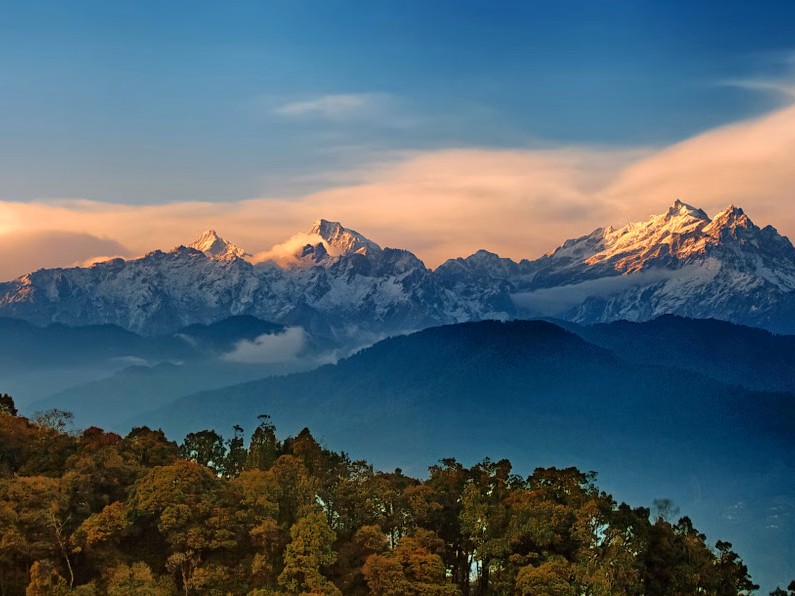
Sikkim is the state where the Himalayas stop being a backdrop and become the itinerary. It is also India’s first fully organic state, home to Kangchenjunga, the world’s third-highest peak, and to more than 200 monasteries scattered across its four regions.
Gangtok sitting at 5,500 feet works as the base for everything else, but the real draw is what lies beyond it. Tsomgo Lake at 12,400 feet, Nathu La Pass on the old Indo-China trade route, and Gurudongmar Lake, one of the highest lakes in the world at over 17,000 feet.
It works particularly well for a Sikkim family tour with kids or aged parents, since the East and South Sikkim circuits stay under 6,000 feet and skip the permit paperwork entirely.
Travellers pick Sikkim when they want altitude, snow, and a slower, more deliberate pace built around acclimatisation days in Gangtok before heading north. Most travellers fly in via Bagdogra, and Sikkim tour packages from Delhi are among the most booked simply because of the direct flight connectivity.
Meghalaya
Meghalaya carries a different serenity all together during monsoons as it trades altitude for rainfall, and it wears that reputation proudly. Cherrapunji and Mawsynram are officially among the wettest places on Earth, and that same rain is what feeds the state’s waterfalls, caves and the astonishing living root bridges grown by the Khasi tribe over generations.
Mawlynnong is known as Asia’s cleanest village, Nohkalikai Falls is one of India’s tallest plunge waterfalls, and Krem Mawmluh in Cherrapunji is one of the longest caves on the subcontinent, sitting on UNESCO’s tentative heritage list.
Families gravitate toward a Meghalaya family tour built around Shillong, Elephant Falls and Mawlynnong’s flat, walkable trails. Meghalaya suits travellers who want green, misty landscapes without the altitude concerns, and its no-permit access makes it genuinely easier to plan than most Northeast circuits.
The distance being short between Kolkata and Guwahati, Meghalaya tour packages from Kolkata work out especially convenient given the short flight to Guwahati.
Sikkim vs Meghalaya: Detailed Comparison
Picking between these two destinations comes down to what kind of holiday you want. The sections below compare what matters most once you get past the flight search.
Cost & Budget
The Sikkim vs Meghalaya cost gap is smaller than most people expect, but it does exist, and it comes down to permits, vehicle type and how remote your route gets.
| Cost Factor | Sikkim | Meghalaya |
| Starting Package Price | INR 20,000 (6-Days/5-Nights) | INR 17,000 (4-Days/3-Nights) |
| Accommodation per Night | INR 2,000 to 12,000+ | INR 1,500 to 10,000+ |
| Meals per Day | INR 800 to 6,000+ | INR 500 to 4,000+ |
| Internal Transport | INR 1,000 to 10,000+ | INR 800 to 8,000+ |
| Best For | Mid-range and premium travellers who want permits, guides and 4WD transfers sorted | Budget-conscious and first-time Northeast travellers |
Sikkim tends to cost more once North Sikkim joins the itinerary, because of the Protected Area Permits and mandatory four-wheel-drive vehicles on the Lachen and Lachung routes. Meghalaya stays cheaper overall, with no permit system and sedans working fine on most routes. If cost is the only factor, Thrillophilia’s Sikkim budget tour packages start lower than most people expect for a 6-day circuit. Every tour package of Thrillophilia, be it Meghalaya or Sikkim, is priced to fit your budget tier without cutting corners on experience, backed by years of operating tours across both states and the local expertise to match.
Experiences and Places
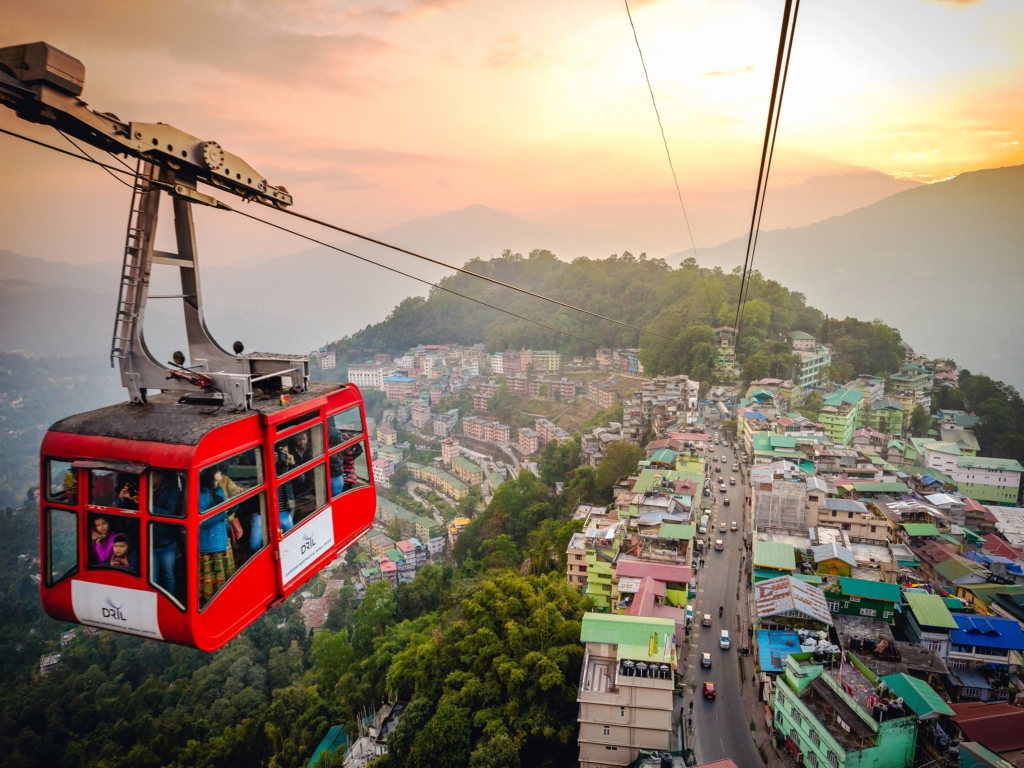
Sikkim and Meghalaya offer two uniquely distinctive and alluring experiences that rarely overlap, which is exactly why so many travellers eventually do both.
Sikkim’s highlights:
- Gurudongmar Lake, one of the highest lakes in the world, with a full-day excursion from Lachen.
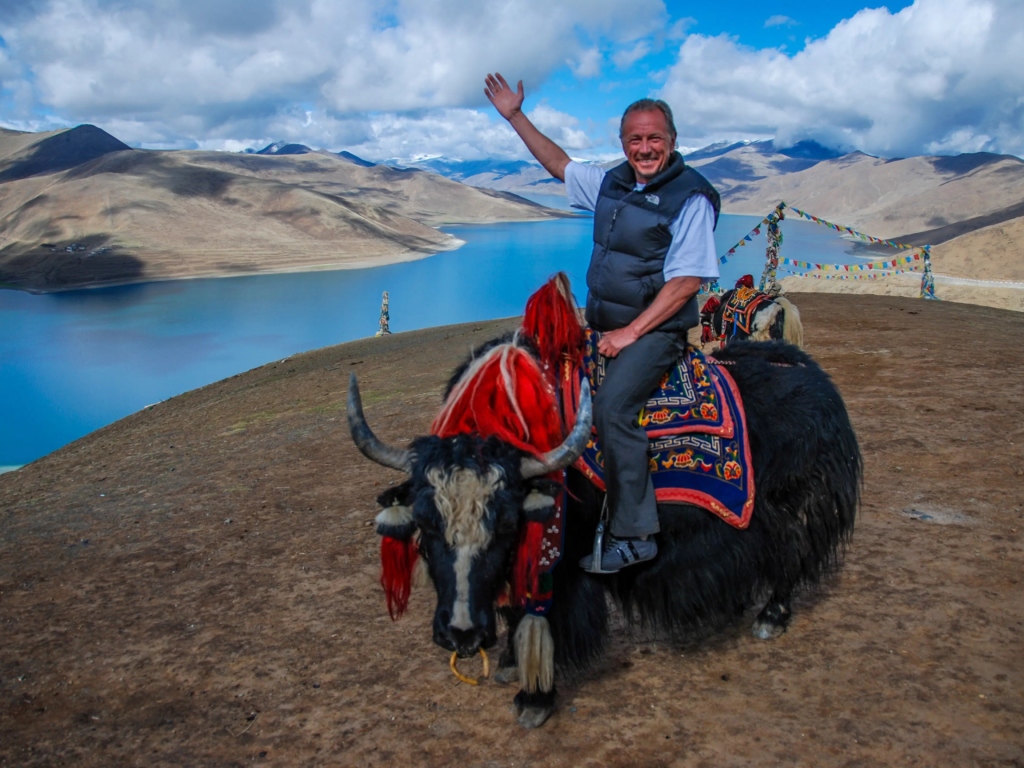
- Tsomgo Lake, where a short cable car ride and a yak ride are both part of the experience.
- Nathu La Pass, an actual stretch of the old Silk Route sitting on the Indo-China border.
- Yumthang Valley, in full rhododendron bloom between March and May.
- The Goechala trek, for travellers chasing close-up views of Kangchenjunga.
Meghalaya’s highlights:
- The Double Decker Living Root Bridge at Nongriat, reached after a 3,000-plus step trek.
- Dawki’s Umngot River, where the water is clear enough that boats appear to float in mid-air.
- Mawlynnong Village, for a slow walk through Asia’s cleanest settlement.
- Shnongpdeng, for cliff jumping, kayaking and riverside camping.
- Krem Mawmluh and Mawsmai Cave, for anyone curious about limestone geology.
Thrillophilia ensures that every experience added to your itinerary is well executed, from booking the activities and arranging the logistics through to the completion of the experience. They take care of everything.
A Sikkim group tour works well for adventure-heavy groups doing the Silk Route or a Nathula bike run, while friends chasing cliff jumps, caves and kayaking tend to pick a Meghalaya group tour instead. Both work brilliantly for a bigger crew, just for very different reasons.
Weather & Best Time to Visit
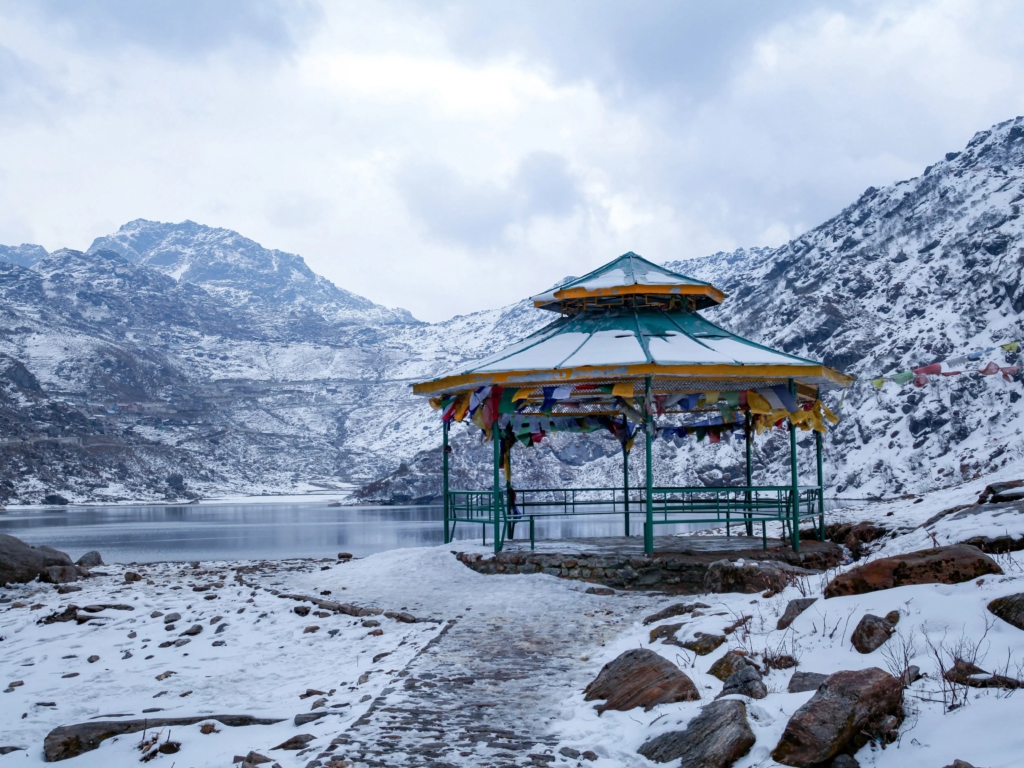
Sikkim vs Meghalaya weather could not be more different, and that statement alone might settle the debate for you. So when people ask about the Sikkim vs Meghalaya best time to visit, the honest answer is that it depends entirely on which version of Northeast India you want to see.
| Season | Sikkim | Meghalaya |
| Spring/Summer (Mar to Jun) | 10 to 25°C, rhododendron blooms, clear Kangchenjunga views | 14 to 25°C, pleasant, light pre-monsoon showers from May |
| Monsoon (Jun to Sep) | Heavy rain, frequent landslides on NH10, North Sikkim often cut off | Some of the heaviest rainfall on Earth, but waterfalls at their absolute peak |
| Autumn/Winter (Oct to Feb) | 5 to 20°C, the clearest skies of the year, snow above 8,000 feet in Jan and Feb | 5 to 20°C, widely considered the best overall season, dry and clear |
October to December works well for both. If you prefer snow and mountain views then stretch into March to May for Sikkim. If you want to explore Meghalaya’s Elephant falls, seven sister falls and other waterfalls at their peak then June to September delivers the best desired experience.
Weather here can turn without warning, so Thrillophilia’s on-ground teams track conditions closely and adjust itineraries on the spot, swapping in alternate routes or experiences if a pass closes or a trek turns unsafe, so a sudden shift doesn’t cost you a day of your trip.
Food & Vegetarian Meal Options Availability
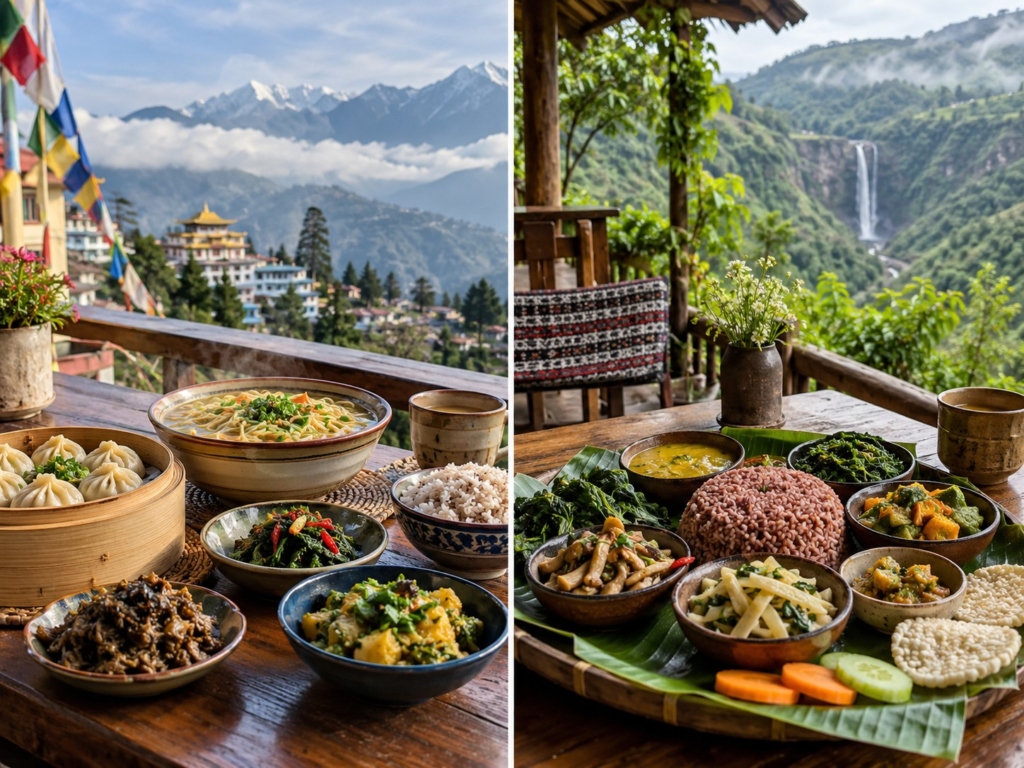
Sikkim
- Cuisine: strong Tibetan and Nepali influence
- Dishes to try: momos, thukpa, gundruk
- Where to eat in Gangtok (MG Marg): Taste of Tibet for momos and thukpa, Parivar Restaurant for a mixed Indian, Chinese and Tibetan vegetarian menu, Masala – The Restaurant for an all-vegetarian spread, and The Dragon Wok for Jain food, served here as a dedicated Rasoi Thali
- Lachen and Lachung: far more limited, with most meals coming straight from your hotel kitchen, so flagging dietary needs before you leave Gangtok genuinely helps
Meghalaya
- Cuisine: smoked meats and rice-based Khasi cooking
- Dishes to try: Jadoh and other traditional Khasi preparations
- Where to eat in Shillong (Police Bazar): Trattoria for authentic Khasi dishes, Bistro Vegetarian and Jiva Veg for pure vegetarian North and South Indian food, with Jain options available at select vegetarian kitchens in the area
- Dawki and Shnongpdeng riverside camps: vegetarian choices thin out considerably, much like Sikkim’s North circuit
Thrillophilia’s years of operating tours across both Sikkim and Meghalaya mean the on-ground teams already know which hotels and kitchens in Lachen, Lachung, Dawki and Shnongpdeng can reliably serve Jain and vegetarian meals, and pre-arrange this before you arrive. So instead of spending your trip negotiating with hotel kitchens or hunting for a meal that fits your diet, everything is sorted in advance, leaving you more time for the actual experience.
Getting Around
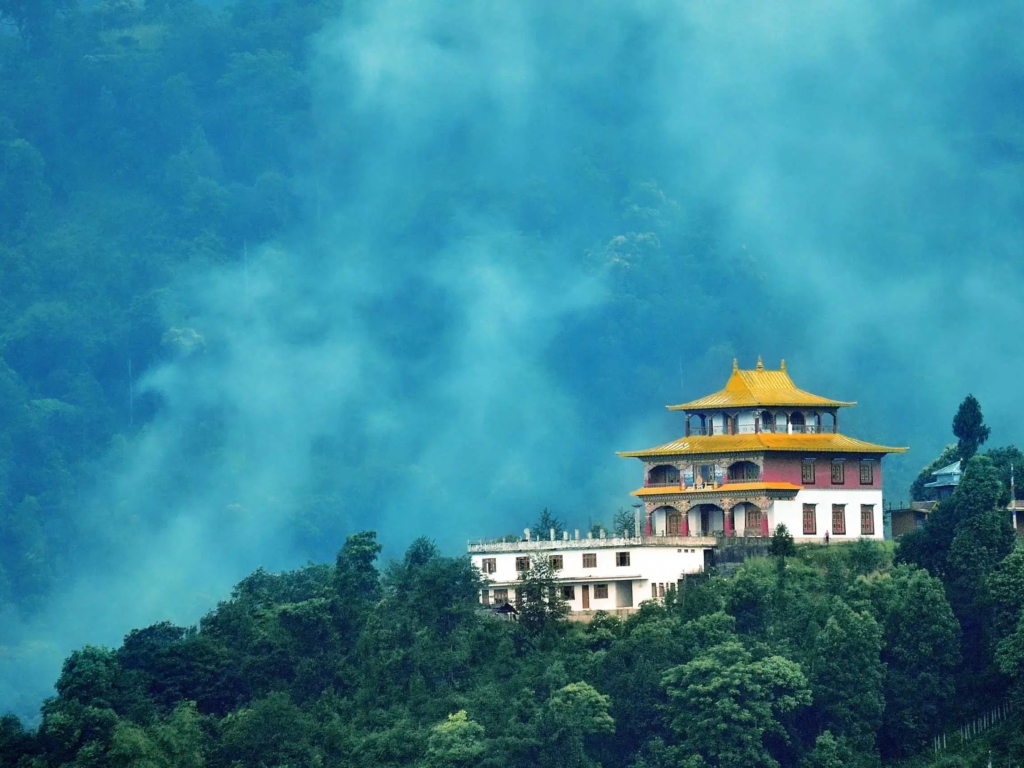
Sikkim
- Mountain roads are narrow and winding, and self-drive is rarely a good idea.
- North Sikkim specifically requires a 4WD SUV rather than a regular sedan.
- Shared jeeps and private taxis handle most of the movement between towns
Meghalaya
- Noticeably easier to navigate independently
- Roads to Cherrapunji and Dawki are well-paved, and sedans work fine for most of the state
- Self-drive or scooter rentals are realistic around Shillong
- Most highlights sit within a two to three hour radius of each other
If ease of travel is the priority, Meghalaya is the destination one can go for. Sikkim rewards the extra planning, but only once you are standing at Gurudongmar Lake looking at a view Meghalaya cannot offer.
Thrillophilia takes the planning part off your hands either way, arranging the right vehicle for each route, from 4WD SUVs for North Sikkim to sedans for Meghalaya’s easier roads, and handling permits and drivers in advance, so the logistics never get in the way of the experience.
Sample Itinerary & Ideal Trip Duration
A 6-day trip is the most booked duration for both the states, though the pace and experience inside those six days looks very different.
Sikkim: 6-Day Gangtok and North Sikkim Itinerary
For a trip that covers both the capital and the high Himalayan passes, the 6-Days and 5-Night Sikkim tour itinerary is one of the ideal duration, splitting time between Gangtok’s acclimatisation stop and the high-altitude lakes further north, in the spirit of the Getaway to Sikkim route. Getaway to Sikkim with FREE Yak Ride is one of the most booked 6-day Sikkim itineraries.
- Day 1: Arrive and settle into Gangtok
- Day 2: Tsomgo Lake and Nathu La Pass
- Day 3: Transfer to Lachen
- Day 4: Gurudongmar Lake, onward to Lachung
- Day 5: Yumthang Valley, back to Gangtok
- Day 6: Departure
Meghalaya: 6-Day Shillong, Cherrapunji and Dawki Itinerary
For a trip that covers waterfalls, root bridges and rivers without feeling rushed, the 6-Days and 5-Nights Meghalaya tour itinerary works well for the travellers, splitting time between Shillong’s sightseeing and Cherrapunji and Dawki’s natural highlights, in the spirit of the Holidays in Meghalaya route. Holidays in Meghalaya | FREE Visit to Elephant Falls is one of the most booked 6-day Meghalaya itineraries.
- Day 1: Arrive in Shillong
- Day 2: Elephant Falls and Shillong Peak
- Day 3: Cherrapunji’s waterfalls
- Day 4: Nongriat’s living root bridge trek
- Day 5: Dawki’s Umngot River and Mawlynnong Village
- Day 6: Back to Guwahati and departure
Who Should Choose Sikkim or Meghalaya?
If you are still stuck on Sikkim vs Meghalaya which is better for your specific trip, this should help settle it.
| Choose Sikkim If… | Choose Meghalaya If… |
| You want high-altitude lakes and snow-capped views | You want waterfalls, caves and green valleys |
| You do not mind arranging permits in advance | You want to travel without permit paperwork |
| You have a mid-range to premium budget | You want more budget flexibility |
| You enjoy monasteries and Himalayan culture | You enjoy trekking to living root bridges |
| You are planning a high-altitude honeymoon or a snow-chasing getaway | You want an easier, family-friendly circuit |
Thrillophilia builds every itinerary around any destination you choose, using AI according to the traveller’s pace, group size, budget and preferences to shape a day-by-day plan for the on-ground accuracy.
Final Verdict: Sikkim vs Meghalaya
So, Sikkim vs Meghalaya, which one to choose? If you want to explore the beautiful snow-capped peaks, high-altitude lakes and a proper Himalayan expedition feel, then you can go for Sikkim as your next Northeast India tour destination. If waterfalls, living root bridges and a gentler, greener pace sound more like your holiday, Meghalaya is the better call.
Plenty of travellers end up doing both anyway, and Thrillophilia offers multi-destination tours in which you can explore both but at a reasonable budget tier with efficient and hassle free on-ground experiences. Whichever destination you decide for your next tour, start with Thrillophilia’s personalized itineraries and let the permits, transfers and packing lists get sorted before you land.
Why Choose Thrillophilia for Your Sikkim or Meghalaya Trip?
Deciding where to go is the easy part. Making the trip actually happen, especially somewhere as unpredictable as the Northeast, is where things get tricky. That’s where years of on-ground experience count.
Thrillophilia’s destination experts know these routes well enough to help you pick the right pace and sort the permits, with trusted local partners in Gangtok, Lachen, Lachung, Shillong, Cherrapunji and Dawki who make sure the plan holds up once you’re actually there.
Thrillophilia’s Sikkim tour packages are rated 4.6 by over 21,000+ verified travellers, and Meghalaya tour packages are rated 4.5 out of 5 by over 15,300+ verified travellers, alongside recognition as Best Leisure Tours Brand at The Economic Times Travel and 3 million+ happy customers rated 4.8/5 across TripAdvisor and Google.
Maybe you want an extra day at Gurudongmar Lake, a slower walk through Nongriat’s root bridges, or a trip that stitches Nathu La and Dawki together into one long circuit. Whatever the shape of it, the itinerary bends to fit you, not the other way round. Permits, transfers and hotels get sorted in the background, so all that’s left for you to do is show up and take it in.
FAQs
Meghalaya usually works better for first-timers since it needs no permits and connects through Guwahati with shorter transfers. Sikkim rewards a second visit once you are ready for altitude, permits and a slower Himalayan pace.
A 6-day Sikkim trip starts around INR 20,000 per person, while a similar Meghalaya trip starts closer to INR 17,000. The Sikkim vs Meghalaya cost gap mostly comes from permit fees, mandatory 4WD transfers up north, and higher meal costs at altitude.
October to December works well for both states, with clear skies and comfortable temperatures. Add March to May if Sikkim’s snow and Kangchenjunga views matter more, or aim for June to September if Meghalaya’s waterfalls at full flow are the priority.
Both work beautifully. Sikkim suits couples chasing mountain views and a quieter high-altitude romance. Meghalaya suits couples drawn to waterfalls, root bridge treks and riverside camps in Dawki. It comes down to snow peaks or green valleys.
Not comfortably in one stretch, since they sit on opposite ends of the Northeast with different gateway airports, Bagdogra for Sikkim and Guwahati for Meghalaya. Most travellers treat them as two separate trips, though both pair well with Darjeeling or Kaziranga as an extension.