

Quick Jumplinks to Navigate
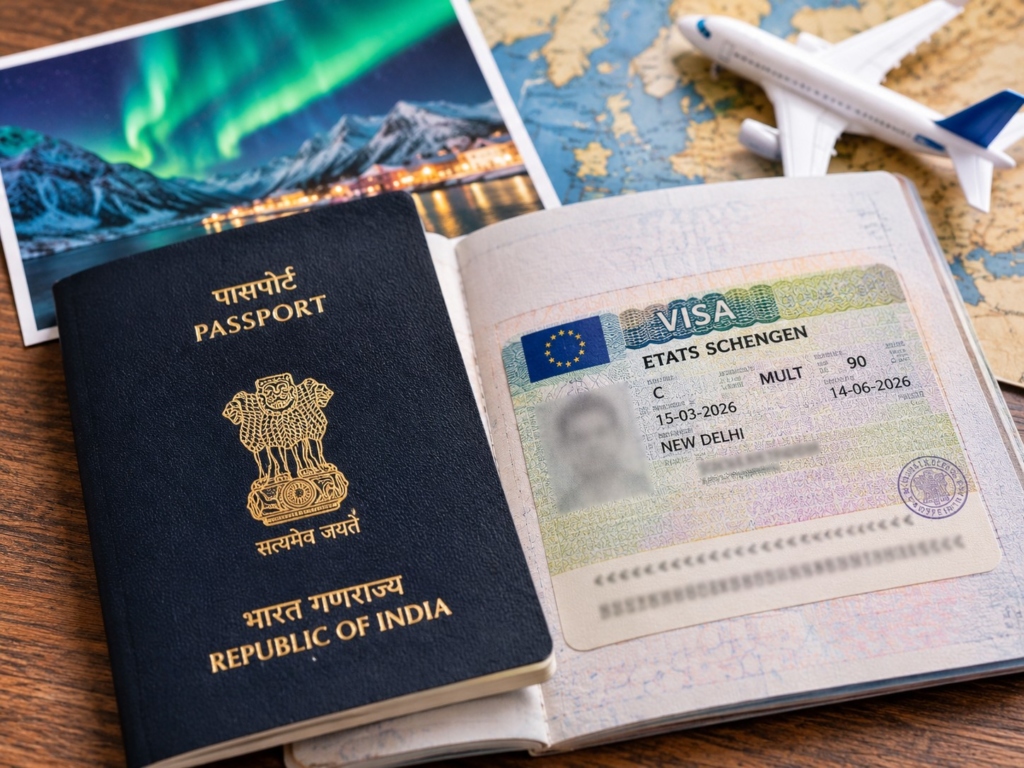
If you’re planning a Northern Lights trip to Europe but aren’t sure how the Schengen visa works, this guide is for you. The most important things to understand are which country you should apply to, what documents you need, and how early to begin the process. If your trip is entirely based in one Schengen country, you should apply through that country’s visa process. If you plan to visit multiple Schengen countries, apply through the country that is your main destination, determined by the purpose of your visit or length of stay. If no main destination can be identified, apply through the country whose external Schengen border you intend to cross first.
For a Northern Lights trip, understanding Schengen visa regulations matters because travellers often combine destinations such as Norway, Finland and Iceland to improve their chances of seeing the aurora. However, visiting multiple countries does not mean you need a separate Schengen visa for each one if your visa is valid for the countries and dates you intend to visit.
While the process can seem complicated for first-time travellers, Thrillophilia’s Europe Operations team with 20+ destination experts can help travellers understand the application requirements, organise their itineraries and prepare for the documentation process. Our internal booking data suggests that 95% of the travellers who opted for our experts’ guidance for the visa application process enjoyed a seamless experience with minimal to no delays, as per their post-trip feedback. This guide explains how the visa works, when to apply, what to prepare, and how to plan around the seasonal timing of a Northern Lights holiday, with practical operational insights to ensure a seamless pre-trip visa application process.
How Does a Schengen Visa Work for a Northern Lights Trip?
A short-stay Schengen visa generally allows eligible travellers to visit countries within the Schengen Area for up to 90 days in any 180-day period, subject to the visa’s validity, permitted duration of stay and entry conditions. Norway, Finland and Iceland are all part of the Schengen Area, so travellers combining these destinations or focusing on a specific country can generally use one valid Schengen visa for the trip.
Before applying, our experts recommend considering these three questions to determine the correct application country and understand how the rules apply to your itinerary.
Am I Visiting Only One Northern Lights Destination?
If your trip focuses on one Schengen country, the process is relatively straightforward. You should apply through the country where you intend to spend your trip.
For example, if you are planning a 7-day Iceland trip covering Reykjavík, Akureyri, and other Arctic destinations, you would ordinarily apply through Finland’s visa application process applicable to your place of residence.
The same principle applies if you plan to visit Tromsø and other destinations entirely within Norway, or travel around Iceland to look for the aurora. Your application should reflect your actual itinerary, accommodation arrangements and intended activities.
Am I Visiting Multiple Northern Lights Destinations?
If your itinerary combines two or more Schengen countries, you should ordinarily apply through the country that constitutes your main destination. This is determined by the length or purpose of your stay, not simply by the country where you first land.
For example, if you are planning an 8-day itinerary for a Norway-Finland trip, with 5 days in Norway and 3 days in Finland, Norway would ordinarily be the main destination, assuming no other purpose of travel changes that assessment.
This is particularly relevant for Northern Lights travellers who combine Tromsø in Norway with a trip to Rovaniemi in Finland. Even if you plan to see the aurora in both countries, the country where you spend the longest time will usually determine where you should apply, unless the purpose of the trip establishes a different main destination.
Is There No Identifiable Main Destination?
If you are spending equal amounts of time in multiple Schengen countries and no particular purpose establishes a main destination, the first-entry rule applies.
For example, suppose you plan an 8-day trip covering both Finland and a trip to Norway, spending 4 days in each country, with no overriding purpose that makes either country the main destination. In this case, if you enter the Schengen Area through Norway first, you would ordinarily apply through Norway.
However, it is important to remember that the first-entry rule applies only when a main destination cannot be determined. Choosing a country because it has an earlier appointment or a more convenient application process does not change which consulate is responsible for your application.
Thrillophilia’s Europe tour packages are all well-equipped with comprehensive visa assistance. This means that whether you’re planning a solo trip or a large group trip, all involved travellers can opt for visa application guidance from our experts to help with documentation checks, itinerary formatting, and checking for any errors to avoid unnecessary delays and hold-ups.
When Should You Apply for a Schengen Visa for a Northern Lights Trip?
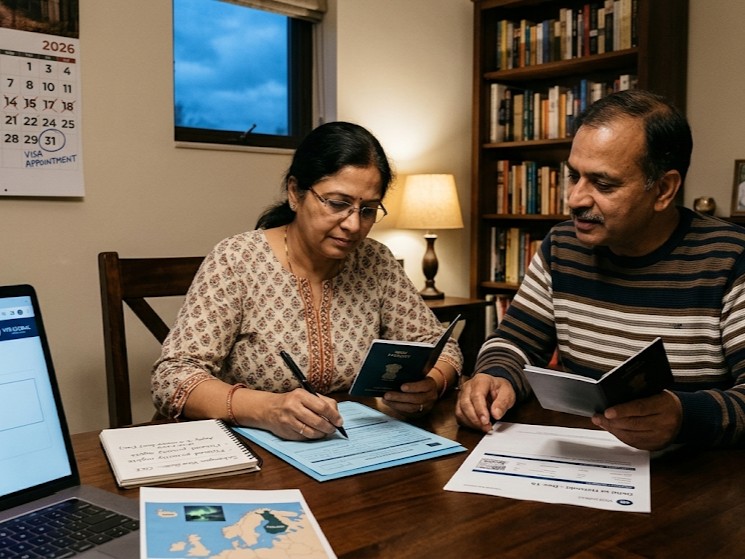
Timing is especially important for Northern Lights holidays because many travellers plan around the winter season, when demand for flights, accommodation and aurora excursions can be high.
According to the European Commission, you can generally submit a Schengen visa application up to 6 months before your intended trip and at least 15 calendar days before departure. The normal processing period is 15 calendar days, but it can extend to 45 calendar days if further examination or additional documents are required. Appointment availability and passport transportation can add to the overall timeline.
Thrillophilia’s internal booking data indicates that 85% of our travellers who applied for their Schengen visa at least 3 months before their intended departure dates enjoyed a more relaxed experience. This is because a 3-month window offers enough time to account for any itinerary changes or documentation rechecks as suggested by the consulate without compromising on the trip experience.
Our experts further recommend that for winter Northern Lights trips, you should apply at least 5-6 months in advance to account for the peak travelling window.
| Planning stage | What to do | Why it matters |
| Several months before travel | Decide your main destination, route and approximate dates | Helps establish the correct country for your application |
| As early as the application window allows | Check appointment availability and current consular requirements | Winter travel demand can make appointment planning important |
| Before submitting the application | Organise accommodation, travel plans, insurance and financial documents | Helps ensure your supporting documents match your itinerary |
| At the appointment | Submit the required documents and biometrics, where applicable | The consulate needs the required information to assess the application |
| While waiting for a decision | Monitor application updates and respond promptly if additional documents are requested | Further scrutiny can extend processing time |
| Before departure | Check your visa validity, permitted stay and entry conditions | A visa approval does not automatically guarantee entry |
These are practical planning stages, not guaranteed processing deadlines. You should not assume that submitting an application 15 days before departure will leave sufficient time for every appointment, document request or courier delay.
What Documents Do You Need for a Schengen Visa for a Northern Lights Trip?
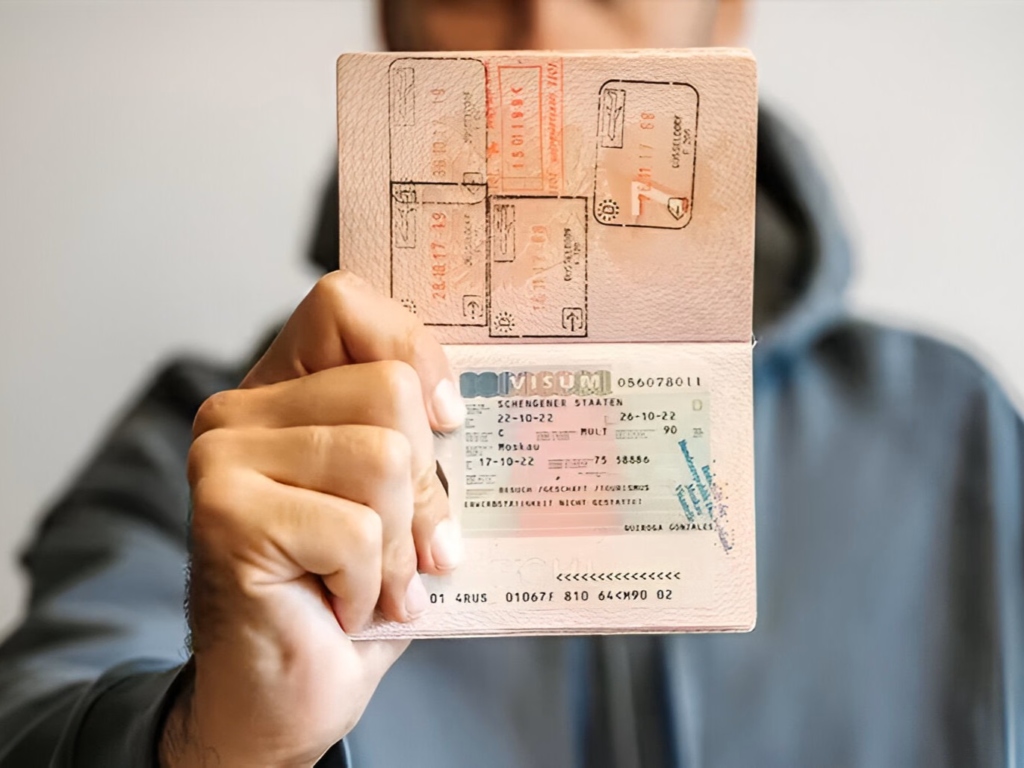
Your documents should clearly show the purpose of your visit, your travel arrangements, your ability to fund the trip and your intention to leave the Schengen Area before your authorised stay expires. Exact requirements can vary by consulate and applicant circumstances, so always use the current checklist for the country responsible for your application.
Here are the key documents to prepare:
- Passport Validity & Buffer: Your passport must be issued within the last 10 years and remain valid for at least 3 months beyond your planned departure date from the Schengen Area. It must also contain a minimum of 2 entirely blank pages for the visa sticker and stamps.
- Visa Application Form & Photo Specs: The form must be fully completed and signed. You must provide two identical, recent biometric photographs (35mm x 45mm) taken within the last 6 months against a light, solid background, strictly adhering to ICAO biometric standards.
- Detailed Travel Itinerary: Provide a complete round-trip flight reservation or proof of transportation (such as train or bus tickets). The itinerary must explicitly lay out your intended route, travel dates, and the exact duration of stay in each country.
- Proof of Accommodation: Submit confirmed hotel bookings, a rental agreement, or an official invitation/sponsorship letter from a host residing in the Schengen Zone. The dates on these documents must perfectly align with your flight itinerary.
- Financial Means & Subsistence: You must provide clear evidence of sufficient funds to support your stay, typically verified through official bank statements from the last 3 to 6 months, income tax returns (ITR), or payslips. Requirements vary, as each member country specifies a minimum daily amount required per traveller.
- Employment & Ties to Home Country: To establish an “intention to return to India”, you must present a valid employment contract, an approved leave sanction letter, business registration documents, or student enrolment papers, depending on your occupational status.
- Travel Medical Insurance Minimums: Your insurance policy must offer a minimum coverage of €30,000 (or equivalent) and must be issued by a consulate-approved Indian insurance provider. It must be valid across all 29 member nations, cover the entire duration of your trip, and explicitly include emergency medical attention, hospitalisation, evacuation, and repatriation of remains.
- Biometrics & Digital Registration: You must appear in person at the visa application centre to provide fingerprints and a digital photograph.
Our experts ensure all these documents are in the required format while assisting with your application process. Our internal data indicates that our travellers enjoy a 98% visa approval rate due to the comprehensive assistance offered by our Europe Operations team.
What Mistakes Should You Avoid When Applying for a Schengen Visa?

Northern Lights trips often involve multiple countries, connecting flights and accommodation booked around specific travel dates. Errors in the visa application can create avoidable delays or additional expenses, especially when your trip is planned for a particular winter period.
Here are some of the common mistakes our destination experts recommend keeping in mind while applying for your short-term Schengen visa:
- Applying through the first country you enter: Apply through your main destination, not automatically your first point of entry.
- Assuming the country where you hope to see the aurora determines the application: The responsible country depends on your itinerary, length of stay and purpose of travel.
- Waiting until the last minute: The standard processing period does not include every appointment or courier delay, and applications can take longer.
- Submitting inconsistent travel documents: Ensure your application form, accommodation details and itinerary reflect the same intended trip.
- Ignoring travel insurance requirements: Check that the policy meets the applicable Schengen conditions.
- Booking non-refundable arrangements too early: Consider the risk of visa delays or refusal before committing to expenses that cannot be recovered.
- Confusing VFS Global with the visa decision-making authority: Follow the official instructions of the consulate responsible for your application.
- Assuming a visa guarantees entry: Border authorities may still check whether you meet the conditions for entry.
Why Choose Thrillophilia for Your Schengen Visa and Northern Lights Trip?
Thrillophilia’s Europe tour packages are rated 4.7/5 by 27,400+ verified travellers across our 12 years of successfully assisting travellers with their Schengen visa application process. But this rating alone isn’t the only reason why you should choose Thrillophilia to help you plan your Europe trip.
Planning a Northern Lights holiday requires coordination between visa preparation, winter travel arrangements and a multi-country itinerary. Thrillophilia’s Europe destination experts help travellers organise their route and understand the visa process applicable to their intended destinations.
- Itinerary-based visa guidance: Helps travellers identify the country responsible for their application based on the planned route, main destination and length of stay.
- Documentation guidance: Helps travellers understand the relevant checklist and organise supporting documents before submission.
- Seasonal trip coordination: Helps align the planned itinerary with the intended winter travel dates, accommodation and aurora experiences.
- Multi-country planning: Helps coordinate routes across destinations such as Norway, Finland and Iceland while keeping the intended itinerary clear.
- Pre-departure assistance: Helps travellers clarify application steps and review travel arrangements before departure.
For first-time travellers and large group trips to Europe, this coordination can make the planning process easier to manage, particularly when the trip includes several Arctic destinations. However, it is important to understand that Thrillophilia cannot guarantee visa approval or influence a consulate’s decision. Visa decisions rest solely with the competent authorities.
Frequently Asked Questions
Apply through the country that is your sole or main destination. If your trip includes multiple countries and no main destination can be determined, apply through the country whose external Schengen border you intend to cross first.
You can generally apply up to 6 months before travel and should submit your application at least 15 calendar days before departure. Since processing can extend to 45 days and appointments or courier services may add time, start preparing several months ahead.
Generally, yes. A valid Schengen visa can cover travel across these countries, provided its validity, permitted stay and number of entries cover your itinerary. You do not ordinarily need a separate Schengen visa for each country.
The standard processing period is usually 15 calendar days after the application reaches the competent consulate. It can extend to 45 calendar days in certain cases, and appointment availability or document transportation may increase the total time required.
You can plan your itinerary in advance, but consider the financial risk before paying for non-refundable flights, hotels or aurora excursions. Follow the relevant consulate’s instructions for travel bookings and supporting documents, and remember that visa approval is not guaranteed.