

Quick Jumplinks to Navigate
Every visit to Hoi An feels special, but if your trip coincides with a full moon night, you’re in for a truly remarkable experience. Hoi An used to be one of Southeast Asia’s busiest trading hubs. Today, it serves as a place where time seems to linger and traditions hold significance. For travelers planning a Vietnam tour from India, Hoi An is often a highlight because of its old-world charm and cultural richness. When the Lantern Festival takes over each month, the whole town lights up – literally and emotionally.
It is not just a photo opportunity, but an opportunity to be a part of something significant, based in local culture, and shared by those around you. Let us walk through what makes the Hoi An Lantern Festival so unique and why you might want to plan your Vietnam trip around it.
What Is the Hoi An Lantern Festival?

The Hoi An Lantern Festival takes place on the 14th night of each lunar month, when the moon is at its fullest. That means there are twelve chances every year to experience it. Unlike annual festivals, this one gives travellers flexibility. You do not need to attend during Tet or plan around peak holiday dates. You simply check the lunar calendar, arrive in town a day or two early, and let the evening unfold.
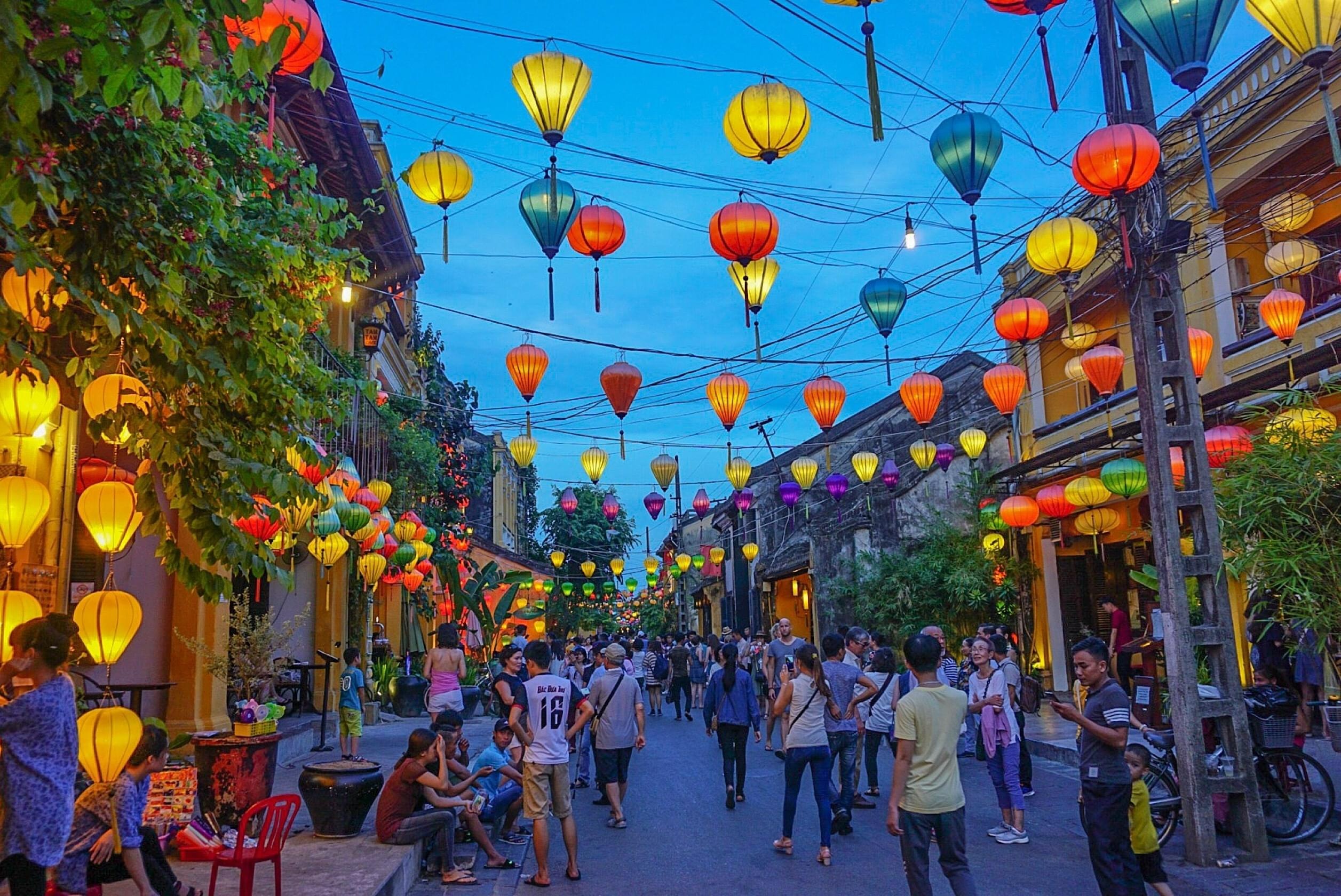
During the festival, the use of electric lights is limited in the Ancient Town. Locals decorate their houses, shops, and temples with colourful silk lanterns. These lanterns are not just decorations; they are part of a long-standing Vietnamese tradition that associates the full moon with good fortune, peace, and spiritual balance.
A Walk Through the Ancient Town

On festival night, motorbikes and cars are restricted from entering the old quarter. This gives you a rare opportunity to walk along the narrow lanes in silence, apart from the sound of chatter, traditional music, and footsteps on stone pavements. The Japanese Covered Bridge, which is one of the top places to visit in Vietnam, is lit entirely by lanterns, while street vendors sell handcrafted items and glowing paper lotus flowers meant for the river.
Shophouses from the 17th and 18th centuries, with yellow walls and wooden balconies, reflect the town’s mix of Vietnamese, Chinese, and Japanese influences. You do not need a map. You just follow the crowd, turn down a quiet alley, or stop for a cup of tea at one of the riverfront cafés. Everything slows down, and that is the point.
The River and Floating Lanterns

One of the evening’s key attractions is the floating lantern ceremony. You can get a little paper lantern with a candle inside from street vendors or local children. These are not expensive and are available all around the riverbanks. Once lit, you gently place the lantern on the Thu Bon River with a wish in mind. No one rushes you, and there is no loud music or countdown. It is a personal moment shared by many people doing the same thing.
This practice is connected to Buddhist customs, symbolising a wish for health, peace, or guidance for departed loved ones. It is also believed that releasing light onto the river brings clarity and lets go of negative energy.
Traditional Music and Street Activities

There is more to the Hoi An Lantern Festival than lanterns. Public squares and temple courtyards turn into performance spaces. You will find plenty happening around the streets – folk musicians playing traditional tunes, artists showing calligraphy skills, and small skits that bring Vietnamese folk stories to life. One of the more unique activities is Bai Choi, a combination of bingo, poetry, and music. Locals of all ages participate, and even visitors are encouraged to join.
If you are lucky, you might catch a traditional lion dance or a brief water puppet show. These performances are not commercial events with high ticket prices. They are part of the festival’s community-driven feel, meant to involve everyone.
What You Should Eat?

Street food is a big part of the experience that lets you indulge in local flavours. On festival night, the streets are filled with vendors selling local dishes that you can try while walking. Hoi An is famous for its trademark dish, cao lau, which combines thick noodles, pork and fresh greens. You will also find white rose dumplings, which are delicate rice paper parcels filled with minced shrimp, and banh mi with a Vietnamese twist. Trying local food is also one of the top things to do in Vietnam, making your cultural journey even more memorable.
For dessert, try Chè. It is a sweet mix of beans, coconut milk, jelly, and fruits served warm or cold. Many food stalls are set up beside the river, where you can eat slowly while watching the lanterns float by. You do not need to reserve anything in advance, just show up hungry and walk until you find something you like.
Why It Is Worth Your Time?

The Hoi An Lantern Festival is not large or loud, as there are no headline acts, fireworks, or fancy installations. Instead, it offers authenticity that is generally harder to find. Everything about it is rooted in local belief, tradition, and participation. You do not just attend the festival. You become part of it, even for just one night.
You could walk the same streets on another night, and it would still be beautiful. But on lantern night, the city feels more connected. It is quiet but not empty. Alive but not chaotic. And it is this very harmony that stays with you long after you have left Hoi An.
Conclusion
What stays with you about the Hoi An Lantern Festival is not the brightness, but the quiet meaning behind it all. Whether you’re putting a lantern on the river or simply taking it all in, there’s a tranquil beauty in how everything blends with each other – light, water, tradition, and the people around you.
If you are planning a trip to Vietnam, keep an eye on the lunar calendar. A full moon night in Hoi An offers more than a photo opportunity. It gives you time to pause, reflect, and join in a tradition that continues to light up hearts as much as it lights up the river.