

Quick Jumplinks to Navigate
Travelling to Japan with parents over 60 takes more planning than a typical trip. The destinations are not the problem. The real challenge is managing the daily pace, understanding how much walking is realistic, and making sure the logistics do not drain your parents before the sightseeing even begins. This guide covers exactly what families need to know when planning Japan with parents (60+): from city selection and transport to medical preparedness and how to approach senior-friendly itineraries.
Thrillophilia’s Japan tour packages offer options across group departures, private tours, and customised family itineraries. When comparing packages, look closely at the number of cities covered, transfer arrangements, hotel locations, and the amount of walking required each day. Popular first-time combinations include Tokyo, Kyoto, and Osaka, while longer itineraries may add destinations such as Hakone or Hiroshima.
Is Japan a Good Destination for Senior Parents?
Japan can work well for parents over 60, but it does require honest planning. Major cities have reliable public transport, and many hotels offer comfortable facilities. The difficulty tends to come from itinerary design rather than the destination itself.
Several things matter more for senior travellers than for younger ones. Large railway stations in Tokyo and Osaka can involve long corridors, multiple levels, and busy transfer points. Historic areas in Kyoto often have slopes, stone paths, and uneven surfaces. Temple and shrine visits may also involve stairs, while some stations and older buildings have limited step-free access. These details can be tiring for travellers with joint pain or mobility concerns.
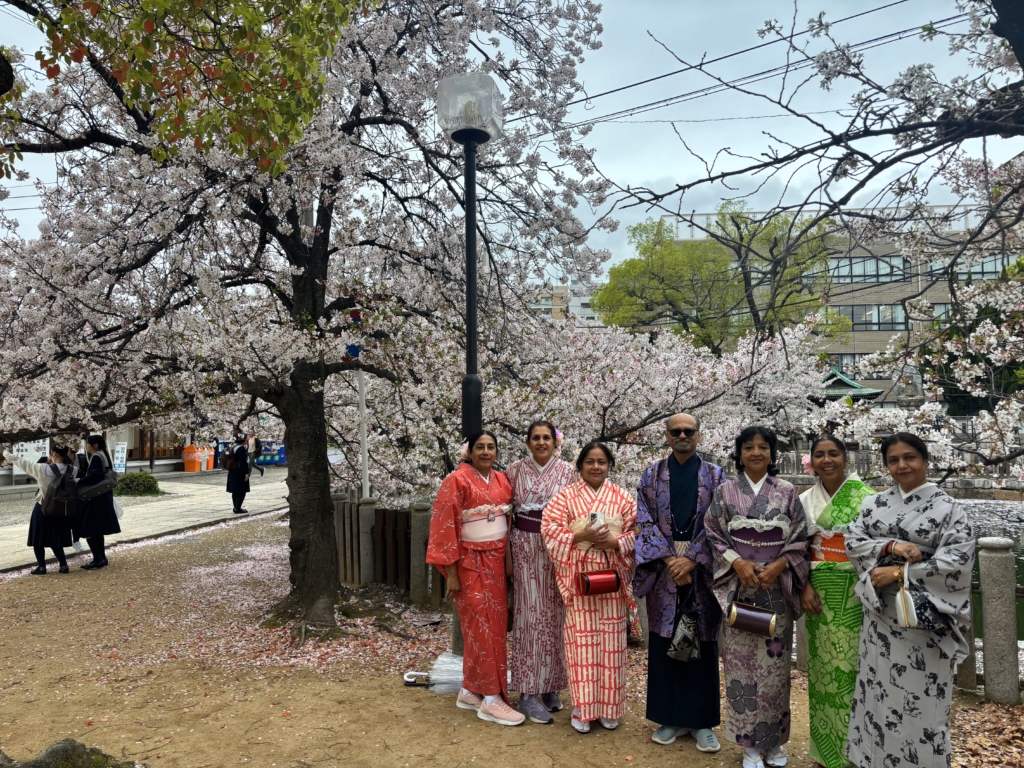
Weather is another real consideration. Summers in much of Japan, particularly in Tokyo, Kyoto, and Osaka, can be hot and humid from June to August. This can affect energy levels significantly for older travellers. Spring, from March to May, is popular for comfortable sightseeing and cherry blossoms, though crowds can be heavy during peak bloom. Autumn, from September to November, often brings pleasant conditions and colourful foliage, but typhoon-related rain can affect some early-autumn travel.
Winter travel is possible but adds its own challenges. Northern Japan and mountain areas can experience heavy snowfall, while Tokyo and Kyoto can be cold during December to February. Snow and ice may make outdoor paths slippery, particularly in colder regions. Layers, non-slip footwear, and a slower daily pace become essential during winter visits.
The short answer is that Japan is suitable for senior parents, but only when the itinerary is built around their actual pace, not around a list of attractions.
Best Japanese Destinations for Senior Travellers
Not all Japanese cities and regions are equally suitable for older travellers. Here is a practical look at which destinations can work well for parents over 60 and why.
- Tokyo: Tokyo offers a wide range of sightseeing, shopping, gardens, museums, and food experiences. Taxis can help reduce walking between distant areas, and some attractions have lifts and accessible facilities. However, major stations can be large and busy, so plan transfers carefully and avoid tight connections.
- Kyoto: Kyoto is known for temples, gardens, and traditional streets, but some famous sights involve steps, slopes, and uneven paths. Choose a small number of attractions each day, use taxis when practical, and check access details before visiting. Garden visits and selected cultural experiences can offer a gentler pace than trying to cover several temple complexes in one day.
- Osaka: Osaka is a useful base for food, shopping, and urban sightseeing. Its rail network connects many popular areas, while taxis can make shorter trips easier for senior visitors. Large stations and busy shopping districts still require planning, particularly at peak times.
- Hakone: For families who want scenic views and a slower break between cities, Hakone can be a good option. Lake Ashi boat rides and selected scenic transport experiences offer ways to enjoy the landscape without a long hike. Routes may involve transfers and some walking, so check the day’s itinerary and accessibility requirements in advance.
- Hiroshima: Hiroshima offers historical and cultural sightseeing, including the Peace Memorial Park and Museum. The park involves outdoor walking, so allow time for rests and consider transport between sites if needed. Families visiting Miyajima should check ferry arrangements and the walking involved before deciding how much of the island to explore.
Destinations such as Takayama, parts of rural Japan, and mountainous areas can be rewarding but may involve uneven streets, stairs, or longer transfers. They remain viable options, but they need a more carefully paced itinerary to work comfortably for parents over 60.
For a full list of destinations and sightseeing options, the places to visit in Japan guide can help you compare and narrow down destinations based on your parents’ preferences.
Getting Around Japan with Senior Parents
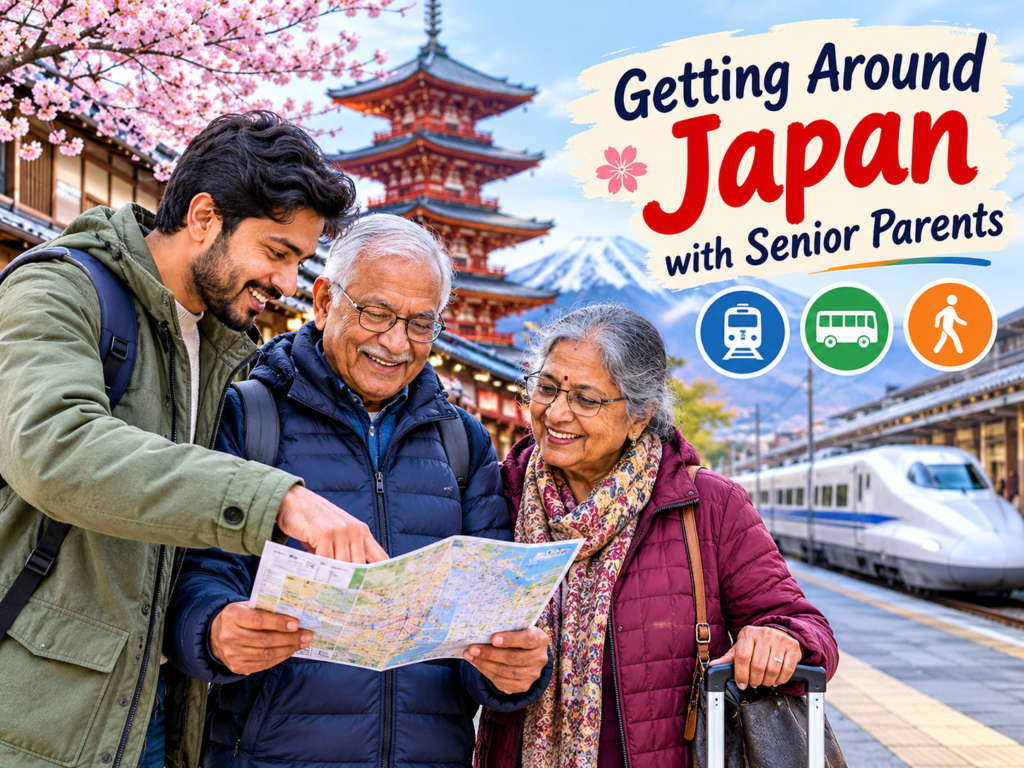
Transport is where many senior travel itineraries either succeed or fall apart. Choosing the right mode of transport for each leg makes a material difference to how your parents feel at the end of each day.
Trains: Japan’s rail network is efficient and useful for travelling between major cities. Shinkansen journeys can be comfortable, and reserved seats help families plan ahead. However, getting through large stations, finding the correct platform, and changing trains can involve considerable walking. Check transfer times carefully and allow a generous buffer when travelling with luggage or older family members. For scenic routes, choose journeys where the views and seating make the travel itself part of the experience.
Coach transfers: Group tours may use coach transfers for inter-city travel. These can be practical for senior travellers because luggage handling and stops are organised, and there is less need to navigate busy stations independently. The limitation is that coach travel is less flexible. If your parents need a rest stop earlier than scheduled, this may not always be accommodated in a large group setting.
Private transfers: For families with parents who have limited mobility or who find group schedules difficult, private transfers offer more control. The vehicle can take you closer to many hotel entrances and sightseeing areas, reducing the need to navigate stations with luggage. Check the exact inclusions of a Japan family tour package before booking, as private transfers are not necessarily included in every itinerary.
Walking distances: This is worth planning honestly. A sightseeing day in Tokyo or Kyoto can involve several kilometres of walking once you factor in station corridors, transfers, museum floors, temple grounds, and time at attractions. For parents over 60, a realistic daily target depends on their mobility, stamina, and health; plan conservatively and build in breaks rather than treating any distance as a universal target. Using taxis between distant attractions and choosing hotels near planned sightseeing areas can reduce unnecessary walking. Grouping nearby attractions together on the same day is one of the most effective ways to keep walking manageable without cutting out experiences.
Staying Comfortable: Accommodation and Pacing

Hotel selection matters more for senior travel than most planning guides acknowledge. A centrally located hotel reduces daily travel time and can make taxis or public transport easier to access. It also means your parents do not need to travel far to reach restaurants, convenience stores, pharmacies, or sightseeing starting points.
For parents with knee or joint issues, lift access is important. Always confirm lift availability when booking. Some smaller or traditional Japanese properties may have stairs, compact layouts, or rooms that are not fully step-free. Checking this in advance prevents an unpleasant arrival.
Room setup also matters. A room close to the lift or on a lower floor may be easier to access, although availability will depend on the property. Traditional Japanese-style rooms may involve sleeping on futons placed on tatami flooring, which can be difficult for some older travellers to get up from. If your parents need western-style beds, a twin configuration rather than a double bed, or a step-free bathroom, request this at the time of booking and confirm it with the hotel.
Pacing the itinerary: One major attraction or area per day works well for many senior travellers. Combining several large Tokyo neighbourhoods or multiple Kyoto temple visits into a single day can be tiring for parents over 60. Spread major sights across separate mornings and use afternoons for rest, a nearby café, or a short, easy outing. Build at least one slower afternoon into every three or four days of travel.
Hotel changes are one of the most tiring aspects of a multi-city trip. Packing, unpacking, navigating a new hotel layout, and adjusting to a new neighbourhood all add fatigue. For a 10 to 12-day Japan trip with senior parents, keeping the number of hotel changes to three or four can be more comfortable than switching every two nights. A stay of three nights at each base gives your parents time to settle in and move at their own pace.
Health and Medical Preparedness for Senior Parents in Japan
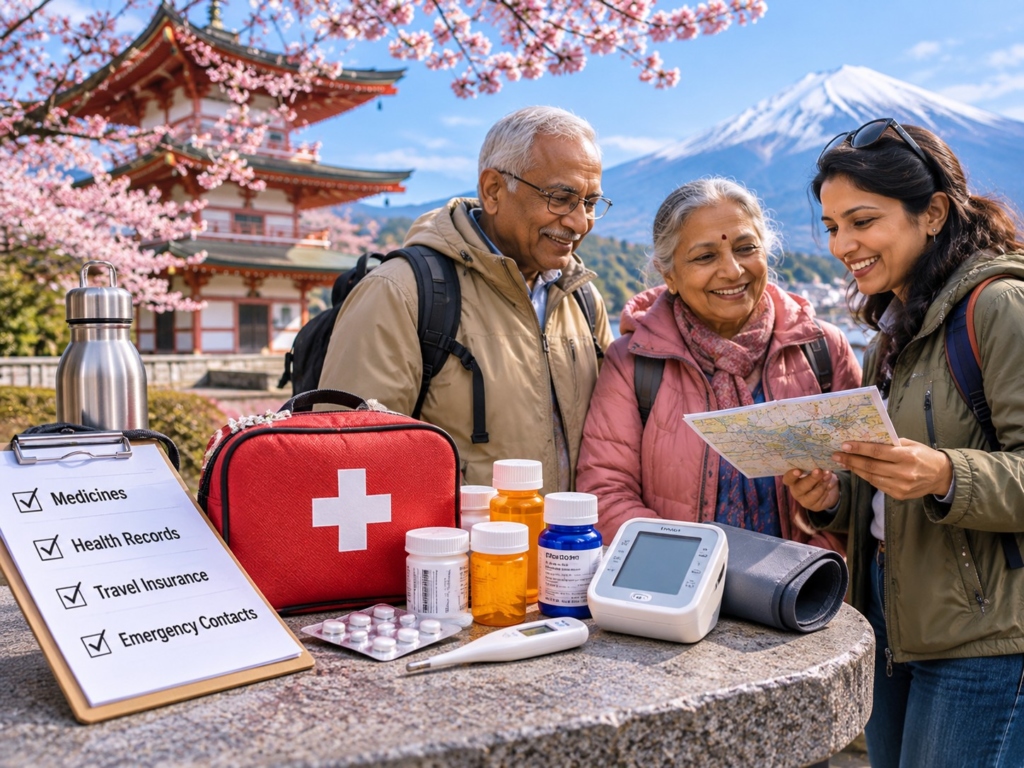
This section is often left out of travel guides but is one of the most important parts of planning for parents over 60. Getting it right before departure avoids a great deal of stress during the trip.
Travel insurance: Always purchase comprehensive travel insurance that includes medical coverage. For senior travellers, this should specifically cover hospitalisation, emergency evacuation, and pre-existing conditions where applicable. Confirm the coverage limits before buying. Check whether the policy includes a 24-hour assistance line and whether support is available in a language your family can use comfortably.
Medications: Carry enough prescription medication for the full duration of the trip, plus a buffer if possible in case of delays. Keep medicines in their original labelled packaging and carry them in your hand luggage. Japan has pharmacies, but not every overseas prescription medicine is available locally, and some medicines that are commonly used elsewhere are restricted or subject to import rules in Japan. Check Japan’s official medication import guidance before travelling, especially if carrying prescription drugs or controlled substances. Carry a written list of medications, dosages, and generic names, and keep prescriptions or a doctor’s letter with you when appropriate.
Weather: Check the forecast for the specific regions and dates you are visiting. Summer heat and humidity can be challenging in cities such as Tokyo, Kyoto, and Osaka, while winter conditions vary widely by region. Mountain areas and northern Japan can be snowy and icy. Carry suitable layers, comfortable non-slip footwear, and rain protection, and shorten outdoor activities during very hot, cold, or wet weather.
On-trip health monitoring: Some older travellers may find long travel days, heat, or steep routes tiring. If your itinerary includes mountain areas, hot springs, or strenuous excursions, consider your parents’ health and mobility before booking. Anyone with a heart, respiratory, or other significant medical condition should consult their doctor before adding physically demanding activities or destinations at altitude.
Nearest hospitals and emergency numbers: Japan’s emergency numbers are 119 for an ambulance or fire emergency and 110 for police. Save your hotel address in Japanese, identify nearby medical facilities before travelling, and ask your accommodation or tour operator for help if you need medical assistance. Keep travel insurance details and emergency contacts easily accessible throughout the trip.
Why Thrillophilia for Japan with Parents (60+)
Planning a Japan trip for parents over 60 involves considerably more than choosing cities and booking flights. The itinerary needs to balance sightseeing with realistic travel times, station transfers, hotel access, and enough time to rest between activities.
- Itineraries designed around senior pacing: Rather than covering the maximum number of cities, build a Japan family itinerary around realistic daily walking, sufficient rest time, and a manageable number of hotel changes. Popular combinations such as Tokyo, Kyoto, and Osaka can be structured with longer stays at each base to avoid constant movement.
- Transfer arrangements planned in advance: Check whether a package uses trains, coaches, or private transfers for each leg. Clear transfer details help families understand how much station navigation, luggage handling, and walking will be involved.
- Accommodation checked for accessibility and location: Prioritise hotels based on lift access, proximity to planned sightseeing areas, and comfort. For senior travellers, confirm room configuration, step-free access where required, and the availability of nearby medical facilities before finalising the stay.
- Support during the trip: Before booking, check what assistance is available from the tour operator and whether the itinerary includes a tour manager or local support. Knowing whom to contact for transfer issues or medical assistance can make travel less stressful.
- Flexible itinerary customisation: For families who prefer a private Japan tour rather than a group departure, consider an itinerary with fewer hotel changes, added rest periods, and alternatives to high-walking experiences. Accommodation and transport can be selected around specific mobility requirements where available.
- Low-walking activity alternatives: Japan offers seated or lower-effort experiences such as selected river or lake cruises, scenic train journeys, gardens with accessible routes, and city sightseeing by vehicle. Check the walking and step requirements of each activity in advance, as access varies by venue.
- Breakfast and meal planning: Check whether daily breakfast is included in the package. This can make mornings easier for senior travellers, while planning nearby dining options helps avoid long walks when everyone is tired.
For families planning this trip, exploring Thrillophilia’s Japan group tour packages is a useful starting point to compare durations, destinations, and inclusions.
Frequently Asked Questions
Around 10 to 12 days can work well for many families visiting two or three bases, such as Tokyo, Kyoto, and Osaka. This allows several nights in each place, reducing hotel changes and giving your parents time to settle in and recover between sightseeing days. Shorter trips can also work if you focus on fewer destinations and avoid packing too much into each day.
Tokyo, Osaka, and selected parts of Kyoto can work well when the itinerary is planned carefully. Major cities offer extensive transport options, but large stations and popular sights can involve a lot of walking. Choose centrally located accommodation, use taxis where helpful, confirm accessibility in advance, and plan only a few key activities each day.