

Quick Jumplinks to Navigate
A Japan holiday for four can cost approximately INR 3,50,000 to INR 8,00,000 for seven nights, including flights from India. The final amount depends heavily on your travel dates, children’s ages, room arrangements, and sightseeing choices. This planning estimate assumes two adults and two school-age children, rather than four full-fare adults. It is not a live quotation.
For a comfortable first visit, allow around INR 5,00,000 to INR 6,50,000 for eight days and seven nights. Tokyo, Kyoto and Osaka make a practical route, although changing cities adds train fares and luggage handling.
Thrillophilia’s destination experts suggest that you should compare routes and inclusions across Japan tour packages before fixing your budget.
The following estimates assume bookings, standard economy flights, shared family accommodation, and moderate sightseeing.
Japan family trip cost breakdown
Return flights from India
Set aside INR 1,40,000 to INR 2,60,000 for four economy return tickets. This is a planning allowance, not a verified airfare quote. Departures from Delhi, Mumbai or Bengaluru may offer different connections and prices. Compare flying into Tokyo and returning from Osaka against a Tokyo return ticket. An open-jaw route sometimes saves a costly backtrack.
Check baggage, meals, transit requirements and total journey time before choosing the lowest fare. A long overnight connection can be particularly tiring for younger children. Reserve early when travelling during school holidays.
Hotels and family rooms
Budget INR 70,000 to INR 1,50,000 for seven nights in modest to comfortable accommodation. Japanese city hotels often have compact rooms, and a standard double may not accommodate four guests. Check occupancy rules and bed sizes before booking. Two connecting rooms or an apartment-style stay can be more practical than squeezing everyone into one room.
Staying near a railway station usually saves time and taxi fares. Tokyo neighbourhoods such as Ueno and Asakusa can offer useful transport connections. In Osaka, consider how easily your accommodation connects to your planned attractions.
Food and daily meals
Allow INR 35,000 to INR 65,000 for family meals over eight days. Convenience stores, food courts and casual restaurants can help control spending. Vegetarian families should check broths and sauces carefully, as seemingly meat-free dishes may contain fish stock. Accommodation with breakfast or a kitchenette offers greater flexibility for children.
Trains, metro and airport transfers
Plan INR 30,000 to INR 70,000 for intercity travel, local trains and airport connections. The upper end becomes more relevant when adding Tokyo-to-Kyoto or Tokyo-to-Osaka journeys. JR Central’s September 2026 weekday Kodama package lists Tokyo-to-Kyoto adult fares from JPY 10,960, although conditions and dates affect availability.
For local sightseeing, prepaid transport cards make station transfers easier. Compare individual Shinkansen tickets with any rail pass before buying. A nationwide pass is not automatically economical for a short, city-focused holiday.
Attractions and family activities
Keep INR 30,000 to INR 80,000 for paid experiences. One theme-park day can take a considerable share of this allowance, especially with premium access or express passes. Balance it with lower-cost outings such as Senso-ji, public parks and neighbourhood walks. Browse things to do in Tokyo to select activities suited to your children’s ages.
Tokyo Disneyland and Universal Studios Japan require separate ticket planning. Prices and opening hours vary by date, so consult each venue’s official calendar before finalising travel. Popular experiences may need advance reservations.
Visas, insurance and extras
For Indian nationals, Japan’s single-entry visa fee is INR 500 per applicant in the current official schedule. VFS service charges are additional and may vary by application centre. Budget around INR 10,000 to INR 25,000 for visa processing, insurance, mobile data and incidental expenses combined. Confirm exact charges before applying.
Carry a separate buffer for laundry, snacks, luggage storage and occasional taxis. Travel insurance is particularly worth checking for medical cover and disruption protection. Do not assume every tour package includes flights, visas or all meals.
Three sample budgets for an eight-day family holiday
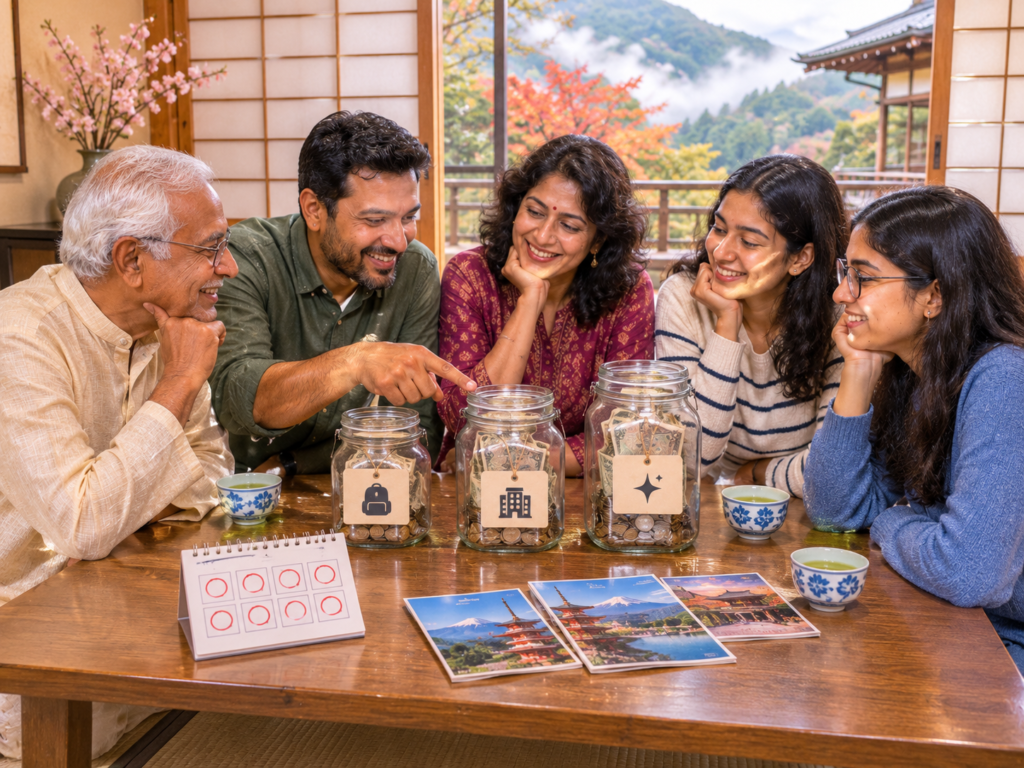
Budget-focused trip: approximately INR 3,50,000
Allow INR 1,40,000 for flights, INR 70,000 for stays, INR 35,000 for food, INR 30,000 for transport, INR 30,000 for attractions and INR 15,000 for essentials. The remaining INR 30,000 provides a modest contingency. This approach works best with one main base, economical meals and fewer premium attractions.
Comfortable trip: approximately INR 5,50,000
Allocate INR 1,90,000 to flights, INR 1,10,000 to hotels, INR 50,000 to meals, INR 55,000 to transport and INR 65,000 to sightseeing. Reserve INR 20,000 for essentials and INR 60,000 as a buffer. This permits a Tokyo–Kyoto–Osaka route with some paid family experiences.
Premium trip: approximately INR 8,00,000
A higher allowance could include INR 2,60,000 for flights, INR 1,80,000 for hotels, INR 75,000 for dining, INR 70,000 for transfers and INR 1,10,000 for activities. Add INR 25,000 for essentials and INR 80,000 for flexibility. Premium theme-park access, larger rooms and private transfers can quickly absorb the difference.
How to choose the right route without overspending
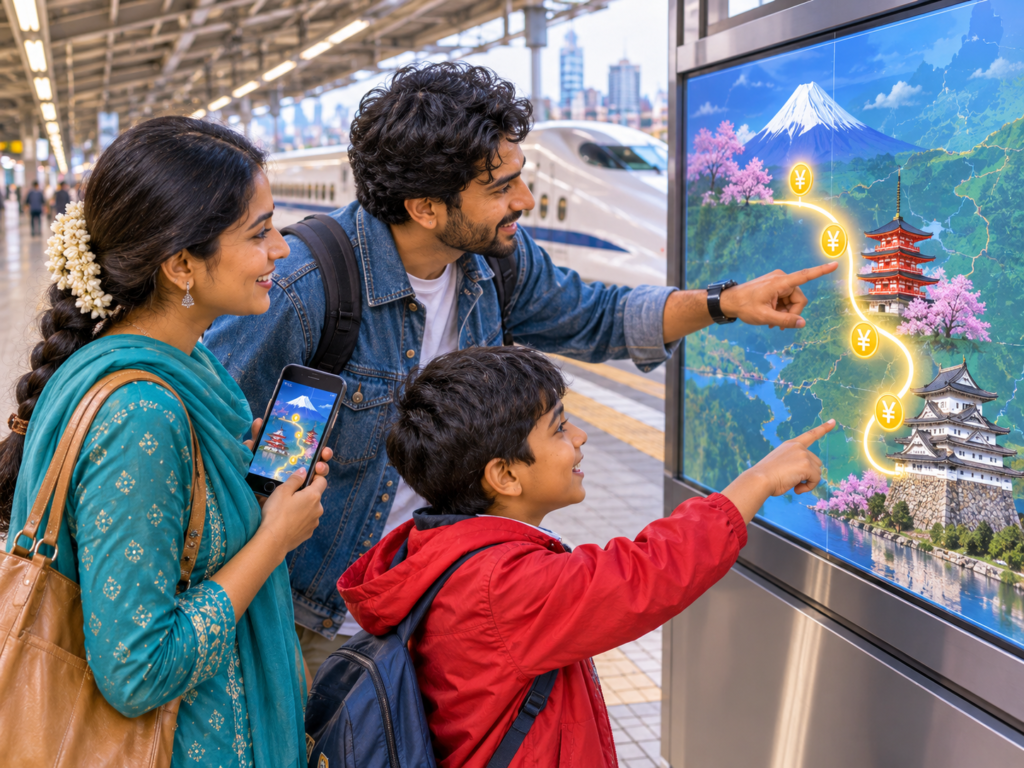
For a first family visit, three nights in Tokyo, two in Kyoto and two in Osaka can work. However, seven nights leave limited time for rest after international flights. Families with toddlers may prefer four or five nights in Tokyo and the remainder in one other city. Explore Japan’s places to visit before deciding which stops matter most.
Kyoto rewards slower sightseeing. Fushimi Inari involves substantial walking if you continue beyond its lower paths. Osaka works well for food districts and a dedicated theme-park day. Avoid scheduling a major attraction immediately after a long train journey.
When does Japan cost more?
Late March and early April attract cherry blossom visitors, although bloom dates vary each year. Golden Week, usually around late April and early May, increases domestic travel demand. Autumn foliage periods and New Year holidays can also tighten hotel availability. Summer may offer different fares, but heat and humidity affect family sightseeing.
Book refundable accommodation early, then compare flight prices across nearby departure dates. Travelling outside peak school-holiday windows can improve value. Always weigh savings against weather conditions and your family’s tolerance for long sightseeing days.
Why plan your family holiday with Thrillophilia?

Planning a family holiday in Japan involves coordinating international flights, accommodation, intercity trains, sightseeing reservations and activities across multiple destinations. Thrillophilia offers customisable Japan tour packages that bring these arrangements into a structured itinerary.
- Well-Planned Routes Across Japan: Travelling between Tokyo, Kyoto, and Osaka requires careful planning, especially with children and luggage. Thrillophilia’s Japan itineraries combine major attractions with intercity transfers and sightseeing schedules. Families can explore Tokyo’s modern attractions, Kyoto’s historic temples and Osaka’s entertainment districts without unnecessarily retracing their route. Depending on the trip duration, itineraries can also include excursions to Mount Fuji, Hakone or Nara.
- Family-Friendly Accommodation Arrangements: Japanese hotels often have smaller rooms than travellers expect, so choosing accommodation is especially important for families of four. Thrillophilia’s packages offer different hotel categories, allowing families to choose stays according to their budget and comfort preferences. Room occupancy, bedding arrangements and proximity to railway stations can be considered when finalising accommodation. This is particularly useful when travelling with younger children or elderly family members.
- Convenient Intercity Transfers and Local Transportation: Japan’s extensive railway network makes travelling between cities convenient, although navigating large stations with children can be challenging. Thrillophilia offers itineraries with planned transportation arrangements, including intercity journeys and sightseeing transfers where specified. Families can review the available transfer options and choose arrangements that reduce unnecessary travel time. This also helps avoid confusion when moving between Tokyo’s railway networks or travelling onwards to Kyoto and Osaka.
- Access to Popular Family Attractions: Japan offers several attractions that appeal to different age groups, including Tokyo Disneyland, Tokyo DisneySea, Universal Studios Japan and interactive digital art experiences. Thrillophilia’s itineraries feature a selection of sightseeing experiences and activities, allowing families to prioritise attractions that interest their children. Theme-park visits can be incorporated into suitable itineraries, with admission tickets and additional experiences subject to the selected package’s inclusions.
- Seasonal Planning for Japan Holidays: Japan’s travel conditions change considerably throughout the year. Cherry blossom season attracts large crowds, summer brings high temperatures and humidity, while winter offers opportunities for snow-related experiences. Thrillophilia’s Japan packages cover different travel periods, helping families compare destinations and activities according to their holiday dates. Travellers can also consider seasonal attractions, expected weather and peak-period accommodation costs before choosing an itinerary.
Frequently Asked Questions
It can be enough for a carefully planned seven-night trip with advance flights and moderate accommodation. Peak-season fares, two hotel rooms and theme-park extras may require a higher budget.
Costs depend more on hotel location, travel dates and planned attractions than the city alone. Compare the complete itinerary, including airport transfers and intercity trains, before deciding.