

Quick Jumplinks to Navigate
The traditional music of the Andaman and Nicobar Islands is a captivating blend of indigenous tribal rhythms and various multicultural influences. It highlights the diversity of music in songs, including Great Andamanese chants and Nicobari festival songs, providing examples of devotional and increasingly contemporary fusions, in presenting diversity as a point of celebration. The Duggera drum, the Sumay bamboo flute, the Rabab, the Tumdak, and others represent complementary sounds that contribute richness to Andaman and Nicobar Islands music. Rituals, dance, and festivals are additionally ensure that music traditions are developing and continuing. Andaman and Nicobar Islands music culture is a vibrant space, representing community, spirituality, and identity across generations.
When you think of the Andaman and Nicobar Islands, the first image that comes to mind is usually turquoise waters and serene beaches. But beyond the landscapes lies another highlight: its music traditions. The music of the Andaman and Nicobar Islands is as diverse as its people, reflecting the voices of indigenous tribes, settlers, and seafaring communities who made these islands their home.
Here, music is not just about entertainment, but it’s also an art of storytelling, ritual, and cultural memory. The Great Andamanese tribes once sang rhythmic chants during travel or sport, while the Nicobari community carried forward their rich folk traditions in weddings and harvest celebrations. Even settlers from the mainland introduced devotional hymns, Bollywood tunes, and classical influences, blending seamlessly with the island’s heritage, making Andaman Tour Packages a perfect way to experience this cultural richness firsthand.
What makes this soundscape fascinating is the role of traditional instruments. The Duggera drum, Sumay bamboo flute, and Rabab have been integral to celebrations, while rare instruments like the Pū kuta yem nga, a wooden board used for dance rhythms, highlight unique craftsmanship.
So, what is the traditional music of Andaman and Nicobar? How is tribal music different from the songs of the settlers? And which instruments are most important to these traditions? Through this blog, let’s explore the music of the Andaman and Nicobar Islands in detail.
History Of Music In Andaman & Nicobar
The history of music in the Andaman and Nicobar Islands is deeply tied to its communities. Indigenous tribes like the Great Andamanese, Onge, and Jarawa preserved oral traditions through songs, chants, and ritual performances. These were not melodic in the classical sense but rhythmic, with chants used for storytelling, travel, and daily activities.
In the 19th century, British officer Maurice Vidal Portman recorded Andamanese songs in Western notation, marking one of the earliest attempts to preserve these traditions. Later, researchers like Curt Sachs highlighted how music was created organically, crafted during boat-making or farming, then refined in community gatherings.
With settlers arriving from Bengal, Tamil Nadu, and mainland India, the islands absorbed folk, devotional, and classical influences. The Nicobari people, especially, blended indigenous music with Christian hymns and modern instruments. Today, the music of the Andaman and Nicobar Islands reflects a living heritage that is ancestral yet adaptive, traditional yet evolving.
Indigenous Tribal Music Of Andaman
Great Andamanese
The Great Andamanese music is unique for its rhythmic chants and communal unison singing. Instead of focusing on melody, their songs emphasise timekeeping, making them essential during trips, hunting, or sports. These chants often narrate personal experiences, legends, and adventures, creating a collective memory. Music here was not just art but a survival tool, binding the tribe through rhythm and repetition.
Jarawa and Onge
The Jarawa and Onge tribes follow traditions rooted in rhythm and ritual. Their performances include chants, handclaps, and stomping, accompanied by simple instruments crafted from bamboo and coconut shells. These acts are more than entertainment—they reinforce social ties and spiritual beliefs. Their music remains an intimate part of community life, celebrated during dances, storytelling, and seasonal rituals across the islands.
Moken Seafarers
Known as sea nomads, the Moken seafarers have a distinct musical heritage tied to the ocean. Their ritual dances and folk songs often mirror the rhythms of the waves, honouring the sea as a life source. Music here is deeply spiritual, performed during fishing rituals or community gatherings. The seafaring chants and percussion rhythms carry centuries of maritime culture and resilience.
Music from Settlers and Nicobari Communities In Andaman
Multi-Cultural Influences
The island’s settlers brought Bengali, Tamil, and Hindi influences, enriching local traditions with classical ragas, folk ballads, and even Bollywood music. Over time, these merged with indigenous forms, creating a multicultural soundscape. Festivals often feature devotional bhajans, folk songs, and modern tunes, reflecting how migration and cultural exchange shaped the music of the Andaman and Nicobar Islands into a diverse heritage of sound.
Bonbibi Worship
In coastal areas, music plays a central role in Bonbibi worship, where the deity of the forest and sea is honoured. Ritual songs feature melodic flutes, Jaltarang (water-filled porcelain cups), and drums. These devotional performances are community-driven, often involving storytelling through music. Bonbibi songs remain a vibrant expression of faith and resilience, blending indigenous styles with settler traditions in a sacred format.
Devotional and Contemporary Music
Among Nicobari communities, Christian hymns and carols during Christmas and Easter hold deep significance. Traditional songs also feature in weddings, harvest festivals, and village gatherings. Today, modern instruments like guitars accompany folk tunes, blending romance and tradition. This mix of devotional, folk, and contemporary music showcases how Nicobari culture evolves while staying rooted in its ancestral rhythms and practices.
Traditional Instruments Of Andaman
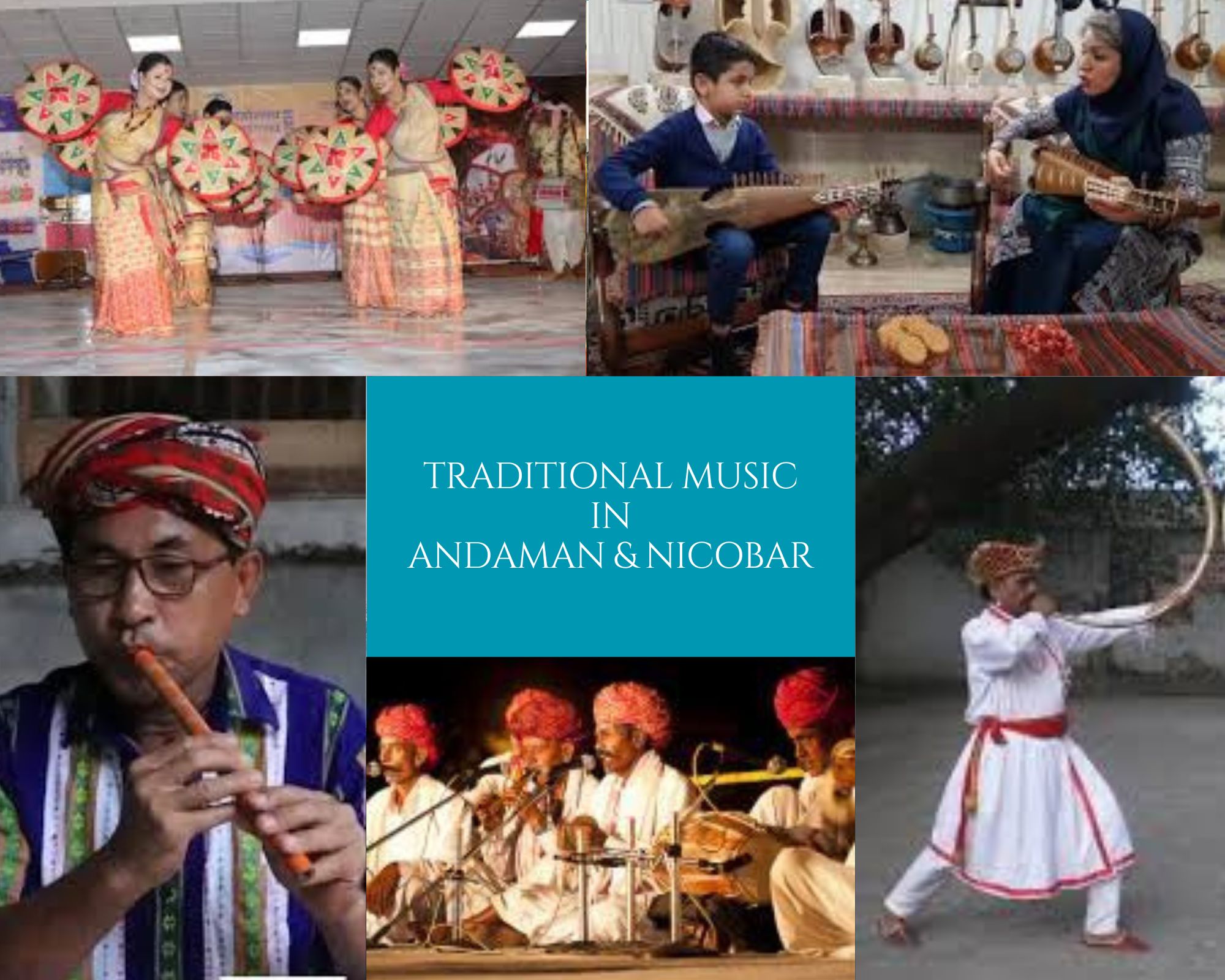
These islands’ traditional music closely reflects the cultural and historical significance of their instruments. If you’re searching for the 5 musical instruments of the Andaman and Nicobar Islands, here are the ones that stand out the most:
Duggera Drum
The Duggera is a large, barrel-shaped drum that produces deep, echoing beats. It is central to tribal dances, storytelling, and rituals, often played in unison by groups to create a sense of rhythm and unity. Its powerful sound not only entertains but also brings people together during festivals and celebrations.
Tumdak
The Tumdak is a percussion instrument carved from bamboo or hollowed tree trunks. Played with hands or sticks, it creates sharp and earthy rhythms. The Tumdak is often the heartbeat of traditional dances, where performers sync their chants, claps, and steps with its beats, making it a vital part of tribal festivities.
Sumay Bamboo Flute
The Sumay is a bamboo flute made from several tubes of different lengths, bound together to produce multiple notes. It is commonly played during festive gatherings and cultural performances. The Sumay’s soft, soothing melodies balance the heavy drum beats, adding a melodic touch to rituals, songs, and community celebrations.
Rabab
The Rabab is a stringed instrument with a resonating body crafted from a coconut shell or gourd. It has one or two strings, usually made from gut or metal, and is plucked to accompany folk songs. The Rabab adds harmony to traditional music, giving it a warm, melodic sound that blends beautifully with percussion.
Tutari
The Tutari is a brass, trumpet-like instrument known for its loud and bold tone. Traditionally used to announce the arrival of leaders or mark special occasions, it has become a staple in festive music. Its sharp, celebratory sound adds excitement and energy, making it an essential part of community gatherings and performances.
The music of the Andaman and Nicobar Islands is a living archive of cultural memory, blending tribal chants, settler hymns, and contemporary styles. It reflects not only the island’s diversity but also their resilience, where instruments fashioned from bamboo or coconut shells echo stories of identity and belonging. Whether it’s the haunting chants of the Great Andamanese or the festive beats of Nicobari drums, music here remains timeless, connecting past traditions with present celebrations.
Also Read