

Quick Jumplinks to Navigate
Most travellers’ primary motivation for travelling to Finland, Norway, or Iceland is the world-renowned Northern Lights, where the sky lights up in colours that no picture could quite properly capture. However, before finalising your trip, it’s not uncommon to worry about your actual chances of seeing the Northern Lights, as it is a natural phenomenon and mainly dependent on three factors: darkness, sufficiently clear skies, and aurora activity.
Finland’s Meteorological Institute estimates that auroras occur on approximately 50% of dark, cloudless nights in much of Lapland, rising to around 75% in the Kilpisjärvi area. These are clear sky statistics, which, when paired with practical operational practices like strategically planned additional nights in probable regions, increase your chances of sighting the Northern Lights significantly. Based on Thrillophilia’s internal booking data, 84% of our travellers who booked their trip with us for Northern Lights sightings in Finland, Norway, or Iceland were successfully able to spot a distinct, moving display. Additionally, 90% of travellers who booked longer itineraries, like a 10-day Norway itinerary, where their days were strategically mapped in regions with the highest chances of spotting the lights, reported back successful sightings in their post-trip feedback.
Even with realistic and strong aurora forecasts, your extensively planned trip to Norway with the sole purpose of viewing the Northern Lights can be compromised if the clouds block the sky. This is why our experts at Thrillophilia have compiled this guide to help you better understand the factors that affect Northern Light sightings, how to best improve your chances, and how to realistically plan your trip around it. Rather than offering generic tips that often fail in the actual destination, this article features insights that are based on official sources like Finland’s Meteorological Institute and are put together after intensive research by Thrillophilia’s On-ground Operations team.
Which Months Offer the Best Chances in Finland, Norway and Iceland?
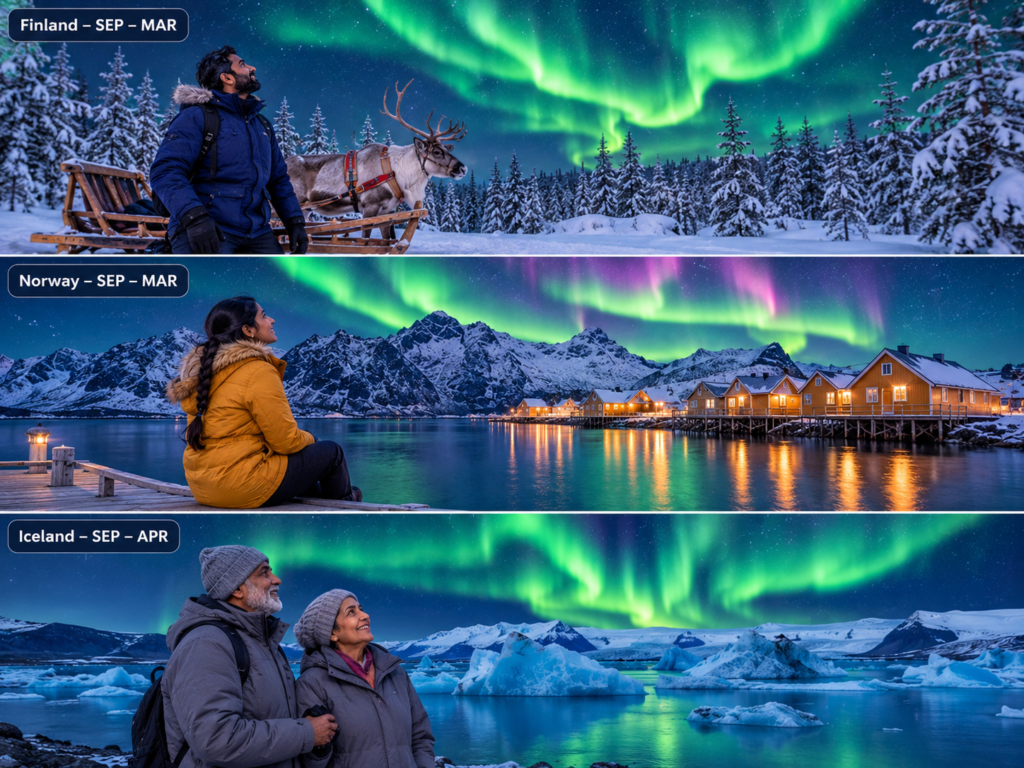
The best months for increasing your chances for viewing the Northern Lights in Finland, Norway, and Iceland can be categorised into two windows; one offers the highest chances but also features higher crowd levels, and another window offers comparatively lower chances but arrives with fewer crowds and is usually more budget-friendly. Each destination has its own advantages and disadvantages that affect your chances.
Here is a quick guide to help you understand the best months to travel to Norway, Finland, and Iceland for aurora sightings:
| Destination | General Viewing Season | Periods Worth Considering | What to Keep in Mind |
| Finland | Late August to early April | September to October and February to March | Lapland offers dark skies and strong viewing opportunities, but clouds can still prevent sightings. |
| Norway | Late August or September to late March, depending on location | September to October and February to March | Northern Norway is well placed for aurora viewing, but coastal weather can change quickly. |
| Iceland | Late August to April | September to March | Dark nights are essential, and cloud cover and changing weather can affect viewing plans. |
Although the seasons overlap, there are no guaranteed best months for sightseeing. Thrillophilia’s internal data suggests travellers who plan their trip during autumn and spring months have 90% higher chances of sighting the lights in Finland and Norway, while Iceland’s main viewing season generally runs from September to April.
The winter months of December and January can also offer long viewing windows in northern locations but are often unsuitable for families travelling with children and elders due to the cold, although 75% of our adventure travellers choose this window, as suggested by our booking data. Summer is generally the most unsuitable season for viewing the lights since the nights are too bright in these destinations but can be favourable for travellers wishing to experience the midnight sun phenomenon.
How Many Nights Should You Stay to Improve Your Chances?
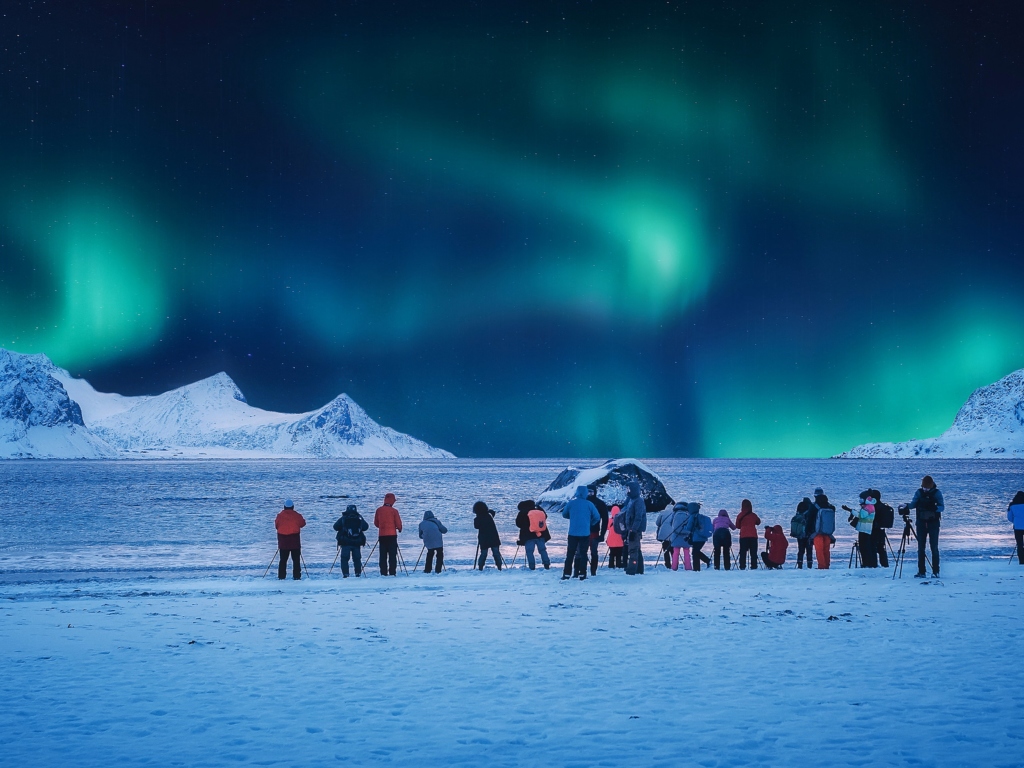
This is the decision that most affects your chances of viewing the aurora or northern lights. In the right location and weather conditions, the right number of days can significantly increase your sighting chances. Additionally, cloud covers shift on a daily basis, often changing significantly within minutes or hours. This means if you weren’t able to view the lights on your first nights, chances are you might be able to properly experience them on your second or third night.
A 1- to 2-night stay is generally avoided by our experts, since while two nights can be enough for a sighting given the weather conditions are favourable, it leaves little room to recover from cloudy weather or weak aurora activity. Our internal booking data indicates that 25% of our travellers who planned fewer nights in the shoulder seasons were unable to spot the lights properly. Comparatively, our internal data shows 80% of the travellers who booked Norway, Finland, or Iceland 7-day itineraries during peak seasons with at least 3-4 nights dedicated to sighting chances were successfully able to witness distinct movement due to more opportunities to check forecasts, adjust locations, and the time to wait for clearer skies. However, if your entire trip intent is focused on the lights, longer itineraries, like a 10-day Finland itinerary, offer the best viewing chances since they allow enough time for clearing unpredictable weather and solar fluctuations.
Thrillophilia’s destination experts keep these factors in mind while recommending itineraries that are specifically designed for the purpose of increasing your chances, with customisation options still available for you to tailor your itinerary to your needs.
Here is a quick planning table for you to refer to for understanding your practical chances based on duration:
| Nights Available | Practical Expectation |
| 1–2 nights | A limited window with little flexibility if the weather is unfavourable |
| 3–4 nights | More opportunities to try on different evenings |
| 5–7 nights | Greater flexibility to work around clouds, weather, and changing aurora activity |
Planning your trip according to these factors significantly increases your viewing chances, but no travel partner can guarantee the occurrence of a natural phenomenon definitively.
How Does Cloud Cover Affect Northern Lights Visibility?
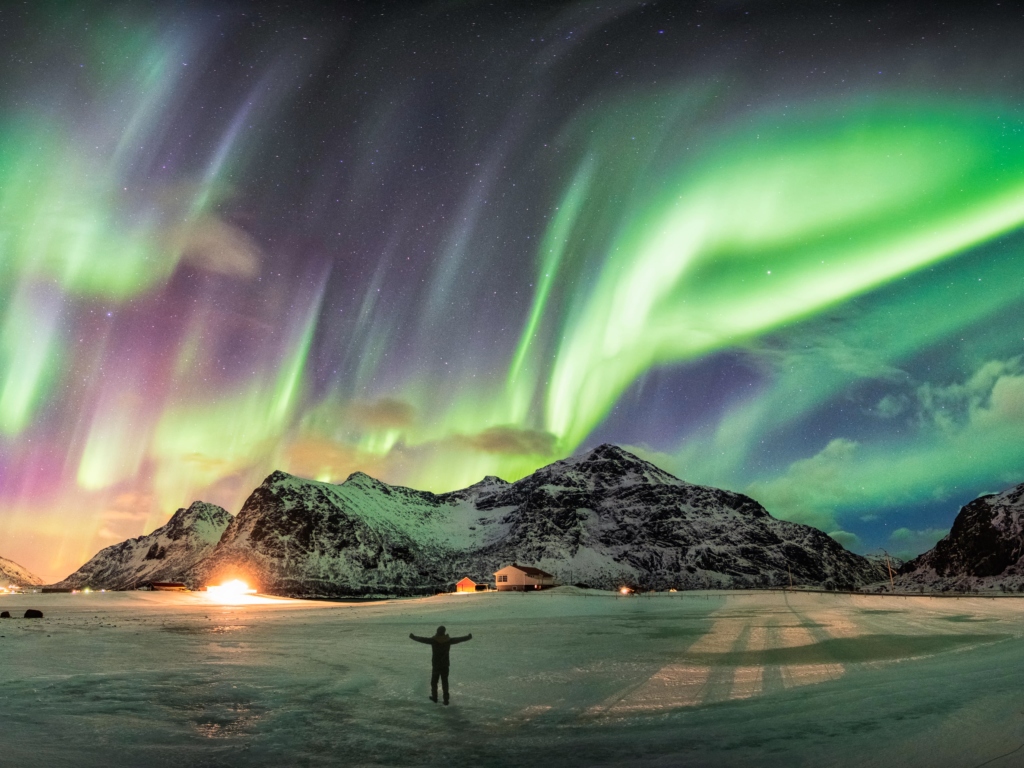
Cloud cover refers to the phenomenon when, even with high geomagnetic activity promising better chances of sightseeing, clouds can obscure the sky, preventing you from properly witnessing the lights. However, party clear skies may offer viewing opportunities through gaps in the cloud, especially since cloud covers are very dynamic in nature and constantly changing.
Here is where a flexible itinerary becomes important. With Thrillophilia’s Finland Norway tour packages, your itineraries are planned with open schedules and are adaptable so you can chase the best weather and solar conditions in real time, rather than sticking to a rigid, pre-planned calendar. This is also where itineraries for travellers focusing on Scandinavian sightseeing rather than the aurora sightings differ the most. All of our Northern Lights focused packages are planned with the flexibility of last-minute adaptations, which led to 95% of our travellers reporting a satisfying experience with trips planned in suitable weather conditions.
How Do Aurora Alerts and Forecasts Help You Plan?
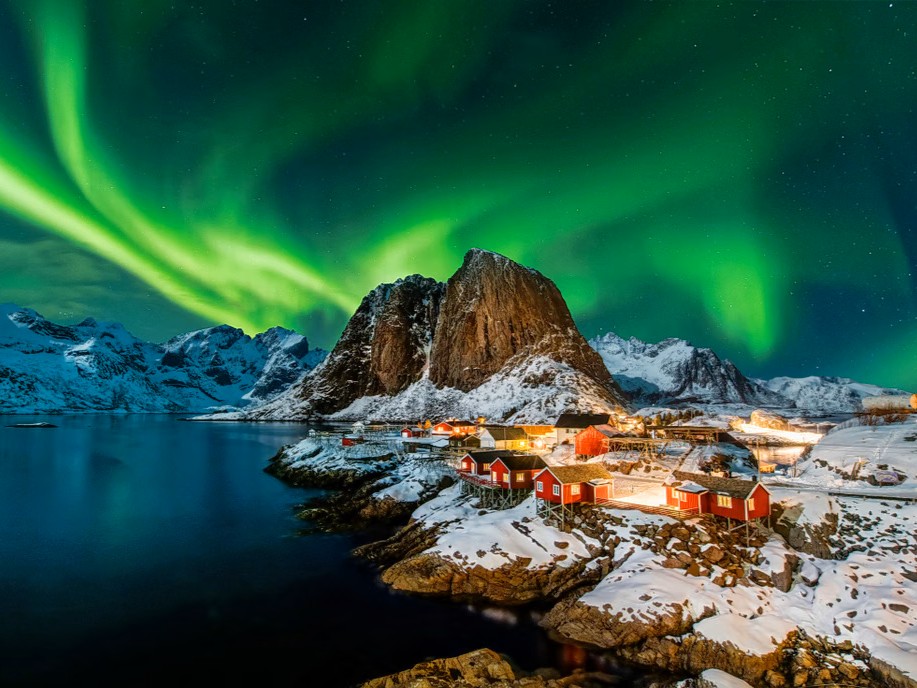
Aurora alerts and forecasts help establish a probable timeline backed with scientific calculations to offer likely chances of viewing the lights. These are an important part of itinerary planning for Northern Lights-focused trips.
Here are some of the measures you can consider while checking Aurora Alerts and forecasts:
- Check Aurora Activity Forecasts: Aurora forecasts estimate geomagnetic activity, which influences the likelihood and potential intensity of auroral displays. Higher values can indicate stronger activity, but they do not guarantee that the Northern Lights will be visible at your location.
- Check Cloud Cover Separately: Clear skies offer the best opportunities; partly clouded skies have lower chances, and overcast can entirely block the display, even when aurora activity is strong.
- Use Aurora Alerts, but Don’t Depend Entirely: Aurora alerts are predictions, not guarantees. A notification does not necessarily mean the aurora will appear overhead or remain visible for long.
Since these are mostly planning guides rather than being entirely dependable estimates, your guides become the most important people to help you best increase your chances since they’re familiar with regional weather and viewing conditions.
Our guides, who have been affiliated with Thrillophilia for at least 5 years with 10+ years of established experience, check the forecasts and combine them with their on-ground knowledge to offer you the best local sighting probabilities.
Finland vs Norway vs Iceland: Which Should You Choose for the Best Chance?
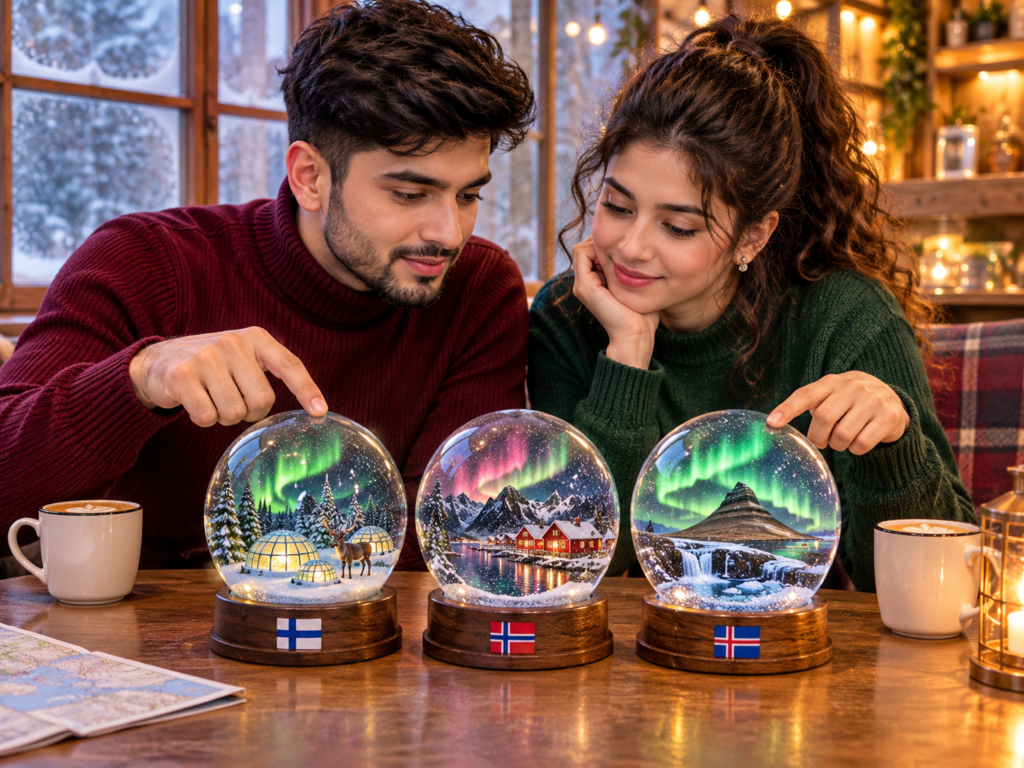
There isn’t one definitive country, region, or area that guarantees the best chances for Northern Lights sightings. Each destination requires different planning priorities and responds to different preferences, depending on the travellers’ needs. Therefore, it is best to plan your trip not just around the Northern Lights but also for what the country itself has to offer for a more satisfying experience.
Our internal data shows travellers who opt for trips that combine both dedicated days for aurora sightings and sightseeing experiences are 90% more likely to experience a well-rounded trip, even if weather conditions don’t make way for distinct aurora movements.
| Destination | Consider It If You Want | Planning Priority |
| Finland | An aurora-focused stay in Lapland, with options such as glass-roofed cabins and winter activities | Choose a northern location and allow several nights for viewing |
| Norway | Arctic scenery, coastal landscapes, and aurora excursions around destinations such as Tromsø | Monitor changing local weather and keep viewing locations flexible. |
| Iceland | Aurora viewing alongside waterfalls, volcanic landscapes, and other nature experiences | Check cloud forecasts and road conditions before travelling to viewing spots |
How to Plan Your Evenings to Maximise Your Chances
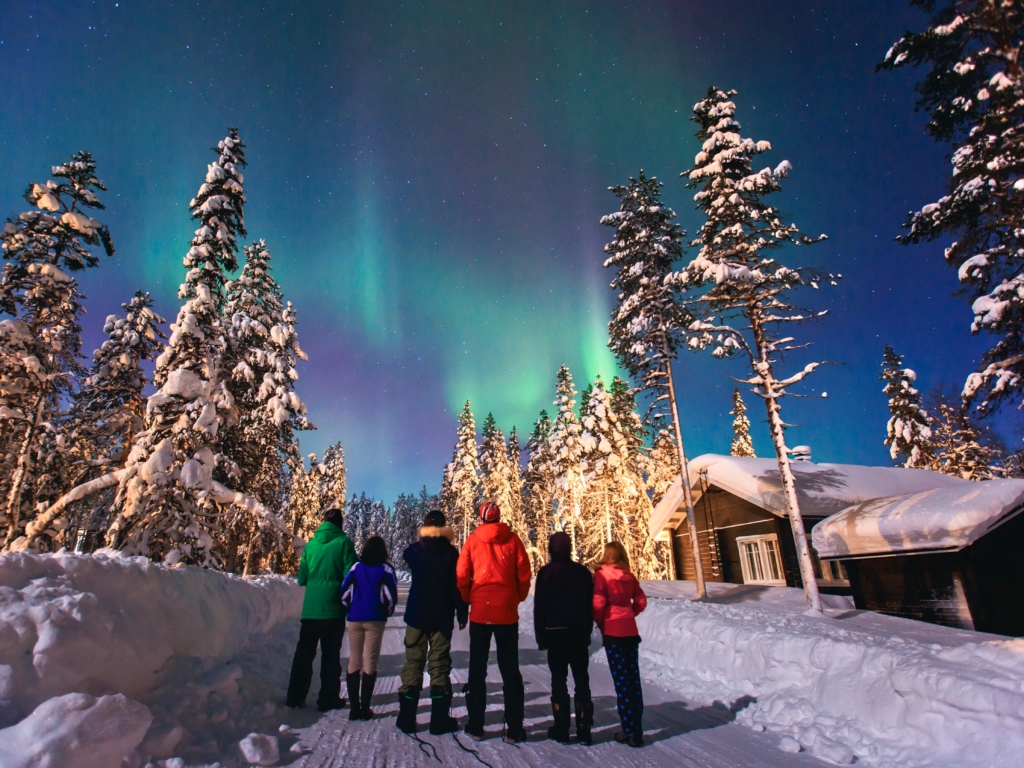
As we near the end of this guide, here are some planning considerations for your evenings that can help maximise your chances, as recommended by Thrillophilia’s destination experts:
- Stay for several nights rather than relying on one planned aurora excursion.
- Keep at least a few evenings free of fixed activities.
- Check both aurora activity and local cloud cover.
- Choose accessible viewing spots away from strong artificial lighting.
- Dress for prolonged outdoor waiting in cold conditions.
- Follow local weather, road, and safety advice if travelling to another viewing location.
Our guides and experts already follow these measures to plan your trip to ensure a hassle-free experience for you.
In addition to structuring your itinerary for increasing your aurora chances, our experts also include activities like glass igloo stays for honeymoon trips to Norway, Finland, and Iceland and husky sledding and snowmobiling for families with children to enhance your trip experience.
Why Choose Thrillophilia for Your Northern Lights Trip?
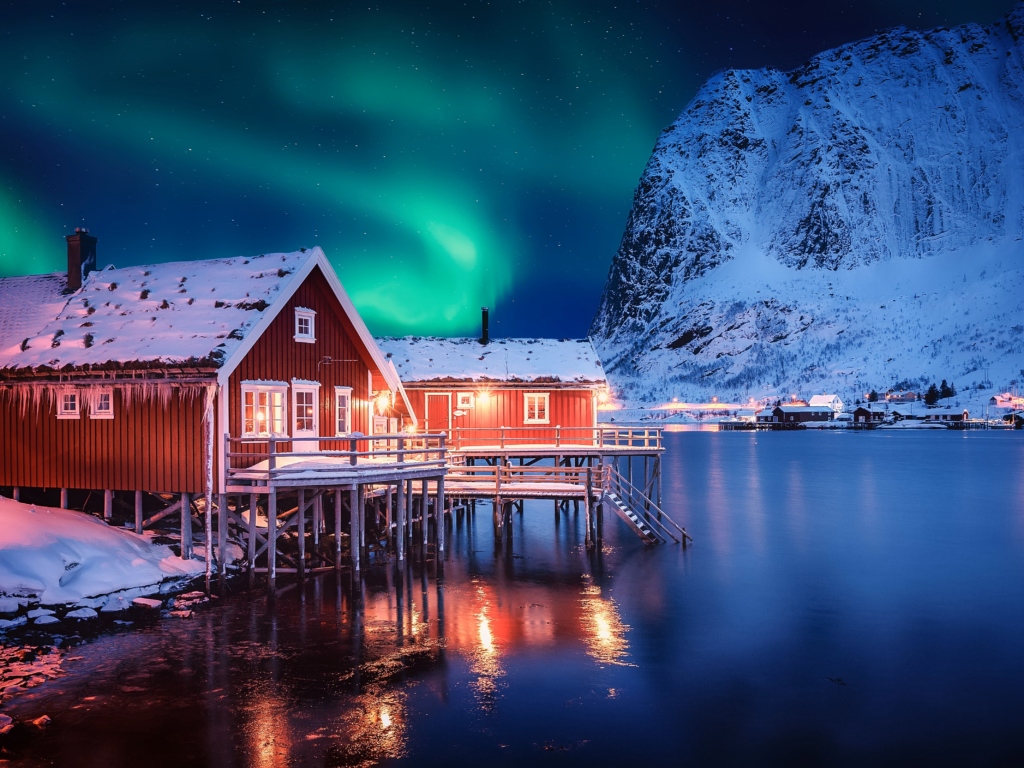
Rated 4.7/5 by 14,800+ combined, verified travellers who booked Norway, Finland, and Iceland packages with Thrillophilia, our trips are designed and operated by ourselves from scratch to align an itinerary to your needs and preferences, be it for a dedicated Northern Lights-focused trip or a trip focusing on both sightseeing and aurora experiences.
Apart from our 12+ years of experience operating Finland, Norway, and Iceland trips for Indian travellers, Thrillophilia is also known for dependable planning considerations for different traveller types and trip intents, like:
- Destination-Specific Planning: Compare Finland, Norway, and Iceland based on your travel dates, preferred experiences, and aurora-viewing opportunities.
- Itinerary Coordination: Plan multiple nights in northern regions to allow more opportunities for aurora viewing.
- Experience Selection: Explore Northern Lights excursions alongside activities such as husky sledding, snowmobiling, and scenic stays.
- Travel Logistics: Coordinate accommodation, transfers, and excursions around local weather and seasonal conditions.
- Pre-Departure Support: Prepare for winter travel with guidance on itinerary planning, clothing, and activity arrangements.
Frequently Asked questions
All three destinations offer opportunities to see the aurora. Your chances depend on the location, season, cloud cover, and aurora activity. Choose a destination that allows several nights for viewing rather than relying on a single evening.
Three to four nights provide multiple opportunities to look for the aurora, while a five-to-seven-night stay offers more flexibility if the weather is unfavourable. However, no length of stay guarantees a sighting.
The viewing season generally runs from late August or September to March or early April, depending on the destination. September to October and February to March are popular periods to consider, although local darkness and weather conditions remain important.
Thick cloud cover can block the aurora even when geomagnetic activity is high. Check local cloud forecasts alongside aurora predictions, and consider another accessible viewing location if conditions are clearer there.
No. Aurora alerts indicate potentially favourable conditions, but they cannot guarantee that the lights will appear or be visible from your location. Monitoring forecasts, keeping your plans flexible, and staying for several nights can improve your opportunities.