

Quick Jumplinks to Navigate
Booking a trip to Japan is the easy part, but realising that your hotel room is too small for your family of four in a city like Tokyo or Osaka because you didn’t understand how room sizes work in Japan is a practical concern that can compromise your trip experience if not planned properly.
Unlike honeymoon trips or solo trips, where the room size generally isn’t a problem, travelling with family requires special considerations when it comes to accommodations. Since a family trip to Japan often features children and seniors, ensuring their comfort, accommodation location, and the size of the room become important factors, especially when you have full sightseeing days lined up.
Knowing in advance the difference between different room types in Japan, like standard rooms, family rooms, and apartment-style accommodation, helps you determine the best size for your family. This is because Japan’s room layouts are distinctly different from those of India’s, where the number of guests, bed configuration, and luggage space matter as much as the room’s stated area.
Having operated Japan trips for over 12 years, Thrillophilia has built a network of hotels ranging across diverse budget and comfort tiers, suitable for different families and their styles. By arranging your stays at verified, well-rated properties like the Keio Presso Inn Hamamatsucho in Tokyo and Hotel Granvia in Hiroshima, we ensure your stays are aligned to your family’s size, budget, and preferences and located conveniently for your itinerary’s progression.
This article, compiled by Thrillophilia’s destination experts, compiles the same planning considerations we use to allocate your accommodations to help you understand everything that you need to know about Japanese room sizes and types. Combined with practical insights from our on-ground experts, this guide will make sure you can avoid any unwanted surprises regarding your room on a trip to Japan with your family.
What Is the Average Hotel Room Size in Japan?
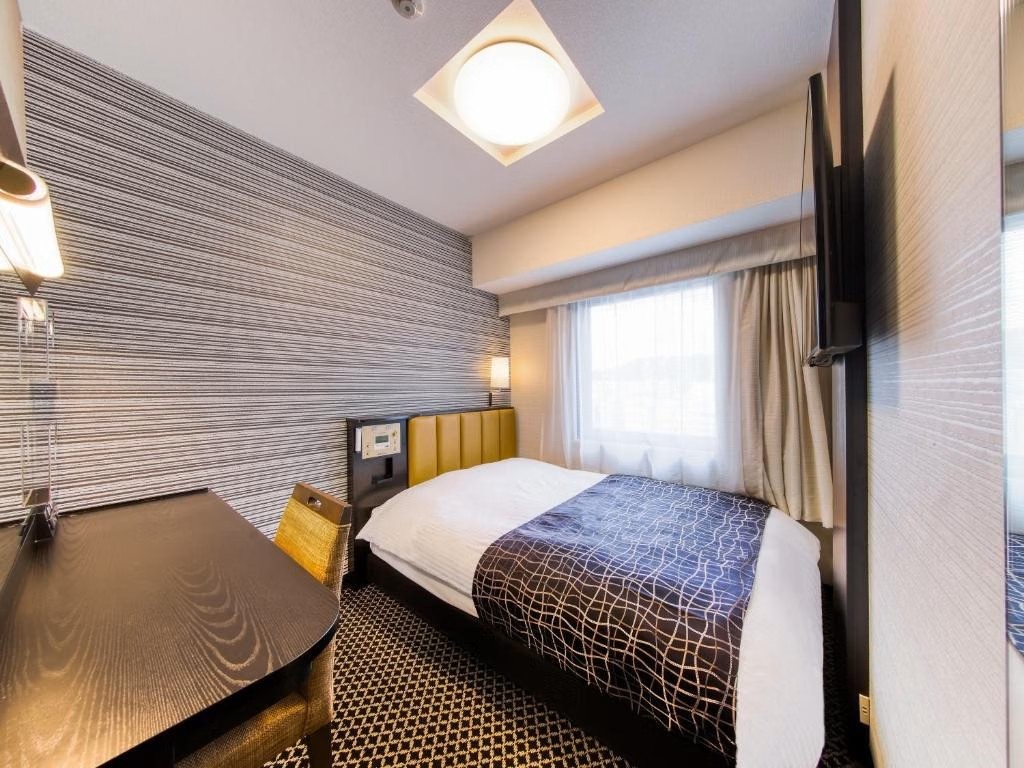
There isn’t a strictly average hotel room size in Japan, as the dimensions vary by hotel category, property, and city. The properties Thrillophilia offers for families also range across multiple categories that influence the room size, layout, and budget.
However, this is a rough breakdown of different Japanese room types, their approximate size, and which traveller groups they generally suit:
| Room Type | Approximate Size | Generally Suitable For |
| Compact single room | 10–15 sq. m. | One traveller |
| Standard double or twin room | 15–20 sq. m. | One or two adults |
| Larger double or twin room | 20–25 sq. m. | Couples or small families, subject to occupancy rules |
| Family room | 25–40 sq. m. or more | Families needing extra sleeping space |
| Apartment-style accommodation | 30–50 sq. m. or more | Families seeking additional living space |
It is important that you treat this table for indicative planning ranges, rather than official national averages. Exact measurements can be obtained from your assigned destination expert based on the package you choose.
The table below turns the room dimensions into realistic accommodation suggestions for different family compositions, with insights from Thrillophilia’s destination experts:
| Family Composition | Accommodation to Consider | What to Check |
| Two adults and one infant | Double or twin room | Cot availability and child-sharing policy |
| Two adults and one young child | Larger twin or family room | Bed-sharing rules and floor space |
| Two adults and two children | Family room or apartment | Maximum occupancy and separate bedding |
| Two adults and teenagers | Connecting rooms or a larger apartment | Privacy and individual sleeping arrangements |
| Three generations travelling together | Multi-bedroom apartments or connecting rooms | Accessibility, bathrooms, and sleeping arrangements |
How Do Japanese Hotel Room Sizes Compare With Indian Hotels?
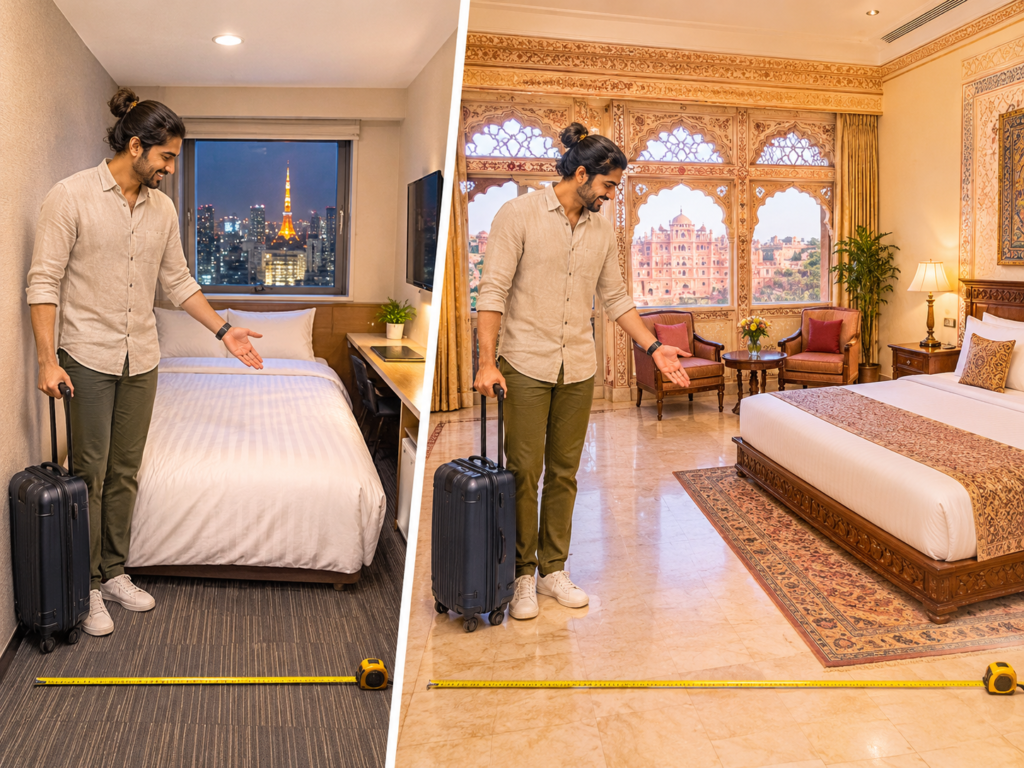
While not every Japanese room is smaller than the standard room size in India, travellers might find most standard Japanese rooms to be more compact. Since the main difference lies in the properties being compared, families should check the advertised floor area in square metres rather than relying on photographs and star ratings.
Here are some practical considerations suggested by Thrillophilia’s Japan Operations team to help you choose your accommodation type better:
- Luggage space: A compact room may not have enough floor space to keep several large suitcases open simultaneously.
- Sleeping arrangements: Two beds do not necessarily mean there is enough space for an additional child or extra bed.
- Room layout: Some rooms have more efficient layouts, while others may have limited space around the beds and entrance.
- Bathroom configuration: Check whether the bathroom, toilet, and washbasin are combined or separated, especially when several family members share one room.
For families travelling with two children, our experts recommend comparing larger twin rooms, dedicated family rooms, and apartment-style accommodation for a better balance between comfort, location, and budget.
When you’re confused about which room size and type would fit your family’s requirements better, this is where booking a well-equipped Japan tour package with Thrillophilia makes your on-trip coordination easier. We offer stays at verified, well-located properties with family-specific room allocation depending on your needs and budget for a comfortable experience.
What Types of Family Rooms Are Available in Japan?
Depending on your family’s needs and preferences, Japan’s room types can be separated into 4 categories, each with their own advantages and considerations:
Standard Twin or Double Rooms
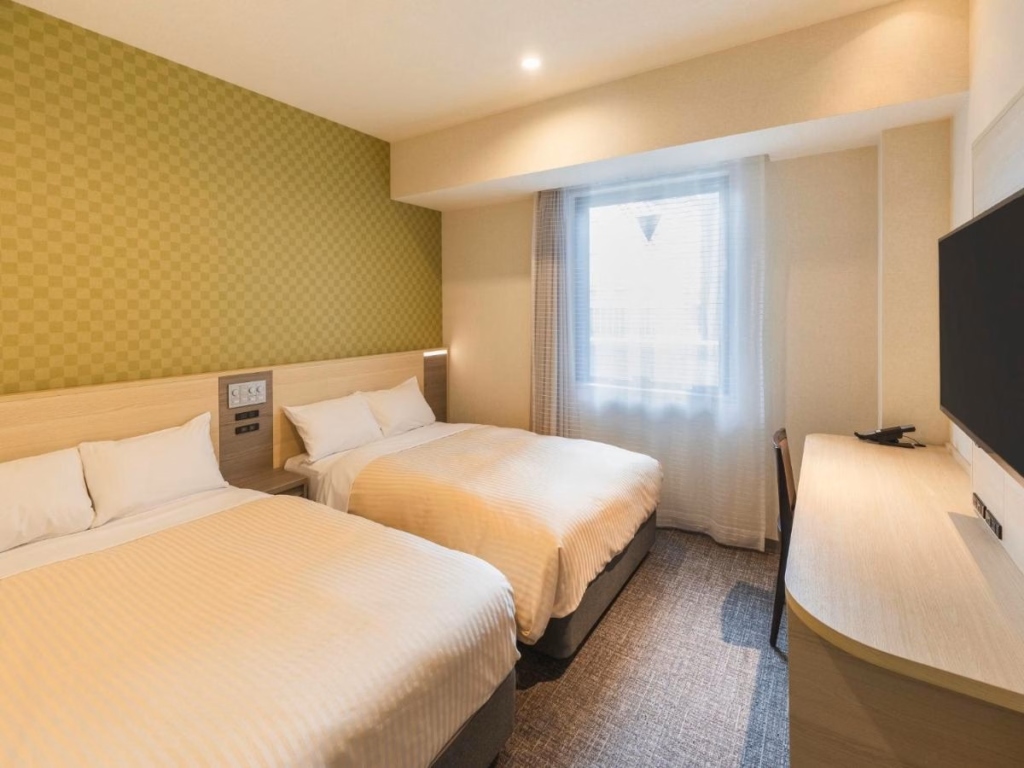
Rooms with a double bed or two single beds are generally best suited for couples travelling with an infant or young child and travellers looking for a more budget-friendly option and are preferred by 46% of small families travelling with us, as per Thrillophilia’s internal booking data. These rooms are comfortable enough for two adults, and works well since children that young require less space. Make sure you ask the hotel in advance whether they permit children to share existing beds and check for extra bed and cot availability.
One of the hotels Thrillophilia arranges your stays at in Tokyo, APA Hotel Shinjuku Kabukicho Chuo, offers compact twin and double beds with under-bed luggage storing facilities, making it a practical option for short family stays in Tokyo.
Connecting Rooms
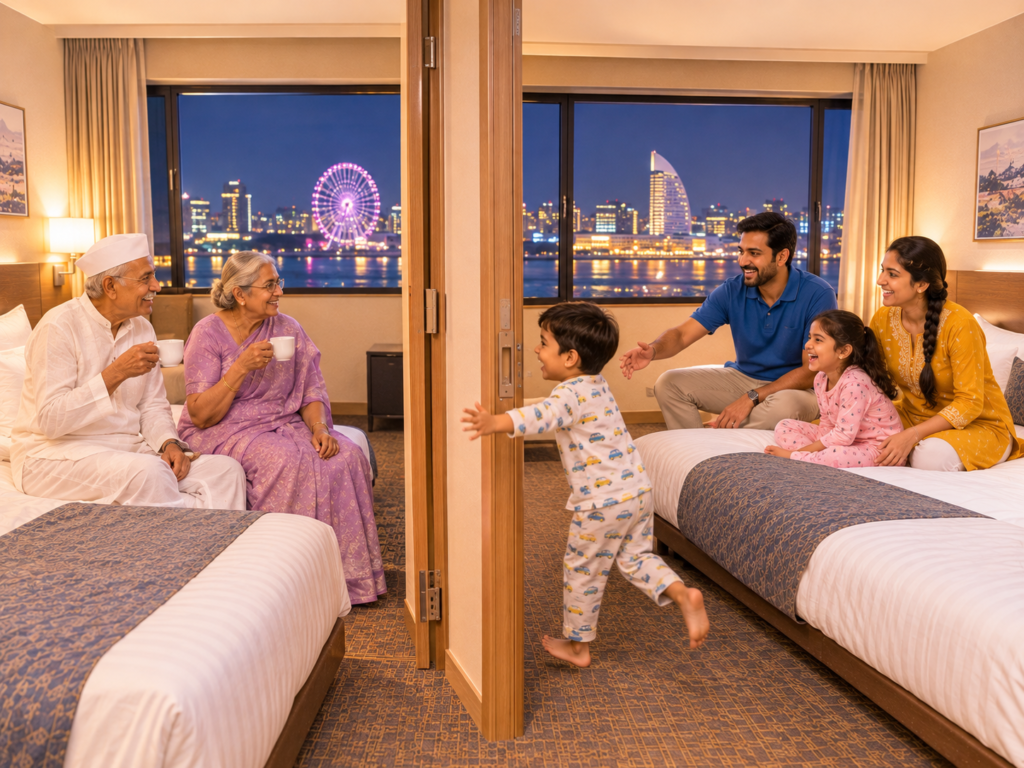
If you are travelling with older children, booking connecting rooms that feature two adjoining rooms can provide both separate sleeping areas with better privacy and still keep the family close. However, not all packages offered by Thrillophilia explicitly guarantee connecting rooms unless specifically stated by the property.
Dedicated Family Rooms
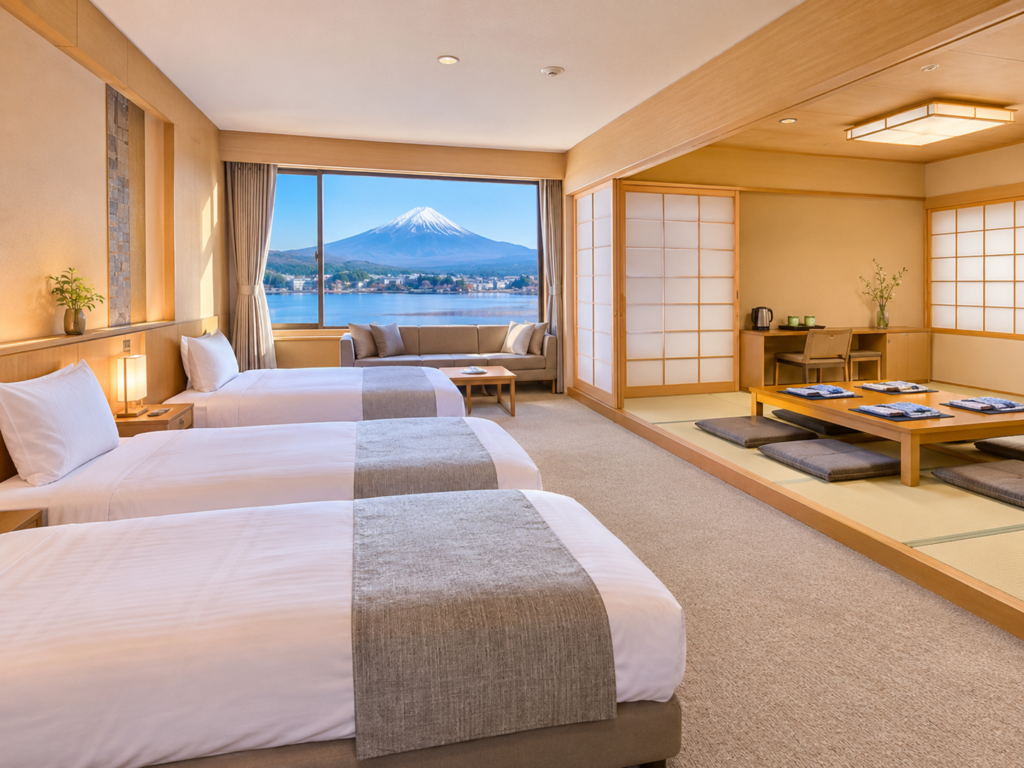
Specialised family rooms in Japan often feature larger floor areas and family-orientated sleeping arrangements, making them a preferred option for 75% of the larger families or families seeking more space, as per Thrillophilia’s internal booking data. You can find rooms with multiple beds or a combination of beds and sofa beds, both convenient and comfortable options. The most important thing to keep in mind for dedicated family rooms is to verify the maximum occupancy and whether bedding is included in the quoted price.
The Ibis Styles Kyoto Shijo is one of the properties allocated by Thrillophilia for your stay and features dedicated Japanese family rooms from 28 m² that can accommodate up to 5 guests with 3 single beds. The room availability is subject to variation and must be confirmed with the property.
Apartment Style Rooms
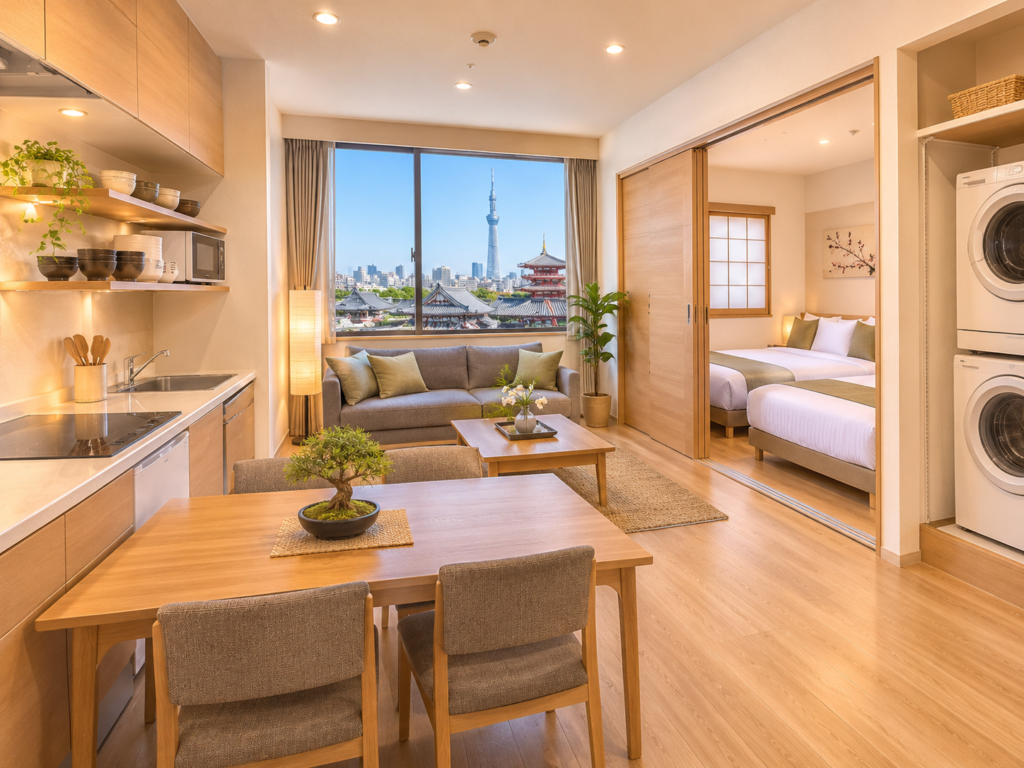
Apartment hotels in Japan combine traditional hotel services with residential features like kitchens, living areas, and laundry facilities. If your family trip to Japan features multiple adults and children alike and therefore requires more space for comfort, this is a very well-suited option for you compared to standard Japanese business hotels.
Since apartment rooms are the most spacious and offer multiple amenities, they also tend to be one of the more expensive accommodation choices. For families planning a budget trip to Japan, booking compact rooms with double beds might be a better alternative.
Thrillophilia’s destination experts plan your stays in properties that let you feel comfortable and relaxed after active sightseeing days without necessarily being out of your budget. Additionally, being able to avoid the hassle of booking rooms individually in each destination by letting experts handle the booking and room allocation process makes your overall experience smoother.
What Should Families Check Before Booking a Hotel in Japan?
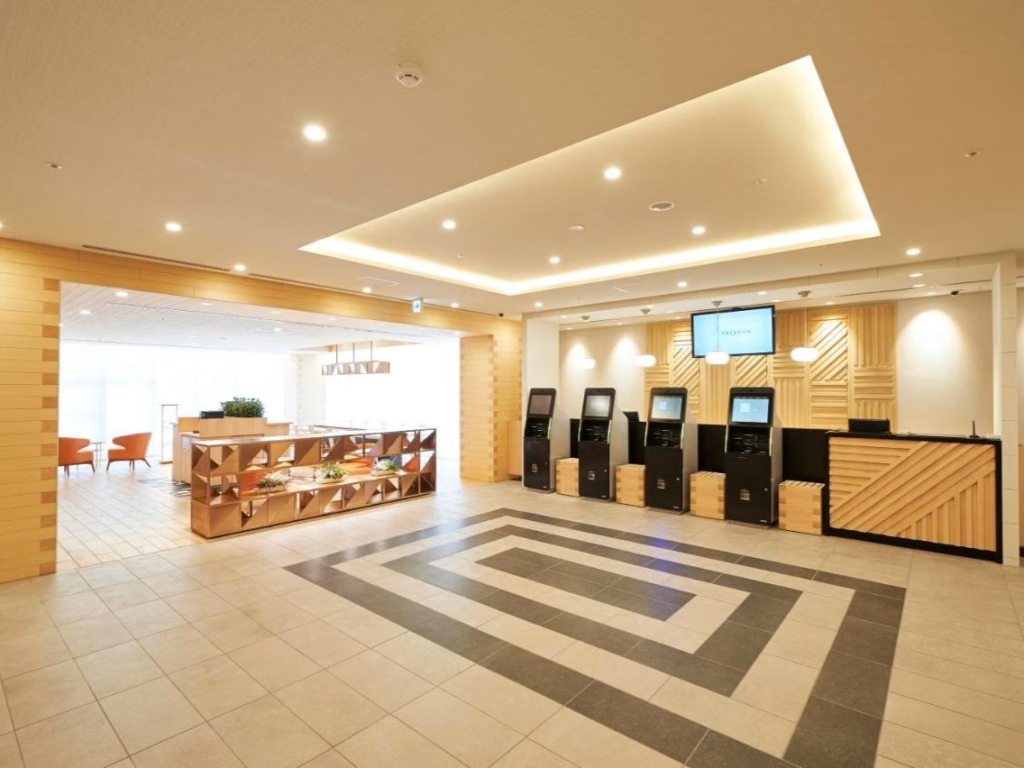
It’s easy to get swayed by the multiple hotel listings in Japan, each promising something convenient. However, knowing which one fits your family’s criteria the best might get difficult amongst hundreds of options, especially for first-timers.
To help you choose your accommodation type better, Thrillophilia’s destination experts have compiled a checklist of considerations to keep in mind before finalising a room:
- Room area: Check the advertised size in square metres.
- Maximum occupancy: Confirm the number of adults and children permitted.
- Bed configuration: Verify bed dimensions and whether extra beds are available.
- Child policies: Check age limits, bed-sharing rules, and cot availability.
- Luggage space: Consider how many large suitcases your family will bring.
- Bathroom layout: Check whether the bathroom and toilet are separate.
- Location: Balance room size against access to train stations, restaurants, and attractions.
- Kitchen and laundry: Prioritise these facilities for longer stays, where useful.
- Cancellation terms: Review the booking conditions before confirming.
Thrillophilia already used these planning considerations while selecting your accommodations to allow ease of movement, comfort, and a hassle-free experience in a foreign country.
Why Choose Thrillophilia for Selecting the Best Room for Your Family in Japan?
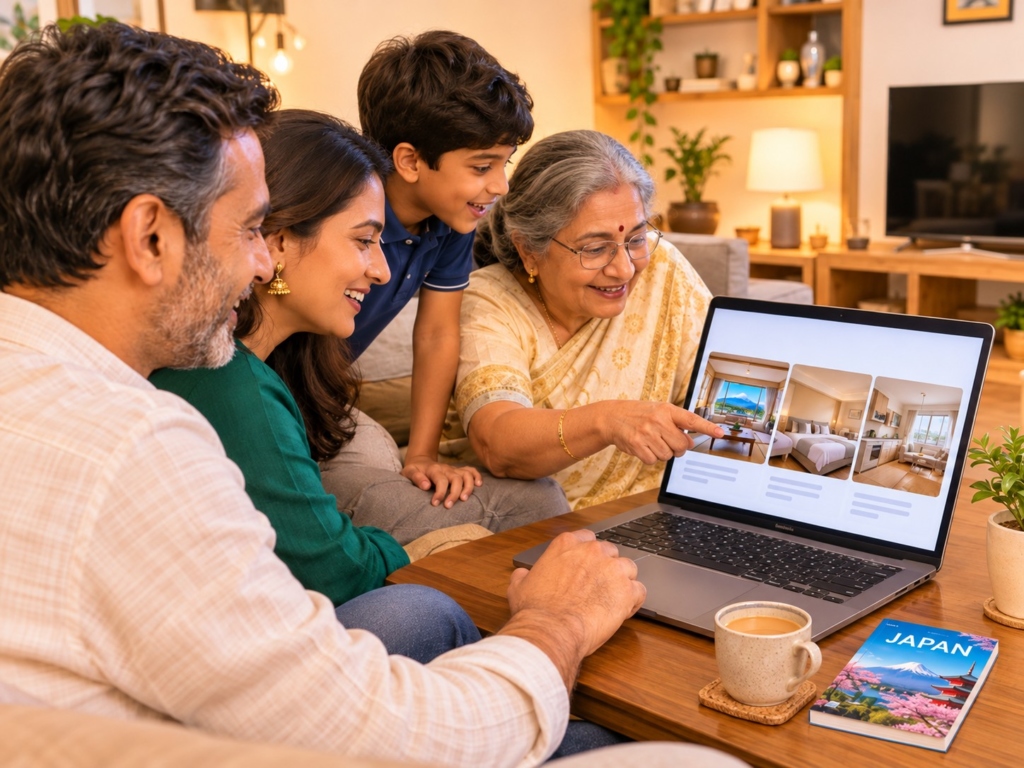
Rated 4.9/5 by 1,200+ verified families who chose Thrillophilia for a Japan trip, our packages help families plan accommodation around their group size, comfort preferences, and itinerary, making it easier to balance space, location, and budget when exploring Japan.
- Family-Friendly Stays: Explore accommodation options suited to your family size, travel style, and budget.
- Space and Comfort: Compare room configurations to find suitable sleeping arrangements for adults and children.
- Convenient Locations: Choose packages with hotels located with practical access to train stations, attractions, and dining options.
- Ensuring Meal Availability: In addition to providing your family with daily breakfasts at your accommodation with vegetarian options, we also provide you with a list of nearby restaurants.
- Multi-City Planning: Coordinate accommodation across Tokyo, Kyoto, and Osaka without overlooking your family’s space requirements.
- Travel Planning Support: Get help coordinating your stays with your broader Japan itinerary.
Frequently Asked Questions
A larger room of around 25 to 40 square metres can offer more comfort for a family of four, depending on the bed configuration and luggage requirements. Always check the hotel’s maximum occupancy before booking.
Some Japanese budget and business hotel rooms are more compact than rooms Indian families may be used to. However, sizes vary by hotel category, so compare the advertised floor area rather than relying on location or star rating alone.
Yes, some hotels offer dedicated family rooms with multiple beds, sofa beds, or other sleeping arrangements. Availability and occupancy limits vary, so confirm the room configuration before booking.
Apartment-style accommodation can be useful for families who need extra living space, kitchen facilities, or laundry access, particularly during longer stays. Check the property’s actual layout and amenities before reserving.