


Quick Jumplinks to Navigate
Even though vegetarian food is available in Japan, especially in major cities such as Tokyo, Kyoto and Osaka, Indian travellers should understand an important difference.
For Jain travellers, finding suitable meals requires additional planning because the restrictions can extend beyond meat and fish to eggs, onion, garlic and root vegetables.
The easiest way to plan vegetarian and Jain food in Japan is to shortlist restaurants before travelling, communicate your dietary restrictions clearly and check ingredients rather than relying on a dish’s name.
As per Thrillophilia’s destination experts, travellers following vegetarian or Jain diets should shortlist restaurants before departure and confirm ingredients directly, as Japanese dishes may contain fish-based stock even when they appear vegetarian.
Here are the practical ways to find suitable meals during your Japan trip.
1. Look for Indian vegetarian restaurants in Tokyo

Tokyo is a useful starting point for Indian travellers who prefer familiar meals such as dal, roti, rice, vegetable curries and thalis.
The city has a wide range of international dining options, including vegetarian and vegan restaurants. The official Tokyo tourism website also provides guidance for visitors with dietary requirements.
When searching for Indian vegetarian food in Tokyo, look for:
- Restaurants that explicitly describe themselves as vegetarian or vegan.
- Indian restaurants that offer vegetarian thalis and clearly identify ingredients.
- Restaurants that confirm whether Jain preparations are available.
- Locations near your hotel or sightseeing area, so you do not need to travel across the city for every meal.
If you follow a strict Jain diet, ask whether the kitchen can prepare food without onion, garlic, potatoes and other root vegetables. Do not assume that an Indian restaurant automatically offers Jain meals.
2. Find vegetarian-friendly meals in Kyoto
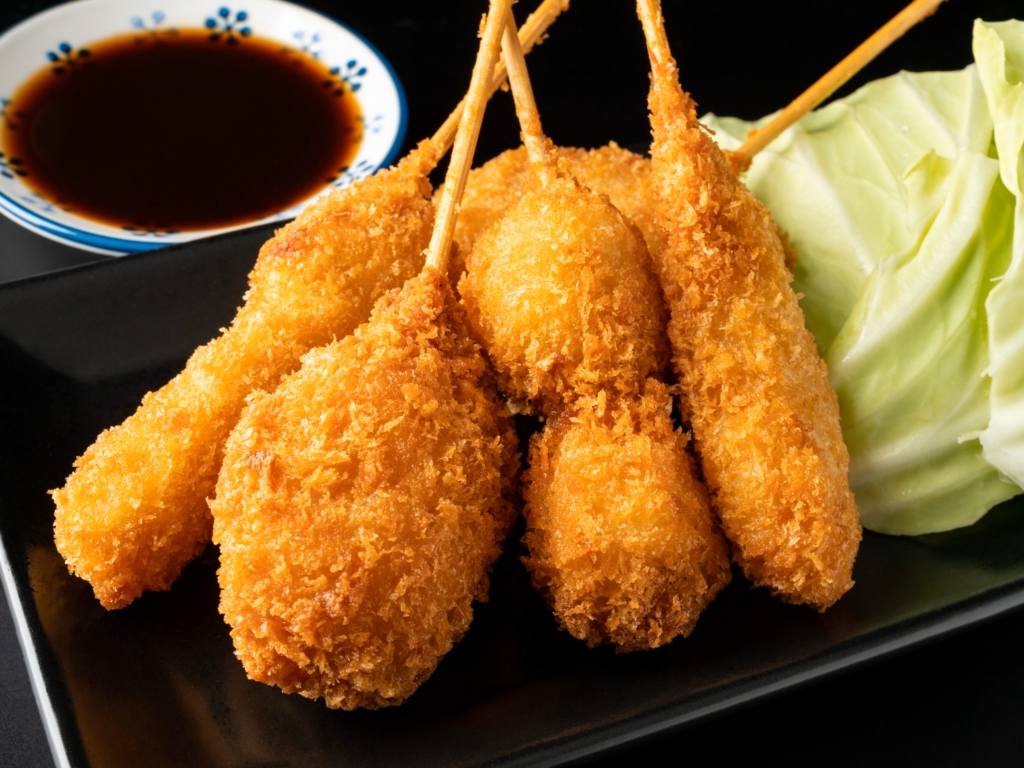
Kyoto is particularly interesting for travellers seeking traditional Japanese plant-based cuisine.
One option is shojin ryori, a style of Buddhist temple cuisine that traditionally excludes meat and fish and focuses on vegetables, tofu, seasonal ingredients and carefully prepared dishes.
However, shojin ryori is not automatically suitable for every Jain traveller. Recipes may include root vegetables or ingredients that do not meet individual Jain dietary restrictions.
Based on destination-specific recommendations from Thrillophilia’s travel planning team, travellers visiting Kyoto should confirm whether shojin ryori contains root vegetables, onion or garlic before booking, as traditional Buddhist cuisine may not meet every Jain dietary requirement.
When planning vegetarian food in Kyoto, consider:
- Temple cuisine: Research restaurants that serve shojin ryori and ask about ingredients before booking.
- Tofu restaurants: Kyoto is known for tofu dishes, but check the accompanying broth and sauces.
- Vegetarian cafés: Look for dedicated vegetarian or vegan menus.
- Indian restaurants: These may be a practical option if you want familiar flavours or require Jain preparations.
3. Explore vegetarian food options in Osaka
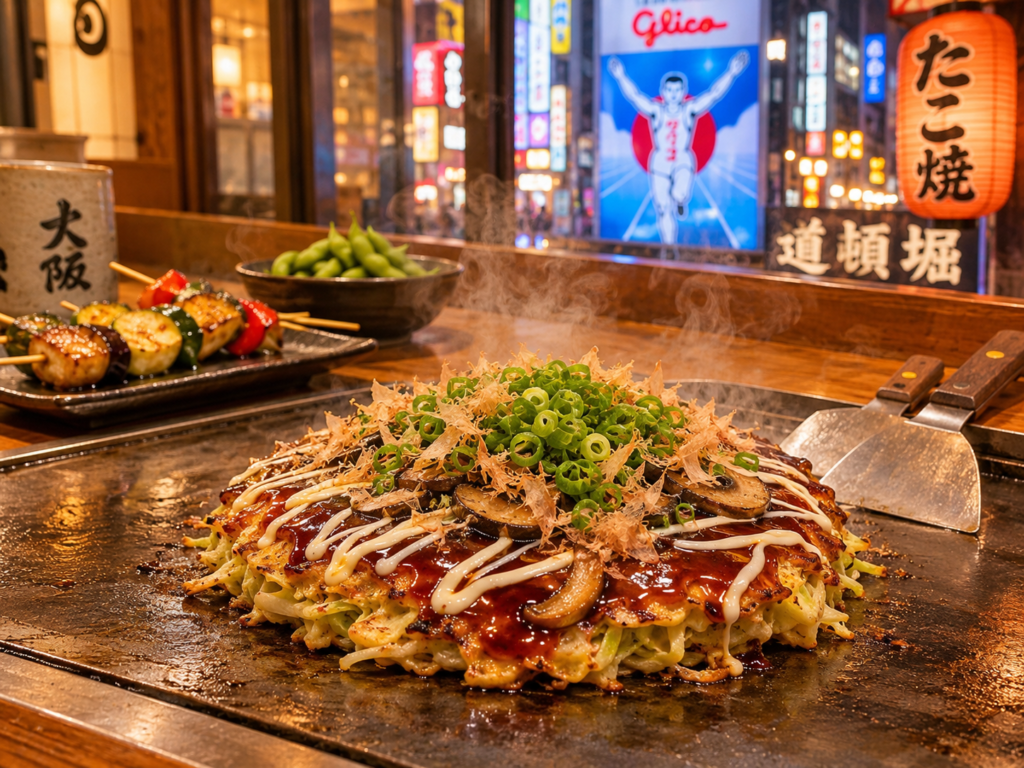
Osaka is well known for its food culture, but many popular local specialities use meat, seafood or fish-based ingredients. Vegetarian travellers should therefore check dishes carefully instead of assuming that vegetable-heavy food is meat-free.
For vegetarian and Jain meals in Osaka:
- Search for dedicated vegetarian and vegan restaurants.
- Look for Indian restaurants that can explain their preparation methods.
- Confirm whether noodles and soups contain fish or meat stock.
- Ask whether sauces, seasonings and toppings contain animal-derived ingredients.
- Check opening hours before travelling to a specific restaurant.
Dedicated plant-based restaurants can be particularly useful when you want a meal without repeatedly explaining the same restrictions. Still, if you follow strict Jain rules, verify the ingredients and preparation method directly.
4. Use convenience stores for quick vegetarian meals
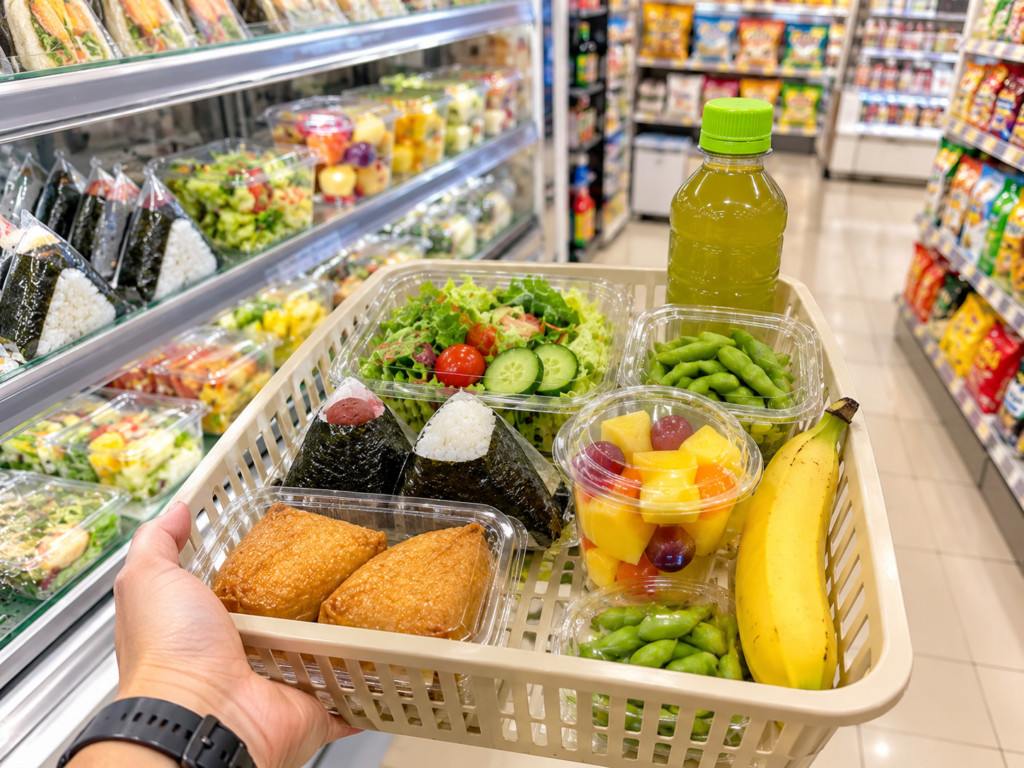
Japan’s convenience stores, commonly called konbini, are useful when you need a quick meal between train journeys, sightseeing stops or late-evening activities.
The Japan National Tourism Organization identifies several potentially useful options, including selected rice balls, packaged beans, edamame, salads and inari sushi. It also warns that sauces accompanying some products may contain dashi, a stock commonly made using fish.
Look for these options, while checking the individual product’s ingredients:
- Umeboshi onigiri: Rice balls filled with pickled plum.
- Kombu onigiri: Rice balls containing kelp.
- Inari sushi: Rice packed into seasoned tofu pockets.
- Edamame: Soybeans served as a snack.
- Plain rice and salads: Useful additions to a simple meal.
- Packaged beans and fruit: Convenient options when restaurant choices are limited.
Thrillophilia recommends checking the ingredient label on every packaged food item, particularly rice balls, sauces and prepared meals, because recipes and ingredients can differ between products and convenience store chains.
5. Learn why dashi matters when ordering vegetarian food in Japan
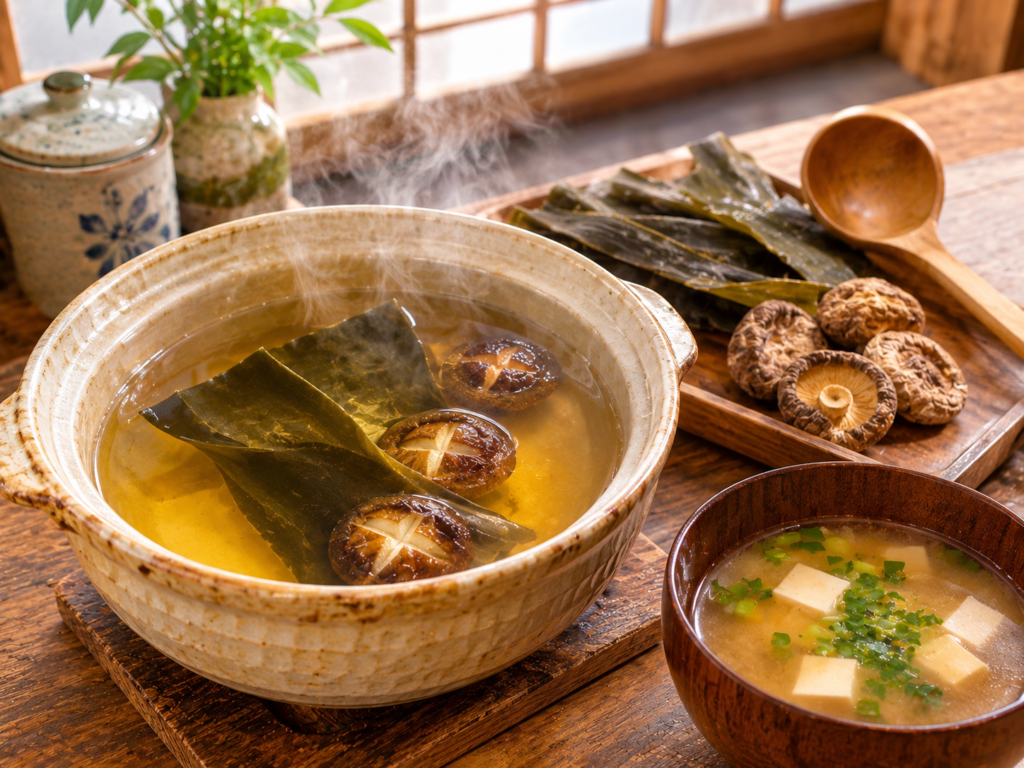
One of the most important things for vegetarian travellers to understand is dashi.
Dashi is a Japanese stock used in many soups, sauces, noodle dishes and seasonings. Some versions are made with kombu seaweed or other plant-based ingredients, while others use bonito flakes or other fish-derived ingredients.
This means a dish containing tofu, mushrooms, vegetables or noodles may still contain fish stock.
Before ordering, ask:
- Does this dish contain fish stock?
- Is the soup broth completely vegetarian?
- Are the sauces free from meat and fish ingredients?
- Can the dish be prepared without animal-derived stock?
If you are vegan, also ask about eggs, dairy and other animal-derived ingredients. If you follow a Jain diet, communicate your additional restrictions separately.
6. Carry a Japanese vegetarian or Jain food card
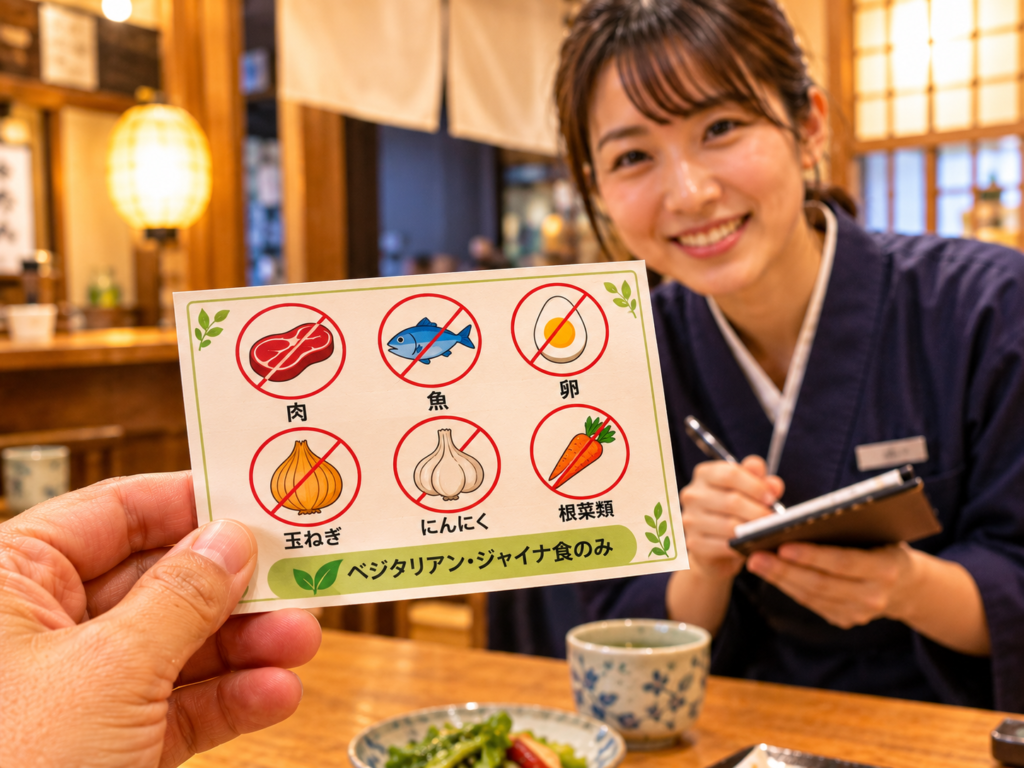
A dietary card is especially helpful when ordering at a restaurant where the staff may not speak English fluently.
Rather than relying only on the word “vegetarian,” explain precisely what you cannot eat.
For a strict Jain diet, you could prepare a card that states:
- No meat, poultry or seafood.
- No fish stock or meat-based broth.
- No eggs, if applicable to your diet.
- No onion or garlic.
- No potatoes or other root vegetables.
- No animal-derived ingredients in sauces or seasonings, where required.
Dietary requirements differ between individuals and families, so personalise the card instead of using a single definition for everyone.
Keep the card saved on your phone and carry a printed copy for situations where your battery is low or mobile internet is unavailable.
7. Use these Japanese phrases to explain your dietary restrictions

These phrases communicate specific restrictions, but they do not guarantee that every ingredient or preparation method is covered. A written dietary card with your complete requirements is preferable for strict Jain meals.
A few prepared phrases can make ordering easier. Show them to restaurant staff if pronunciation is difficult.
| Purpose | Japanese Phrase | Pronunciation |
| I do not eat meat or fish. | 肉と魚は食べません。 | Niku to sakana wa tabemasen. |
| Does this contain fish stock? | 魚のだしは入っていますか? | Sakana no dashi wa haitte imasu ka? |
| Please do not add onion or garlic. | 玉ねぎとにんにくを入れないでください。 | Tamanegi to ninniku o irenaide kudasai. |
| I cannot eat root vegetables. | 根菜は食べられません。 | Konsai wa taberaremasen. |
8. Check restaurant menus and ingredients before you visit

A restaurant’s vegetarian or vegan label is a useful starting point, but it does not automatically confirm that every dish suits your diet.
Based on Thrillophilia’s trip-planning experience, confirming dietary restrictions with restaurants before arrival is a practical way to reduce uncertainty, especially for travellers who require strict Jain meals or need specific ingredients excluded.
Before visiting:
- Check the latest menu on the restaurant’s official website.
- Contact the restaurant if your restrictions are strict.
- Confirm whether separate preparation is possible if cross-contact matters to you.
- Ask about broths, sauces, dressings and garnishes.
- Reserve in advance for special meals or restaurants with limited seating.
Frequently Asked Questions
Yes, some Indian restaurants may offer Jain meals, especially in larger cities, but availability varies. Contact the restaurant in advance and confirm restrictions on onion, garlic, root vegetables, eggs and fish stock.
Some dishes are naturally vegetarian or can be adapted, but fish-based dashi is common in Japanese cooking. Always confirm the broth, sauces and other ingredients before ordering.