


Quick Jumplinks to Navigate
Japan is a destination where ancient temples, neon-lit streets, bullet trains and traditional neighbourhoods exist side by side. However, for many Indian travellers, the language barrier can make planning a holiday feel intimidating. From reading restaurant menus to navigating busy railway stations, travelling Japan without Japanese may seem challenging at first.
The good news is that you do not need to be fluent in Japanese to explore the country comfortably. Major airports, popular tourist attractions and transport networks often provide English-language signage, while translation apps, digital maps and simple communication techniques make everyday interactions easier. Some preparation is particularly useful when visiting smaller towns, family-run restaurants or rural destinations.
This detailed information explains how to travel around Japan without speaking Japanese, including the best apps, how to understand signs, practical transport advice and tips for a smooth holiday.
Is It Possible to Travel Japan Without Speaking Japanese?

Yes, travelling Japan without Japanese is entirely possible, especially when your itinerary includes popular destinations such as Tokyo, Kyoto, Osaka, Nara and Hiroshima. Airports, major hotels, tourist information centres and many railway stations offer English-language assistance or signage.
However, English proficiency varies by location. Small restaurants, local markets, rural accommodation and neighbourhood businesses may communicate primarily in Japanese. Announcements on local trains and handwritten notices can also be difficult to understand.
The key is to combine basic planning with digital tools rather than depend entirely on English. Download translation apps, save important addresses, learn a few Japanese phrases and keep your accommodation details accessible offline. These small steps can make independent travel much easier.
Best Apps for Travelling Japan Without Japanese
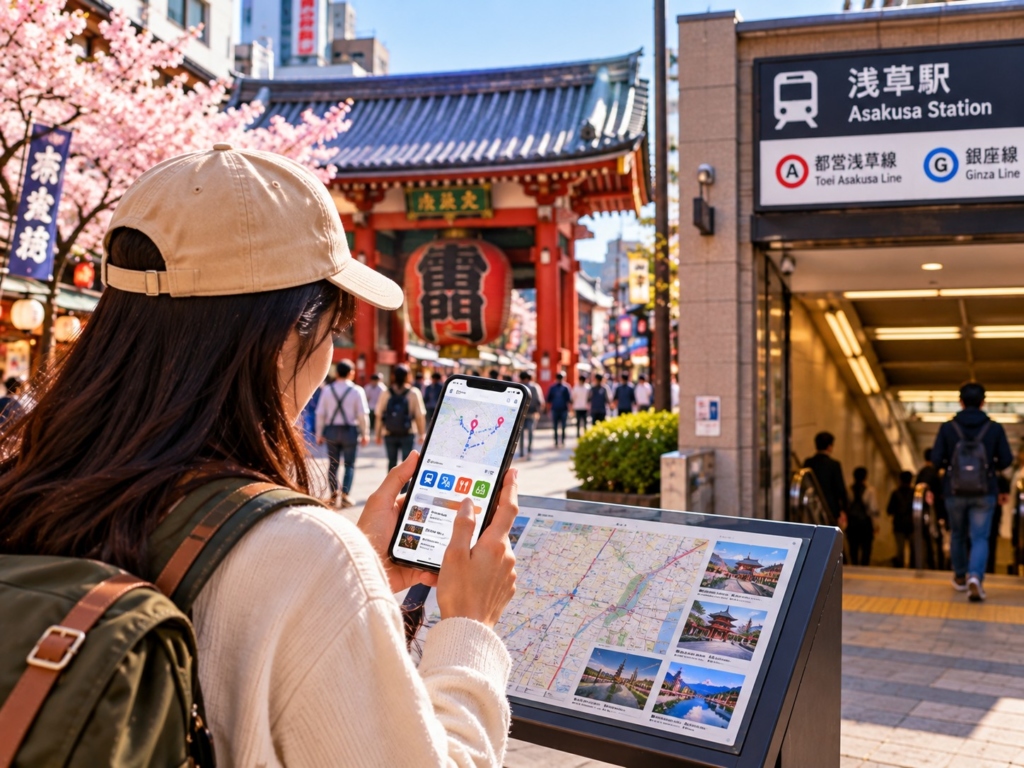
Your smartphone can serve as a translator, navigation guide and transport planner throughout your trip. Download essential apps before departure and check which features require an internet connection.
| App | Uses and Features |
| Google Translate | Google Translate is one of the most useful apps for travelling Japan without Japanese. Its camera feature helps translate menus, notices, vending machines and information boards. Text translation and conversation features are useful when asking for directions or clarifying a request. Download Japanese for offline translation where supported. However, offline results may be less comprehensive than online translations, so verify important information whenever possible. |
| Google Maps | Google Maps helps you find attractions, restaurants, walking routes and public transport connections. It is particularly useful for checking station entrances, nearby exits and estimated journey times. Download suitable offline map areas in advance, but remember that live transit updates and certain navigation features require an internet connection. |
| Japan Travel by NAVITIME | Japan Travel by NAVITIME offers route planning and destination information. It can help you compare train connections, understand transfers and plan journeys between cities. This app is particularly useful when coordinating Shinkansen journeys with local trains. Check the latest schedules, fares and ticket requirements before departure. |
| VoiceTra | VoiceTra is a speech translation app developed by Japan’s National Institute of Information and Communications Technology. It supports multilingual conversations and can help when speaking with hotel staff, shopkeepers or local residents. Internet access is generally required, so keep a text-based translation alternative available. |
| Safety tips | Safety tips provides multilingual alerts about earthquakes, tsunamis and severe weather, along with disaster preparedness information. It is a useful addition to your travel toolkit, particularly if you plan to explore multiple regions. Enable notifications and familiarise yourself with the app before travelling. |
Understanding Japanese Signs Without Knowing the Language
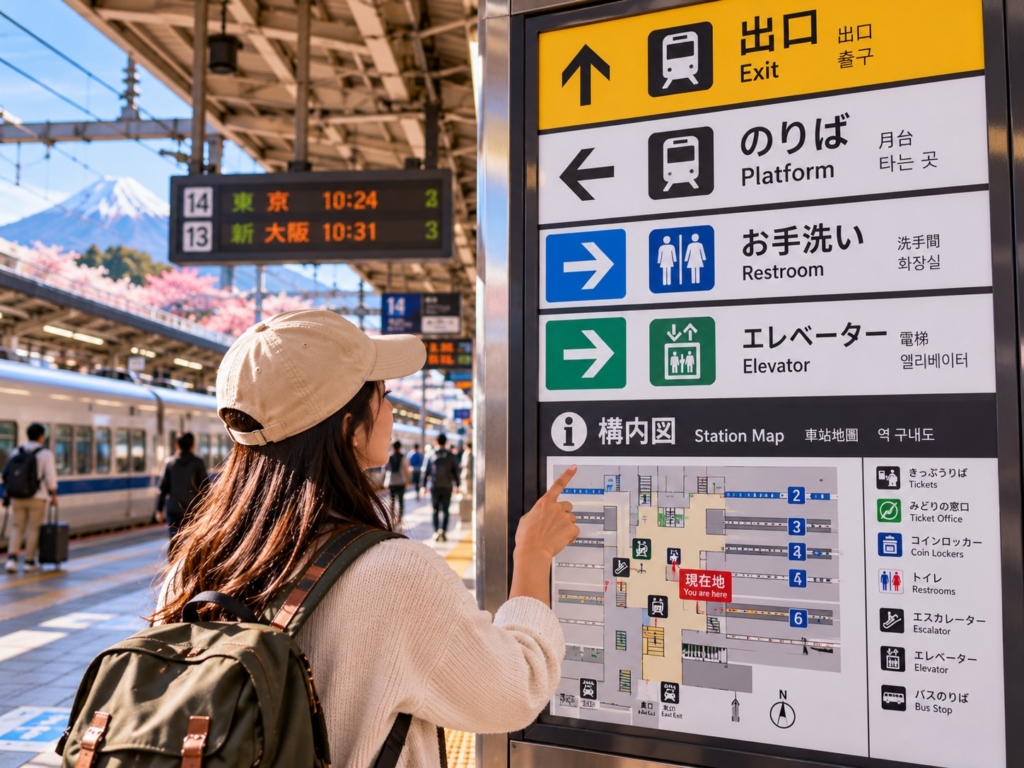
Japanese signs become easier to navigate once you recognise common patterns. Many important public signs use English translations, Arabic numerals, colour coding or universally recognisable symbols.
Here is what to look for:
- Train stations: Look for station names written in Roman letters, line colours, platform numbers and directional arrows. Station codes can also help you identify the correct stop.
- Road and pedestrian signs: Familiarise yourself with symbols for pedestrian crossings, parking restrictions, exits and public facilities. Do not rely on symbols alone when interpreting road restrictions.
- Restaurants: Picture menus are common in tourist areas. Plastic food displays outside restaurants can also help you identify dishes before entering.
- Toilets: Look for standard male and female symbols and accessibility icons. Learn the difference between common Japanese labels such as 男 (men) and 女 (women).
- Warnings and restrictions: Recognise symbols indicating no photography, no entry, prohibited smoking or restricted access. Use a translation app for unfamiliar rules rather than guessing.
A practical tip: Photograph unfamiliar signs and use your translation app’s camera or image-translation feature. For important instructions, check the translated text against the surrounding context.
How to Navigate Japan’s Public Transport Without Japanese
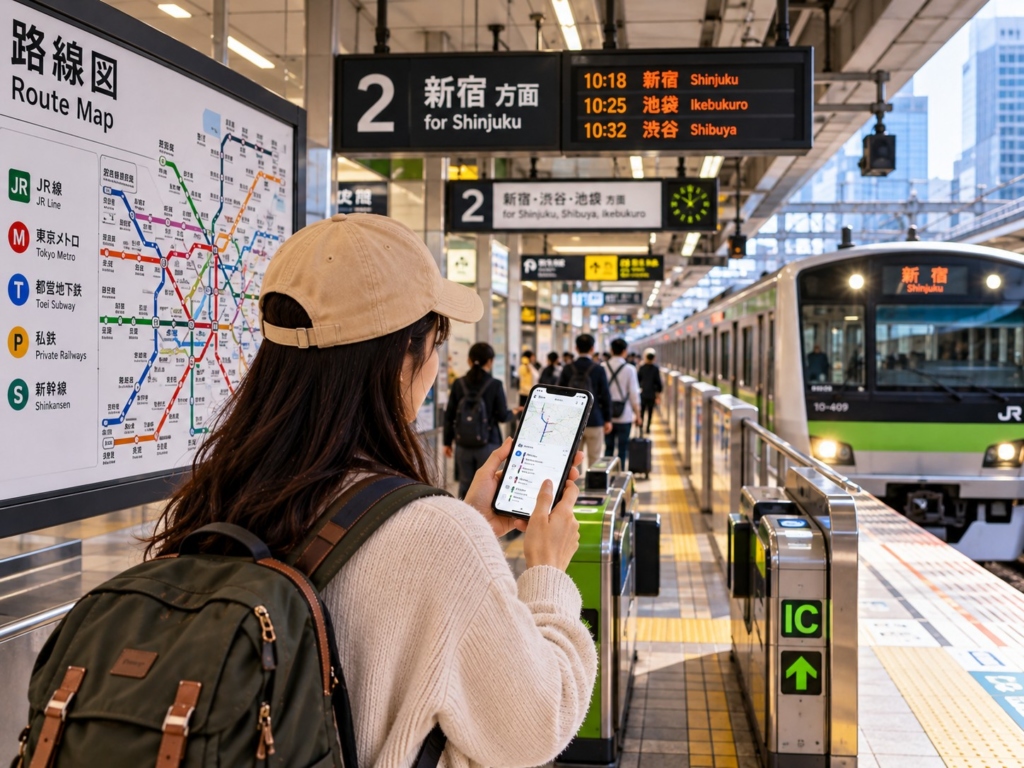
Japan’s railway network is efficient, but large stations can be confusing because several railway companies and subway lines may share the same complex.
Start by entering your destination into Google Maps or Japan Travel by NAVITIME. Check the departure station, line name, platform, transfer points and arrival station before boarding. Pay attention to the direction of travel, since trains on the same line may operate in opposite directions. Consider these practical tips:
- Use an IC card: Cards such as Suica, PASMO and ICOCA can simplify payment on compatible trains, buses and at many participating shops. Coverage and card availability vary by region and service.
- Check the fare before travelling: Some routes require separate tickets or supplements, including certain limited express and Shinkansen services.
- Keep your destination written in Japanese: Save your hotel’s address and the name of your next station in Japanese script to show staff or taxi drivers.
- Allow extra transfer time: Large stations may require considerable walking between platforms, particularly when travelling with luggage.
- Confirm the final train: If you are returning late, check the last departure in advance rather than assuming services run throughout the night.
English signs are increasingly common across major transport systems, but smaller stations and local services may offer less language support.
Ordering Food in Japan Without Speaking Japanese
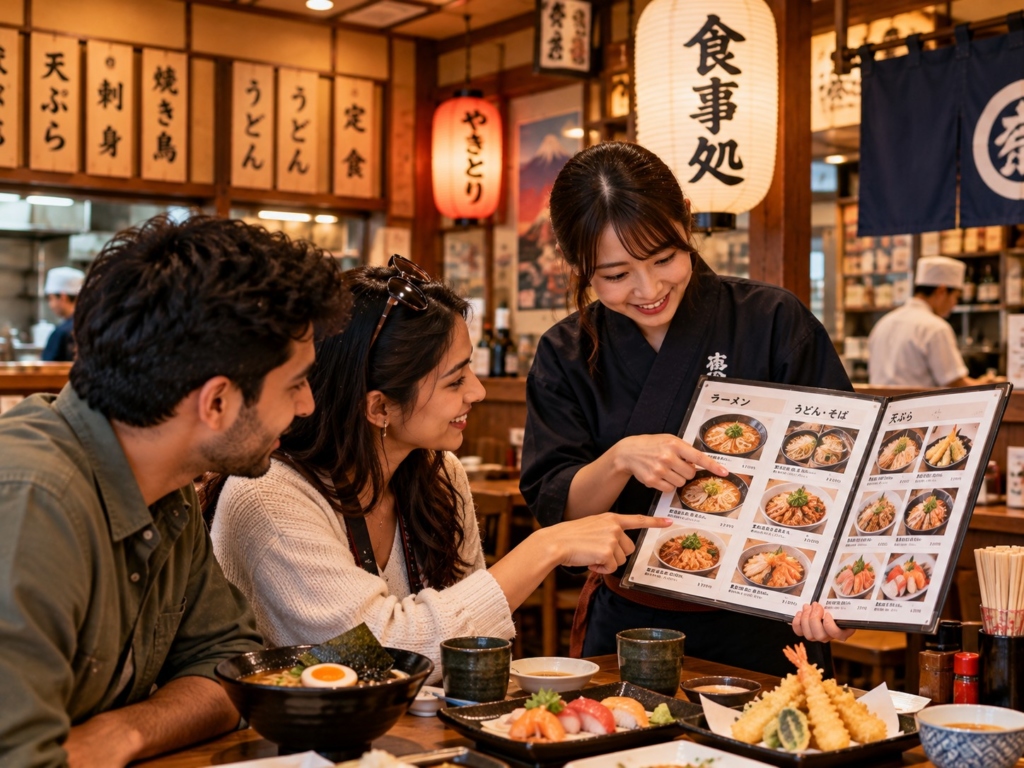
Food is one of the highlights of a Japanese holiday, and the language barrier should not prevent you from trying ramen, sushi, tempura, udon or regional specialities.
Look for restaurants with picture menus, display models or English-language menus. You can also use a translation app to understand ingredients and communicate dietary requirements.
A few techniques can make ordering easier:
- Save photographs of dishes you want to try and show them to the server.
- Translate the menu before placing your order, especially when ingredients matter.
- Keep dietary restrictions written in Japanese, including allergies. Do not assume that a dish is vegetarian simply because it contains vegetables.
- At some ramen shops, you may need to purchase a meal ticket from a vending machine before sitting down. Use the machine’s language option if available or ask staff for assistance.
- Carry some cash because smaller establishments may not accept every international card.
If you have a serious food allergy, communicate it clearly and confirm the restaurant understands the restriction. Machine translation can make mistakes, so do not rely on it as your only safeguard.
Essential Japanese Phrases Every Traveller Should Know
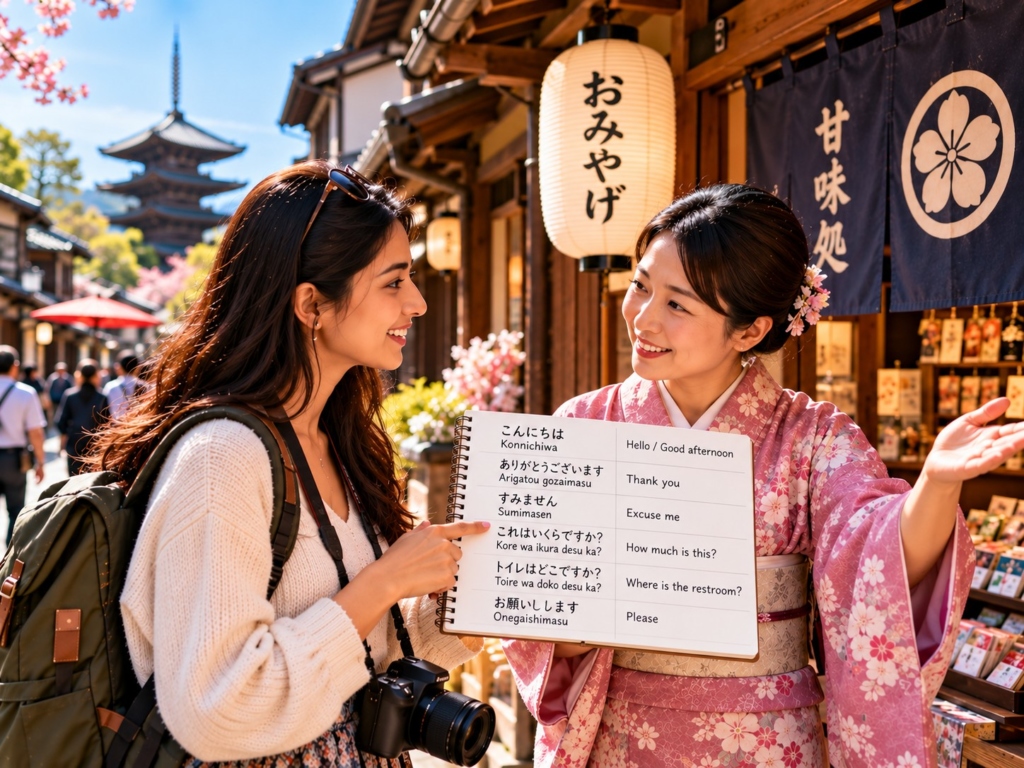
You do not need to memorise Japanese grammar. Learning a few polite expressions can make interactions friendlier and help you handle common situations.
| Japanese phrase | Meaning |
| Konnichiwa | Hello / Good afternoon |
| Arigatou gozaimasu | Thank you |
| Sumimasen | Excuse me / Sorry |
| Eigo o hanasemasu ka? | Can you speak English? |
| Kore o kudasai | This, please |
| Eki wa doko desu ka? | Where is the station? |
| Tasukete kudasai | Please help me |
| Wakarimasen | I don’t understand |
Speak slowly, remain polite and use gestures where appropriate. When communication becomes difficult, show the translated question on your phone instead of trying to pronounce a long sentence.
Practical Tips for Travelling Japan Without Japanese
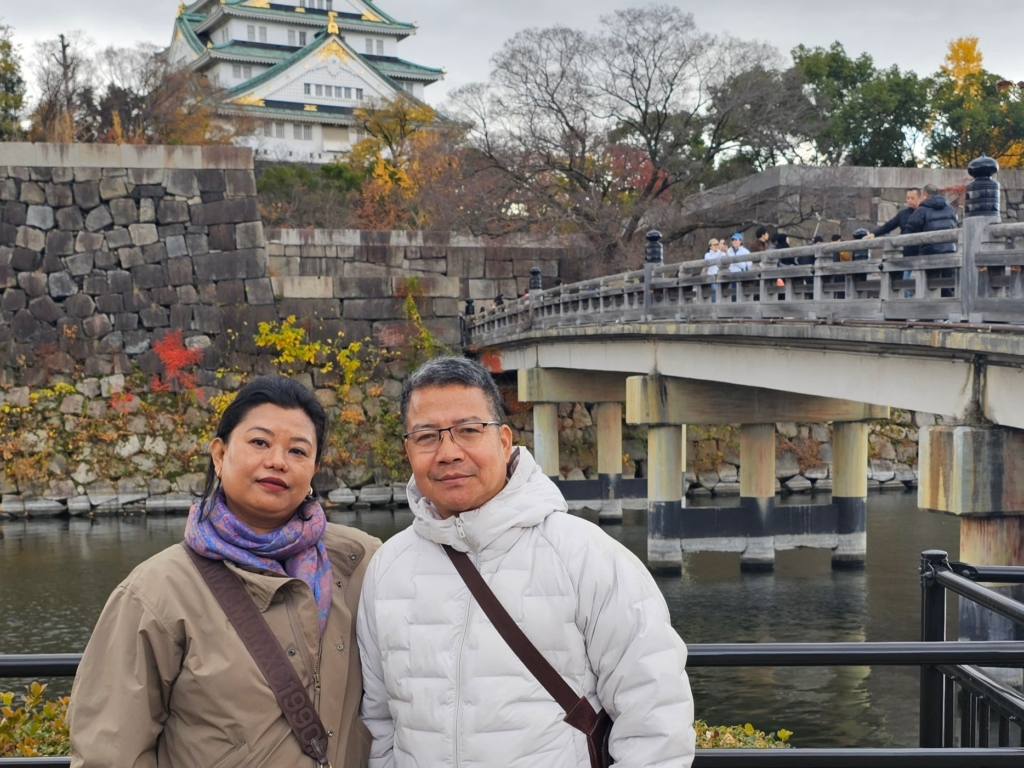
A little preparation can prevent common problems and help you enjoy the destination with confidence.
- Arrange reliable mobile connectivity. Consider a travel eSIM, physical SIM or pocket Wi-Fi device. Check your phone’s compatibility and keep essential information accessible offline.
- Save important addresses. Store your hotel’s address, booking confirmation, nearest station and emergency contacts on your phone. A screenshot is useful if your internet connection fails.
- Carry a payment backup. Keep an international card and some Japanese yen. Not every small business accepts cards, and transport payment options differ by location.
- Respect local etiquette. Speak quietly on trains, queue properly, avoid blocking walkways and carry your rubbish until you find an appropriate bin. Follow posted rules at temples, shrines and private properties.
- Plan for emergencies. Save Japan’s emergency numbers: 110 for police and 119 for fire or ambulance services. The Japan Visitor Hotline, operated by the Japan National Tourism Organization, is available around the clock at 050-3816-2787 for tourist information and assistance.
- Keep your itinerary realistic. Avoid packing too many destinations into one day. Give yourself extra time for station transfers, unfamiliar ticket machines and unexpected route changes.
Why Choose Thrillophilia for Your Japan Holiday?
Planning an international holiday becomes easier when transport, accommodation, sightseeing and daily schedules are considered together. For travellers concerned about the language barrier, a well-organised itinerary can reduce the number of unfamiliar decisions they need to make on the ground.
Thrillophilia offers Japan tour packages that travellers can explore according to their preferred destinations, travel duration and budget. Depending on the specific package, you can compare accommodation arrangements, sightseeing inclusions, transfers and planned experiences before choosing an itinerary.
Here is how booking support and thoughtful planning can help:
- Structured itineraries: A planned route helps you understand which cities you will visit, how long you will spend in each destination and how the journey fits together. This is especially helpful when combining Tokyo, Kyoto and Osaka.
- Support with travel planning: Before booking, review the itinerary, transfer arrangements, inclusions and exclusions. Ask for clarification about train tickets, airport transfers and local transport wherever these details are relevant to your package.
- Suitable options for different travellers: Couples may prefer a balanced mix of city experiences and cultural sightseeing, while families may value manageable travel days and convenient accommodation locations. Compare package details to find an itinerary that matches your needs.
- Less uncertainty around logistics: Confirming transfers, hotel locations and sightseeing arrangements in advance can reduce the need to negotiate every detail after arrival. For independent activities, keep destination names and addresses saved in Japanese.
- Help with choosing experiences: Japan offers everything from historic temples and traditional neighbourhoods to food tours, scenic landscapes and modern attractions. A package can help you organise these experiences into a practical route without overlooking travel time.
- Clearer budgeting: Compare the total package price and check whether international flights, meals, entrance tickets, local transport and travel insurance are included. This helps you estimate additional spending in INR rather than relying on assumptions.
Frequently Asked Questions
Yes. Indian travellers can visit Japan without speaking Japanese. English signage and assistance are available at many major tourist attractions, airports and transport hubs. Translation apps, saved addresses and a few polite Japanese phrases can help you manage situations where English is less commonly spoken.
Google Translate is a useful all-round option because it supports text, camera and conversation translation. VoiceTra is another option for spoken conversations. Download the necessary language packs in advance and remember that offline functionality varies between apps and features.
English signs are common at major airports, popular attractions and many railway stations. However, smaller towns, rural stations and local businesses may have limited English signage. Use a navigation app and camera translation to understand unfamiliar directions and notices.
Yes. Navigation apps, station codes, colour-coded lines, platform numbers and IC cards make train travel manageable. Check the route, direction, platform and transfer points before boarding, and allow extra time when changing trains at large stations.
Japan is generally considered a convenient destination for independent tourism, but every traveller should take normal precautions. Save emergency numbers, keep accommodation details accessible and download the Safety tips app for multilingual disaster alerts. Contact local authorities or emergency services when necessary.
A tour package may be helpful if you prefer planned accommodation, sightseeing and transfers rather than arranging every detail independently. Compare inclusions, itinerary pace and available support before booking. Independent travellers can also explore Japan comfortably with suitable apps and advance preparation.