

Quick Jumplinks to Navigate
A Schengen visa rejection can disrupt months of planning tied to flights, hotels, work leave, and carefully chosen Europe tour packages. For Indian travellers, especially those who are applying for family travel, a refusal often feels final, but it rarely is. Under the Schengen Visa Code, consulates are required to clearly state the reason for refusal, and applicants have the legal right to appeal or reapply using the refusing country’s formal procedure.
Understanding Schengen Visa requirements for Indian citizens at this stage becomes critical, as most refusals stem from documentation gaps rather than ineligibility. The most reliable way to recover from a refusal is to treat it as a checklist, not a setback. Each refusal letter highlights specific grounds, and only those points need to be corrected. Whether you are reapplying or appealing, success depends on submitting targeted evidence that directly addresses the flagged issue.
A clear Europe itinerary, consistent hotel and transport bookings, traceable finances, compliant Schengen travel insurance, and strong proof of return ties usually carry more weight than lengthy explanations. For family applicants, aligning documents with Schengen Visa Requirements for Indian Families, including dependency proof, consent letters, and financial responsibility, is especially important.
From a planning standpoint, we know that structured Europe itineraries are viewed more favourably when they clearly reflect realistic travel flow and confirmed logistics. At Thrillophilia, we design itineraries around fixed routes, defined city stays, and manageable transit days. When this structure is accurately reflected in a visa application, it helps reduce ambiguity around the purpose and conditions of stay, which is one of the most common triggers for refusals.
Your next step should be simple and strategic:
- Appeal when you can show the decision was incorrect or incomplete with documentary evidence, and follow the appeal route mentioned in the refusal notice.
- Reapply when you can materially strengthen the exact area that was flagged, because submitting the same style of file again often repeats the same outcome.
What “Visa Rejected” Actually Means
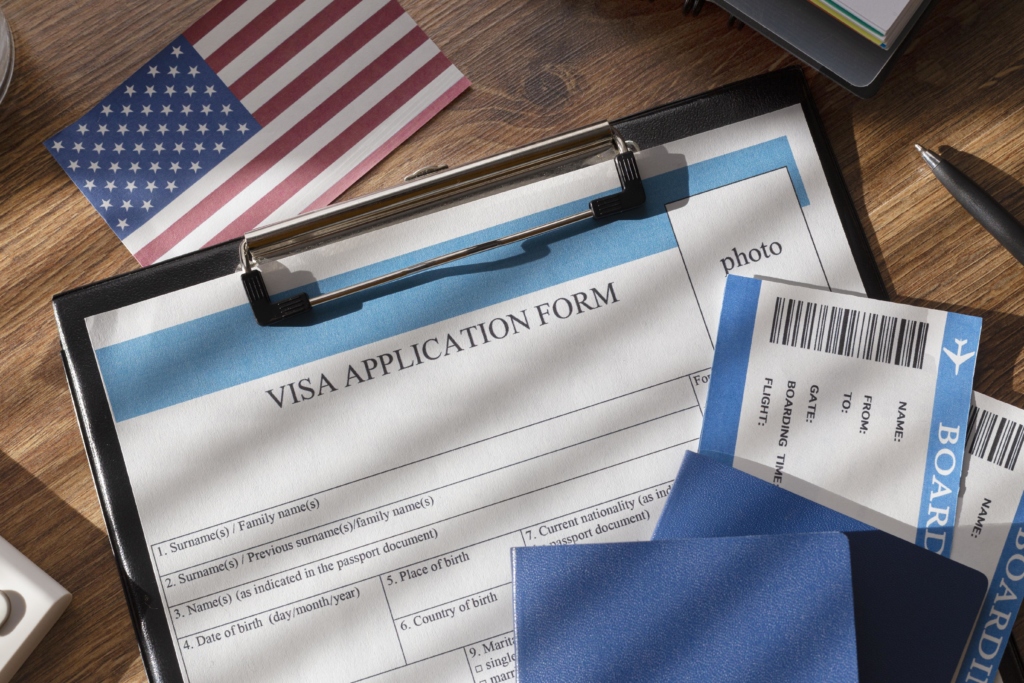
“Schengen Visa rejected” is a common phrase, but the embassy’s decision letter is more specific. The exact label matters because it decides whether you can appeal, reapply, or claim a fee refund in limited cases. Here are some of the terms that you need to know before reapplication of your Schengen Visa.
1) Visa refused
This is the most common formal refusal decision. The Schengen Visa Code lists specific refusal grounds (including missing insurance, SIS alert, doubts about documents, doubts about your intention to leave, and more). A refusal decision must be notified using the standard form in Annex VI, and refused applicants have the right to appeal.
2) Application inadmissible
This generally means the consulate did not accept your application for examination because basic requirements were not met. In that case, the Visa Code says the consulate must return your documents, not examine the application, and reimburse the Schengen visa fee.
3) Consulate not competent
If the consulate isn’t competent for your case, it must return documents, reimburse the visa fee, and tell you which consulate is competent.
Do You Get a Refund If Your Schengen Visa Is Refused?

Yes, in a few cases. From a traveller planning perspective, these rules can help you set your expectations-
- The Visa Code says the Schengen visa fee is not refundable, except in the cases where the consulate is not competent or the application is inadmissible (fee reimbursed).
- If you used a visa application centre/external service provider, an additional service fee may apply, and the Visa Code caps that service fee to no more than half of the visa fee.
Also note: the European Commission revised Schengen visa fees globally from €80 to €90 for adults and €40 to €45 for children aged 6–11, effective 11 June 2024.
Schengen Visa Refused? Follow These Steps Before You Apply Again
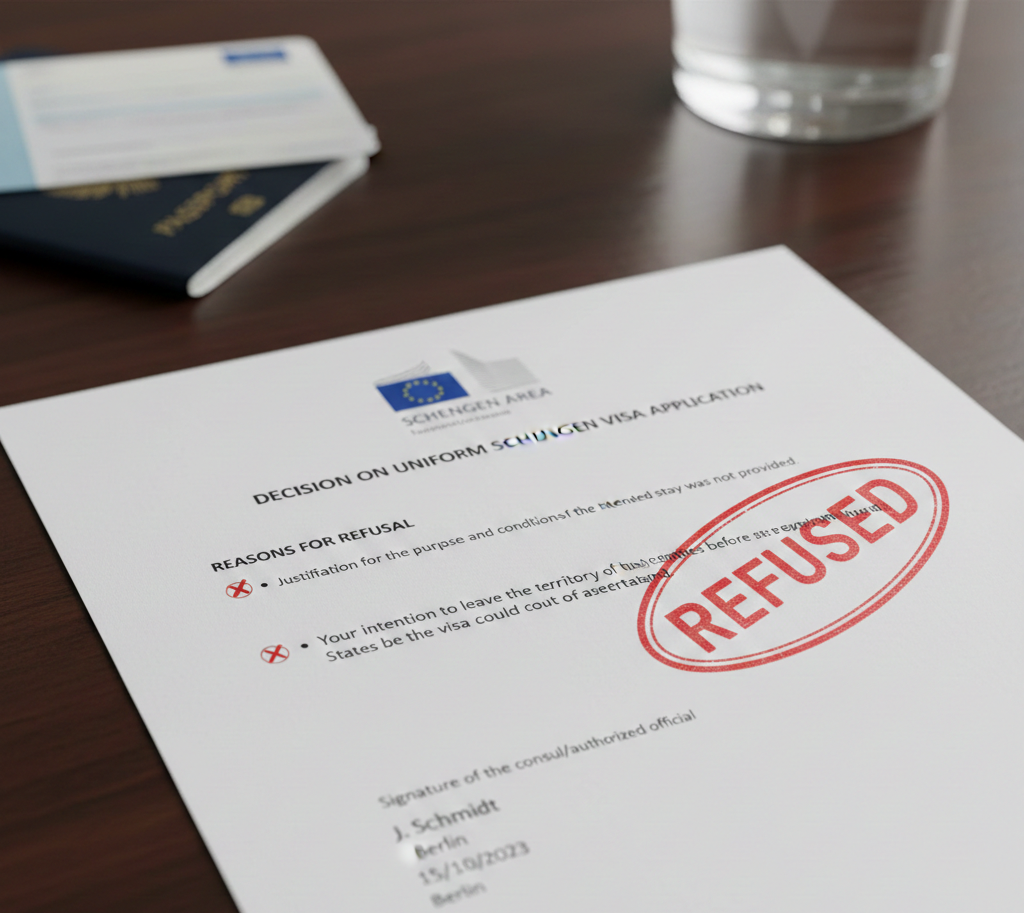
Step 1: Decode the Refusal Letter
When your Schengen visa is refused, the consulate must notify you with reasons using the standard Annex VI refusal form. This form works like a diagnosis sheet: one or more boxes are ticked, and those ticked reasons are what you must address.
Do this immediately:
- Write down the exact ticked refusal reason(s) without paraphrasing.
- Check if there is any short note/remark.
- Locate the appeal instructions and deadline. When a Schengen visa is refused, you have a legal right to appeal, and the refusal form must tell you where to appeal, the deadline, and the authority that handles it.
Step 2: Appeal the Decision or Submit a Fresh Application
You typically have two options:
1) Appeal
- Refused applicants have the right to appeal.
- Appeals are conducted against the Member State that took the final decision, following that country’s national law. This is usually the best option to go for when you can show the refusal was based on a clear misunderstanding or incomplete reading of evidence (and you can prove it with documents).
2) Reapply
- Reapplying is often smarter when the refusal happened because your file was weak, inconsistent, or missing key evidence.
- A previous Schengen refusal is not an automatic ban. The Schengen Visa Code specifically says a past refusal must not automatically trigger another refusal. Instead, every new application has to be re-assessed using all available information.
Practical rule: Reapply only when you can fix the exact issue mentioned in the refusal letter with stronger documents. Submitting the same file again usually leads to the same result.
Step 3: Fix Common Schengen Visa Refusal Reasons
Below are common refusal reasons you’ll see ticked in the checklist of the standard form, and this is how you can fix them-
1) Reason: “Information submitted regarding the purpose and conditions of stay was not reliable”
This appears on the refusal form and usually points to itinerary credibility.
What to improve
- A day-wise route that matches bookings and travel time (no city-hopping that looks unrealistic).
- Ensure that bookings and dates are internally consistent across your form, cover letter, and itinerary.
Note: For travellers applying with organised Europe tour plans, we emphasise that the itinerary submitted to the consulate must exactly match the confirmed route, city-night distribution, and travel dates that have been issued. Our curated itineraries follow a fixed travel flow, and even small mismatches between that structure and the visa file can raise credibility concerns, despite valid bookings being in place.
2) Reason: “Your intention to leave before the expiry of the visa could not be ascertained”
This is explicitly listed on the refusal form and refers to lack of proof of return.
What to improve
- Strong “return anchors” that match your situation: employment proof + approved leave, business proof, education proof, dependent responsibilities, etc.
- A cover letter that explains your return timing clearly (and matches your leave dates).
3) Reason: “You do not have sufficient means of subsistence…” (or funds not lawful/credible)
This option also appears on the refusal form, meaning lack of sufficient funding or proof.
What to improve (without inventing a minimum amount)
- Clean bank statements, salary slips, ITRs, and any sponsorship proof (if applicable).
- A clear explanation + proof for large sudden credits (avoid unexplained “top-ups”).
Note: The Visa Code also explains that means of subsistence are assessed based on the duration and purpose of stay, referencing average prices and Member State reference amounts. So, it is suggested to provide a practical explanation of the same.
4) Reason: “Proof of holding adequate and valid travel medical insurance was not provided”
This is a refusal-form reason, which points to the absence of enough/valid medical insurance as per the Schengen visa rules.
The Visa Code sets exact insurance requirements:
- Valid across the territory of Member States
- Covers the entire intended stay/transit
- Minimum coverage is €30,000
- Covers repatriation, urgent medical attention, emergency hospital care, or death.
What to improve
- Policy certificate clearly showing Schengen validity + dates + €30,000 coverage and the required medical items.
5) Reason: “Reasonable doubts…” about documents, statements, or intention to leave
The Schengen Visa Code allows refusal where there are reasonable doubts about authenticity, veracity, reliability, or intention to leave.
What to improve
- Remove weak or unverifiable documents.
- Fix mismatches across: form fields, cover letter, itinerary, hotel/flight details, financial statements.
Step 4: Reappealing
The Schengen Visa Code is clear:
- refusal must be notified via Annex VI
- refused applicants have a right to appeal
- appeals follow national law of the refusing Member State
Here is a clean appeal letter structure which is evidence-led-
- Cover letter subject: “Appeal against refusal dated ___” + application reference
- Copy of refusal form (Annex VI)
- Point-by-point response to each ticked reason
- Evidence bundle labelled (Annex 1, Annex 2, …)
Tip: Keep it factual. Appeals work best when you can show the decision relied on incomplete information or a misunderstanding, proved with documents.
Step 5: Build A Stronger Document Pack Checklist
A reapplication should be a rebuilt file, not a patched one. Your goal is to make the case so consistent and verifiable that the refusal reason no longer applies.
Document checklist for reapplication-
- Re-check every form field for internal consistency (dates, purpose, travel history).
- Rebuild itinerary so it is logical and matches bookings.
- Strengthen funds proof (clean statements + explainable inflows).
- Strengthen return anchors (leave approval, employer letter, business/education proof).
- Confirm insurance meets the Schengen Visa Code: valid across Schengen, covers entire stay, €30,000 minimum, and required medical coverage.
Final takeaway for travellers planning a Europe trip from India

A Schengen visa refusal is frustrating, but it is not a “no forever.” In most cases, it simply means the consulate did not find one or more parts of your file strong enough under the refusal grounds listed in the Visa Code, and they have flagged that gap on the refusal form.
For India-based travellers planning a Europe tour package on fixed leaves and pre-decided dates, the key is not speed, it is accuracy. Once your documents clearly answer the ticked refusal reasons, your application must be assessed as a fresh case and a previous refusal should not automatically decide your new result.
FAQs
A past refusal stays on record and consulates can see it, but it does not act like an automatic ban. Schengen rules state that a previous refusal must not automatically lead to refusal of a new application, and the new application must be assessed on all available information.
Yes. The Visa Code states that a previous refusal must not automatically lead to refusal of a new application, and your new file must be assessed on all available information. In practice, your best chance comes when you reapply with clear upgrades to the exact refusal reason(s), not the same set of documents again.
Yes. Refused applicants always have the right to appeal, and these appeals are conducted under the national law of the Member State that made the final decision. Your refusal notice should also indicate the appeal route and deadline, so use that as your starting point.
Usually no. The Visa Code says the fee is not refundable except in the specific cases where either the consulate is not competent or the application is inadmissible. If you reapply, you generally pay the visa fee again (and any service charges, if applicable).
The Visa Code requires insurance valid across Member States, covering the full stay/transit, with minimum coverage of €30,000, including medical emergencies and repatriation. Before you submit, double-check that your certificate clearly shows Schengen-wide validity, correct dates, and the required coverage amount.
Related Links