
Things to Do in Antalya, Bodrum, and the Izmir Coast: Beaches, Ancient Ruins, Food Markets, and Experiences

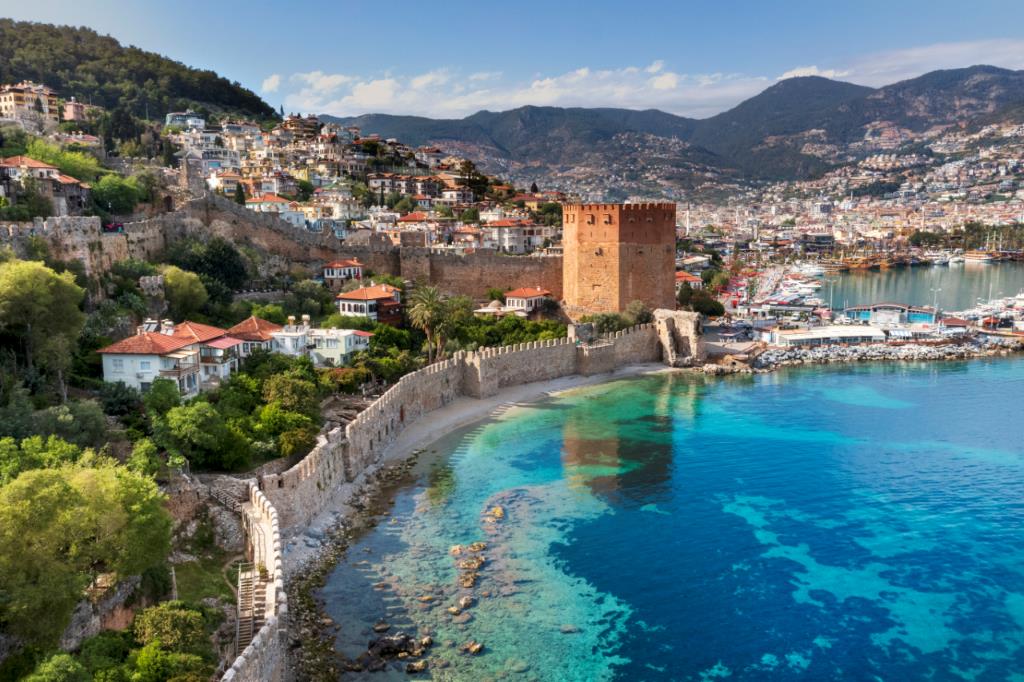
Antalya: The Old Quarter, the Ruins, and the Waterfront
Most people arriving in Antalya head straight for a beach resort and stay there. That works if a beach holiday is the goal. But Antalya also has an old city that is worth a proper half-day, and skipping it means missing a large part of what the place actually is.
Start with Kaleici, the historic quarter built on a cliff above the harbour. The main entrance is through Hadrian’s Gate, a Roman triumphal arch built in 130 CE to mark the visit of Emperor Hadrian to the city. It has three arches, stands 8 metres high, and is constructed from marble and granite. The original structure was two storeys tall, and what you walk through today is the lower half that survived intact. It is still the main gateway into the old town, and there is no entry fee.
Once inside, the pace shifts. The streets are narrow and cobbled, lined with Ottoman wooden houses, small hotels, carpet shops, and cafes. The Yivli Minaret, built by the Seljuk Sultan Alaeddin Keykubad in the early 13th century, rises 38 metres above the rooftops. Made from dark glazed brick and fluted in design, it has become a defining symbol of Antalya.
From here, everything slopes gently toward the harbour. The Roman harbour at the base of the old town has been in use since the 2nd century BCE and now functions as a marina, lined with seafood restaurants along the water’s edge. It is one of the better places in the city to sit down for dinner.
If you have more time, two excursions just outside the city are worth planning. Duden Waterfalls, about 12 kilometres from the centre, are split into two parts. The Upper Duden sits within a park with walking paths, while the Lower Duden, closer to the coast, drops directly into the Mediterranean Sea. Seeing it from the water, on a short boat ride from Antalya harbour, is the more striking option.
Further out, about 17 kilometres east, is Perge, an Ancient City with roots stretching back to antiquity. Its main street once ran nearly a kilometre, lined with columns and cooled by water channels flowing through the centre. The site includes a 15,000-seat stadium, Roman baths, a monumental gateway, and a theatre.
What to Eat in Antalya
After moving through the old town and nearby ruins, food in Antalya feels closely tied to its setting. The marina and Kaleici both centre around seafood. The typical format is fresh fish or prawns, paired with cold mezze, eaten slowly at a table overlooking the harbour. Being on the Mediterranean coast, the freshness of the fish is noticeable.
For something more casual, gozleme is widely available at markets, and the Antalya bazaar near the clock tower is a good stop for local preserves, dried fruits, and olive oil sourced from the surrounding region.
Bodrum: History Beneath the Party Town Image
From Antalya, the experience shifts again once you reach Bodrum. Bodrum is widely known for its nightlife, beach clubs, and luxury yachts, and all of that is easy to find. But underneath that surface, the city sits on the site of ancient Halicarnassus, and its historical depth is easy to overlook if you only treat it as a resort destination.
The Mausoleum at Halicarnassus, built around 350 BCE as the tomb of Mausolus, was one of the Seven Wonders of the Ancient World. Very little remains on site today, but understanding its scale helps place Bodrum within a much older context. Many of the original carvings were removed in the 19th century and are now in the British Museum in London.
Closer to the waterfront, Bodrum Castle dominates the harbour. Built from 1402 onwards by the Knights of St John, it incorporates stones taken from the Mausoleum, which is why some of its walls still carry ancient carvings. The castle’s four towers were each maintained by different groups of knights, English, French, German, and Italian.
Today, the castle houses the Museum of Underwater Archaeology, the largest of its kind in the world. Its collection spans roughly 3,500 years, with artefacts recovered from shipwrecks along the Aegean and Mediterranean coasts. One of the highlights is the Uluburun Shipwreck, dating to around 1300 BCE, whose cargo included ivory, amber, gold jewellery, and metal ingots. The museum itself is extensive, so it is worth setting aside at least two hours.
Bodrum’s Food and Market Scene
After the historical sites, Bodrum’s present-day culture shows up most clearly in its markets and food. The covered market near the town centre sells local produce, olives, cheeses, and honey. The region is also known for its mandarin oranges, which appear both fresh and in preserved forms.
Along the waterfront, fish restaurants and meyhanes line the marina. The meze culture here leans Aegean in style, lighter and more olive oil-forward than what you might find elsewhere, and designed for long, relaxed meals. With its waterfront eateries, the local cuisine is given a contemporary twist, resulting in dishes that make the most of the fresh produce of the Aegean region. Luxury resorts here take fine dining seriously, and Bodrum’s top-tier restaurants offer a range of culinary experiences that draw on the best of the region’s gastronomy. Several have earned Michelin recognition, placing Bodrum firmly on the map for food travellers as well as those coming for the sea.
Izmir and the Aegean Coast: The City, the Ruins, and the Villages
Moving further along the coast, Izmir brings another shift in pace. As Türkiye’s third largest city and second largest port, it has been a trading hub since antiquity, shaped by Greek, Roman, Byzantine, and Ottoman influences. It feels more relaxed in pace than many larger Turkish cities, and its food culture reflects that difference.
Kemeralti Bazaar, the historic market district, stretches from Konak Square to the ancient Agora of Smyrna. With over 5,000 shops, it is one of the largest and most varied bazaars in the country. Here, you will find textiles, spices, jewellery, olive oil products, ceramics, and leather goods. Within the bazaar are hans, former caravanserais that once served as commercial inns. Kizlaragasi Hani, built in the 18th century, is one of the best preserved and now functions as a shopping courtyard.
Street food in Izmir is distinct enough to be worth seeking out by name. Boyoz, a flaky pastry of Sephardic Jewish origin, is typically eaten for breakfast with a boiled egg and tea. Kumru is a sesame bread sandwich filled with sucuk, salami, cheese, tomatoes, and pickles. Midye dolma, stuffed mussels, appear across the coast, including here.
The wider Izmir region has also built a reputation for fine dining. The Aegean’s Michelin-recognised restaurants — from Izmir’s laid-back classics to Mugla’s newly highlighted venues — illustrate a dining landscape that appeals to both food travellers and culture seekers alike. The MICHELIN Guide Turkiye 2026 Selection covers Izmir and Mugla across 64 recommended restaurants, including one Two-Star restaurant (Vino Locale in Izmir), six One-Star restaurants split between Izmir and Bodrum, 17 Bib Gourmand restaurants, and eight MICHELIN Green Star restaurants recognised for their approach to sustainable gastronomy.
Ephesus, Sirince, and the Area Around Selcuk
About an hour south of Izmir, the focus shifts more directly to history. Ephesus was once one of the largest cities in the Roman Empire and remains one of the best preserved ancient sites in the world, recognised as a UNESCO World Heritage Site. Walking through it, you move along marble streets like Curetes Street, past landmarks such as the Library of Celsus and the Great Theatre, which could seat 25,000 people. The Terraced Houses, accessible with a separate ticket, preserve detailed interiors of Roman homes. It is worth allowing at least three hours to explore the site properly.
Nearby, Sirince offers a different experience. This hilltop village, originally an Anatolian Greek settlement, is known for its fruit wines made from peach, cherry, strawberry, and fig. It has been nominated as a Best Tourism Village by UN Tourism, a recognition that reflects both its character and its commitment to preserving local traditions. Small shops across the village offer tastings, along with local preserves, olive oil soap, and textiles. Visiting earlier in the day helps avoid peak crowds.
Further north of Izmir, about 100 kilometres away, lies Pergamon, another Ancient City and a UNESCO World Heritage Site. Once a major centre of the Hellenistic world, it sits on a dramatic acropolis above the modern town of Bergama, with a well-preserved theatre, a temple to Athena, and one of the ancient world’s most significant libraries.
Kusadasi, about 20 kilometres from Ephesus, brings the coastline back into focus. It is a resort town with beaches and Guvercin Adasi, a small fortified island connected by a causeway. The island’s 14th-century castle offers views across the bay.
Getting Around the Aegean Coast
Across all these places, moving between them is relatively straightforward, and the journey itself becomes part of the experience. Izmir has an international airport with direct and connecting flights. Selcuk is about an hour away by road or train. Bodrum is roughly three hours from Izmir, while Antalya is further along the coast, about four to five hours by road or a short domestic flight away.
The most practical way to explore the region is to follow a loose circuit, entering through Izmir and exiting through Antalya, or the reverse, with stops at Ephesus, Sirince, Pamukkale, and either Bodrum or Antalya depending on the route.
What ties all of this together is the range within a relatively small stretch of coastline. In a matter of days, you move from ancient ruins and archaeological sites to working markets, beach towns, and quieter coastal villages.
It is this constant shift, between history, landscape, and everyday life, that defines the experience of travelling along the Turkish Riviera and the Aegean coast.