

Quick Jumplinks to Navigate
A trip to Europe rarely has one fixed price. The same flight, hotel or rail journey can cost more or less depending on when you travel, when you book and how much inventory remains. This is dynamic pricing: travel suppliers adjust prices as demand, availability, seasonality and market conditions change.
For Indian travellers, the effect is significant because a European holiday combines several moving costs. It includes international airfare, hotels, intercity transport, attractions and sometimes package components.
As per Thrillophilia’s destination experts, headline prices on any Europe itinerary are starting points rather than universal quotes, which is why a 7-day package can span a broad range, while longer itineraries cost more as countries, transfers and experiences are added.
Understanding dynamic pricing helps you budget realistically and identify where flexibility can save money. Here’s what actually moves the price of a Europe trip, and what you can do about it.
1. How Dynamic Pricing Affects Flights to Europe
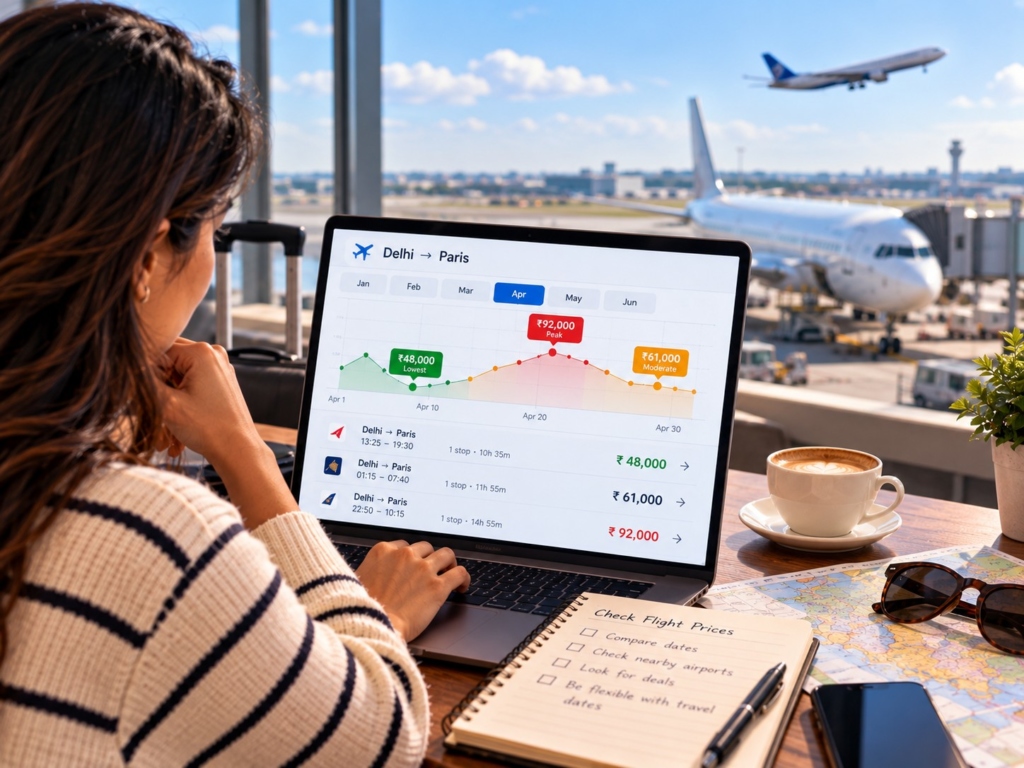
Airlines sell seats through different fare buckets based on real-time demand, seat availability, and seasonality. When lower-priced inventory disappears, the next available fare may be higher. Popular routes around school holidays, summer weekends or major events can therefore become expensive quickly.
For Indian travellers, the departure city is also important. Delhi, Mumbai and Chennai can have different fare patterns to the same European gateway, while one-stop routes through major hubs may price differently from nonstop services. Baggage, seat selection and flexibility can also change the final fare.
Hence, you should compare the complete fare and not just the first number displayed. If dates are flexible, check nearby departure days and alternative European gateways. Booking early gives you access to more fare choices before demand tightens.
2. Hotels: The Second Major Price Swing

Hotel pricing can move sharply as occupancy changes. Paris, Amsterdam, Zurich and Rome can become considerably more expensive during summer, weekends, festivals, trade fairs and other high-demand periods.
These changes compound over a multi-city itinerary. A ₹3,000 difference per night across eight nights adds ₹24,000 to the trip. Shifting one or two nights to a lower-demand period can sometimes save more than cutting several small daily expenses.
Also, a central hotel location may command a premium on busy dates, while a property outside the core can be more affordable. This matters even more for a larger travelling party, since a rate difference on an Europe group tour multiplies across every room booked, not just one.
When comparing Europe group packages, you should check the hotel category, neighbourhood, meals, cancellation terms and inclusions apart from the advertised starting price.
3. Trains, Attractions and Activities Can Change Too
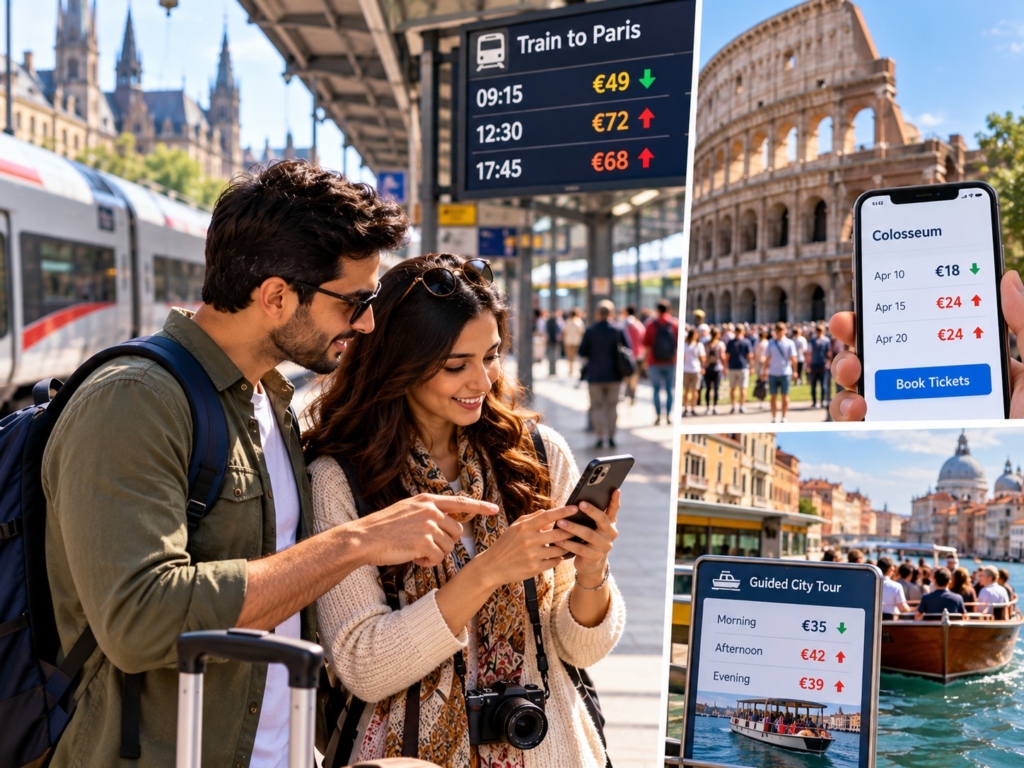
Europe’s rail and sightseeing costs can also be time-sensitive. Advance-purchase rail fares may offer lower tiers that disappear as departure approaches. Popular attractions can have timed-entry or peak-period pricing, and limited-capacity experiences can sell out.
As a consequence, your transport and sightseeing budgets are not always fixed. A last-minute intercity train, premium departure time, or sold-out attraction replaced by a costlier option can increase daily spending.
For high-demand experiences such as Swiss mountain excursions, Vatican guided visits or major museum entries, reserving capacity early can make the itinerary more predictable.
Since January 2026, this dynamic-pricing logic has extended to rail as well. Italy’s Frecciarossa, Frecciargento and Frecciabianca high-speed trains now use an airline-style model where fares shift daily based on real-time demand, rather than a fixed set of discount tiers. Booking these routes well in advance, and where possible choosing off-peak days such as Tuesdays over Fridays, now makes a bigger difference to the fare than it used to. Trenitalia’s Intercity and Regionale services remain outside this system, since they are regulated and subsidised, so their pricing stays comparatively stable.
4. Peak Season and Holidays
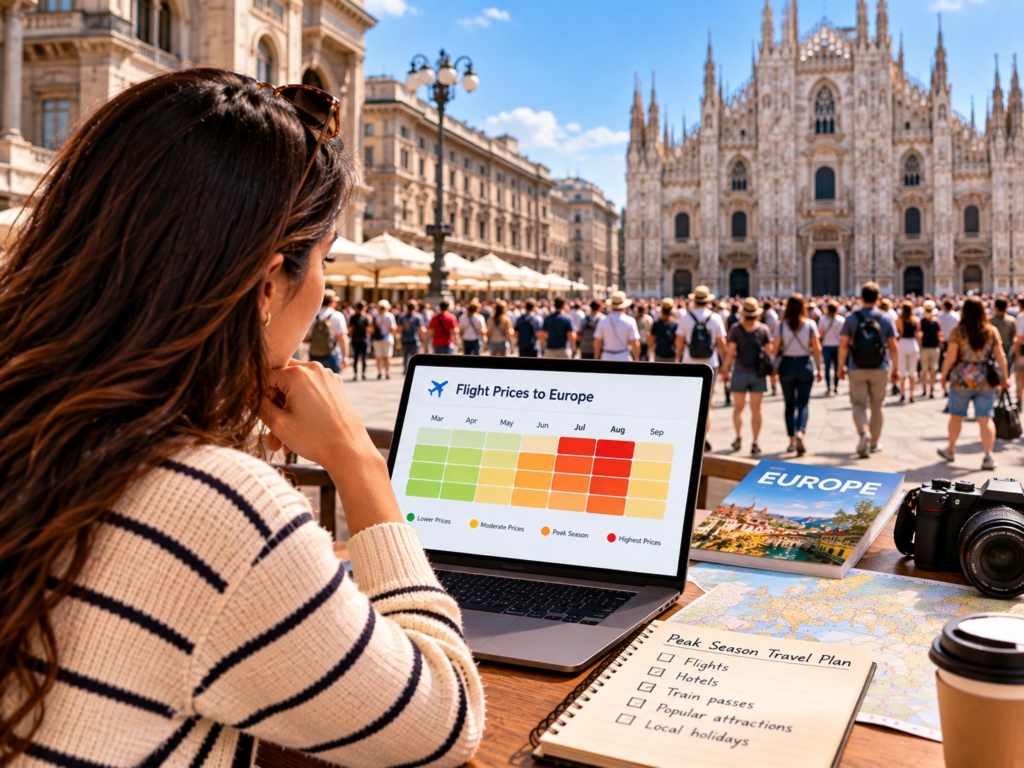
Europe’s summer period is a high-demand window. Thrillophilia’s destination experts identify May to September as peak season, with July and August generally the most expensive. Christmas and New Year can create another spike.
This isn’t just about flights and hotels rising together, either. Restaurant tables, popular attraction slots and even intercity trains can be harder to book at short notice during these windows, since local demand adds to the pressure from tourists. If your travel dates genuinely can’t move, it’s worth locking in accommodation and any must-do attractions earlier than you would for a shoulder-season trip, since availability tends to disappear faster than the price itself rises.
5. Major Events Can Spike Prices in a Single City
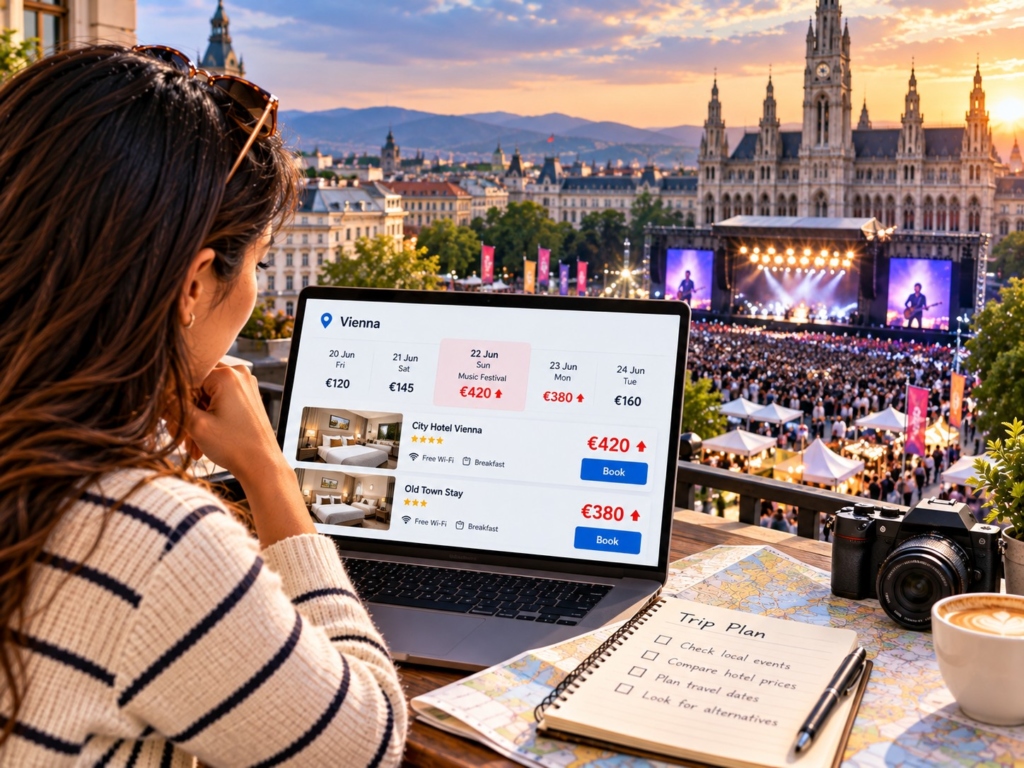
Concerts, sporting events, festivals, exhibitions and conferences can concentrate demand in one city. Even if you are not attending, nearby hotels and transport can become more expensive. Checking a city’s event calendar before finalising your dates can help you avoid an unplanned price spike that has nothing to do with the tourist season at all.
This is easy to miss because the event itself may not even be on your radar. A trade fair in Frankfurt or a football final in Madrid can quietly push up hotel rates across an entire city for several days, well beyond what the season alone would explain. A quick search for major events in your destination cities, alongside your actual travel dates, is worth the five minutes it takes.
6. Late Booking on Fixed Dates Leaves You Fewer Options
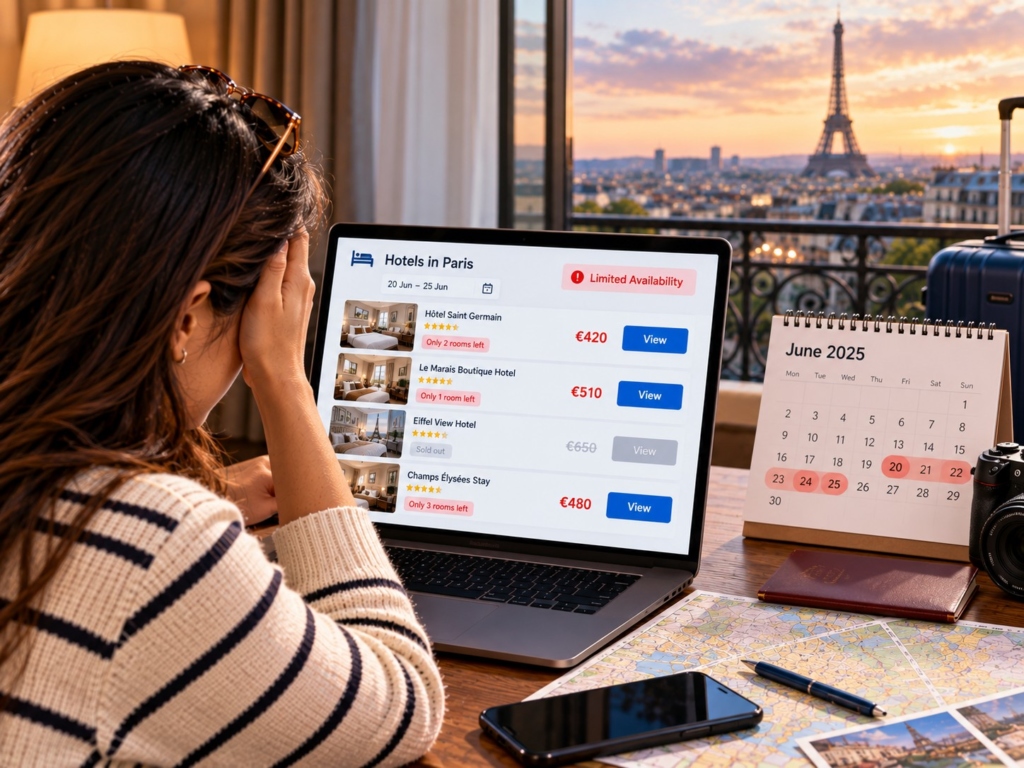
If you must fly on a Friday, stay in central Paris and take a specific train at a fixed time, you have fewer alternatives when cheaper inventory disappears. Fixed constraints are the single biggest reason two travellers on the same route can end up paying very different prices, since one has room to shift and the other does not.
This is worth planning around wherever possible. If even one part of your itinerary can flex, such as leaving a day earlier or staying in a slightly different neighbourhood, it gives you an alternative to pick if your first-choice option becomes expensive closer to the date. The travellers who end up paying the most are usually the ones with zero flexibility left by the time they actually book.
7. Currency Movements Add Another Layer for Indian Travellers
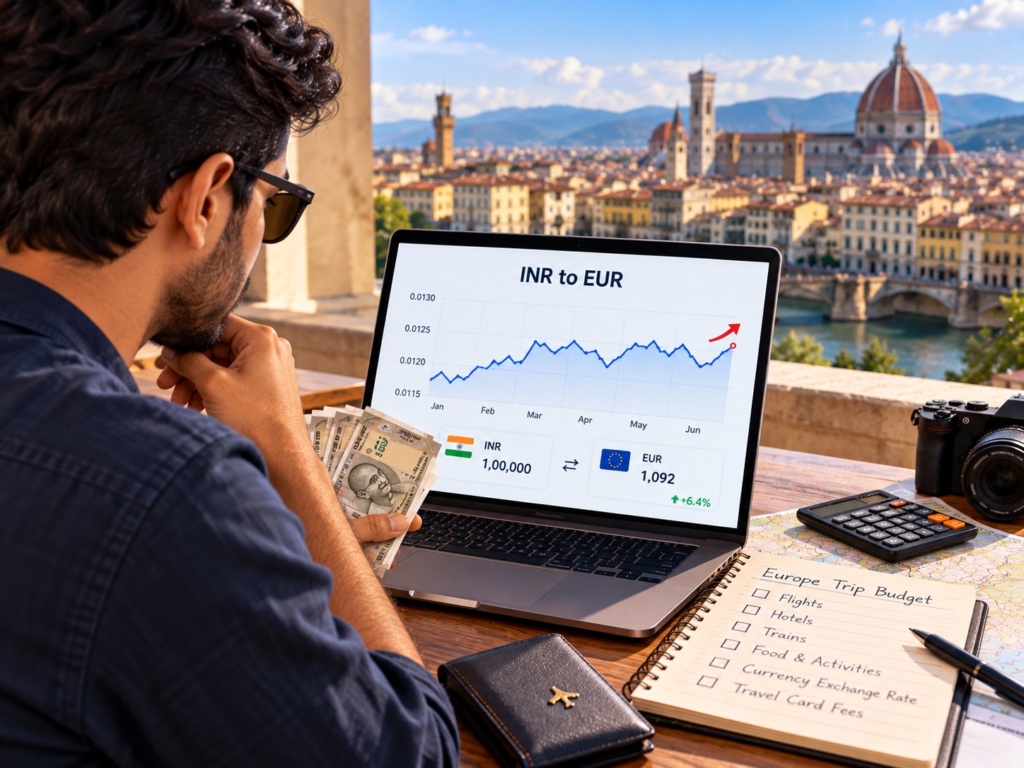
Most of your Europe costs are priced in euros, Swiss francs or pounds, which means the final INR cost of your trip depends on the exchange rate at the time you actually pay, not just the listed price. An itinerary quoted months in advance can end up costing more or less in rupee terms purely because of currency movement, separate from any change in the underlying euro price.
This is worth factoring in for a longer or more expensive trip, such as an Europe family tour package, where the total spend across flights, hotels and activities is large enough that even a small shift in the exchange rate is noticeable.
8. Package Pricing Reflects the Same Underlying Factors
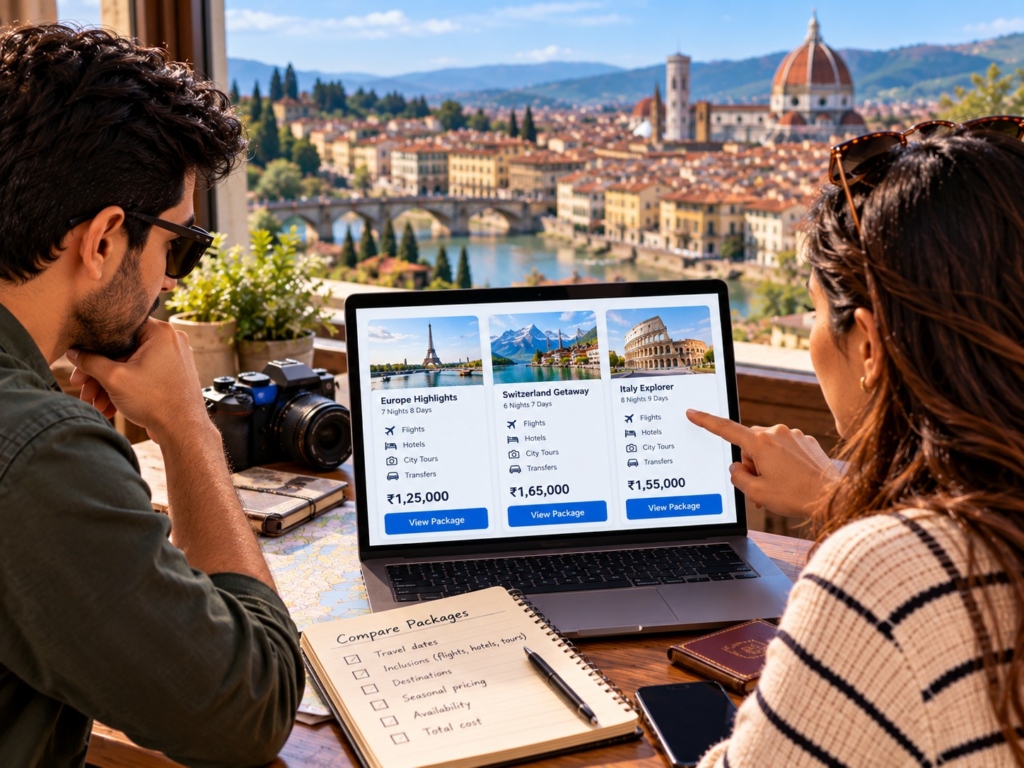
Thrillophilia’s Europe tour package prices are not immune to the same facts covered above. The flights, hotels and experiences that make up a package are themselves priced dynamically by the underlying suppliers.
This is why the starting price shown for an Europe honeymoon package or a multi-country itinerary can shift as travel dates, hotel category or group size change, even for what looks like the same route on paper. Booking earlier, and being flexible on the exact departure date where possible, generally gives access to the same lower-tier pricing that applies to independent bookings.
9. Reducing the Impact of Dynamic Pricing
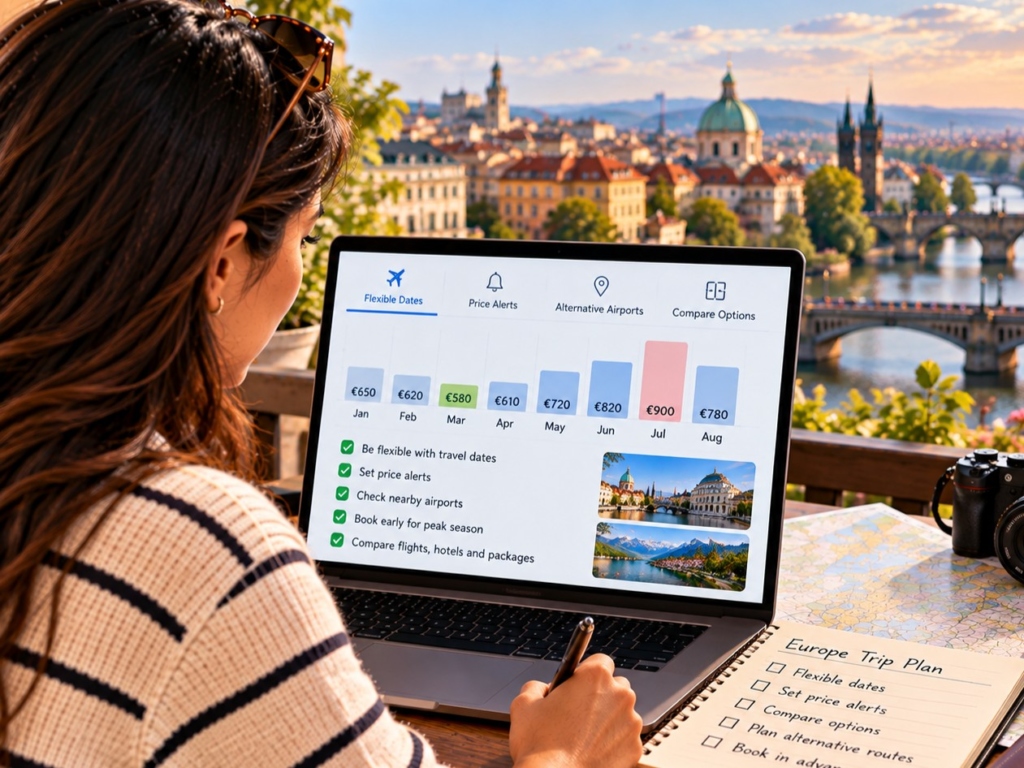
A few practices make the biggest difference across flights, hotels, trains and packages alike:
- Book early, especially for peak season, major events or high-speed rail routes now under dynamic pricing
- Stay flexible on exact travel dates and, where possible, the departure city
- Compare the complete fare or rate, not just the first number shown
- Check a destination’s event calendar before locking in dates
- Reserve capacity early for high-demand attractions and experiences
This applies whether you are booking independently or comparing an Europe group tour package, since the same underlying pricing mechanics apply either way. The traveller with the most flexibility usually has the most room to avoid paying the peak of any given price swing.
Frequently Asked Questions
Yes, flight ticket prices fluctuate constantly based on demand, seat availability, and timing. While fares generally trend upward as a plane fills, airlines may lower prices if they are not hitting sales targets or if a competitor initiates a flash sale. The sweet spot for booking international travel to Europe is usually 2-6 months in advance to get the lowest price.
Post-holiday in February and September offer the most discounts on Europe trips. The cheapest months to fly to the continent are January, February, and November, as these fall outside of major holidays and peak tourist seasons.
There is no conclusive evidence that search activity directly influences ticket prices, as most sites pull fares from live airline systems. However, some suggest using incognito mode or clearing cookies simply to get a clean comparison across sites, rather than as a way to influence the fare itself.
This is largely a myth. Multiple independent studies and airline pricing experts have found no credible evidence that airlines track an individual traveller’s searches and raise fares in response. What actually happens is that prices change constantly in the background, due to seat inventory selling out, demand shifting, and prices generally climbing closer to departure, so a price you see on a second or third check may simply reflect a real change that would have happened whether you searched again or not.
Yes, dynamic pricing affects train tickets, particularly on high-speed networks. Effective January 1, 2026, Italy’s Freccia trains shifted to an airline-style algorithm that fluctuates prices daily based on real-time demand. To secure the best rates, booking high-speed rail several months in advance is now important. As per Thrillophilia’s on-ground team, you can still find price stability on Regional and Intercity trains, which remain subsidised and fixed-rate.