


Quick Jumplinks to Navigate
Foreign transaction charges are one of those Europe trip costs that never make it into the initial budget. They accumulate quietly across hotel check-ins, restaurant bills, train ticket purchases, and ATM receipts. By the end of a 10-day trip, that combined total can quietly add up to what a Eurail pass would have cost.
Most Indian travellers overpay not because these charges are unavoidable, but because of a few fixable decisions. Carrying the wrong card, selecting the wrong currency option at a payment terminal, or not understanding what “pay in INR” actually does at a European ATM are where most of the extra money disappears. Getting ahead of these before departure makes a measurable difference to what you actually spend on the ground.
What You Are Actually Paying Beyond the Price Tag

When you swipe an Indian card in Europe, the final amount charged can include several layers beyond the original euro price:
- Forex markup from your Indian card issuer, typically 1.5% to 3.5%
- GST at 18% applied to that markup
- Dynamic Currency Conversion markup of 5% to 8% if you accept billing in INR
- ATM withdrawal fee from your Indian bank
- ATM operator surcharge from the European machine itself
On a EUR 1,000 spend at INR 112 per euro, a 3.5% markup adds approximately INR 3,920. GST on that adds another INR 706. Together, that is roughly INR 4,626 above the base INR 1,12,000. Each charge is separate, and several can apply simultaneously on the same transaction.
Dynamic Currency Conversion deserves specific attention. European ATMs and card terminals regularly offer to bill you in INR instead of euros. The conversion rate used comes from the merchant or ATM operator, not your card network. Accepting it adds 5% to 8% on top of whatever your card already charges. These two costs are independent, which means accepting DCC on a standard markup card compounds the problem.
Choosing the Right Card Before You Depart

Selecting a card built for international use before leaving India removes the largest recurring charge from every purchase in Europe. This one decision affects every transaction you make on the trip.
Several Indian banks issue credit cards with zero foreign-currency markup on eligible international purchases. Before choosing one, check beyond the headline feature. Some zero-markup cards still impose a fixed international transaction fee in INR. Others exclude overseas spending from reward points or have limited acceptance across certain European countries. Download the current fee schedule from the issuer and read it fully before applying.
A prepaid forex card loaded with euros before departure lets you lock in the exchange rate at the time of loading. It also limits your exposure if the card is lost or compromised. For trips that include non-eurozone countries like Switzerland, load Swiss francs separately. Using a euro wallet in Switzerland triggers a cross-currency conversion, adding another cost layer.
Always Pay in the Local Currency
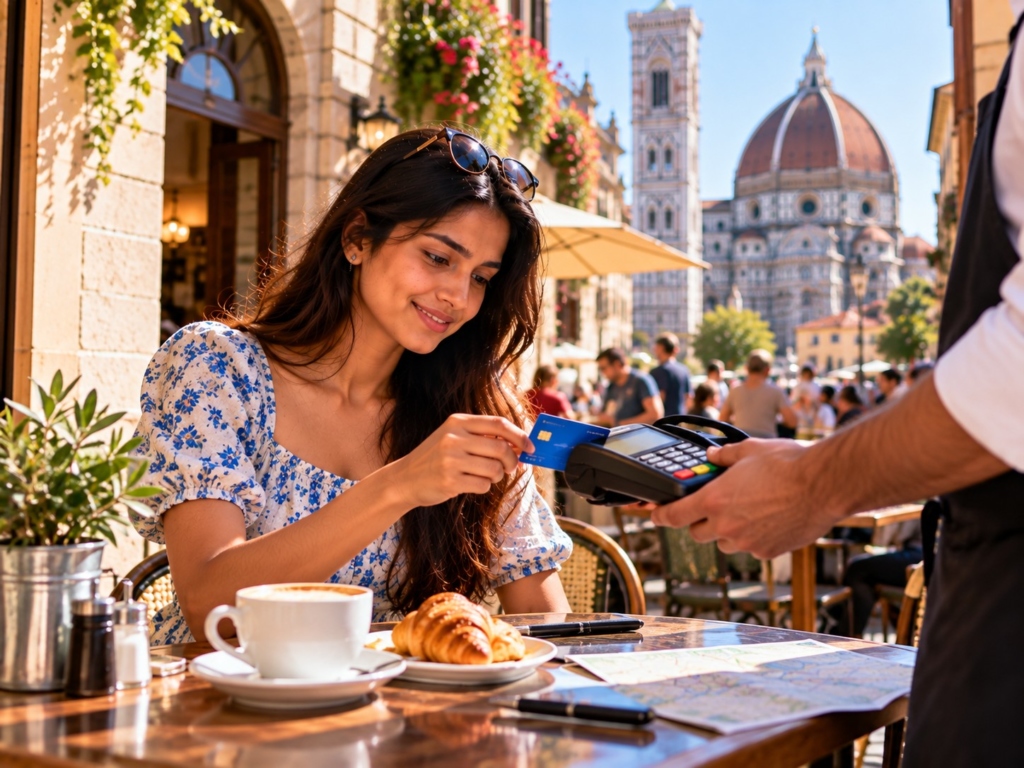
At every card terminal and ATM in Europe, you will face a choice. The machine asks whether you want to pay in euros or in INR. Always select euros.
Selecting INR activates Dynamic Currency Conversion. The merchant or ATM operator applies their own exchange rate, which includes their margin. Visa advises customers to decline DCC whenever the rate or fee is not clearly shown or the choice feels pressured. You are entitled to decline and still complete the transaction.
Screen wording varies by country and machine. Decline anything that reads “pay in INR,” “use home currency,” or “accept conversion.” Select options that say “pay in EUR,” “local currency,” or “decline conversion.” Do not assume the rupee amount displayed is a courtesy. It is a commercial conversion offer.
A EUR 100 bill converted through DCC can cost INR 800 to 1,000 more than the same amount billed in euros through your card network. That difference is not a visible fee. It sits inside the rate the machine uses without making the gap obvious.
Managing ATM Withdrawals in Europe

Cash remains useful in parts of Europe, particularly in smaller towns, local markets, and older transport systems that do not reliably accept cards. The challenge is that each withdrawal can carry up to three separate fees: your Indian bank’s international withdrawal charge, your card’s forex markup, and the European ATM operator’s own surcharge.
The most practical fix is withdrawing less frequently and in larger amounts. A fixed EUR 3 operator charge represents 7.5% of a EUR 40 withdrawal. On a EUR 200 withdrawal, it represents 1.5%. Withdraw what you need for a few days rather than a small daily amount.
Prefer ATMs attached to recognised banks over standalone machines in airports, tourist streets, or nightlife areas. Independent ATMs are more likely to use aggressive DCC prompts and higher surcharges. Read the fee disclosure before confirming any withdrawal. If the machine offers to display your amount in INR, decline and proceed in euros.
Practical Steps Before You Leave India

A short preparation list removes the need to fix these issues mid-trip:
- Enable international transactions on every card you plan to carry
- Confirm overseas ATM withdrawal limits and purchase limits with your bank
- Carry at least two cards from different issuers or networks, stored separately
- Save your bank’s international helpline number somewhere separate from the card itself
- Obtain a small amount of euros before departure for immediate arrival needs
If you need physical euros before the trip, avoid airport exchange counters. “Zero commission” counters build their margin into the exchange rate rather than showing it as a separate charge. Use a licensed forex provider in the city and compare the actual number of euros you receive, not the advertised rate.
Managing Your Europe Trip Budget from the Start

Avoiding transaction charges keeps your daily spending on track. Planning the broader cost structure before departure protects the rest.
As per Thrillophilia’s destination experts, travellers who pre-confirm their major trip costs report fewer mid-trip budget surprises across European destinations. Our Europe tour packages start from INR 1,17,500 per person for a 6-day trip. Packages include confirmed accommodations, coordinated transfers, guided sightseeing, and immigration assistance. Knowing fixed costs before departure makes daily spending decisions considerably more straightforward.
For group tours or customised family holidays, our destination experts can walk you through per-country cost patterns before you finalise your itinerary.
What you spend on foreign transaction charges was always part of your travel budget. The difference is whether it goes to the bank or stays with you in Europe.
Frequently Asked Questions
A zero-forex credit or debit card removes the largest recurring charge on international purchases. Compare the full fee schedule including ATM fees, annual charges, and cross-currency fees before selecting one. Always carry a second card from a different network as backup.
Yes, selecting INR activates Dynamic Currency Conversion, where the merchant or ATM sets the exchange rate. This rate typically includes a markup of 5% to 8% above the card network rate. Always choose euros or local currency at every terminal and ATM without exception.
It depends on usage. A prepaid card helps with budgeting and limits exposure if lost or skimmed. A zero-forex credit card is better suited for hotel deposits and offers stronger purchase protection. Compare total costs including loading fees, ATM charges, and unused-balance rates before deciding.
Withdraw less frequently and in larger amounts to reduce the impact of fixed per-withdrawal charges. Use ATMs attached to recognised banks rather than standalone tourist-area machines. Always select euros when prompted and read the full fee disclosure before confirming.
No, mobile wallets are only the payment interface. The card linked to the wallet determines the forex markup, conversion method, and ATM policy. If the underlying card charges foreign transaction fees, those fees apply whether you use the wallet or the physical card.