

Quick Jumplinks to Navigate
Eating well in Bhutan as a vegetarian or Jain traveller is possible, but it takes a little more planning than simply asking for a meal without meat. Vegetarian dishes are available across the country, especially in towns such as Thimphu, Paro, Punakha, and Phuentsholing. Strict Jain requirements need more attention because onion, garlic, potatoes, and other root vegetables may be used in dishes that otherwise appear vegetarian.
Bhutanese food is built around rice, vegetables, chillies, and cheese, with Indian, Nepali, and Tibetan options also available in larger towns. Dishes such as ema datshi (chillies cooked with cheese) and vegetable stews can suit some vegetarians, but they are not automatically Jain-friendly. Recipes differ between kitchens, and shared cooking equipment can also matter for travellers who follow strict dietary practices.
The easiest way to make meals comfortable is to share your requirements before the trip, confirm what is included in the itinerary, and check each meal with the hotel, restaurant, or tour manager. In smaller towns and on longer road journeys, there may be fewer restaurants to choose from, so planning ahead is especially useful.
This guide covers vegetarian and Jain food in Bhutan, including what to expect at breakfast, lunch, and dinner, where to look for Indian food, how to handle included group meals, and practical tips for travelling with specific dietary requirements.
Travelling to Bhutan with Thrillophilia? Here’s How We Make Jain Meals Easier
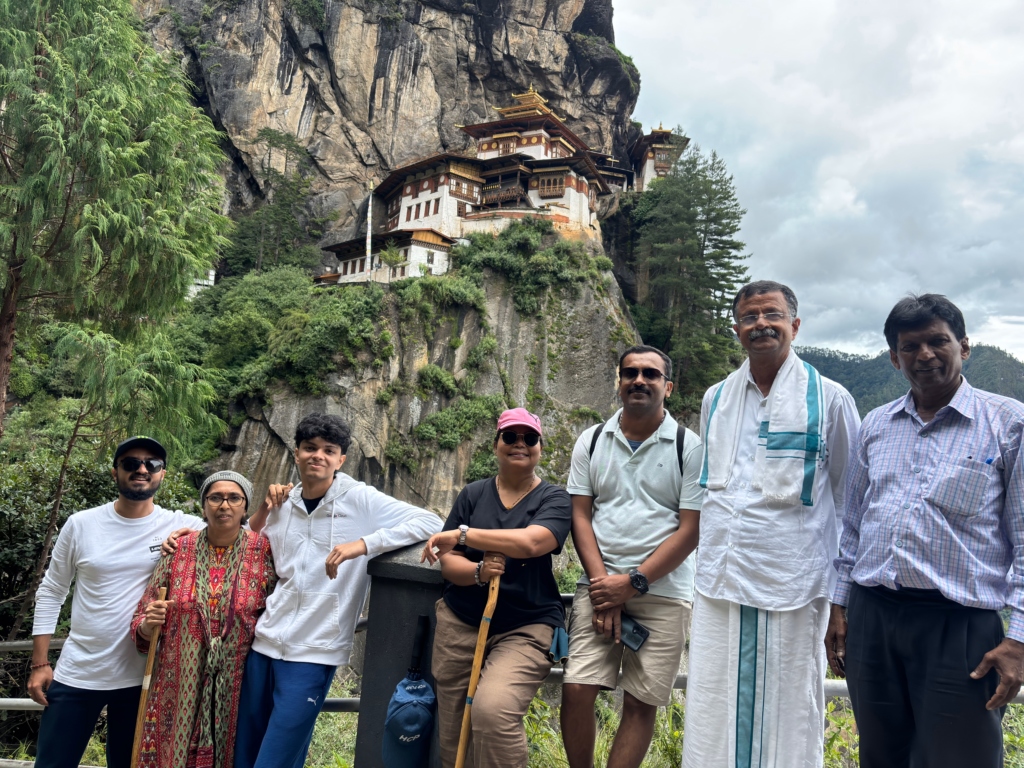
Travelling with specific dietary requirements does not mean you have to compromise on the experience of exploring Bhutan. At Thrillophilia, we understand that food is an important part of a comfortable holiday, particularly for travellers following a strict Jain or vegetarian diet. Having been organising Bhutan trips for over 10 years, we understand the importance of communicating dietary preferences well before the journey begins.
If you are travelling on a Jain diet, we arrange Jain meals across your Bhutan tour by communicating your requirements to the hotels and restaurants included in your itinerary. Our team also helps coordinate meal preferences during sightseeing days and longer road journeys, so you have a clearer idea of where and what you will be eating. We recommend sharing your dietary restrictions at the time of booking so that the necessary arrangements can be discussed in advance.
Understanding Jain Dietary Requirements in Bhutan
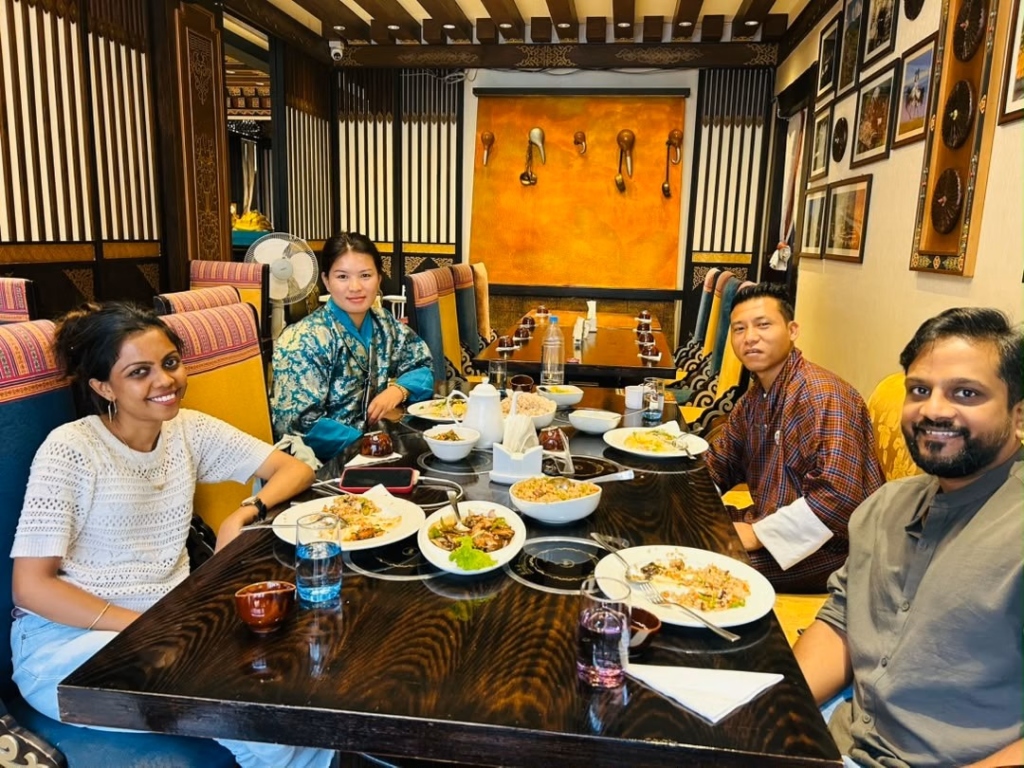
A Jain diet goes beyond standard vegetarianism. Along with meat, fish, and eggs, Jain practices generally exclude onion, garlic, potato, carrot, beetroot, turnip, radish, and other root vegetables. Some strictly observant travellers also avoid mushrooms and particular foods during specific religious periods. Requirements vary, so explain your own restrictions clearly rather than assuming every restaurant will understand the term “Jain”.
Bhutan has plenty of vegetarian dishes, but vegetarian does not automatically mean Jain. Ema datshi, a popular dish made with chillies and cheese, may be vegetarian, but its preparation should still be checked for onion or garlic. Kewa datshi contains potatoes, while shamu datshi is made with mushrooms, so neither is suitable for every Jain traveller. Vegetable stews, soups, noodles, momos, sauces, and hotel buffet dishes can also contain ingredients that are not obvious from the menu.
At Indian restaurants, staff may be familiar with Jain meal requests. At Bhutanese or multi-cuisine restaurants, be specific: explain that you do not eat onion, garlic, potatoes, or any other root vegetables included in your personal restrictions. Ask whether these ingredients are used in the sauce, stock, seasoning, or cooking oil, and whether the meal can be prepared separately. A written dietary card can be helpful when verbal explanations are difficult.
A simple note to show restaurant staff is: “I eat vegetarian food and follow a Jain diet. Please do not use onion, garlic, potato, or other root vegetables in my food. Please check the sauce, stock, and seasoning as well.” Adapt the list to your own practice and ask your guide or hotel to help communicate it in the local context.
For a trip where meals are arranged in advance, share your requirements at the time of booking and ask for written confirmation of which meals can be accommodated. Group restaurants and hotels may prepare set menus ahead of time, so a reminder just before each included meal is worthwhile.
Jain and Vegetarian Food in Thimphu
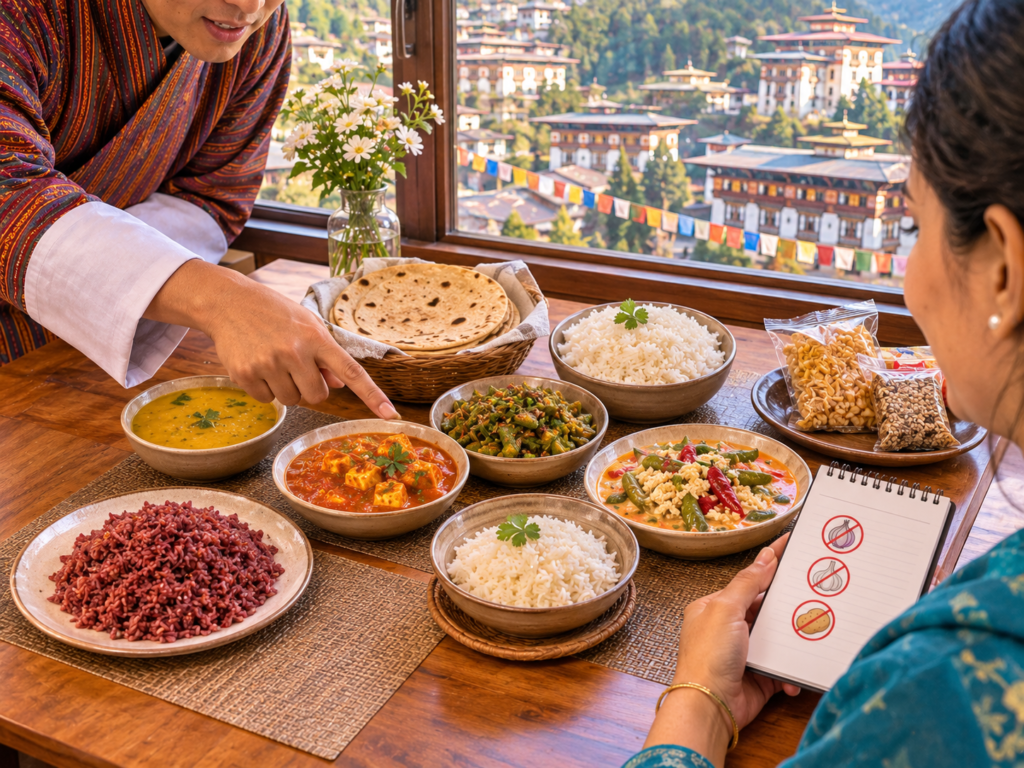
Thimphu has one of the widest ranges of dining options in Bhutan. Alongside Bhutanese restaurants and cafés, the city has Indian, Nepali, Korean, Chinese, and other international cuisines. That variety makes it easier to find vegetarian meals, although strict Jain preparation still needs to be confirmed dish by dish.
- Sinchula Indian Cuisine: Sinchula is an Indian restaurant in central Thimphu, around the Phendey Lam and Hong Kong Market area. It serves North Indian dishes and selected South Indian options, and Jain food has been reported as available on request.
- Indian restaurants in central Thimphu: Several Indian dining options can be found in the city centre. These can be useful for familiar meals such as dal, roti, rice, vegetable curries, and paneer dishes. Do not assume a dish is Jain-friendly because it is vegetarian; confirm the ingredients and preparation method before ordering.
- Bhutanese vegetarian dishes: Ema datshi may be an option for vegetarians who eat dairy and chillies, provided the ingredients suit their diet. Other vegetable dishes and rice-based meals may also be available. Ask how each dish is prepared, especially if you avoid onion, garlic, potatoes, or mushrooms.
Thimphu is a useful place to discuss food preferences with your guide and stock up on suitable packaged snacks before travelling to smaller towns. If your Bhutan itinerary includes a free evening, ask in advance whether an Indian restaurant can accommodate your dietary requirements rather than leaving the decision until dinner time.
Jain and Vegetarian Food in Paro
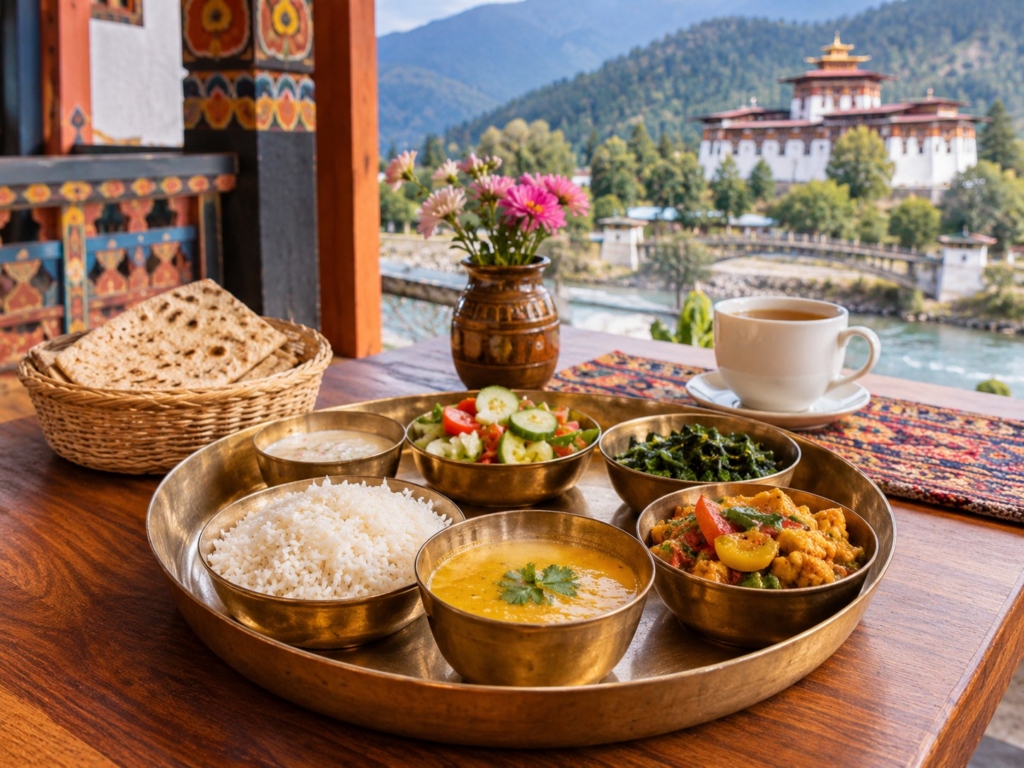
Paro is a common starting point for trips through Bhutan, and it has hotels, cafés, and restaurants serving Bhutanese, Indian, and international food. Vegetarian meals are generally possible, but Jain travellers should still confirm ingredients, particularly when eating outside Indian restaurants.
- Indian meals in Paro: Ask your hotel or guide to recommend a restaurant that can prepare a Jain meal on the day you plan to visit. Familiar options such as dal, plain rice, roti, and a vegetable dish may be easier to explain than a complex curry, but the kitchen must still confirm that prohibited ingredients are not used. Request that the meal be prepared without onion, garlic, potato, or any other ingredients you avoid.
- Bhutanese dishes: Ema datshi is widely associated with Bhutanese cuisine and is made with chillies and cheese. It can be a vegetarian choice for some travellers, but recipes vary. Kewa datshi contains potato and is not suitable for strict Jain diets that exclude root vegetables. Ask about the preparation of vegetable stews, soups, noodles, and momos before ordering.
- Meal timing and sightseeing: Paro days can include sightseeing, temple visits, and excursions that involve driving or walking. Confirm breakfast arrangements with your hotel the evening before, and ask your guide where lunch will be available along the route. If a sightseeing day takes you away from the town centre, carry snacks that meet your dietary requirements so you are not relying on finding a suitable restaurant at short notice.
For a Jain traveller, the most useful approach in Paro is to make meal arrangements in advance, particularly on days with early departures or excursions. Your tour representative can help communicate your restrictions to the hotel and restaurant, but you should still confirm each meal when it is served.
Jain and Vegetarian Food in Punakha and Phuentsholing
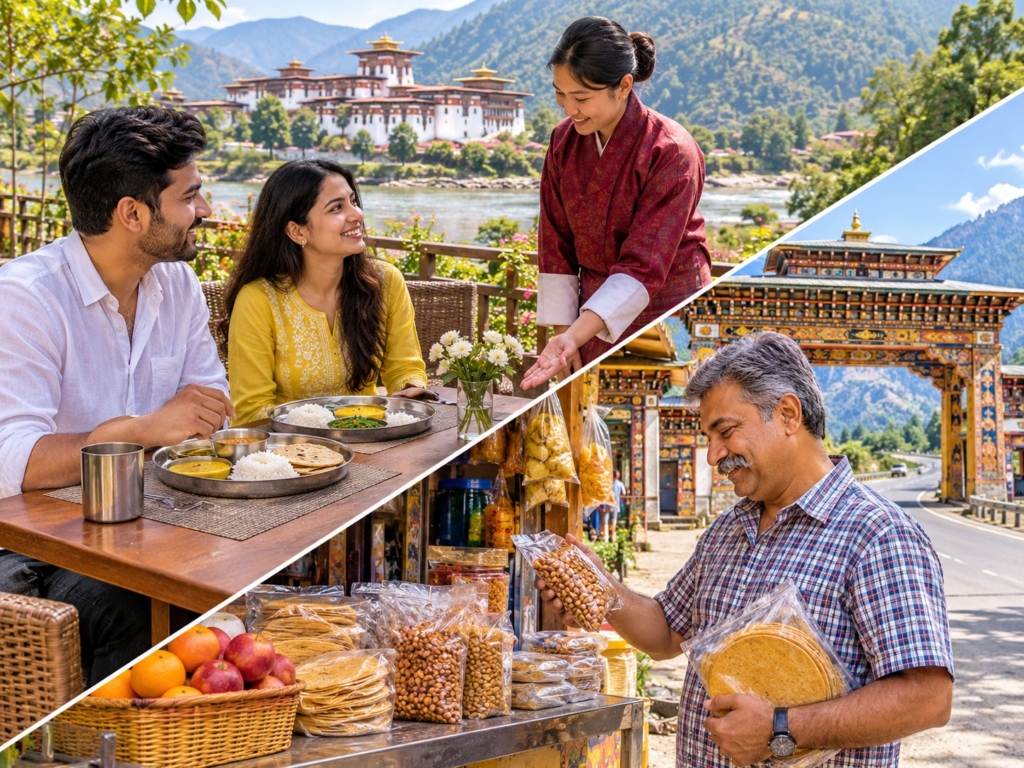
Punakha and Phuentsholing offer different dining settings, so the way you plan meals may vary depending on the itinerary.
- Punakha: Restaurants and hotels serve Bhutanese meals alongside Indian and other familiar options. Vegetarian rice meals and vegetable dishes may be available, but the number of choices can be more limited than in Thimphu. If your accommodation is outside the main town or your day includes visits to dzongs and viewpoints, ask where lunch will be served and whether the kitchen can prepare a Jain meal. Confirm whether vegetable dishes use onion, garlic, potatoes, or stock made from ingredients you avoid.
- Phuentsholing: As a busy border town with strong links to India, Phuentsholing has Indian-style eateries as well as local restaurants. This can make it a useful stop for travellers who prefer familiar vegetarian food. Jain preparation is not guaranteed, however, so ask specifically for a meal made without the ingredients you avoid. If Phuentsholing is at the beginning or end of your journey, it can also be a practical place to purchase packaged snacks for the road.
- On the road between towns: Bhutan itineraries often involve scenic drives between valleys and towns. Restaurants along the way may offer set meals, and there may not be many alternatives nearby. Tell your tour operator about your dietary restrictions before departure and confirm the lunch plan for each transfer day. For stricter Jain diets, carrying suitable snacks is a sensible backup rather than relying entirely on roadside menus.
Vegetarian food is available in Bhutan, but the range and flexibility can vary by location. The further an itinerary moves from larger towns, the more important it becomes to arrange meals with your hotel or tour operator in advance.
Every Meal on a Bhutan Tour Package
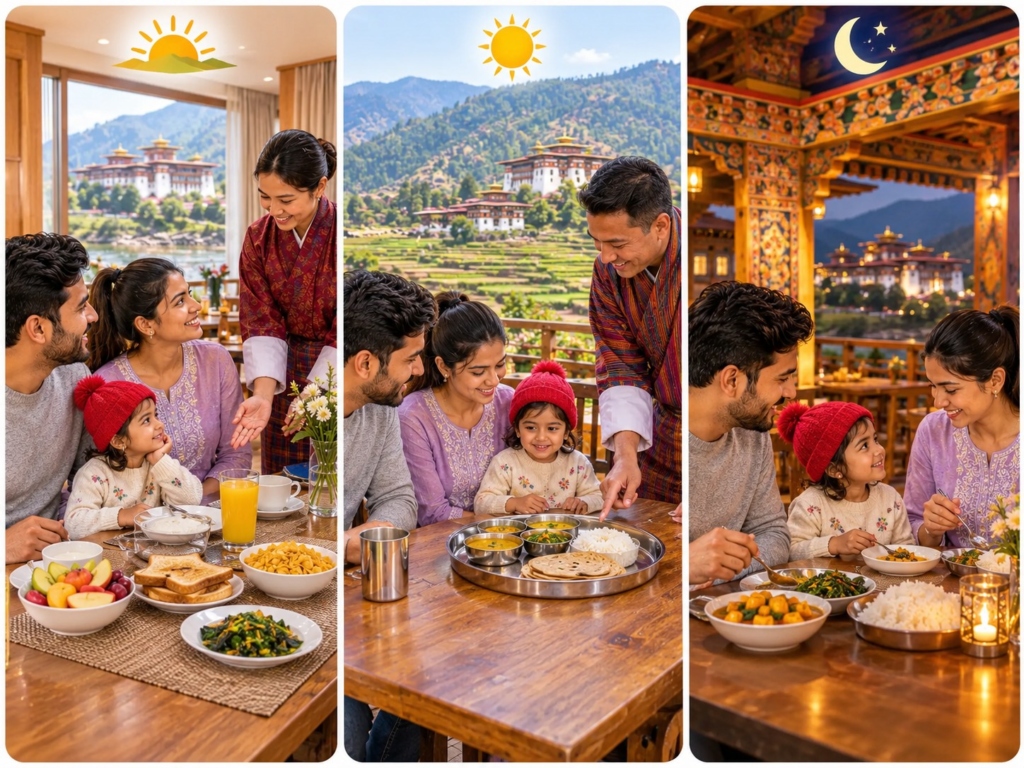
On a Bhutan tour, breakfast is often arranged at the hotel, while lunch may be at a restaurant along the sightseeing route and dinner may be served at the hotel or a local restaurant. The exact arrangement depends on the package, so check the inclusions list rather than assuming every meal is covered.
How Thrillophilia Handles Meal Arrangements
When you book a Bhutan tour with Thrillophilia, your dietary preferences are taken into consideration while planning the trip. For Jain travellers, we communicate the meal requirements to the hotels and restaurants in advance and coordinate suitable arrangements across the itinerary. This is particularly important when travelling between destinations where restaurant choices may be limited.
We also encourage travellers to mention specific restrictions rather than simply requesting vegetarian food. Whether you avoid onion, garlic, potatoes, or all root vegetables, sharing these details helps us communicate your requirements more accurately. While the final preparation depends on the individual hotel’s or restaurant’s kitchen, our team works towards making meal arrangements as comfortable and convenient as possible.
For Jain travellers, the main advantage of having meals organised is that the hotel or restaurant can be informed in advance. The main concern is that set menus and group meals may be prepared before the group arrives. If your dietary requirements have not been communicated clearly, the kitchen may not have a suitable alternative ready.
- Breakfast: Hotel breakfasts may include bread, fruit, cereal, yoghurt, rice, or cooked items, depending on the property. Some dishes may contain eggs, and prepared items or sauces may include ingredients that do not suit your diet. Ask the hotel what can be served and whether a simple meal can be prepared separately. If breakfast is included, confirm the arrangement at check-in and again when needed.
- Lunch: Lunch is often planned around the day’s sightseeing or transfer route. In towns, Indian restaurants may be an option; on the road, choices can be more limited. Ask your tour manager where lunch is planned and whether the restaurant has received your dietary details. If you follow a strict Jain diet, request confirmation of the specific dishes rather than relying on a general assurance that vegetarian food is available.
- Dinner: Dinner may be served at your hotel or arranged at a restaurant. This is often easier to coordinate when the hotel knows your requirements before you arrive. Confirm whether the kitchen can prepare Jain food and whether the meal will be a buffet or a set menu. At group dinners, remind the tour manager and restaurant staff before food is served.
- Meals on free days: If lunch or dinner is not included, use the city-specific guidance in this document and ask your hotel for current recommendations. In smaller destinations, arrange a suitable meal earlier in the day rather than waiting until you are hungry to look for an option.
As part of your planning, check the package inclusions carefully. The number of included meals, the type of restaurant, and the flexibility to customize dishes can vary by itinerary. Make sure your dietary requirements are recorded in writing before departure, and reconfirm arrangements for any meal that is especially important to you.
Practical Tips for Jain Travellers in Bhutan
- Special meals on flights: If you are flying to Bhutan via another country, check the special-meal options with every airline operating your journey. Some airlines offer a Vegetarian Jain Meal (VJML), but availability and request deadlines vary by carrier and route. Request the meal during booking or as soon as your ticket is confirmed, and reconfirm it before departure. Do not assume that a Jain meal will automatically be provided on every flight segment.
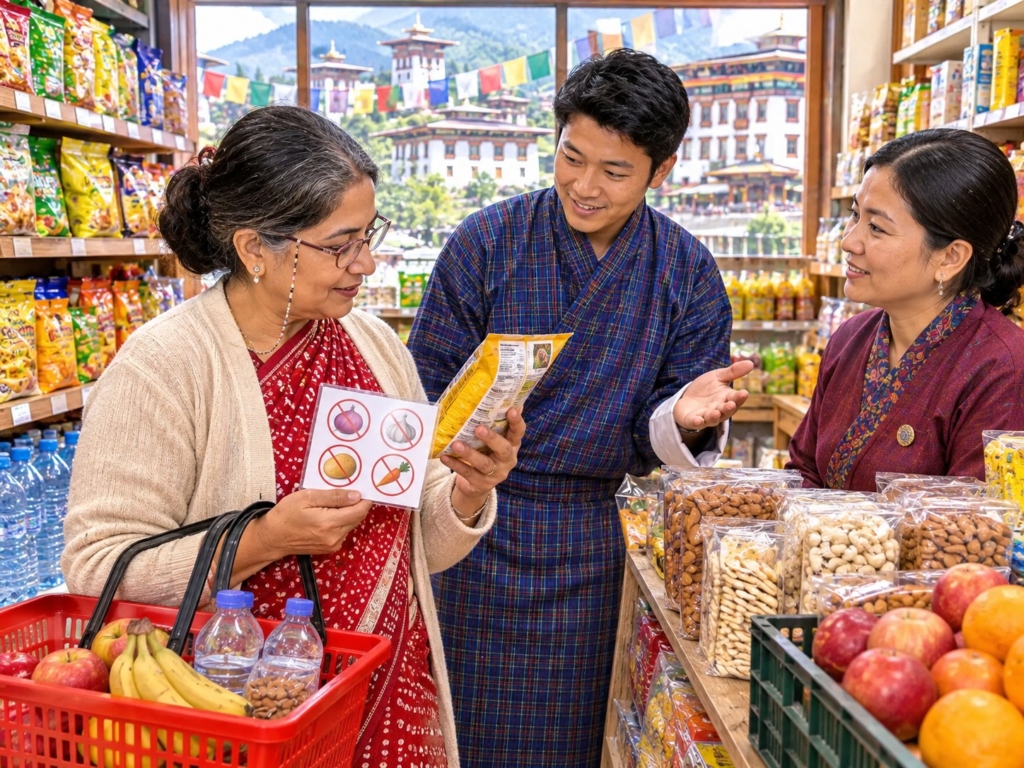
- Packaged snacks: Carry snacks that meet your dietary requirements, such as plain nuts, suitable packaged snacks, or other familiar foods with clearly listed ingredients. These can be useful during long drives, sightseeing days, or when a restaurant cannot accommodate your request. Check labels carefully, since packaged foods may contain onion or garlic powder and other ingredients you avoid.
- Grocery shopping: Larger towns such as Thimphu and Paro have shops where you can look for fruit, packaged snacks, and basic food items. Selection will vary, and specialist Jain products may not be easy to find. If you rely on specific snacks or foods, bring an appropriate supply from home, subject to applicable customs and food-import rules.
- Dietary cards: Carry a printed card that lists your restrictions in simple language. Include onion, garlic, potato, and any other root vegetables or ingredients you avoid. Show it to restaurant staff and ask your guide or hotel to help explain the requirements. The word “vegetarian” alone may not communicate the full needs of a Jain diet.
- Confirm every meal: Recipes differ between restaurants, and ingredients can change. Ask about sauces, stock, seasoning, and cooking methods, and check whether a separate preparation is possible. If cross-contact is a concern for you, explain that clearly as well.
- On-ground assistance during your trip: One of the advantages of travelling with an organised tour is having assistance when plans need attention on the ground. If you are travelling with Thrillophilia, our team helps coordinate with the hotels and restaurants regarding your dietary requirements throughout the Bhutan itinerary. If you have a concern about a particular meal or need clarification about the ingredients, you can communicate it to your tour representative so that it can be addressed with the restaurant. We recommend reconfirming your requirements at each meal, even when arrangements have already been communicated in advance.
- Water and food safety: Follow local guidance on drinking water. Use sealed bottled water or water that has been properly treated, and be cautious with raw produce if its washing water is uncertain. This is especially relevant on road journeys and in places where you have fewer dining options.
With a little preparation, vegetarian and Jain food in Bhutan can be managed throughout a tour. The key is to communicate your restrictions before travelling, plan meals on transfer days, and confirm the ingredients each time rather than assuming that a vegetarian label means Jain-friendly.
A Decade of Bhutan Travel Experience: What We Learn from Our Travellers
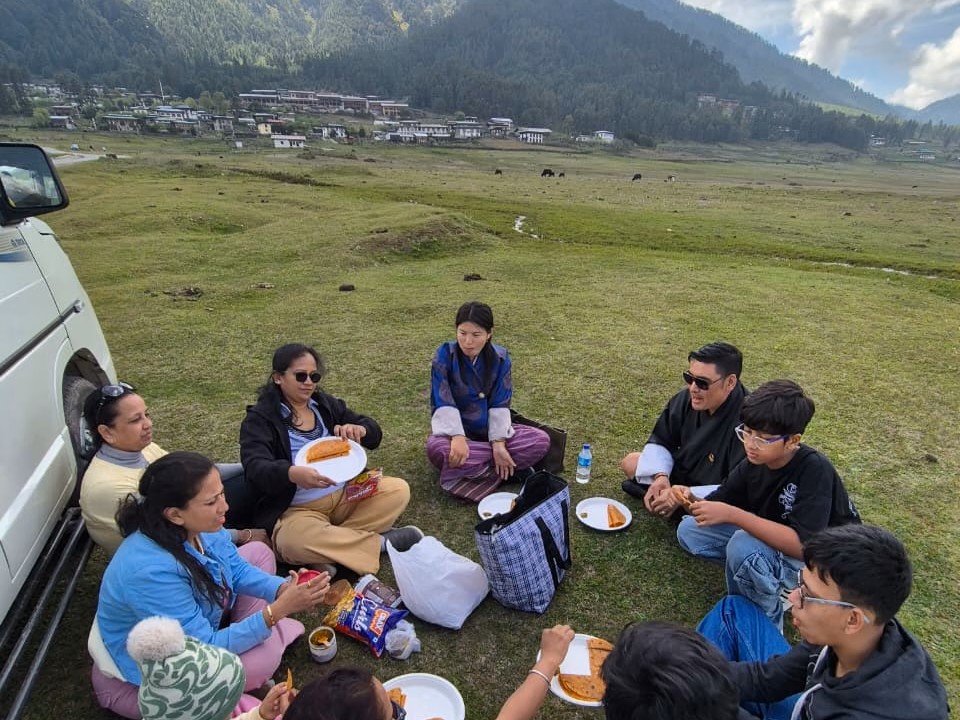
Having organised Bhutan trips for over 10 years, we at Thrillophilia understand that a successful holiday involves much more than sightseeing and hotel bookings. Small details, including dietary preferences, meal timings, and arrangements during long drives, can make a significant difference to the overall experience.
Our relationship with travellers does not end when the tour is completed. Once travellers return home, we follow up with them to collect feedback about their experience, including their accommodation, meals, sightseeing arrangements, and on-ground support. Over the years, traveller suggestions and feedback have helped shape how we organise and improve our Bhutan trips. This continuous feedback process helps us understand what works, identify areas that need attention, and make future journeys more comfortable for travellers with different needs.
Frequently Asked Questions
Vegetarian food is available in Bhutan, especially in larger towns such as Thimphu and Paro, where Indian restaurants are also found. Jain food may be available on request at some restaurants, including Sinchula Indian Cuisine in Thimphu, but current availability should be confirmed directly. Since Bhutanese vegetarian dishes can contain onion, garlic, potatoes, or mushrooms, explain your restrictions clearly and check each meal before ordering.
Share your dietary requirements in writing at the time of booking and ask the tour operator to communicate them to the hotels, restaurants, and tour manager. Confirm which meals are included and whether Jain preparation can be arranged for each one. Remind the tour manager before group meals, especially when a set menu has been ordered in advance. Carry suitable snacks as a backup for long drives or days when options may be limited.