

Quick Jumplinks to Navigate
A Europe trip already takes considerable time, requires careful documentation and, for most Indian travellers, involves applying for a Schengen visa. Now multiply that process by three or four people, each with their own passport, documents, preferences and travel needs, and you get a fair idea of what goes into planning a Europe trip for an Indian family.
Planning a Europe trip with your family is not simply a larger version of any other holiday you have taken. The paperwork runs deeper, and even small decisions, such as choosing hotels, planning transfers, or finding suitable meals, require more thought when children or older family members are travelling with you.
The difference between a smooth family holiday and a rushed, exhausting one is often decided months before departure. Then there are the practical details that are easy to overlook: coordinating luggage across multiple hotel changes, choosing family-friendly accommodation, understanding train connections, keeping emergency documents accessible and leaving enough downtime between major sightseeing days.
The sections below cover what actually needs to change when you plan a Europe trip as an Indian family, from visa documentation and food preferences to choosing the right pace, accommodation and transport for everyone travelling with you.
Start Your Planning With Visa And Documentation
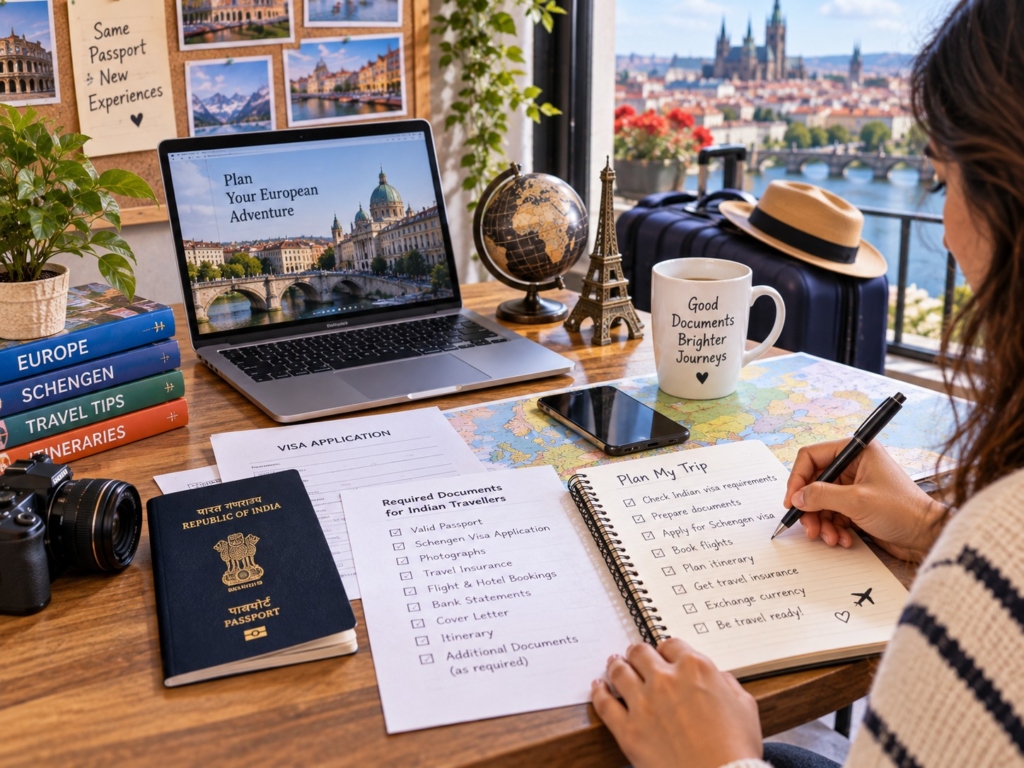
Every family member going on the Europe trip needs a separate Schengen visa and a valid passport. Infants and newborns are also not exempt from this requirement. Children travelling on parents’ passports will not clear European border control.
Standard processing for a Schengen visa takes 15 working days. Between April and July, high demand extends this to 30 to 45 days. Applying 4 to 8 weeks before departure is the safer choice for Indian families.
Required documents for each child include a valid passport with at least 3 months’ validity beyond the return date. An original birth certificate with a notarised photocopy must accompany each child’s application. A photograph sized 35x45mm against a plain white background is submitted separately. Travel insurance with a minimum coverage of EUR 30,000 is mandatory for the Schengen visa process.
Applying through the consulate of your longest-stay country reduces rejection risk, as per Thrillophilia’s destination experts. If one parent travels alone with children, the absent parent’s notarised consent letter is mandatory at European borders.
Visa fees in 2026 are EUR 90 (~INR 9,900) for adults and EUR 45 (~INR 4,900) for children aged 6 to 12. Children under 6 pay no visa fee, though VFS service charges of INR 2,000 to INR 3,000 apply per person.
Choosing the Right Season for Your Family
July and August coincide with Indian school holidays but bring the highest travel costs across Europe. Hotel rates in Paris, Rome, and Zurich reach their annual peak during this window. Rome and Barcelona regularly cross 34°C, making extended outdoor sightseeing difficult for children. Booking accommodation at least 4 to 6 months ahead is essential for peak summer travel.
April to May and September to October offer a genuinely better balance for Indian families. Temperatures across most of Europe stay between 10°C and 22°C during these periods. Crowds at major attractions remain manageable, and return airfares from India range from INR 55,000 to INR 90,000 per person. Prices in this shoulder window are 20 to 30% lower than peak summer rates.
December suits families interested in Christmas markets in Vienna and Munich. Hotel rates rise by 40 to 60% during Christmas week, so booking by September is necessary. Mid-November offers a similar festive experience at noticeably lower overall costs.
January to March has the lowest hotel rates and minimal queues at most attractions. Cold temperatures are a real consideration, but Budapest’s thermal baths offer a worthwhile winter stop for families.
Managing Food on a Europe Trip

Finding vegetarian food in Europe is possible but requires deliberate research before travel. Outside major tourist cities, vegetarian options become limited and inconsistent.
Paris has several Indian restaurants near Gare du Nord for reliable vegetarian meals. The ISKCON temple near Bastille serves free vegetarian lunch every Sunday. In Rome, pizza al taglio and pasta with tomato-based sauces are widely available across the city. Zurich and Lucerne also have Indian restaurants in tourist-facing areas. The Migros grocery chain stocks vegetarian ready-to-eat meals throughout Switzerland. Amsterdam has multiple Indian and Middle Eastern dining options spread across the city.
For smaller towns along your route, carrying Indian snacks is not a comfort choice but a practical one. Namkeen, biscuits, and instant noodles provide reliable backup when local options run short. Grocery chains like Lidl in Germany and France carry affordable vegetarian products suitable for everyday meals.
Most Indian families underestimate food planning until they are already mid-trip, as per Thrillophilia’s on-ground team. Thrillophilia’s Europe family packages include a daily breakfast with vegetarian options built in. A pre-departure consultation helps align your meal preferences with destination-specific dining arrangements before you travel.
Pacing Your Itinerary as a Family

Covering too many countries in too little time is the most consistent planning mistake among Indian families heading to Europe. Based on Thrillophilia’s internal data, covering more than 3 countries in under 10 days consistently felt exhausting and rushed for most travellers.
Two to three countries in 10 to 12 days is the pace that consistently works for families. A 7 to 8-day itinerary across France and Switzerland allows enough time to settle into each location properly. France, Switzerland, and Italy across 10 to 12 days suits families with older children or teenagers well.
One major attraction per day is the realistic limit when travelling with children. Combining the Eiffel Tower and the Louvre on the same day leaves most families exhausted by early afternoon. Afternoon rest breaks need to be built into the daily schedule and not treated as optional extras. Evening walks through pedestrianised city zones work well as low-effort, low-cost family time.
Thrillophilia’s Europe tour packages are structured around this practical pacing logic. Hotels are selected near train stations and city-centre attractions to reduce daily transit time and fatigue.
Transport, Safety, And What to Pack
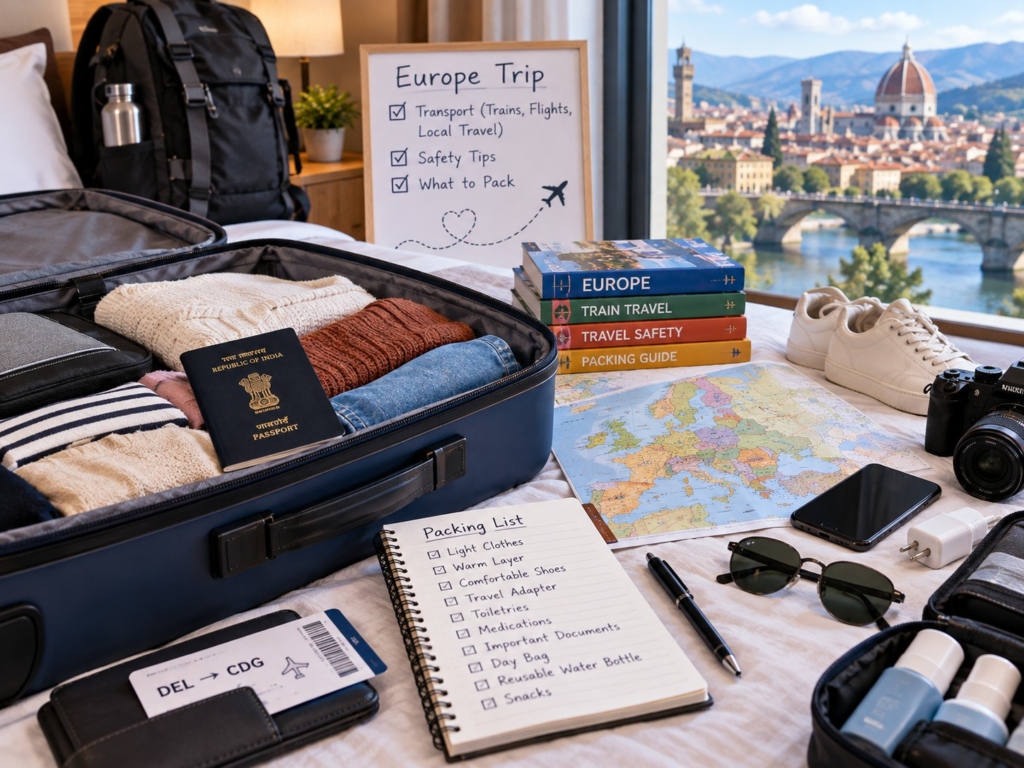
Europe’s rail network is the most practical intercity transport choice for Indian families. Trains connect city centres directly without the hassle of airports and additional check-in time. There are no baggage weight restrictions, and strollers fit into dedicated spaces within the carriages. The Paris to Zurich route by TGV takes approximately 4 hours. Vienna to Budapest by rail takes approximately 2.5 hours each way.
For safety, Europe’s major tourist cities are low-risk for serious crime overall. Pickpocketing remains the main concern in areas like the Paris metro, Rome Termini, and Barcelona’s Las Ramblas. Money belts, zipped bags, and a pre-agreed family meeting point in busy areas are straightforward precautions worth taking.
Packing essentials:
- Universal travel adapters, as Europe uses Type C, E, and F sockets instead of Indian plugs
- Photocopies of all passports and visa approvals stored in a waterproof document folder
- Original birth certificates and notarised consent letters for children who are travelling
- Prescription medications with doctor’s notes and original packaging ready for border checks
- Flat, comfortable walking shoes suited for cobblestone streets across European city centres
Tap water is safe to drink in most European countries. A reusable water bottle cuts daily costs without any health concerns. Thrillophilia’s on-ground team manages airport transfers and intercity travel and provides a complete pre-departure document checklist before your trip begins.
The families who truly enjoy Europe are the ones who planned the parts no travel brochure explains. The details above are the ones that catch most Indian families off guard on their first trip. Explore Thrillophilia’s Europe family tour packages to find an itinerary built around how Indian families actually travel. Group tour packages offer further flexibility for different family sizes and schedules.
Frequently Asked Questions
Yes, every family member requires their own Schengen visa and passport. Children under 6 pay no visa fee. Ages 6 to 12 pay EUR 45, and adults pay EUR 90. VFS service charges of INR 2,000 to INR 3,000 apply per person regardless of age.
April to May and September to October offer the best balance of weather, manageable crowds, and pricing. Peak summer brings higher costs and heat. December suits families interested in Christmas markets but requires early booking by September.
A mid-range 10-day Europe trip for a family of 4 typically totals INR 7 lakh to INR 10 lakh overall. Thrillophilia’s 10 to 12-day multi-country packages start from INR 1.8 lakh per person, with flexible add-ons available for flights and meals.
Vegetarian food is available in major cities but requires advance planning. Paris, Rome, Amsterdam, and Zurich have Indian restaurants. Grocery chains like Migros and Lidl carry vegetarian ready-to-eat options suitable for smaller-town travel.
Two to three countries in 10 to 12 days is the recommended pace for families. Covering more increases travel fatigue, especially for younger children. France and Switzerland or France, Switzerland, and Italy are well-tested combinations for Indian families.