


Quick Jumplinks to Navigate
You land in Paris after a long flight from India and wait at the baggage carousel. The belt stops, but your suitcase never appears. Sounds scary, right?
But if you know how to handle the situation, you don’t have to panic right when you land.
What actually determines how smoothly this gets resolved is less about the airline and more about what you do in the first hour: reporting it correctly, keeping the right paperwork, and staying on top of updates if your itinerary keeps moving between cities.
This matters more for Indian travellers on a Europe trip than it might elsewhere, simply because most Europe itineraries involve several cities in quick succession. A bag that’s delayed by even a day or two can easily end up chasing you from Paris to Zurich to Rome if the airline isn’t kept updated on where you actually are.
This list of things is compiled by Thrillophilia’s destination experts and walks you through the steps you can take to save your bags from being lost forever.
What to Do If Your Baggage Goes Missing in Europe
1. Report the Bag Before You Leave the Airport
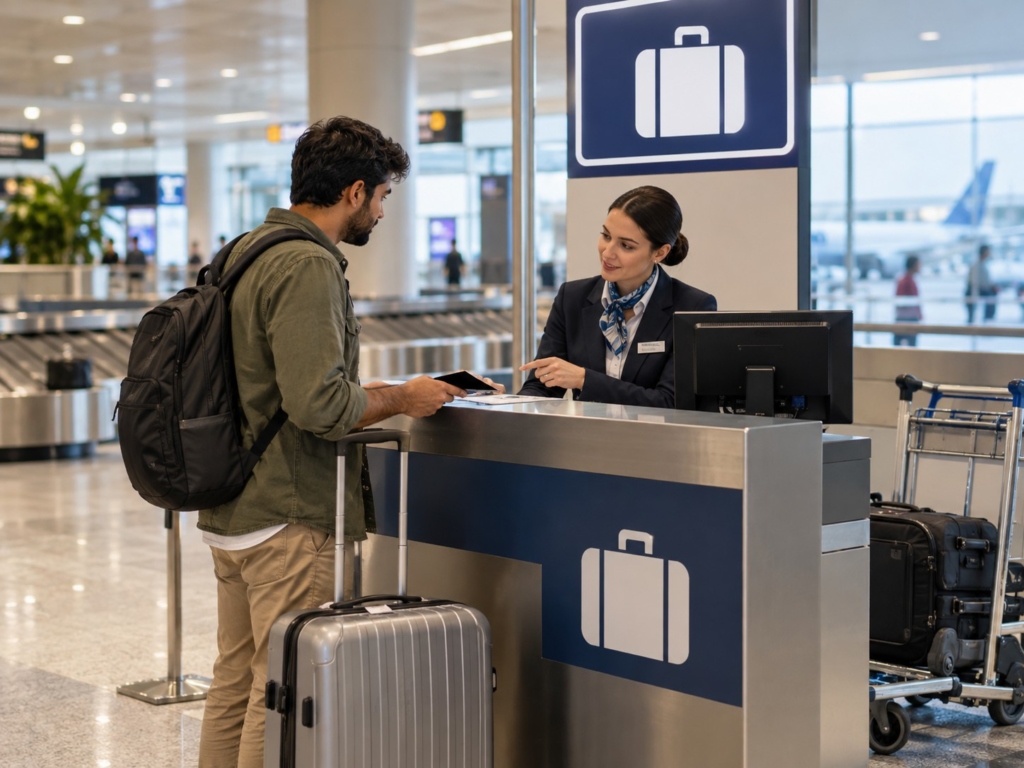
Go to the airline’s baggage desk or the ground-handling counter in arrivals. Show your boarding pass and baggage tag, then ask for a Property Irregularity Report (PIR) or baggage reference number.
Before walking away, check that the suitcase description and contact details are correct. Also check the delivery address. If Paris is only your first stop and you leave for Switzerland shortly afterwards, the airline needs to know that.
Save a screenshot of the PIR on your phone. You may need it throughout the trip.
2. Tell the Airline When You Are Changing European Cities

This is one of the biggest issues on a typical multi-country Europe itinerary.
You may spend two nights in Paris, move to Lucerne, and then continue to Milan. Your delayed suitcase may still be travelling behind you.
Do not assume the airline knows your itinerary. If you leave the city before the bag arrives, update the delivery address with the next hotel.
As per Thrillophilia’s on-ground team, keeping the coordinator informed also means someone local can follow up with the airline or hotel on your behalf if you are busy with the rest of the day’s plans. To help with unexpected circumstances like these, Thrillophilia offers a Guest Experience Officer to help you in every way possible throughout the trip.
In cases if a lost baggage, a GEO will be able to help you with what to do and guide you through the right steps.
3. Track the Bag Using the PIR Number
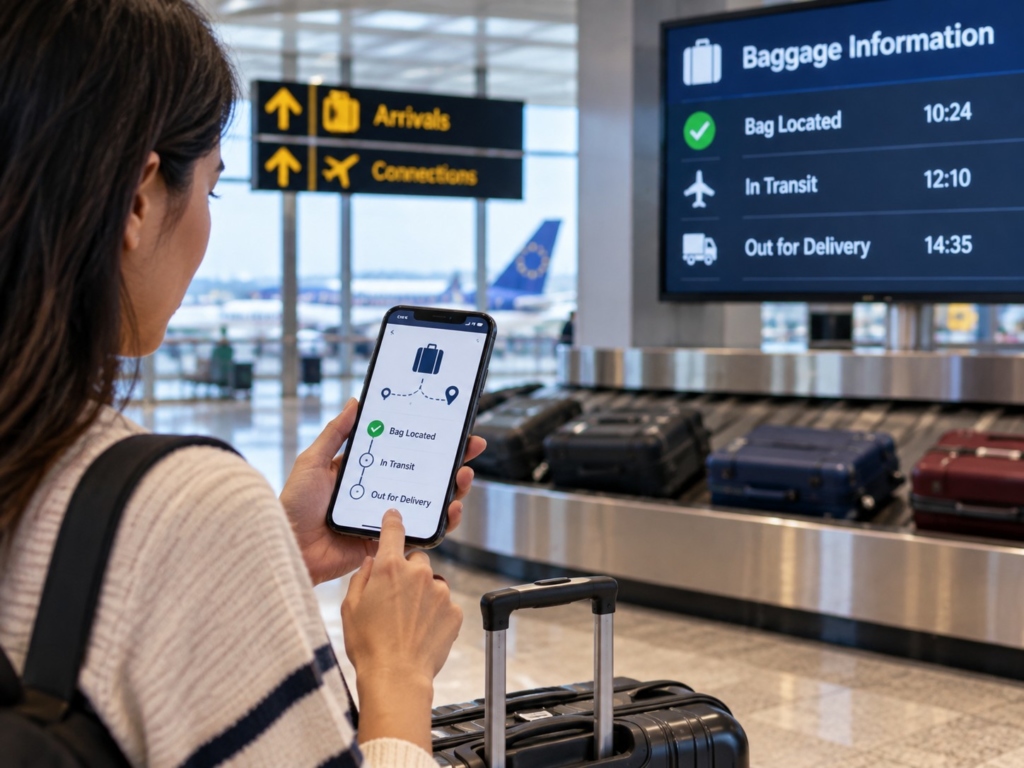
Once the report is filed, use the airline’s baggage-tracing page to follow the suitcase.
Your PIR number is not the same as the baggage tag number, so keep both.
If you use an AirTag or another tracker, keep checking it, but still follow the airline’s official tracing process. A tracker can show where the suitcase is, but it does not replace the baggage report.
4. Buy Basic Clothes and Toiletries, but Keep the Bills

If the suitcase contains all your clothes, you do not need to spend the next two days wearing what you flew in.
Buy what you need for the immediate part of the trip. That may mean a toothbrush, toiletries, underwear and one change of clothes. This is worth planning for even on a Europe honeymoon package, where a missing bag can affect a special dinner or outing you had already booked in advance.
Keep the original bill even if it is in euros or Swiss francs. Your airline or Indian travel insurer may ask for it later.
Avoid buying an entirely new wardrobe unless the delay genuinely requires it. Airlines usually look at whether the expense was reasonable for the circumstances.
5. Write Down What You Packed Before You Forget

If the bag is still missing after a few days, start making a proper contents list.
Think through what you packed before leaving India. Check old shopping emails, card statements, and photographs if they help establish what was inside. Families on a Europe family tour package should prioritise listing children’s items first, since specific sizes or brands of clothing and essentials can be harder to replace quickly in an unfamiliar city.
This becomes important if the bag is eventually treated as lost because the airline may ask you to show what you owned and its value.
6. Understand When “Delayed” Becomes “Lost”
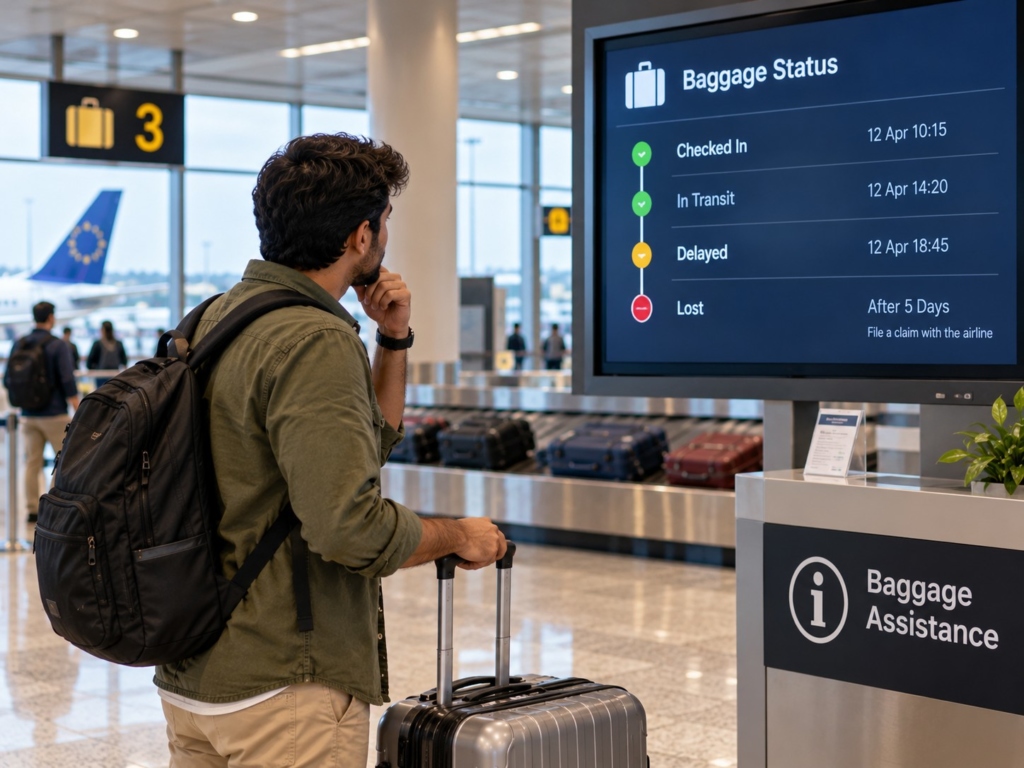
If your suitcase does not appear in Paris, Zurich or Rome, it is not immediately classed as permanently lost.
The airline first treats it as delayed baggage and continues tracing it.
Under the international rules used for baggage claims, a bag that has still not arrived after 21 days can be treated as lost.
That distinction affects what you claim. While the bag is delayed, you are mainly keeping proof of the expenses caused by waiting. If it becomes lost, the value of the suitcase and its contents comes into the claim.
7. Do Not Assume the PIR Is the Final Claim
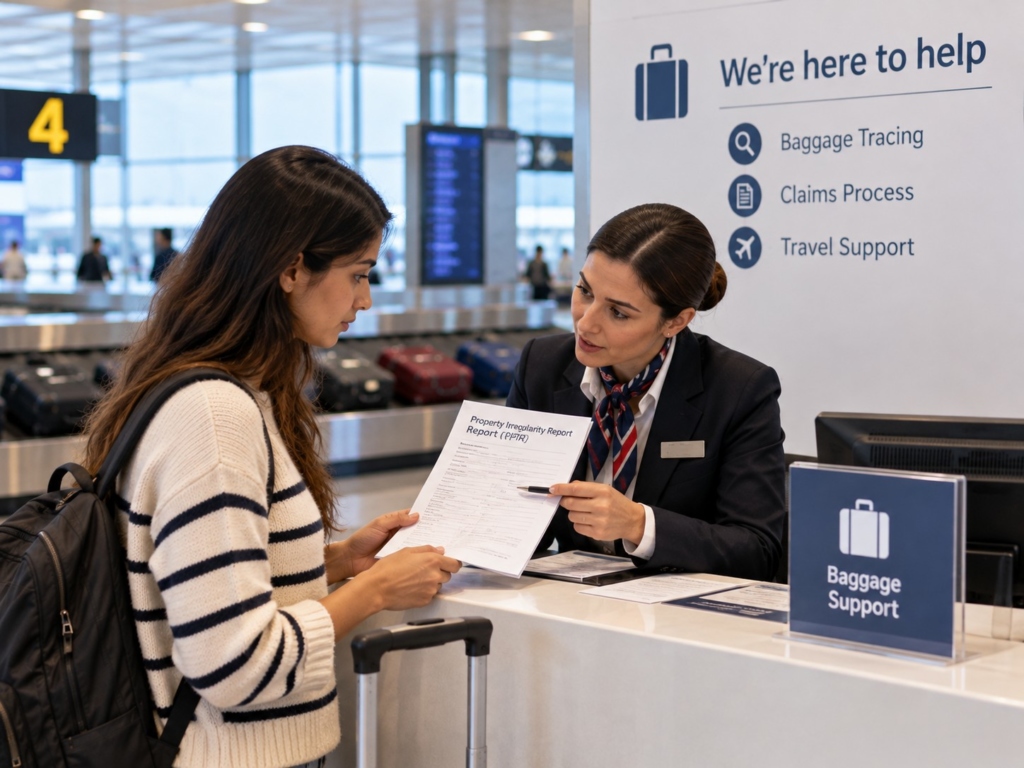
The form you complete at the airport starts the tracing process. It does not necessarily claim back the money you spent while waiting.
If you bought essentials in Paris, Lucerne or another stop, keep the receipts after the bag comes back.
For delayed baggage covered by the Montreal Convention, the written complaint generally needs to be made within 21 days after the bag is returned to you.
Submit it through the airline’s own claims process and keep copies of everything until the case is closed.
8. Check the Travel Insurance You Bought in India

If you bought travel insurance before leaving India, open the policy wording as soon as the baggage delay happens.
Look for baggage delay and loss of checked baggage separately. The policy may treat them as different benefits. According to Thrillophilia’s destination experts, this is worth checking even if you’ve booked a Europe group tour package, since baggage delay cover is sometimes bundled differently from a standalone travel insurance policy and the claim process can vary accordingly.
Your insurer may ask for the PIR, boarding pass, baggage tag and receipts. If the bag never returns, it may also ask for proof of what was inside.
Do not work from a generic “travel insurance covers lost bags” assumption. Check the limits and waiting period in the policy you bought.
Frequently Asked Questions
Report the missing bag at your final arrival airport in Europe. If your journey involved more than one airline, keep the baggage tag and details for every flight segment so the airline handling the case can trace where the suitcase was last transferred.
Update the delivery address with the airline as soon as your Europe itinerary changes. If you have already moved on, ask how the bag will be redirected to your current hotel or next destination.
Report the missing suitcase anyway. Give the airline your flight details and describe the bag as accurately as possible. Your booking and check-in records may also help identify it.
Usually, no. Once the baggage report is filed, follow the airline’s instructions on tracing and delivery. Waiting at a European airport generally does not help unless the airline says the bag is expected shortly.
Keep the baggage case open and contact the airline for the next steps. If the bag is later located in Europe, the airline will tell you how it can be returned. If it remains missing long enough to be treated as lost, follow the airline’s claim process.