


Quick Jumplinks to Navigate
If you are planning a trip to Europe, your journey begins long before boarding the flight. Getting a Schengen visa appointment slot can be one of the most time-consuming parts of the process, especially during the summer rush.
In 2026, increased demand has made appointment availability a practical bottleneck, with reports of limited C-visa slots during the May-to-August peak.
Travellers booking Thrillophilia’s Europe tour packages can benefit from having their itinerary and holiday arrangements organised while preparing their visa paperwork. For families or larger groups, this can be particularly useful because travel dates, accommodation, and supporting documents need to remain consistent across applications.
The team of destination experts also provides practical guidance around documentation and travel planning, but visa approval remains the decision of the relevant embassy or consulate.
No matter if you are planning an independent itinerary or booking a Europe group tour, you should start early and use the correct consulate. Also, you should keep your documents ready before appointment slots become scarce.
Here are seven things worth knowing before you begin.
1. The Appointment Slot Is the Real Bottleneck, Not the Approval

Based on Thrillophilia’s internal data, manual appointment hunting during peak periods can take 4 to 8 weeks of regular checking. So, you should begin the visa process 6 to 12 weeks before departure while preparing as soon as the application window opens.
Officially, Schengen applications can be submitted up to 6 months before the intended journey and normally no later than 15 days before travel.
2. How Early Indians Should Start the Process
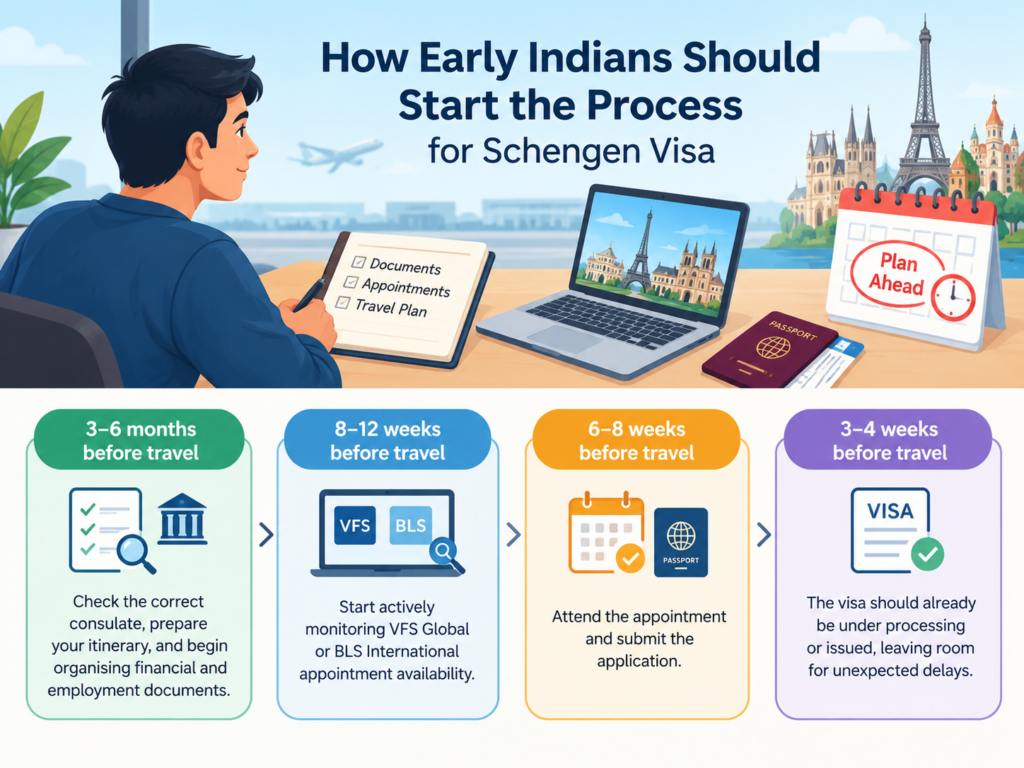
For most Indian travellers, 6 to 8 weeks before departure is a sensible minimum, while 3 months is more comfortable for peak-season Europe travel. If your journey falls between May and August, you should start monitoring appointments way before the planned departure date.
A practical timeline looks like this:
- 3-6 months before travel: Check the correct consulate, prepare your itinerary, and begin organising financial and employment documents.
- 8-12 weeks before travel: Start actively monitoring VFS Global or BLS International appointment availability.
- 6-8 weeks before travel: Attend the appointment and submit the application.
- 3-4 weeks before travel: The visa should already be under processing or issued, leaving room for unexpected delays.
3. Peak Seasons Make Appointments Even Harder to Get

Summer is the most demanding period for European travel from India. School holidays and favourable weather create a large increase in applications. According to Thrillophilia’s destination experts, appointment hunting can take several weeks during this period, so if you are planning to travel to Europe during summer holidays, you should aim for the earlier end of the 6 to 12-week preparation window. This is also when couples planning an Europe honeymoon package tend to feel the appointment crunch most, since summer dates are usually fixed around leave availability.
Christmas markets, New Year celebrations and ski holidays create another busy period. Public holidays can also affect consular staffing and document movement. Germany’s visa guidance specifically cautions that processing may take longer around holidays including Christmas and Diwali.
4. The Schengen Country You Apply Through Changes Your Timeline
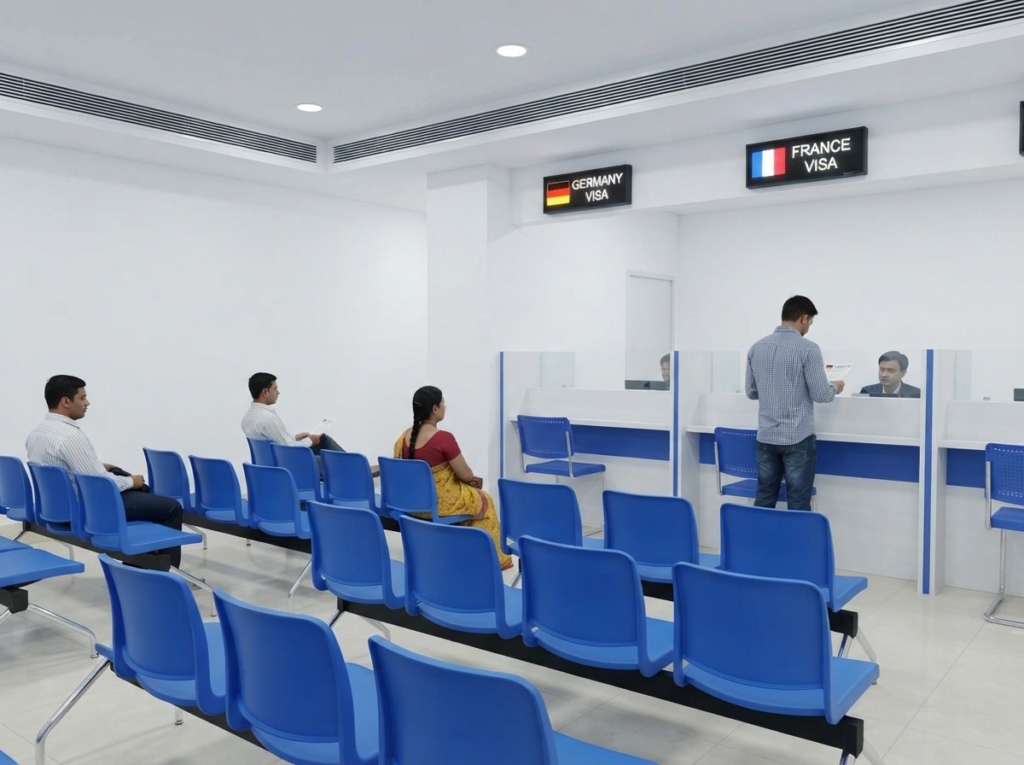
Appointment systems, application centres, workload and processing practices differ between Schengen countries. VFS Global handles applications for many destinations, while Spain uses BLS International in India. The correct application centre depends on the country concerned.
Hence, you should follow the main-destination rule. You must apply through the Schengen country where you will spend the most time. If you are spending equal time in multiple countries, you generally apply through the country of first entry.
5. Book the Appointment Yourself, Not Through an Agent

You should not rely on an agent promising a guaranteed appointment. Germany’s Federal Foreign Office recommends applicants book appointments themselves and says using an agency does not result in an earlier appointment. It also advises applicants to check regularly because additional slots can be released at short notice.
Some VFS systems also display indicative earliest appointment dates, although availability can change dynamically and is not guaranteed.
6. Have Your Documents Ready Before the Slot Appears
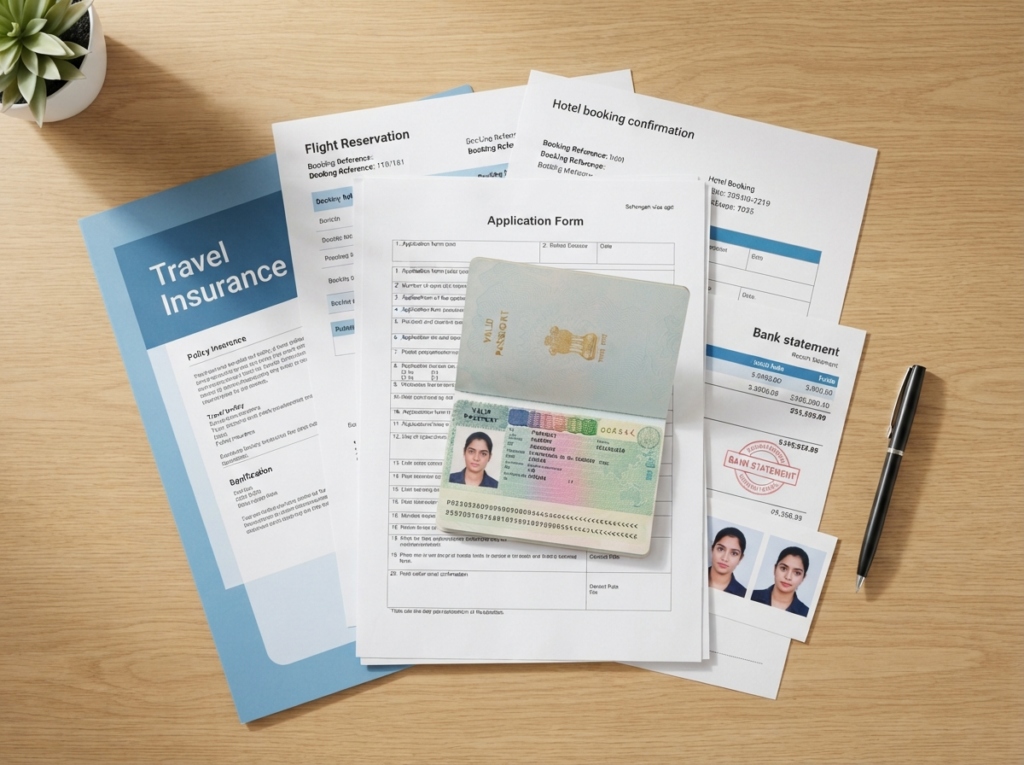
You should have the core paperwork ready before you begin intensive slot hunting. It includes:
- Passport with appropriate validity
- Completed visa application form
- Accommodation and itinerary evidence
- Proof of employment or business
- Recent bank statements and income documents
- Income-tax-return acknowledgements
- Previous passports and travel history
- Schengen-compliant travel medical insurance
The European Commission requires evidence of financial means, accommodation, travel purpose, and medical insurance as part of the application. Travel insurance should provide at least €30,000 (~INR 33L) of medical coverage, valid throughout the Schengen Area and for the relevant travel period. This is especially worth organising early if you’re travelling on an Europe family tour package, since documents need to stay consistent across every family member’s application.
For Indian applicants, a clean financial paper trail is particularly important. You should avoid unexplained large deposits immediately before applying. Instead, maintain statements that demonstrate regular income and credible funds for the trip.
7. The Cascade Regime Can Get Frequent Travellers a Multi-Year Visa

Indian travellers with an established Schengen travel history now have an important advantage. Under the EU’s 2024 visa “cascade” regime, Indian nationals who have lawfully obtained and used two Schengen visas within the previous three years may qualify for a two-year multiple-entry visa. However, it is subject to the applicable conditions and passport validity. A compliant two-year visa can normally be followed by a five-year multiple-entry visa.
This does not mean every repeat applicant automatically receives a long-term visa. Previous visas must have been used lawfully, including compliance with the 90/180-day rule. This is worth checking closely if you’re comparing an Europe group tour package for a return trip, since a multi-year visa can make repeat European holidays considerably easier to plan around.
Frequently Asked Questions About Schengen Visa for Indians
The Schengen visa timeline in India varies by country, season, and appointment availability. Consular processing is generally 15 calendar days after submission, but can extend to 45 days in individual cases. The appointment itself may take several weeks during peak periods.
You should begin preparing for a Schengen visa 6 to 12 weeks before departure. Officially, Schengen applications can generally be submitted up to 6 months before the intended journey. During peak summer and winter seasons, you should start earlier and monitor appointment availability regularly to allow enough time for document checks, processing, and passport return.
There is no Schengen country that is officially guaranteed to be the fastest for every Indian applicant. The processing times fluctuate with season and workload. However, you must apply through the country that is your genuine main destination.
Schengen visas can be refused for Indians for several reasons, including insufficient financial evidence and inconsistent documents. It can also be rejected due to an unclear travel purpose, inadequate proof of accommodation, and doubts about returning to India or discrepancies in the application. Even previous immigration violations can also lead to the rejection of a Schengen visa.
There is no universal minimum bank balance for a Schengen visa. The required funds depend on the destination, trip duration, accommodation, and individual circumstances. Applicants should demonstrate sufficient, genuine, and traceable funds to cover their stay, travel, and return journey rather than relying on a fixed balance.