

Quick Jumplinks to Navigate
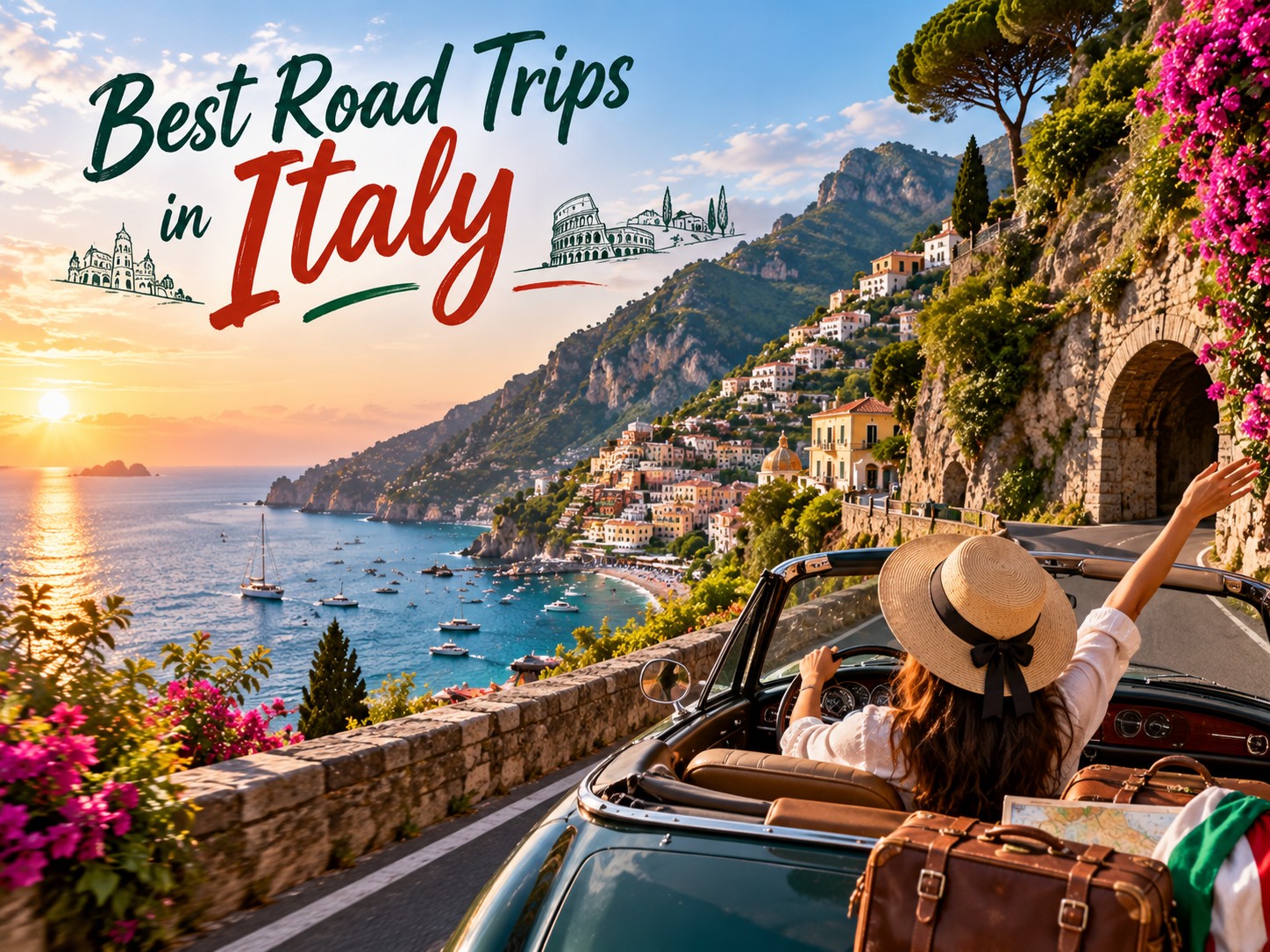
If you want freedom in exploring the rolling vineyards, dramatic coastlines, and historic hilltop towns at your own pace then Italy is one of the best choices.
The country is narrow enough that you can leave snow capped mountains behind in the morning and be driving along warm coastline by evening, and its network of state roads, the ones that wind through wine country and hug cliff edges, seem designed for scenery as much as speed.
This detailed information covers the routes Indian travellers ask about most, what driving in Italy tour package actually involves, roughly what it costs in INR, and a sample itinerary you can build on. If you have been searching for the best places for a road trip in Italy and are not sure where to begin, this should clear most of it up.
Pick the Right Season for Your Drive
- Best months: April to June and September to October offer mild temperatures and lighter traffic than peak summer.
- Peak summer (July-August): Brings the most number of travellers, especially along the Amalfi Coast and around the lakes, along with higher rental and fuel prices.
- Winter: Driving is fine across most of the country, but Dolomite mountain passes close with heavy snowfall, so this is mostly planned during summer.
Budget Realistically for Your Trip
- Car rental: A compact car at rent costs approximately INR 4,500 to INR 7,500 per day depending on season and category.
- Fuel costs: At roughly INR 150 to INR 175 per litre, a week of driving (800 to 1,000 km) can add up to INR 9,000 to INR 12,000 in fuel alone.
- Tolls and parking: Autostrada tolls run around INR 700 to INR 950 per 100 km, while city centre parking costs approximately INR 150 to INR 300 per hour, or INR 1,800 to INR 2,500 for a full day.
- International Driving Permit: Getting one through an Indian RTO costs roughly INR 1,000 to INR 1,500.
- Total estimate: For a 10 day self drive trip for two people sharing a car (covering rental, fuel, tolls and parking), expect to spend between INR 55,000 and INR 85,000, excluding hotels, meals, and entry tickets.
If you are travelling with Thrillophilia, these logistics are handled for you before you even start your journey, so you can focus on the experience while driving.
Get Your Visa Sorted Before You Travel
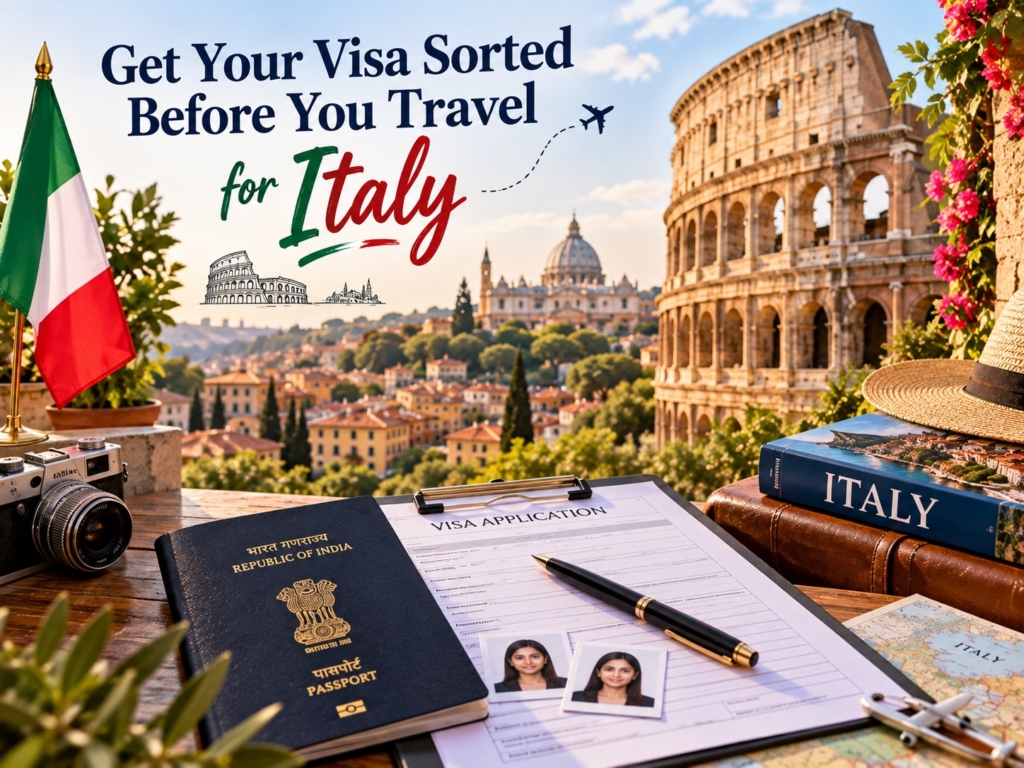
- Schengen Visa (Type C) required: Indian passport holders need a Schengen visa to enter Italy, since there’s no visa-on-arrival facility for Indians travelling to Italy. This single visa also grants access to all 26 Schengen countries for short stays of up to 90 days within any 180-day period.
- Where and how to apply: Applications go through VFS Global centres in India or the Italian Embassy/Consulates, and processing typically takes 15 to 20 working days, though this may extend to 60 days for complicated cases.
- Visa fees: Schengen visa fees increased from EUR 80 to EUR 90 for adults, effective October 2025.
- Travel insurance is mandatory: Travel insurance with 30,000 euro coverage is a mandate for Indian passport holders visiting Italy or any Schengen country, alongside the standard documents like passport validity and financial proof.
If you’re travelling with Thrillophilia, you don’t need to navigate any of this on your own. They provide complete visa assistance, guiding you through documentation, appointment scheduling and application requirements, so your paperwork is sorted well before you’re ready to hit the road.
Map Out the Best Italy Road Trip Routes
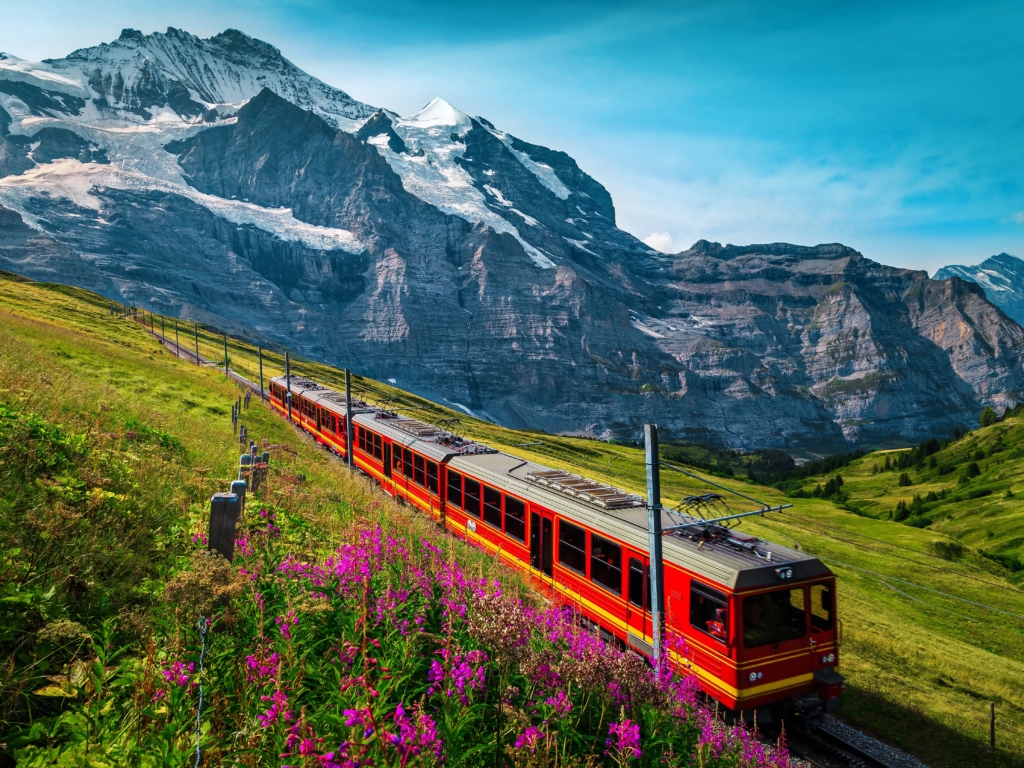
- There’s no single correct route, it depends on your days available and whether you prefer coastline, countryside or mountains.
- A central Italy loop from Rome suits 7 to 10 days and covers Tuscany and the Amalfi Coast without much backtracking.
- A northern loop from Milan or Venice takes in the Dolomites and lake district, good for those who prefer mountains over beaches.
- Keep driving days realistic, since state roads are scenic but slow. A 150 km Amalfi Coast stretch can take twice as long as the same distance on a motorway.
Thrillophilia maps out your trip strategically, and because of their years of expertise, they have a strong hold on the terrain. The best part is that they personalise the tour as per your preferences, mapping out the road based on what is best suited for you.
Pick your must have Places to Visit and Experience on an Italy Bike Trip
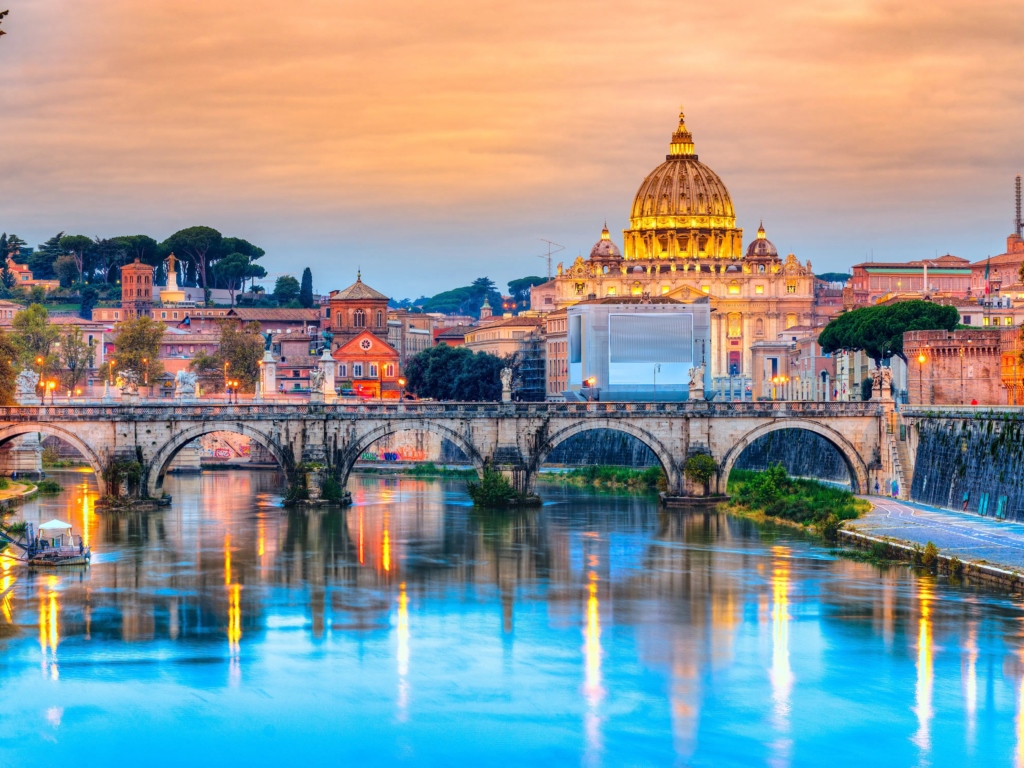
- Dolomites (Bolzano to Cortina d’Ampezzo): Ride the Great Dolomites Road, about 110 km, climbing high passes like Passo Pordoi and Passo Sella, with jagged limestone peaks and switchbacks for a thrilling ride. Stop in Bolzano for its Austrian-influenced charm, and plan for summer only, since it passes close with the first snowfall.
- Ligurian Coast and Cinque Terre: Ride the coast toward La Spezia or Levanto, park there, and explore the five Cinque Terre villages by train or boat, since they aren’t accessible by road. The stretch from Genoa past Portofino is worth riding slowly, with the coastline appearing and disappearing behind headlands.
- Puglia’s Whitewashed Towns: Enjoy flat terrain and wide, empty roads for a relaxed ride. Visit Alberobello’s trulli houses, the whitewashed town of Ostuni, baroque Lecce, and the clear waters of Salento near Otranto, all with far fewer crowds than the Amalfi Coast.
- Northern Lakes: Como, Garda and Maggiore: Ride calmer, scenic routes past Bellagio and Varenna on Lake Como, the open Lake Garda with its Sirmione peninsula, and the quiet Lake Maggiore, reaching the Borromean Islands by boat. Each lake needs just a day or two, making them easy to combine into a longer northern loop.
Know the Driving Rules Before You Set Off
- International Driving Permit required: Indian licences aren’t valid alone in Italy. Get an IDP from your local RTO before departure and carry it alongside your original licence at all times.
- Adjusting to right-hand driving: Italy drives on the right, which takes most Indian drivers a day or two to fully adjust to, particularly at roundabouts.
- ZTL zones catch tourists out: The Zona a Traffico Limitato (ZTL) is a camera-monitored restricted zone in historic centres like Florence, Siena, Bologna and Milan. Driving in without authorisation means a fine by post, sometimes weeks or months later. Park outside the boundary and walk in; rental companies and hotels can help identify it.
- Speed limits and safety: 130 km/h on the autostrada, 90 km/h on state roads, 50 km/h in built-up areas (lower on mountain and coastal roads). Seatbelts are compulsory, and since the blood alcohol limit is stricter than in India, it’s best to avoid drinking entirely if driving that day.
Follow This Sample Italy Road Trip Itinerary
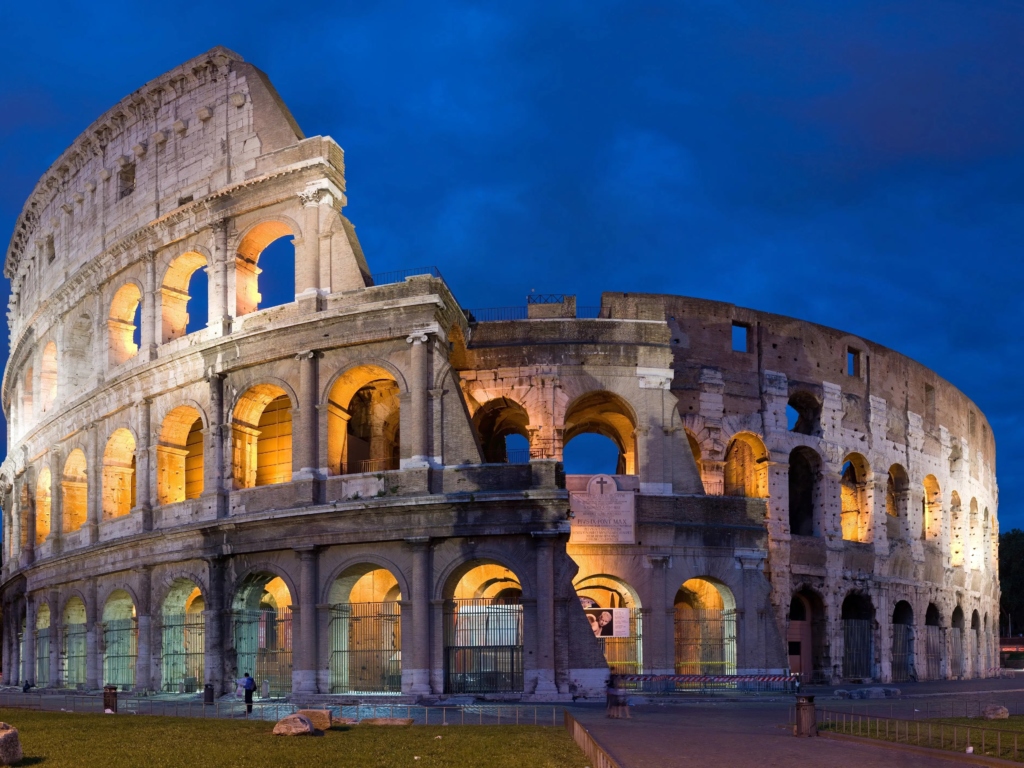
This 10 days and 9 nights Italy tour itinerary covers Rome, the Amalfi Coast, Tuscany and Cinque Terre, and works as a reasonable template for anyone building their first Italy road trip itinerary.
- Day 1: Arrive in Rome, collect your rental car, settle into your hotel for the night.
- Day 2: Explore Rome on foot or by metro. Leave the car parked, since central Rome has an active ZTL zone.
- Day 3: Drive from Rome to Sorrento, stopping at the ruins of Pompeii along the way.
- Day 4: Drive the Amalfi Coast road, stopping in Positano, Amalfi and Ravello.
- Day 5: Drive north from Sorrento toward Siena, a longer driving day best started early.
- Day 6: Day trip through the Val d’Orcia, covering Pienza, Montepulciano and San Gimignano.
- Day 7: Drive from Siena to Florence and spend the day exploring, parking outside the ZTL boundary.
- Day 8: Drive to La Spezia, park the car, and take the train to explore the Cinque Terre villages.
- Day 9: Drive back toward Rome, with a stop at the hilltop town of Orvieto.
- Day 10: Return the rental car in Rome before your onward flight.
Choose Thrillophilia to Plan Your Italy Road Trip
Planning any of the routes above on your own means sorting out car rental, an International Driving Permit, ZTL zones, toll systems, visa paperwork and hotel bookings in five or six different towns, often in a language you do not speak. Thrillophilia handles this coordination for travellers who would rather spend that time actually deciding which hill town to stop at next.
Our 14 Days Italy Self Drive Tour, running from Venice down to the Amalfi Coast, is built specifically for travellers who want the freedom of driving without having to plan every stop, parking arrangement and route from scratch.
Beyond the itinerary itself, their team provides Schengen visa documentation support, including hotel vouchers and transport confirmations formatted the way VFS Global expects them, along with 24/7 on trip support if anything needs sorting out while you are on the road.
Pricing is laid out clearly before you book, so you know exactly what is included and what you will need to budget separately, which matters more on a self drive trip than on almost any other kind of holiday.
FAQs
Yes. An Indian driving licence alone is not accepted for driving in Italy. You need an International Driving Permit issued by your local RTO before you travel, and you must carry it together with your original Indian licence at all times while driving.
Tuscany is generally the easiest starting point, since its roads are wider and less demanding than the Amalfi Coast’s cliffside route. The Amalfi Coast is more spectacular but involves narrow hairpin turns and heavy summer traffic, which can be stressful for someone driving in Italy for the first time.
A minimum of 7 days is enough to cover one region properly, such as Tuscany or the Amalfi Coast, without rushing. For a route that combines two or three regions, such as Rome, the Amalfi Coast and Tuscany together, 10 to 12 days gives you a more comfortable pace.
A ZTL, or Zona a Traffico Limitato, is a restricted traffic zone in the historic centre of many Italian cities, monitored by cameras rather than police. Driving into one without authorisation results in a fine sent by post, often weeks after your trip has ended. The simplest way to avoid this is to park outside the ZTL boundary, which your hotel can usually point out, and walk or take a taxi into the centre.
Not really. The five villages of Cinque Terre are connected by footpaths, a local train line and boats rather than roads, and parking within the villages is either unavailable or very limited and costly. The practical approach is to park in La Spezia or Levanto and use the train or a boat to move between the villages.