

Quick Jumplinks to Navigate
The United States is one of the most visited countries in the world, and most first-time visitors from India follow a broadly similar itinerary with New York, Las Vegas, perhaps Los Angeles or Orlando. These are legitimate destinations, but they represent a narrow version of what the country actually offers. The USA’s geography spans six time zones, covers 9.8 million square kilometres, and contains ecosystems ranging from Arctic tundra to subtropical wetland. The experiences listed here sit outside the standard tourist circuit and cover the country more honestly — wildlife, food, history, and architecture across destinations that rarely appear on a first itinerary but consistently define a second or third one.
Wildlife, Wilderness, and the Outdoors
The United States contains some of the most ecologically diverse protected landscapes in the world, and several of the country’s most significant wildlife experiences are bookable as guided day tours rather than requiring extended backcountry expeditions.
Grand Teton National Park in Wyoming is one of the most ecologically intact mountain ecosystems in North America. The Teton Range rises directly from the valley floor without foothills, creating a landscape that is immediately and dramatically vertical. A guided wildlife safari within the park covers the sagebrush flats and river corridors where moose, bison, elk, bald eagles, and pronghorn are regularly sighted. The park’s wildlife is most active at dawn and dusk, and a guide significantly increases both the range and quality of sightings across a single morning.
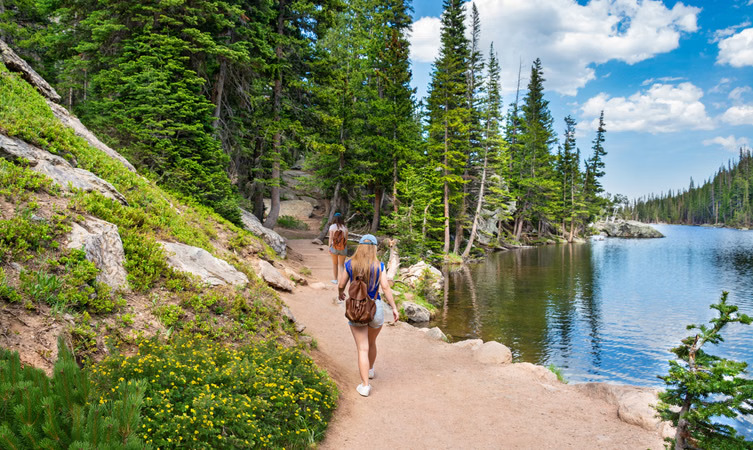
Rocky Mountain National Park in Colorado sits at elevations between 2,400 and 4,300 metres and contains more than 60 mountain peaks above 3,600 metres. The park’s Trail Ridge Road is the highest continuous paved road in the United States, passing through alpine tundra above the tree line. Wildlife here includes elk herds, bighorn sheep, and black bears. The park receives over four million visitors annually but its trail network distributes them across more than 600 kilometres of maintained paths.
The Mount Rushmore, Crazy Horse and Custer State Park Tour in South Dakota covers the Black Hills, where natural landscape and American history occupy the same terrain. Custer State Park supports a free-roaming bison herd of approximately 1,300 animals across open grassland and pine forest, and wildlife drives through the park regularly produce sightings of pronghorn, elk, and burro populations that have become a fixture of the route. Mount Rushmore and the still-under-construction Crazy Horse Memorial add a cultural dimension to a day that is as much about the landscape of the Great Plains as it is about the monuments carved into it.
Alaska occupies a different category entirely. The Wilderness, Wildlife and Glacier Experience from Anchorage covers glacier terrain, coastal wildlife, and the scale of the Alaskan landscape in a single day, with brown bears, Dall sheep, beluga whales, and bald eagles among the species commonly sighted depending on season. The Arctic Circle and Aurora Viewing Tour operates in the winter months and covers the 66th parallel, where the aurora borealis is visible on clear nights between September and April. Alaska accounts for more than 17 percent of the total land area of the United States and contains more coastline than all other US states combined.
The Everglades Airboat Adventure Tour in Florida operates within the largest subtropical wilderness in the United States, a 6,070-square-kilometre wetland ecosystem that is unlike any other landscape in the country. Airboats navigate the shallow waterways at speed, covering terrain that is inaccessible by any other means of transport. American alligators, great blue herons, roseate spoonbills, and river otters are among the wildlife sighted on a standard tour.
Whale watching off Cape Cod in Massachusetts operates from Provincetown, at the tip of the Cape Cod peninsula, and targets Stellwagen Bank National Marine Sanctuary, one of the most productive feeding grounds on the US Atlantic coast. Humpback whales, fin whales, and minke whales are sighted on the majority of tours between April and October, with humpbacks being the most frequently observed due to their surface-active behaviour.
The Columbia River Gorge in Oregon and Washington contains more than 100 waterfalls within a canyon that stretches roughly 130 kilometres. Multnomah Falls drops 189 metres and is among the tallest year-round waterfalls in the country. A guided waterfall tour of the Gorge covers terrain that would take multiple days to explore independently and provides geological context for a landscape formed by catastrophic Ice Age flooding.
The New Orleans swamp tour operates in the Louisiana bayou ecosystem directly outside the city. The bayou is a working wetland, not a managed attraction, and the tours operate within it rather than around it. American alligators, nutria, egrets, and cypress forest characterise the landscape. The contrast with the urban environment of New Orleans, less than an hour’s drive away, is considerable.
Food, Drink, and Culinary Trails
American food culture is regional in a way that does not translate well through restaurants abroad. The difference between Kansas City barbecue and Texas barbecue is not a minor variation but a distinct tradition built around different cuts, different woods, different sauces, and different histories. The same applies to New England seafood, Lowcountry cuisine in South Carolina, and the food culture of the Pacific Northwest. Guided culinary experiences provide access to this regional specificity in a way that independent restaurant visits rarely do.
The Seattle Pike Place Market Food Tour covers one of the oldest continuously operating public farmers’ markets in the United States, established in 1907. The market sits above Elliott Bay and operates across multiple levels of vendors, fishmongers, produce stalls, and prepared food counters. A guided tour structures the visit around the market’s history, its vendors, and the food traditions of the Pacific Northwest, including Dungeness crab, smoked salmon, and artisan cheese among them.
The Kentucky Bourbon Trail Tasting Experience covers the most concentrated cluster of whiskey distilleries in the world. Kentucky produces approximately 95 percent of the global bourbon supply, and the legal requirements that define bourbon as a category, produced in the United States, made from a grain mixture of at least 51 percent corn, and aged in new charred oak containers, are specific to this region’s production history. A structured tasting experience distinguishes between age statements, mash bills, and finishing processes in a way that a standard distillery visit does not.
The Charleston Culinary and Historic Walking Tour covers South Carolina’s oldest city, where the food culture draws on West African, French Huguenot, and Native American culinary traditions that converged during the colonial period. Lowcountry cuisine, defined by rice dishes, shellfish, and slow-cooked meats, developed here and remains specific to this stretch of the South Carolina coast. The tour covers both the food and the architectural context of a city whose historic district is one of the best preserved in the American South.
The San Antonio River Walk Food and History Tour moves through one of the most culturally layered cities in Texas, where Spanish colonial history, Mexican culinary tradition, and German immigrant food culture have produced a cuisine that is distinct from the rest of the state. The River Walk itself runs through the centre of the city alongside the San Antonio River, and the tour connects the food to the history of a city that changed hands between Spain, Mexico, and the United States across a period of less than 50 years.
History, Culture, and the American West
The United States is a relatively young country by global standards, but the historical events that defined it, including the founding of the republic, westward expansion, the Civil War, and the development of the American West, left a physical record that is still largely intact and accessible.
The Freedom Trail History Walking Tour in Boston covers 2.5 miles of marked path through 16 historically significant sites, including the Massachusetts State House, the site of the Boston Massacre, Paul Revere’s house, and the USS Constitution, the world’s oldest commissioned naval vessel still afloat. Boston is where much of the political groundwork for American independence was laid between 1765 and 1776, and the Freedom Trail connects these sites in sequence.
Nashville and Savannah both offer hop-on hop-off trolley tours that cover more ground than walking allows in a single day. Nashville’s tour includes the Ryman Auditorium, which served as the home of the Grand Ole Opry for 31 years, the Parthenon replica in Centennial Park, and the historic neighbourhood of East Nashville. Savannah’s tour covers one of the most intact historic districts in the American South, a grid of 22 park squares laid out in 1733 that has remained structurally unchanged for nearly three centuries.
The Atlanta City Sightseeing Tour covers a city that was almost entirely destroyed during the Civil War and rebuilt in the decades that followed, becoming the economic and cultural capital of the American South. The tour includes the Martin Luther King Jr. National Historic Site, the historic Sweet Auburn district, and the city’s broader architectural narrative of destruction and reconstruction.
The Dallas Ranch and Cowboy Experience provides a working introduction to Texas ranch culture, covering horse riding, roping, and cattle-related activities on a functioning property outside the city. It is one of the few experiences on this list that is genuinely participatory rather than observational, and it connects to a tradition of ranching and cattle driving that shaped the geography and economy of the American Southwest across the 19th century.
The Chicago Architecture River Cruise covers more than 50 buildings along the Chicago River in 90 minutes, with architectural and historical context provided throughout. Chicago is where the modern skyscraper was effectively developed, and the river provides a vantage point that street-level exploration cannot replicate. The buildings visible from the water include structures by Louis Sullivan, Mies van der Rohe, and a range of 20th-century architects whose work defined the city’s skyline.
Planning Around These Experiences
Think of these 19 experiences as your cheat sheet to visit the USA, spanning 14 states and everything from Arctic adventures to Florida’s lush wetlands. The best part? None of them takes more than a day, which means you can mix, match, and build a trip that feels completely your own. Many of these experiences sit close enough to each other to be stitched together into one epic journey. And with prices starting from just INR 4,300 per person, they’re easier to fit into your plans than you might think.
If it’s your first (or even second) time in the United States, here’s a tip: skip planning by cities and start planning by experiences. The USA is massive, a flight from the East coast to the West coast is about 6 hours so you cannot see the country in one trip. But if you build your itinerary around moments like these, you’ll come back with stories, not just a checklist. And honestly, that’s a much better way to remember a place.