

Quick Jumplinks to Navigate
There is a particular kind of travel hunger that Europe used to own entirely. The hunger to stand somewhere storied, in a city that looks like it was built to be walked through slowly, where the food tells you something real about the people, where the streets hold a history that does not feel like a school textbook. For decades, that hunger sent Indian travellers west. Paris, Rome, Barcelona. The Grand Tour, reinvented for a generation with Schengen visas and Instagram accounts.
But something has shifted quietly, steadily, and now unmistakably, a new destination has claimed that same hunger. South Korea, is drawing Indian millennial travellers in numbers that would have seemed improbable a decade ago. Not just fans making pilgrimages to drama filming locations (though that is real, and it is significant), but curious, discerning travellers who want to eat well, move through beautiful landscapes, and feel genuinely immersed in a culture that rewards slow attention. The kind of travellers who, a few years ago, would have been booking Eurostar tickets.
What changed? Almost everything, and nothing in this happened overnight.
The Hallyu Effect, But Not the Way You Think
The easy explanation is Hallyu, the Korean Wave of pop culture that swept through India via BTS and Squid Game and a hundred dramas that Indian audiences watched through the pandemic and did not stop watching after. That is not wrong. But it flattens something more interesting.
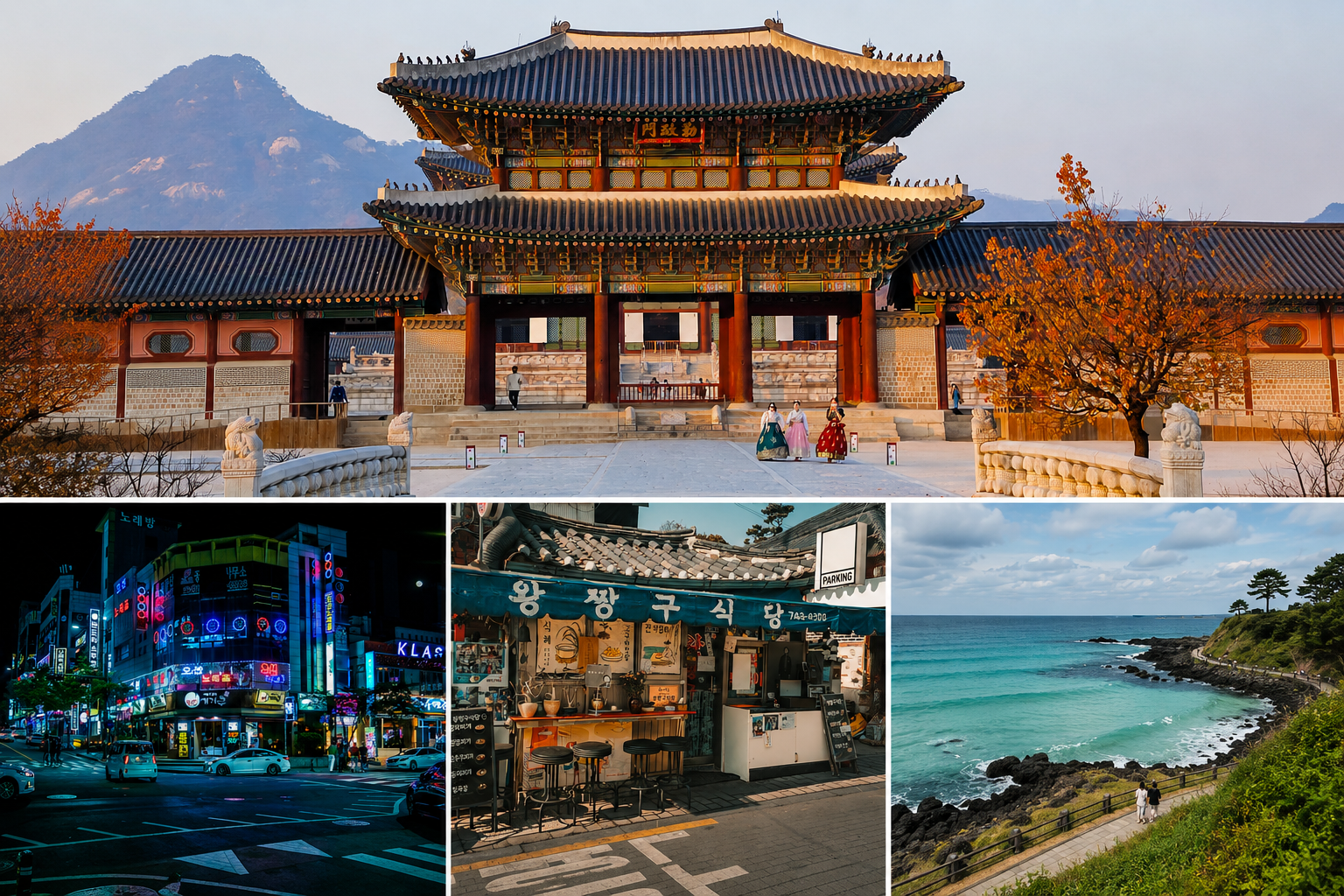
Hallyu did not just create fans, it created people who felt familiar with a place they had never visited. Who knew what a jjimjilbang felt like before they had ever been in one. Who could identify the Namsan Cable Car from a single aerial shot, or recognise Gyeongbokgung Palace’s stone courtyard the moment they walked through its gates. This is a new kind of travel readiness, the destination pre-loaded in the imagination, the first visit already feeling like a return.
That emotional intimacy, built through screens over years, is what makes Korea travel convert so reliably from interest to actual booking. The question is not why Korea. For a significant slice of Indian travellers between 25 and 40, the question is why it took this long.
A Country That Travels Well at Every Speed
What sustains Korea beyond the initial pull is that it is a genuinely excellent travel destination across wildly different interests, something that Europe’s top cities cannot always claim without caveats.
For active travellers, Korea offers hiking culture that is almost philosophical in its seriousness. Trails are well-marked, mountain temples appear where you least expect them, and the sense of altitude arrives fast. Cheonggyesan Mountain in Seoul’s southern fringe delivers pine-shaded paths and panoramic city views within an hour of the urban core. On the east coast, Mudeungsan National Park outside Gwangju features columnar basalt rock formations that are registered national monuments, the kind of geological drama that belongs on magazine covers. Down in Jeju, the Olle Trail routes weave along coastal cliffs above water so blue it looks implausible, and the sunrise from Gunsanoreum parasitic cone at 6 AM, with Hallasan framed behind you and the Seogwipo sea in front, is among the better mornings available on this planet.
For food travellers, Korea requires an entirely separate article, but the short version is this: the regional variation is extraordinary, and none of it is particularly well-known outside Korea. Gwangju is considered the culinary capital of the country, home to tteokgalbi (charcoal-grilled minced galbi patties in sweet marinade) from the Songjeong-dong restaurant street and Mudeungsan spring water that locals swear changes how everything tastes. Mokpo, a port city on the southwest coast, runs a famous bread pilgrimage trail through its bakeries and is legendary for its dried seafood, including croaker, skate and kelp, stacked in colourful rows at the harbour market. Gangneung, on the East Sea, has quietly become Korea’s coffee capital, with over forty seafront roasters along its Anmok Beach Coffee Street. These are not tourist constructs. These are places Koreans themselves travel to eat.
For culture travellers, the depth is real and largely untouched by the standard itinerary. The Asia Culture Center in Gwangju, a serious contemporary arts complex, hosts over thirty exhibitions and performances annually. Haslla Art World in Gangneung sits on a cliff above the East Sea, its outdoor sculpture park ending at a sea-cave photo spot that has been more shared than most things in the country. Incheon’s Paradise City is genuinely striking, housing three thousand artworks by world-renowned and emerging artists in an integrated resort that doubles as an arts destination. None of this requires a Hallyu hook to be worth a visit.
The Cities That Are Not Seoul
Here is the thing about Seoul: it is magnificent, and it is also not the whole country.
A generation of Indian travellers has done the Seoul circuit, covering Gyeongbokgung, Bukchon Hanok Village, Hongdae and N Seoul Tower, and come back wanting more. More specifically, more of the Korea that feels less packaged, less photographed, more like the country that Koreans themselves inhabit day to day.
That Korea is in Gangneung, where mornings start with the East Sea and coffee that has been taken seriously since long before it was fashionable. It is in Gwangju, where the streets around Dongmyeong-dong have been turned into a neighbourhood of renovated hanok buildings housing specialty cafés and small restaurants, and where the weight of modern Korean history sits differently than it does in Seoul. It is in Jeju, where haenyeo, the traditional female free-divers who are a UNESCO Intangible Cultural Heritage, still perform live diving sessions near the museum, and where the island’s volcanic geology creates landscapes unlike anything on the peninsula. It is in Mokpo, frankly unglamorous, full of the best seafood you will eat in Korea and the kind of alive daily market that does not exist for tourists.
The Incheon-to-Seoul corridor offers its own counterpoint, from Songdo’s engineered waterfront to Silmido’s tidal island accessible only when the sea recedes to Suwon’s UNESCO-listed Hwaseong Fortress with its walkable 5.7-km walls. These are not satellite towns. They are complete places with their own logic and their own pleasures.
What the Comparison to Europe Actually Means
To be clear: Korea is not trying to be Europe, and the travellers choosing it are not settling. The comparison holds because the emotional register is similar, the desire for cities that repay walking, food that has been thought about for centuries, culture that does not feel thin. Korea delivers on all of it, with the added dimension of being genuinely surprising. Visitors do not arrive knowing exactly what they will think. The scale shifts constantly, from a thousand-year-old fortress wall to a Zaha Hadid-designed plaza to a baseball stadium where the crowd chants in perfect synchrony and everyone is eating fried chicken.
The Grand Tour was always about formation, about returning changed, having understood something about the world and your place in it. That, at least, has not changed. Only the destination.
Thrillophilia offers curated Korea itineraries covering Seoul, Gangneung, Incheon, Gwangju, Mokpo, and Jeju, designed for travellers who want more than the highlights reel. Explore our Korea packages.