

Quick Jumplinks to Navigate
Many travellers planning a trip to Morocco begin with Marrakech, and it is easy to understand why. The city is energetic, historic, and layered with markets, gardens, and palaces. Yet spring is one of the best times to look beyond it. From mid March through early May, temperatures become pleasantly warm across most regions, landscapes begin to green after winter rains, and travelling between cities feels comfortable.
Exploring beyond Marrakech allows visitors to experience Morocco through different settings within a single season. Imperial medinas, Atlantic coastal towns, mountain villages, and desert landscapes all reveal distinct sides of the country during spring, when daylight hours are longer and travel conditions remain manageable.
Best Places to Visit Beyond Marrakech
1. Fes and Meknes: Imperial History in Spring
- Ideal stay: 2 days in Fes, 1 day in Meknes
- Travel time from Marrakech to Fes: Around 6.5 to 7 hours by train
- Spring temperature: 12°C to 24°C
Travelling north from Marrakech brings you to Fes, often regarded as Morocco’s cultural and intellectual centre. Its historic medina, recognised as a UNESCO World Heritage Site, is one of the largest car free urban areas in the world. Exploring it involves hours of walking through narrow streets, craft workshops, and centuries old religious schools.
Spring weather makes this exploration particularly enjoyable. Daytime temperatures are warm without being overwhelming, allowing visitors to spend longer periods navigating the medina’s intricate network of alleys. Markets remain active, artisans work openly in traditional workshops, and cafés spill onto small squares as the season becomes livelier.
About an hour away from Fes lies Meknes, which once served as the imperial capital under Sultan Moulay Ismail in the seventeenth century. The city still reflects that legacy through monumental architecture, including Bab Mansour and the royal granaries.
Compared with Fes, Meknes feels calmer and easier to explore within a single day. Spring weather encourages walking through open courtyards and historic gates without the intense heat that arrives later in summer. Together, Fes and Meknes provide historical depth that suits travellers interested in architecture, heritage, and slower exploration.
2. From Inland Cities to the Atlantic Coast: Essaouira
- Ideal stay: 1 to 2 days
- Travel time from Marrakech: 2.5 to 3 hours by road
- Spring temperature: 16°C to 24°C
Heading west from Marrakech changes the atmosphere noticeably. Inland landscapes give way to ocean breezes as you reach Essaouira, a coastal town known for its harbour, fortified ramparts, and relaxed pace.
Spring is one of the most comfortable seasons to visit. Temperatures remain mild, and the Atlantic air keeps the climate refreshing compared with inland cities. While Essaouira is known for wind driven water sports, spring winds are generally softer than the stronger gusts seen later in summer.
The town’s UNESCO listed medina is compact and easy to navigate. Fishing boats continue to arrive daily at the harbour, seafood markets remain lively, and cafés open onto sunny squares. Visitors often spend time walking along the historic ramparts, browsing small art galleries, or exploring craft shops within the medina.
After the intensity of larger imperial cities, Essaouira offers a coastal change of pace without requiring long travel distances.
3. Into the Rif Mountains: Chefchaouen
- Ideal stay: 1 to 2 days
- Travel time from Fes: Around 3.5 to 4 hours by road
- Spring temperature: 10°C to 22°C
Further north in the Rif Mountains lies Chefchaouen, known for its distinctive blue painted streets and hillside setting. The journey from Fes introduces a noticeable shift in landscape as rolling hills and mountain scenery begin to dominate the surroundings.
Spring brings some of the most pleasant conditions for visiting the town. The surrounding hills appear greener after seasonal rains, and daytime temperatures allow comfortable walking through steep lanes and stairways that define the town’s layout.
Chefchaouen is best explored slowly. Small bakeries, markets, and cafés form the centre of daily life, while open viewpoints provide wide perspectives across the mountain valley. Its compact scale allows travellers to experience the town fully within a short stay while enjoying the relaxed rhythm of mountain life.
4. The Atlas Mountains: Scenic Landscapes Near Marrakech
- Ideal stay: 1 to 2 days
- Travel time from Marrakech to High Atlas villages: 1.5 to 2.5 hours by road
- Spring temperature: 12°C to 20°C in valleys
South of Marrakech, the High Atlas Mountains introduce another dramatic change in geography. Valleys, terraced hillsides, and traditional Berber villages replace the dense architecture of the cities.
Spring is one of the most scenic times to visit the region. Snow may still remain on higher peaks while valleys begin to show new greenery. The contrast between snowy summits and fresh landscapes creates particularly striking views during this period.
Many travellers visit the Atlas Mountains through day trips or short stays in villages such as Imlil. Scenic drives, village walks, and panoramic viewpoints allow visitors to experience mountain landscapes without committing to demanding trekking routes.
The proximity to Marrakech makes the Atlas region an accessible addition to a broader Morocco itinerary.
5. Toward the Sahara: Desert Regions Near Merzouga and Zagora
- Ideal stay: 1 to 2 nights
- Travel time from Marrakech to Merzouga: 9 to 10 hours by road
- Spring temperature: 18°C to 30°C during the day, cooler evenings
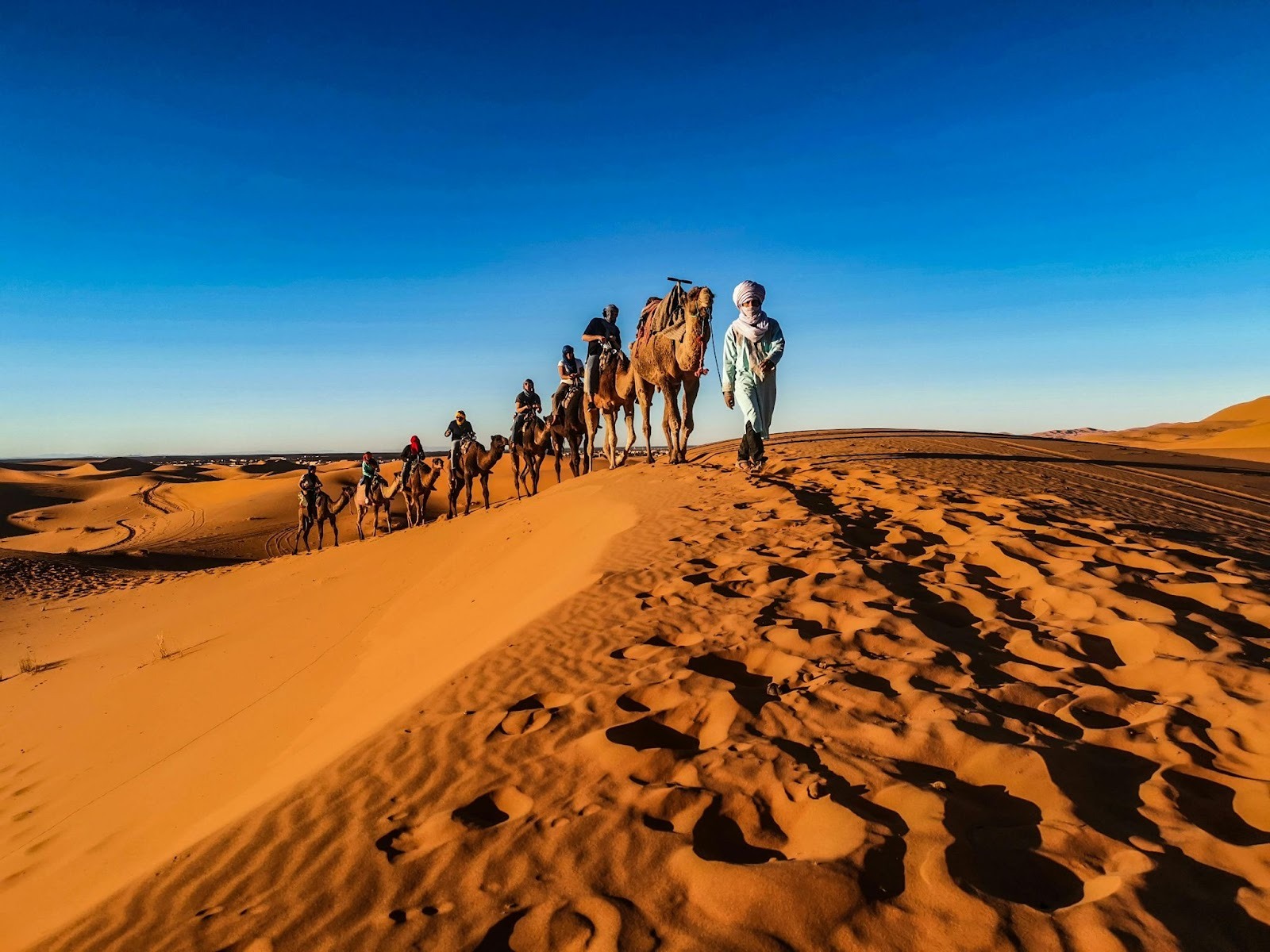
For travellers with more time, the journey can extend east toward Morocco’s desert regions. Destinations such as Merzouga or Zagora serve as gateways to Sahara landscapes defined by dunes, oasis towns, and wide open desert horizons.
Spring offers favourable conditions for visiting these areas. Daytime temperatures remain warm but typically manageable compared with the extreme heat of summer. Evenings cool down considerably, creating comfortable conditions for overnight desert camps.
Travelling toward the Sahara also introduces dramatic scenery along the route, including valleys, palm groves, and traditional kasbah towns. Because distances are long, desert extensions usually work best within itineraries of ten days or more.
How to Structure a Spring Morocco Itinerary
If you have 7 days, a practical route could include:
- Marrakech
- Essaouira
- Fes
This combination works well in spring because it balances inland culture with coastal atmosphere. Marrakech introduces Morocco’s architecture and markets, Essaouira provides a relaxed Atlantic setting, and Fes offers deeper historical immersion. Train connections between Marrakech and Fes simplify travel logistics, while Essaouira is easily reached by road.
If you have 10 days or more, consider adding:
- Chefchaouen
- One Atlas Mountain stop or a desert extension
With additional time, the journey becomes more varied. Chefchaouen introduces mountain scenery in northern Morocco, while the Atlas region or Sahara adds a dramatic landscape contrast. Spring weather makes both mountain drives and desert travel more comfortable before summer heat intensifies.
Looking Beyond Marrakech in Spring
Marrakech remains an important gateway to Morocco, but spring conditions make it an ideal time to explore multiple regions. Historic medinas are easier to walk, coastal towns feel lively yet manageable, mountain landscapes appear greener, and desert travel remains practical during the day.
Combining several destinations within one itinerary allows travellers to see how Morocco changes from region to region. Moving between cities, coastlines, mountains, and desert landscapes reveals a broader understanding of the country and creates a more layered travel experience.