

Quick Jumplinks to Navigate
Planning a Europe tour package as a family often gives Indian travellers a sense of security, but it does not eliminate the need for careful visa preparation. When organising a Europe trip from India, families may meet the basic financial and travel eligibility, yet Schengen visa refusals frequently occur due to overlooked documentation rather than unclear intent or insufficient funds. Family applications are examined more closely, as embassies must verify parental responsibility, legal consent, and financial dependency for every minor travelling abroad. Even small gaps in child-related paperwork can affect the outcome of the entire application.
Many families rely on pre-planned Europe trip packages, assuming that the booking automatically covers all Schengen visa requirements for Indian citizens. But in reality, visa approvals, documentation, and financial proof must still be handled separately by the traveller. There is also a common misunderstanding among tourists that a Schengen Visa for a family is assessed as a single unit. In practice, each applicant, including children and infants, is evaluated individually and then cross-checked against shared documents such as bookings, insurance, and itineraries. Any inconsistency between individual details and family-wide documents can raise concerns. Understanding how family applications are assessed and what is commonly overlooked is essential for preparing a well-aligned application and avoiding preventable refusals.
In practice, families travelling on pre-planned Europe routes often assume that a single set of bookings automatically satisfies visa scrutiny for everyone. However, platforms like Thrillophilia typically structure family itineraries with shared routes but individual traveller details, reflecting how consulates actually assess applications. When this distinction is not mirrored in the visa file, especially for children, gaps around consent, insurance, or dependency become more visible during review.
Here are the Schengen visa requirements for Indian families that are often missed:
1. Mandatory Documents for Children (Under 18) That Indians Commonly Miss
A. Notarised Parental Consent Letters
A notarised consent letter is mandatory when applying for a Schengen Visa for kids if a child travels with only one parent, a guardian, or alone. If only one parent is travelling, the non-travelling parent must provide notarised consent clearly allowing international travel to Schengen countries. Both parents must provide notarised consent if the child is travelling with a guardian or family member. Applications are frequently rejected when parents submit informal letters, unsigned declarations, or documents without notarisation.
Key points to note:
- Consent must be notarised, not self-declared
- The letter should clearly mention travel dates and destination
- Details must match the passport information of the child and parents
B. Proof of Relationship
Embassies require proof that the accompanying adults are the child’s legal parents or guardians. A birth certificate is the primary document for this purpose and should be submitted in its original along with a clear colour copy. The names of the parents on the birth certificate must match their passport details exactly. If the document is not in English, a certified translation may be required. Missing or unclear relationship proof is a common reason for delays in children’s visa processing.
Required documents include:
- Birth certificate showing both parents’ names
- Colour copy with clear, legible details
- Certified translation, if applicable
C. Identity Proof of Both Parents
Indian applicants often assume that documents of the non-travelling parent are not required. However, embassies usually ask for identity proof of both parents, regardless of who is travelling, especially in family applications covering multiple Schengen visa countries. This includes colour copies of valid passports, PAN cards, or driving licences. These documents help establish parental responsibility and address concerns related to child safety and unauthorised travel.
Commonly accepted identity proofs:
- Valid passports of both parents
- PAN cards or government-issued ID
- Driving licences with clear personal details
From an application review perspective, we understand that child-related documents are closely cross-verified against the overall travel structure submitted by the family. At Thrillophilia, we plan family itineraries with the expectation that parental details, consent letters, and insurance coverage align precisely with the confirmed route and travel duration. When even one child’s paperwork does not accurately reflect the shared itinerary, the credibility of the entire application can come under question during assessment.
D. Custody and Legal Documents
In cases of divorce, separation, or sole custody, court-issued legal documents are mandatory when applying for a child’s Schengen visa. This may include a divorce decree, a sole custody order, or specific court permission allowing the child to travel internationally. Parents often ask, do infants need Schengen Visa approval in such cases. Yes, infants also require proper legal documentation if custody arrangements apply. Affidavits or personal declarations are generally not accepted in place of legal orders, and missing custody documents can result in outright rejection.
Applicable situations include:
- Divorced or legally separated parents
- Sole custody arrangements
- Court-restricted travel permissions
2. Common Financial Documentation Errors in Family Schengen Visa Applications
When applying for a Schengen Visa for parents, embassies expect financial documents that clearly demonstrate the ability to fund travel for the entire family. Bank statements should reflect a sufficient balance to cover accommodations, transportation, daily expenses, and contingencies for all travellers. A common mistake is submitting financial records that justify expenses for only one or two applicants without explaining how children or dependents are financially supported.
Common financial oversights include:
- Bank statements covering limited travel expenses
- No explanation of dependency for children
- Sudden or unexplained large deposits
Another issue arises with unclear or inconsistent tax documentation, particularly among self-employed applicants. Families often submit partial filings or acknowledgements that do not accurately reflect income levels. Visa officers compare declared income against the overall Schengen tourist visa cost to assess financial credibility. If the trip appears disproportionate to the submitted financial records, the application may be questioned or refused.
Frequent tax-related issues that are important to adress:
- Incomplete tax filings
- Income not aligning with trip expenses
- Missing proof of employment or business continuity
3. Passport Validity and Travel Insurance Requirements for Family Schengen Visa Applications
Technical requirements are strictly enforced across all Schengen visa countries, and even minor oversights can affect approval. Each passport must be issued within the last ten years, remain valid for at least three months beyond the return date, and contain at least two blank pages. Children’s passports are frequently overlooked during checks, especially in family applications with multiple travellers.
Travel medical insurance is another area where families make errors. Insurance must cover the full duration of travel and be valid across all Schengen states. The policy should provide a minimum coverage of EUR 30,000 and include emergency medical care and repatriation. Insurance documents must list every applicant individually and match travel dates exactly, including those of children and infants. Technical requirements are strictly enforced across all Schengen visa countries, and even minor oversights can impact approval. Each passport must be issued within the last ten years, remain valid for at least three months beyond the return date, and contain at least two blank pages. Children’s passports are often overlooked during verification, especially when family applications involve multiple travellers.
Passport requirements to double-check:
- Issue date within the last ten years
- Minimum three months’ validity beyond return
- At least two blank visa pages
Travel medical insurance is another area where families frequently make errors. Insurance must cover the full duration of travel and be valid across all Schengen states. The policy should provide minimum coverage of EUR 30,000 and include emergency medical treatment and repatriation. Insurance documents must list every applicant individually and match travel dates exactly, including those of children and infants.
Insurance requirements include:
- Coverage across all Schengen states
- Minimum EUR 30,000 medical coverage
- Exact alignment with travel dates
- Inclusion of all family members
4. Application Submission Rules for Families
When applying for a Schengen Visa for family, embassies strongly prefer that all members submit their applications together if travelling on the same itinerary. Separate submissions for parents and children increase the risk of inconsistencies in documents such as bookings, insurance policies, or travel dates. A combined submission helps visa officers assess family relationships, financial responsibility, and travel intent more clearly.
This approach mirrors how we prepare structured family travel plans at Thrillophilia, where a single family route is supported by clearly defined individual details for every traveller. When families submit their applications together with consistent bookings, aligned insurance policies, and identical travel dates that follow the same itinerary logic, the file presents itself as a cohesive plan rather than a collection of loosely connected applications.
Recommended submission practices:
- Submit all family applications together
- Use identical travel dates and itineraries
- Ensure shared documents are consistent across files
Families should also verify that all shared documents reflect the same information for every applicant. Flight bookings, hotel confirmations, and insurance policies must include the names of all travellers. While the Schengen visa fee is paid individually per applicant, submitting applications as a single family unit reduces procedural complications and review delays.
5. Quick Checklist: Schengen Visa Documents Families Must Double-Check
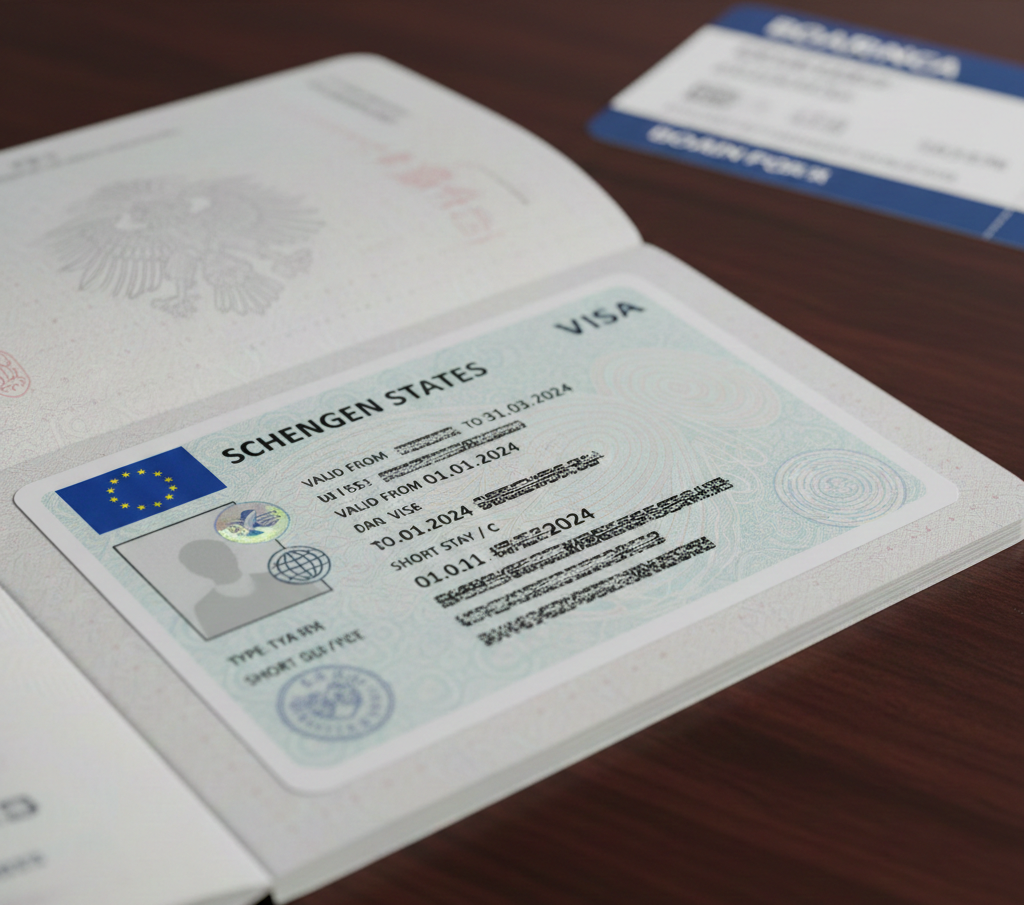
Before submission, Indian families should review this final Schengen visa checklist to avoid last-minute errors:
- Completed visa application forms for each family member
- Valid passports for adults, children, and infants
- Notarised parental consent letters for minors
- Birth certificate and proof of relationship
- Custody or legal travel permissions, if applicable
- Flight bookings with all family members listed
- Hotel confirmations showing family occupancy
- Travel insurance covering all applicants
- Bank statements and income proof covering all travellers
- Accurate payment of applicable visa fees
Reviewing this checklist carefully before submission helps ensure that all individual and shared documents are consistent across the family application. Small oversights, such as missing names on bookings or incomplete child-related paperwork, often lead to delays or refusals. A final document cross-check allows families to identify gaps early, submit a complete file, and approach the application process with greater clarity and confidence.
FAQ’s
Yes, toddlers and infants need a Schengen visa even if they are travelling with their parents. Each child must have a separate passport, a completed visa application form, travel insurance covering the full trip, and inclusion in flight and hotel bookings. Embassies assess infant applications individually, focusing on parental consent, proof of relationship, and travel intent, just like applications for older children.
Yes, parents and children can apply together under a Schengen Visa for family, provided all travellers are following the same itinerary. While applications are submitted together, each family member is assessed individually. Shared documents, such as flight bookings, accommodations, insurance, and itineraries, must clearly include every family member to avoid inconsistencies.
A child’s Schengen visa application requires additional documentation to confirm identity, parental consent, and legal authority to travel. Embassies closely examine these documents to ensure the child’s safety and compliance with visa regulations.
Valid Passport: The child must have an individual passport that meets Schengen validity requirements, including sufficient validity beyond the return date and adequate blank pages.
Birth Certificate: A birth certificate is required to establish the legal relationship between the child and the accompanying parents or guardians. The names must match passport details exactly.
Notarised Parental Consent Letter: A notarised consent letter is mandatory when a child travels with one parent, a guardian, or without both parents. This document confirms legal permission for international travel.
Travel Medical Insurance: The child must be covered by travel insurance that meets Schengen requirements, including coverage across all Schengen countries and the prescribed minimum medical coverage.
Identity Proof of Both Parents: Identity documents of both parents may be required, even if one parent is not travelling, to verify parental responsibility.
Custody or Legal Documents (If Applicable): In cases of divorce, separation, or sole custody, court-issued documents are necessary to confirm legal authority for the child’s travel.
Missing any of these child-specific documents is one of the most common reasons for delays or refusals in Schengen visa applications for families.
The Schengen visa fee for children aged 6–12 is lower than the adult fee, while children under 6 years are usually exempt. However, service charges at the visa application centres still apply. Fees may vary slightly depending on the country and the application centre, so families should check the latest fee structure before submission.
Yes, travel medical insurance is mandatory for children and must meet Schengen requirements. The policy should cover all Schengen countries, be valid for the entire duration of travel, and provide a minimum coverage of EUR 30,000. Insurance must list the child as a named insured member, even if parents are covered under the same policy.
Related Links