



Why is Hampi Called the City of Ruins?
Most of us who have heard or been to Hampi know it as the City of Ruins with magnificent monuments dating back to the 1st century. Spread across more than 4,000 hectares, Hampi is a UNESCO World Heritage Site. It’s ruins have been described by the organization as an "austere, grandiose site" comprising several temples and palaces that continue to attract travellers from across the world even today.
But do you know why Hampi is called the City of Ruins? Read on to find out.
Hampi, located in Karnataka, consists of over 1,600 surviving remains of the last major Hindu kingdom of Vijayanagara that includes "forts, riverside features, royal and sacred complexes, temples, shrines, pillared halls, mandapas, memorial structures, water structures and others.” There is also evidence of Ashokan epigraphy in the 3rd century BC while the initial historical record of settlement in Hampi goes back to the 1st century. The city also finds a mention in the Ramayana and the Puranas of Hinduism as Pampaa Devi Tirtha Kshetra.
Hampi was the centre of the Vijayanagara Empire in the 14th century. It was a wealthy and prosperous city with several temples, farms and markets attracting traders from Portugal and Persia. The empire reached its zenith while other kingdoms down south were being defeated by the Delhi Sultanate.
However, the scenario took a turn in the early 14th century when Muhammad bin Tughlaq ascended the throne in Delhi. He was believed to be a draconian ruler with his reign giving rise to internal rebels, one of whom took refuge in a tiny kingdom called Anegundi near Hampi. Tughlaq’s army eventually showed up, defeated the kingdom and killed the rebel.
Tughlaq appointed a general to take care of the kingdom. However, the general returned to Delhi and left two people (believed to be brothers from one of the ruling families of the region) in-charge. They, slowly and rapidly, expanded their territories. People trusted them with keeping invaders from Delhi at bay and eventually joined hands with them. This unified kingdom came to be known as the mighty Vijayanagara empire that had the whole of South India under its control.
Soon after the Vijayanagara empire came into being, another one was also founded in its immediate north. Alauddin Hassan Bahman Shah, a commander in Muhammad bin Tughlaq’s army, founded the first Muslim kingdom in the Deccan called the Bahmani Sultanate following a revolt against Tughlaq. The kingdom, over a period of two centuries, split into 5 five Deccan Sultanates of Ahmednagar, Berar, Bijapur, Bidar and Golconda.
Back in the Vijayanagara empire, ruler Aliya Rama Raya got into conflicts with the Sultanates quite frequently in the 16th century due to his changing loyalties. The Sultanates, finally, formed an alliance and invaded Vijayanagara. And then began the iconic Battle of Talikota between the Vijayanagara Empire and the Deccan sultanates in which the latter defeated and killed Aliya Rama Raya.
Raya would have won the war had two Muslim generals of the Vijayanagara army not switched sides suddenly. The Muslim officers shifted their loyalty to the sultanates at the last moment and captured a surprised Raya. They, then, beheaded him on the battlefield creating chaos and confusion within the Vijayanagara army, which then lost the battle completely.
Following the defeat of the glorious Vijayanagara empire, the army of the Sultanates plundered the beautiful city of Hampi and reduced it to ruins, in which it still remains. Now, it’s just a ravaged barren area of land scattered with ruins that narrate the story of a violent past. They conquered, pillaged, destroyed, looted and burnt the stunning monuments and other infrastructure in Hampi for six months after the war before abandoning it in ruins. The Dravidian-style architecture that includes temples, palaces, bazaars, mandapas, gardens and military structures is now scattered all over the city in a dilapidated condition.
In his book The Forgotten Empire, Robert Sewell wrote, "With fire and sword, with crowbars and axes, they carried on day after day their work of destruction. Never perhaps in the history of the world has such havoc been wrought... so suddenly, on so splendid a city; teeming with a wealthy and industrious population in the full plenitude of prosperity one day, and on the next seized, pillaged, and reduced to ruins, amid scenes of savage massacre and horrors beggaring description."
Having said that, Hampi is breath-taking and beautiful even in its ruins. One can only imagine what it looked like during its heydays. It would take months or years to even skim the surface of this city’s treasures. Hampi is one city that deserves a visit, so allow us to help you with that.
You can go trekking in Hampi and feel the thrill while bouldering early in the morning. Tek through paddy farms and small jungle trails. Visit the famous Virupaksha Temple and then proceed towards Vijay Vittala Temple through the Sugreeva Caves followed by a Coracle Ride. Experience jaw-dropping views of the hills and valley following the trek.
There’s lots to see and experience in Hampi. Make sure you do all of that. Don’t miss out any!
.jpg?w=305&h=230&dpr)
- 2D/1N
₹ 5,000
₹ 4,499
per adult
- 3D/2N
₹ 14,750
₹ 13,200
per adult
Send Enquiry
- 5D/4N
₹ 31,000
₹ 24,800
per adult
Hampi Top Attractions
Places To Visit In Hampi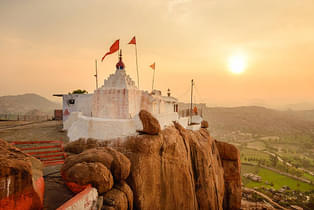
Monkey Temple
It is a significant pilgrimage site and a must-visit for tourists. Located about 4 kilometers from Hampi’s main center, this ancient temple is dedicated to Lord Hanuman, the monkey god from Hindu mythology. the effort is well-rewarded with breathtaking panoramic views of the surrounding landscape, including the Tungabhadra River and the rugged terrain of Hampi. The temple itself is simple yet spiritually uplifting, with a serene atmosphere that invites reflection and reverence. Monkeys, considered sacred here, are a common sight, adding to the temple's charm. The best time to visit is during sunrise or sunset when the hill offers spectacular vistas bathed in golden light. Whether for spiritual solace or scenic beauty, the Monkey Temple in Hampi is a captivating destination.
Read More