



How much does a 14-day trip to Japan Cost?
A 14-day trip to Japan costs around INR 3,50,000-4,00,000 (per person).
- Budget travelers may need to spend around INR 21,500-24,500 per day, eating at local eateries and staying at modest guesthouses in Japan.
- Mid-range travelers may spend around INR 25,000-32,000 per day for comfortable hotels and multi-cuisine restaurants in Japan.
- For those who prefer luxury, the daily expenses may be INR 42,000 or more for top-class accommodations and fine dining in Japan.
- 1D
$ 190
$ 120
per adult
.jpg?w=305&h=230&dpr)
- 11H
₹ 9,883
₹ 6,523
per adult
Attractions
Explore All (17)
- 1H
€ 8
€ 8
per adult

- 1D
₹ 8,500
₹ 5,198
per adult
- 8H
¥ 15,000
¥ 7,500
per adult

- 2H
¥ 2,000
¥ 1,547
per adult

- 1D
₹ 3,983
₹ 2,310
per adult

- 2H
¥ 3,000
¥ 2,400
per adult
- 2H
¥ 1,000
¥ 950
per adult
- 1H
¥ 2,000
¥ 1,000
per adult
- 1H
€ 8
€ 8
per adult
Japan Top Attractions
Places To Visit In Japan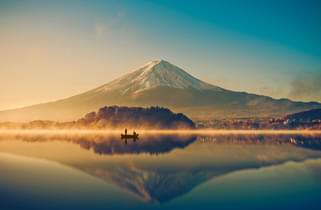
Mount Fuji
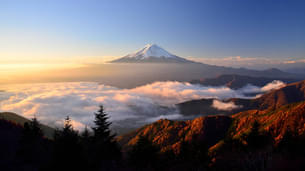
A Japan trip is never truly complete without witnessing the iconic beauty of Mount Fuji. Japan’s Mount Fuji, or most commonly known as “Fuji-san,” is an active stratovolcano in the southwest of Tokyo. Fuji-san, as the natives like to call it, is among Japan’s “Three Holy Mountains” including Mount Tate and Mount Haku. It is situated in Fuji-Hakone-Izu National Park, standing tall at 3,776.24 meters.Mt. Fuji is a symbolic beauty in and around Japan for widely known reasons; it is not only a scenic beauty that attracts tourists from all around the world but also a cultural icon of Japan.If you're planning to visit Mt. Fuji, check out our curated Japan Tour Packages that include this iconic destination and more.The Japanese cultural art and photography is highly inspired by the “snow-capped” mountain and is often witnessed in paintings and pictures. This is not even half of what Mt. Fuji has to offer. Every year, almost more than a million tourists visit the mountain out of which approximately 300,000 climb up to its peak.Climbing the mountain is not taken as a difficult task anymore but rather a calming and pleasing experience because of all the satisfying facilities around, such as accommodation, food, and other fun activities. Not only that, on June 22, 2013, UNESCO announced Mt. Fuji, a World Heritage Site and an important cultural location.
Read More
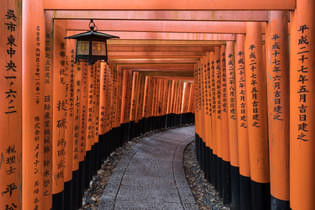
Fushimi Inari Taisha
The Fushimi Inari Shrine is a Shinto shrine located in southern Kyoto and is known for its torii gates. There are more than 1000 gates that create a trail and lead to the main buildings. This temple is a part of the sacred Mount Inari, which is also a part of the shrine and the temple. This temple is more than 1000 years old and is dedicated to Inari- the Shinto god of rice. Foxes roam around this temple and this temple is more than 1000 years old. A majority of the tourists visiting this place usually go to the mountain trails. However, many miss out on visiting the shrine, which is also worth visiting. Behind the main hall of the shrine is the deity where visitors can make an offering and pay their respects. The torii gates are lined up to create a path to a hiking trail and were built through donations from individuals and corporations.Planning a trip in Japan, must checkout Japan Holiday Packages
Read More
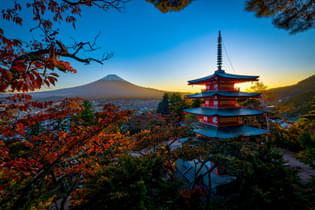
Arakura Fuji Sengen Shrine
In fact, even when Mount Fuji erupted in the 800s, the Japanese emperor sent an envoy to pray here. History also says that upon arrival, a ritual was performed to prevent the eruption of Mount Fuji. This shrine is frequented by locals as it is believed that the shrine here grants wishes related to childbirth. Arakura Fuji Sengen Shrine, a picturesque site with stunning views of Mount Fuji, is a highlight of many Japan packages.Apart from the shrine, the park is also frequented by locals and tourists who want to see the best of cherry blossoms in the park. This shrine is also famously known for the best views of Mount Fuji. You will have to climb to a viewing point, but the journey to the top is worth it.
Read More
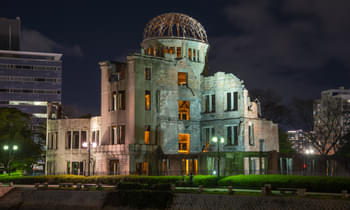
Atomic Bomb Dome
In 1996, it was designated as a UNESCO World Heritage Site. The Dome preserves the ruins as they were post-bombing to promote global peace and the abolition of nuclear weapons. The site attracts millions of visitors annually, visiting here under the impact of nuclear warfare and honouring the memory of the victims. The Hiroshima Peace Memorial Park is surrounded by prominent monuments and museums. These compliments the dome, creating a scenic environment for all travellers to find peace and reconciliation.
Read More
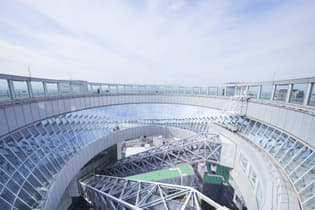
Floating Garden Observatory
To reach the observatory deck, you will need to take an elevator up to the 35th floor. From there, the world’s highest elevator will take you further up to the 39th floor, crossing between the two towers of the building. Visit the doughnut-shaped observatory to enjoy panoramic views of Osaka Castle, Rokko Mountains, and Mount Ikoma from indoor or outdoor platforms.
Read More
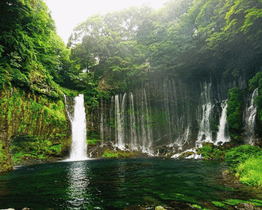
Shiraito Falls
The Shiraito Falls is a waterfall located in Fujinomiya near the Shizuoka prefecture near Mount Fuji. This waterfall is a part of the Fuji Hakone Izu National Park and also a national monument. The falls is considered as sacred by those of the Fuji cult and is also a part of the world heritage list. This falls takes pride in being a part of Japan's Top 100 Waterfalls published by the Japanese government. It is 150 metres wide and drops from a height of up to 20 metres.Locals say that the waterfall flows as delicate as silk thread and is nothing less than a natural treasure. The water comes from the melting snow from Mount Fuji in the southwest of the falls. The Shiraito falls is also mentioned in a lot of writing by Japanese poets and is a must add into the list of those planning to visit Japan.
Read More
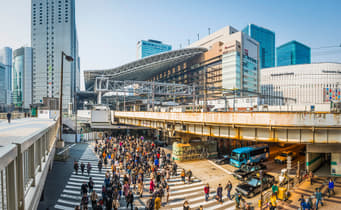
Umeda District
Umeda District, also known as the Kita ( North) District, is one of the two main city centres of Osaka. The futuristic and glamorous district has Osaka’s tallest skyscrapers as well as several iconic landmarks of the city. It is also a famous entertainment, dining, lodging and shopping district and is packed with places to eat, explore and shop. The area also has several departmental stores along with a vast network of underground shopping arcades. Umeda District is also a major transport hub for the city and is known to be the biggest business district of the Kansai region. If you're planning a visit, consider exploring various Japan tour packages that include this vibrant district for a comprehensive experience. Spend a day in this district to check out some of its iconic landmarks. Climb to the top of the Umeda Sky building and enjoy a 360-degree view from its open area corridor. Go on a shopping expedition at the HEP FIVE Shopping Complex and indulge in a 15-minute joy ride on Ferris wheels. Visit other places of interest such as the Osaka Museum of Housing and Living, Tsuyuten Jinja Shrine and more.
Read More
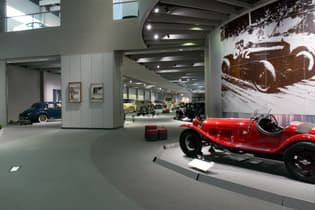
Toyota Museum
The Toyota Museum is a testimony to the growing prowess of Japan as a leading automobile manufacturer. History says that Toyota was once a textile company and ever since it ventured into automobiles, it has grown into one of the leading automobile companies in the world. The museum resembles a factory dating back to the 20th century and it continues to do so as a tribute to its origin and growth story. This museum continues to showcase a lot of cars across different times to amaze its visitors. When planning your visit, consider exploring the various Japan packages available, offering a convenient way to experience this fascinating museum and other incredible attractions in Japan. The museum was inaugurated in 1989 to commemorate the 50th anniversary of the Toyota Motor Corporation and continues to amaze its visitors. Apart from the regular exhibits and the special exhibitions, the Toyota Museum comes with guided tours for you to know more about the brand and the cars in the premises.
Read More
More Japan Attractions
Shitennō Ji Temple, osaka
Kinkaku-ji Temple, kyoto
Earthquake Memorial Museum, japan
Snow Monkey Park, japan
Hiroshima Castle, japan
Kabuki-za, tokyo
Rainbow Bridge, tokyo
Yasaka Shrine, japan
Korakuen, japan
Arashiyama Bamboo Forest, kyoto
Kotohiragu, japan
Mount Komagatake, japan
Zojoji Temple, tokyo
Golden Gai, japan
Ritsurin Garden, japan
Tsumago-juku, japan
Lake Ashi, japan
Tennoji Park, osaka
Hiroshima Peace Memorial Museum, japan
Peace Memorial Park, japan
Itsukushima Shrine, japan
Horyuji Temple, japan
Zenkoji Temple, japan
Crow Castle, japan
Shukkeien Garden Hiroshima, japan
Taiyuinbyo Mausoleum, tokyo
Arashiyama, kyoto
Tenryuji Temple, kyoto
Kyoto Imperial Palace
Onaruto Bridge, japan
Matsumoto City Museum of Art, japan
Kenninji Temple, japan
Nara Park, japan
Kasuga Taisha Shrine, japan
Gion, kyoto
Matsumoto Timepiece Museum, japan
Okawa River, Osaka
Ishiteji Temple Matsuyama, japan
Arakurayama Sengen Park Yamanashi, japan
Nikko Toshogu Shrine, japan
Kongobuji Temple, japan
Imperial Palace, tokyo
Ueno Park, tokyo
Matsuyama Castle, japan
Dogo Onsen, japan
Okunoin Cemetery, japan
Kibitsujinja Shrine, japan
Tokyu Kabukicho Tower, tokyo
Ryogoku Kokugikan National Sumo Arena, tokyo
Togetsukyo bridge, kyoto
Saiko Iyashi-no-Sato Nenba, japan
Mt. Fuji's 5th Station, japan
Todai-ji Temple, japan
Japan National Stadium, tokyo
Hamarikyu Gardens, tokyo
Ueno Zoo, tokyo