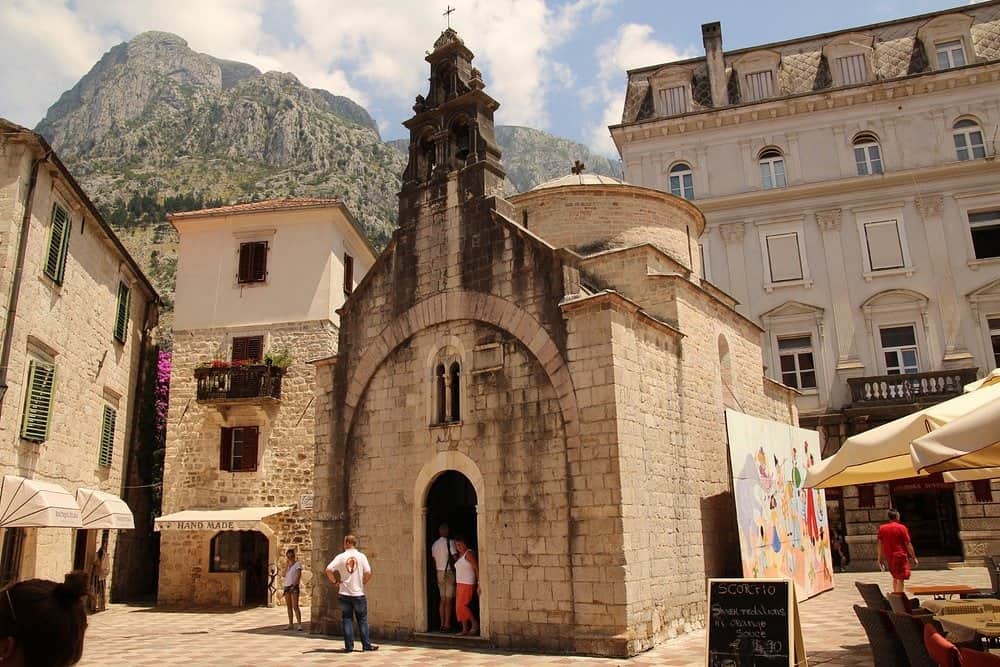
Nestled in the heart of Kotor's UNESCO World Heritage Site, St. Luke's Church stands as a testament to the rich architectural and religious history of Montenegro's coastal region. Located within the city's ancient walls, this remarkable church is a prime example of the architectural diversity that defines Kotor's Old Town.
Constructed in the late 12th century, St. Luke's Church represents a unique blend of Byzantine and Roman Catholic architectural styles, reflecting the complex religious and cultural landscape of medieval Montenegro. The church is particularly notable for its asymmetrical design and modest exterior, which belies its significant historical importance.
Originally built as a Roman Catholic church, St. Luke's underwent a fascinating transformation in the 17th century. During this period, the church was divided to accommodate both Roman Catholic and Orthodox congregations, making it a powerful symbol of religious coexistence and tolerance. This unusual arrangement meant that the church could serve two distinct faith communities simultaneously, a remarkable feature for its time.
The church's interior is equally fascinating, featuring intricate iconostasis, subdued frescoes, and historical artifacts that speak to centuries of religious practice. Its stone walls and carefully preserved architectural elements offer visitors a glimpse into the spiritual and cultural heritage of Kotor.
Architecturally, St. Luke's is characterized by its simple stone construction, typical of medieval Montenegrin buildings. The church's modest size and unassuming facade make it easy to overlook, but for those who take the time to explore, it reveals a rich and complex history.
Today, St. Luke's Church remains an important historical landmark, attracting historians, architects, and tourists interested in understanding the nuanced religious and cultural dynamics of Montenegro's coastal region.