Through Winter Spiti: Vinod’s Himalayan Journey with Thrillophilia
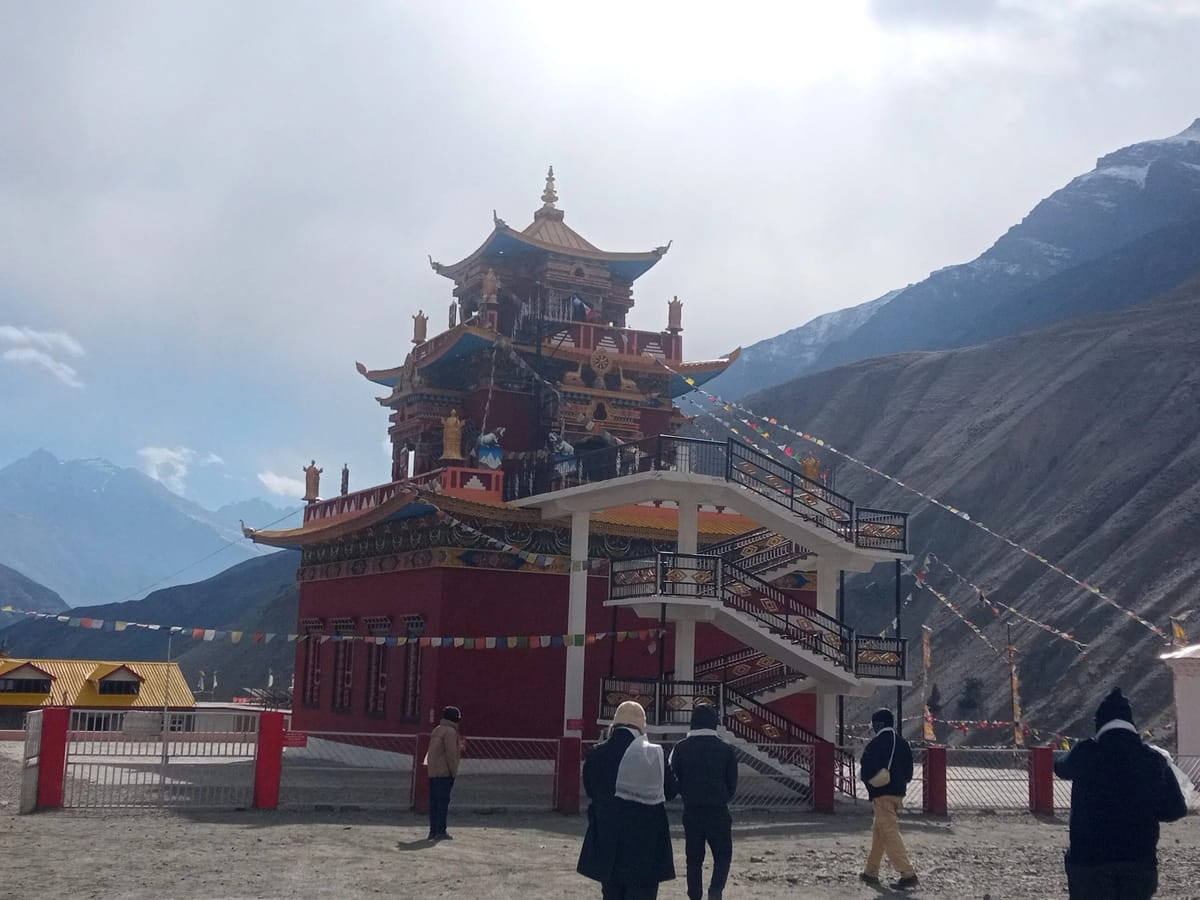
Thrillophilia Verified Booking
PNR: BKDNV5HXRWM
Rating: ★★★★★
Traveller: Vinod
Travellers: Vinod | Sandhya D
Trip Duration: 8 Days | 7 Nights
Travel Date: 03 Jan 2026 to 10 Jan 2026
Destination: Spiti Valley
Package Booked: Spiti Bike Tour Winter Special
Winter changes the Himalayas completely. The roads become quieter, the villages look smaller against the mountains, and the already remote landscape of Spiti feels even more isolated. For Vinod and Sandhya D, an eight-day group journey took them from Delhi through Shimla and Kinnaur and into the high-altitude world of Spiti Valley.
There were ancient monasteries, frozen-looking landscapes, mountain roads that seemed to disappear into the horizon and villages sitting thousands of metres above sea level. Through it all, their guide Neethima stayed closely involved with the group, helping them navigate the realities of travelling through Spiti in winter.
Into Kinnaur
The journey began with an overnight Volvo ride from Delhi to Shimla. By morning, the city was already behind them, and the group was preparing for the next stretch into Kinnaur.
The road towards Sangla followed the Baspa River, cutting through pine forests and steep mountain slopes. The scenery became increasingly dramatic as the group travelled deeper into the valley, with villages appearing between stretches of mountains and river.
One stop gave the group a chance to pause and take in just how high they had climbed. At around 3,500 metres, they stopped at the well-known Hindustan Ka Aakhri Dhaba for a hearty meal. A roadside dhaba at that altitude, surrounded by the Kinnaur mountains, is a very different lunch break from anything one might experience in the plains.
Sangla offered the group their first night among the high mountains. The valley's dramatic landscape made it clear that this was only the beginning of the journey.
Where Two Rivers Meet
The following drive towards Nako took the group further into the remote Himalayan landscape.
At Khab, they stopped to see the confluence of the Spiti and Sutlej rivers. The two waterways meet amid enormous barren slopes, making the viewpoint feel almost disproportionate to the tiny road and vehicles around it.
Further ahead was Nako Lake, sitting at approximately 3,662 metres. In winter, the high-altitude setting gave the lake and surrounding village a distinctly quiet atmosphere. The group explored Nako Monastery and also visited Nako Chango Gompa, where they saw a remarkable 500-year-old prayer wheel made from yak skin.
It was one of those moments when the trip shifted from simply admiring the mountains to discovering the history of the communities that have lived in this difficult terrain for centuries.
Into the Land of Monasteries
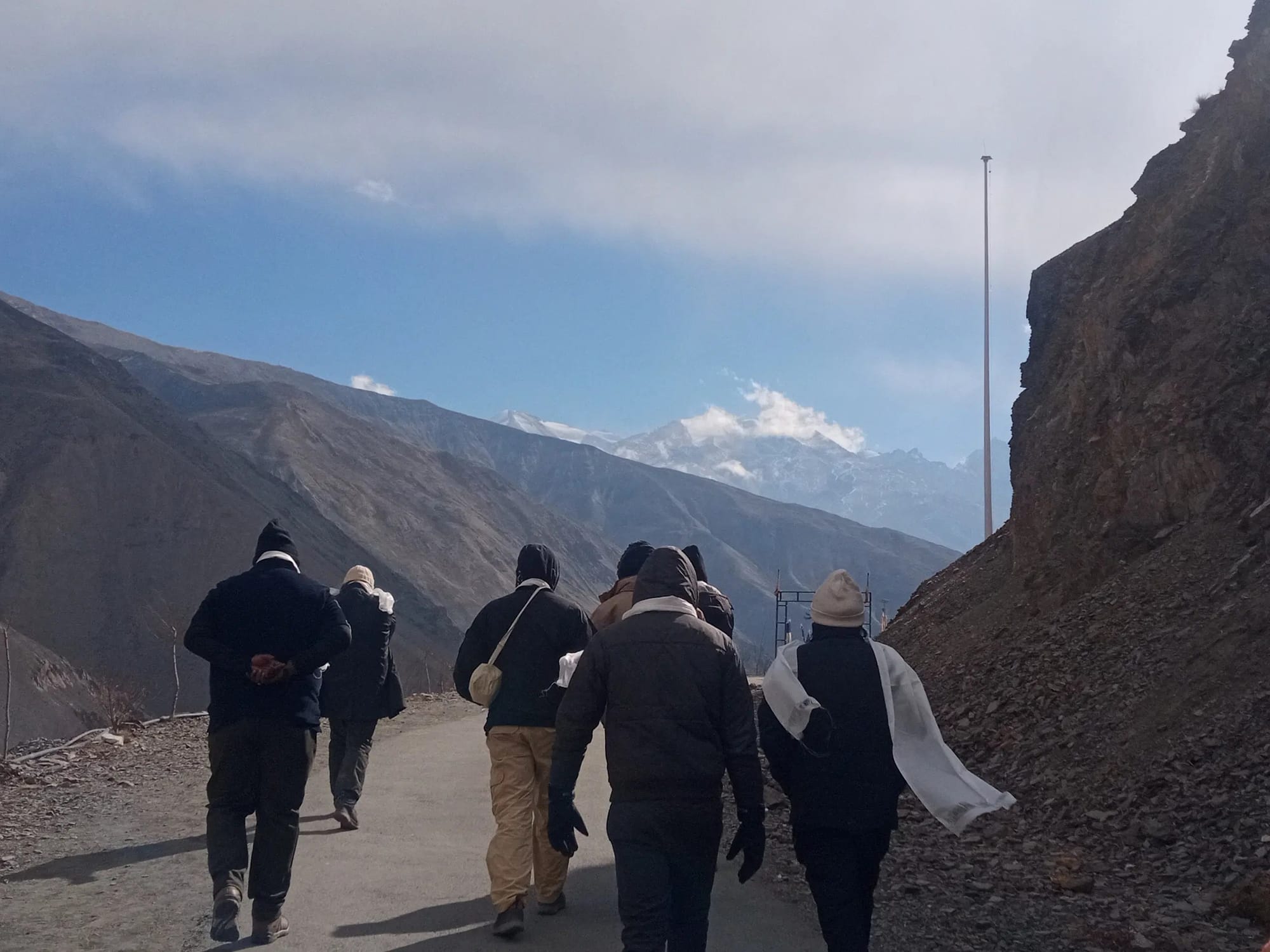
The road from Nako to Kaza brought the group deeper into Spiti.
At Gue Monastery, they encountered one of the valley's most unusual sights: a remarkably preserved mummy believed to be around 500 years old. The experience was striking precisely because of its setting. There was no grand museum surrounding it, just a remote monastery in the middle of the Himalayan landscape.
Later, at Tabo Monastery, the group stepped into a much older chapter of Spiti's history. Founded in 996 AD, Tabo is one of the oldest continuously functioning Buddhist monasteries in the Himalayas. Its ancient temples, murals and sculptures have earned it the name “Ajanta of the Himalayas.”
Walking through the monastery after travelling through the stark mountain landscape outside created a fascinating contrast. The mountains may look empty from a distance, but places like Tabo reveal how much history exists within these remote valleys.
A Day at 4,000 Metres
The next day took Vinod and Sandhya even higher.
The group visited Key Monastery, perched at around 4,166 metres, with its whitewashed buildings rising dramatically against the surrounding mountains. From there, the route climbed towards Hikkim, at approximately 4,440 metres, home to the famous high-altitude post office.
For the group, this was also an opportunity to send postcards from one of the world's highest post offices. It is a small experience, but standing there with the mountains surrounding you makes the postcard feel like something worth keeping.
The road then continued to Komic, around 4,587 metres above sea level. At this height, everything feels different. The settlements are tiny, the landscape is almost entirely open and barren, and the mountains dominate every direction.
The group stopped for lunch before continuing towards Chicham Bridge. The bridge crosses a deep gorge high above the Spiti River and gives travellers a dramatic view of the valley below. It was another natural point for the group to get out, stretch their legs and take photographs against one of the most striking landscapes of the trip.
The Winter Side of Spiti
Travelling through Spiti in winter also meant experiencing the region in its harsher form.
The itinerary itself described the accommodation and facilities as basic in places, something Vinod acknowledged in his review when he mentioned the “minimum facilities.” But that was also part of travelling through one of India's most remote high-altitude regions. Villages such as Hikkim and Komic are not built around conventional tourist infrastructure, and comfort can look very different at nearly 4,600 metres.
What mattered to the group was having someone who understood those conditions and stayed attentive to their needs. Vinod specifically credited Neethima, their guide, for taking good care of them despite those limitations.
Leaving Spiti Behind
The return towards Kinnaur brought another dramatic change in scenery.
The group stopped at Dhankar Monastery, perched high above the Spiti Valley. Believed to be more than 1,000 years old, the monastery's position is as impressive as its history. From the rocky heights, the surrounding valley stretches away in layers of brown and grey mountains.
Further along, the landscape gradually became greener as the group approached Kalpa. The stark terrain of Spiti gave way to forests and apple-growing country, with views towards the snow-covered Kinnaur Kailash range.
After days of travelling through high-altitude desert landscapes, the change was unmistakable. The mountains remained enormous, but the colours and textures of the valley had changed completely.
Why Vinod Recommends Thrillophilia
A winter Spiti trip requires more than simply putting the major attractions into a schedule. The region involves long mountain transfers, high-altitude settlements, limited infrastructure and changing winter conditions. Route planning, realistic travel times and coordination on the ground become particularly important when travelling through places such as Nako, Kaza, Hikkim, Komic and Dhankar.
This is where Shivam Rai, Thrillophilia's Destination Expert, helped coordinate Vinod and Sandhya's journey, while Neethima, their guide, handled the group on the ground. Vinod specifically appreciated how well organised the trip was and noted that all the planned places were covered. He also singled out Neethima for taking good care of the group despite the limited facilities available in the region.
For travellers heading to Spiti, that combination of careful planning and dependable ground support can make a demanding Himalayan journey considerably easier. Vinod's review captured his experience simply: “Well organised. All places covered. Guide Neethima took good care in inspite of minimal facilities. Thank you.”
Also Read: Palak’s Himachal Journey with Thrillophilia