Nikhil Gupta Did the Spiti Valley Bike Tour with Thrillophilia

Thrillophilia Verified Booking
PNR: BKDYLK5TBP1
Rating: ★★★★★
Travellers: Nikhil Gupta & Partner
Trip Duration: 9 Days | 8 Nights
Date of Travel: 13 Jul 2024 to 21 Jul 2024
Package Booked: Spiti from Chandigarh
Guest Experience Officer: Rahul Choudhary
Nikhil Gupta from Mumbai and his partner joined the group bike tour through Spiti Valley in July 2024, starting from Chandigarh and riding through one of the most remote and visually extraordinary landscapes in India. Nine days, eight nights, and a route that covers everything from apple orchards in the lower Himalayas to a crescent lake at 14,000 feet where the stars are the only light source for miles around.
July in Spiti is a particular kind of experience. The roads are at their most accessible, the valleys are a rare green against the grey and brown of the high altitude rock, and the clarity of the sky at night in a place with no light pollution is something that takes a while to process after you get back to the city.
The First Two Days were About Getting into the Mountains
Nikhil and his partner reached Chandigarh on the first day, met the road captain and the rest of the group, got briefed on the terrain, and settled in for the night. The road captain leading the trip on his bike is not a small detail. Spiti is not a route where you improvise. The captain knows which passes are likely to be clear, which stretches to cover early before the afternoon sun softens the road surface, and which stops are worth the time and which ones are not.
Day two was the ride to Narkanda on the Himalayan Expressway, passing through Chail and the lower ranges before the terrain started climbing properly. The apple and cherry trees along the road to Narkanda are one of those things that people mention casually and then cannot stop talking about: the orchards running alongside the road, with the deodar firs behind them and the mountains appearing in gaps above.
Chitkul Set the Vibes
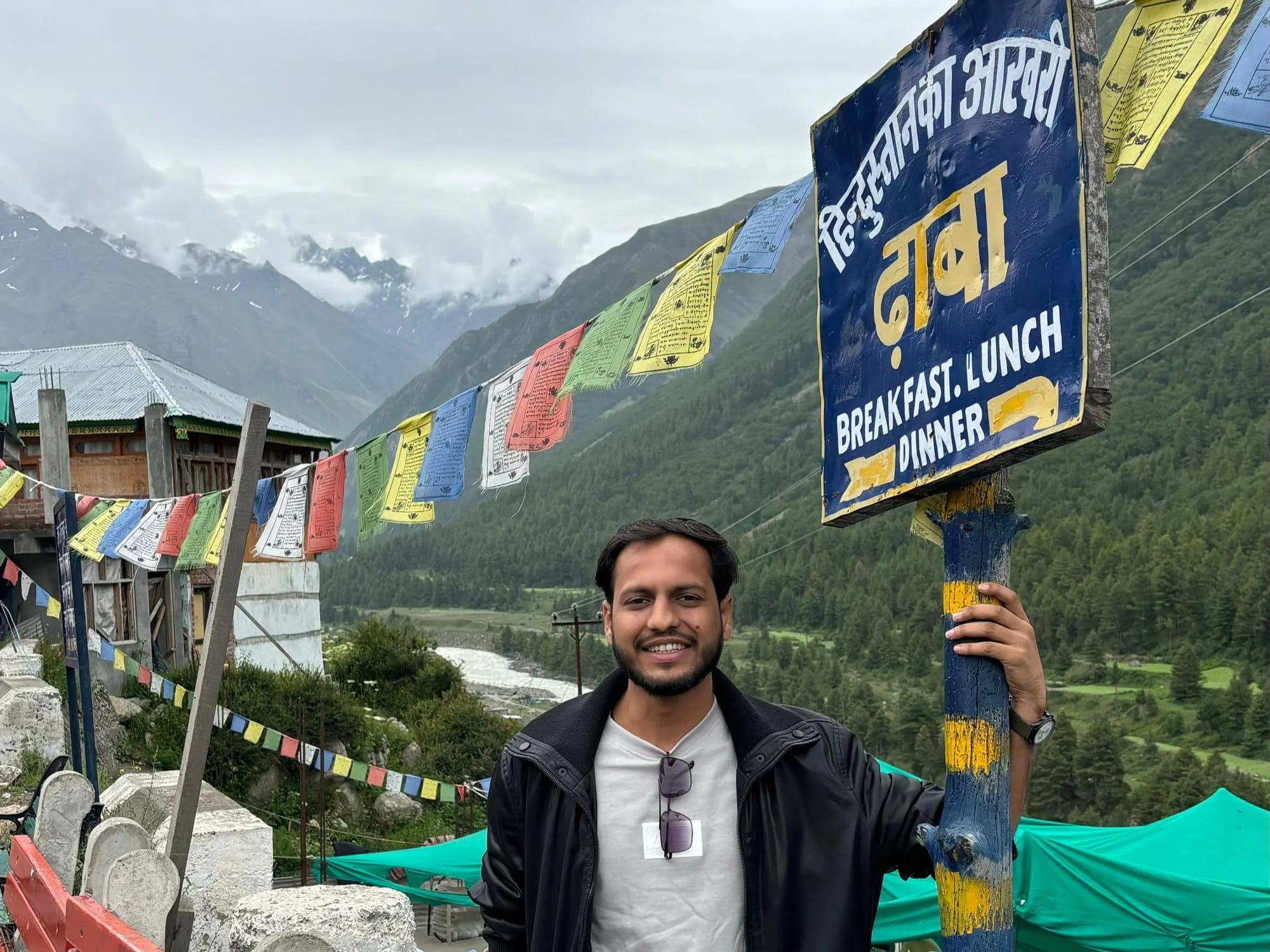
Day three took the group to Chitkul along the Baspa River from Karcham, and this is where Spiti starts introducing itself properly. Chitkul is the last village before the Indo-China border, and the Hindustan ka Aakhri Dhaba sitting at the edge of it is the kind of lunch stop that exists nowhere else. The cold wind off the mountains, the river below, and the knowledge that there is nothing beyond the next ridge except a border and Tibet.
Kalpa and Kinnaur Kailash
The ride back through Karcham and up to Kalpa on day four is the part of the route where the mountains stop being a backdrop and become the main event. Kalpa sits directly across from Kinnaur Kailash, and the sunset from the village, with the peaks turning from white to gold to red before the light disappears, is the kind of thing that makes you understand why people make the drive. A cup of pahadi chai in that light is a reasonable way to spend the evening.
Entering Spiti Valley
Day five was the long ride to Kaza, crossing the Khab bridge at the confluence of the Spiti and Sutlej rivers, stopping at Nako Lake, and making two detours that are hard to justify skipping. The 500-year-old naturally preserved mummy at Gue Village is one of the strangest and most quietly extraordinary things you will see anywhere in the Himalayas. And Tabo Monastery, over a thousand years old with murals that have survived since the 10th century, is a place that rewards a slow walk through rather than a quick stop.
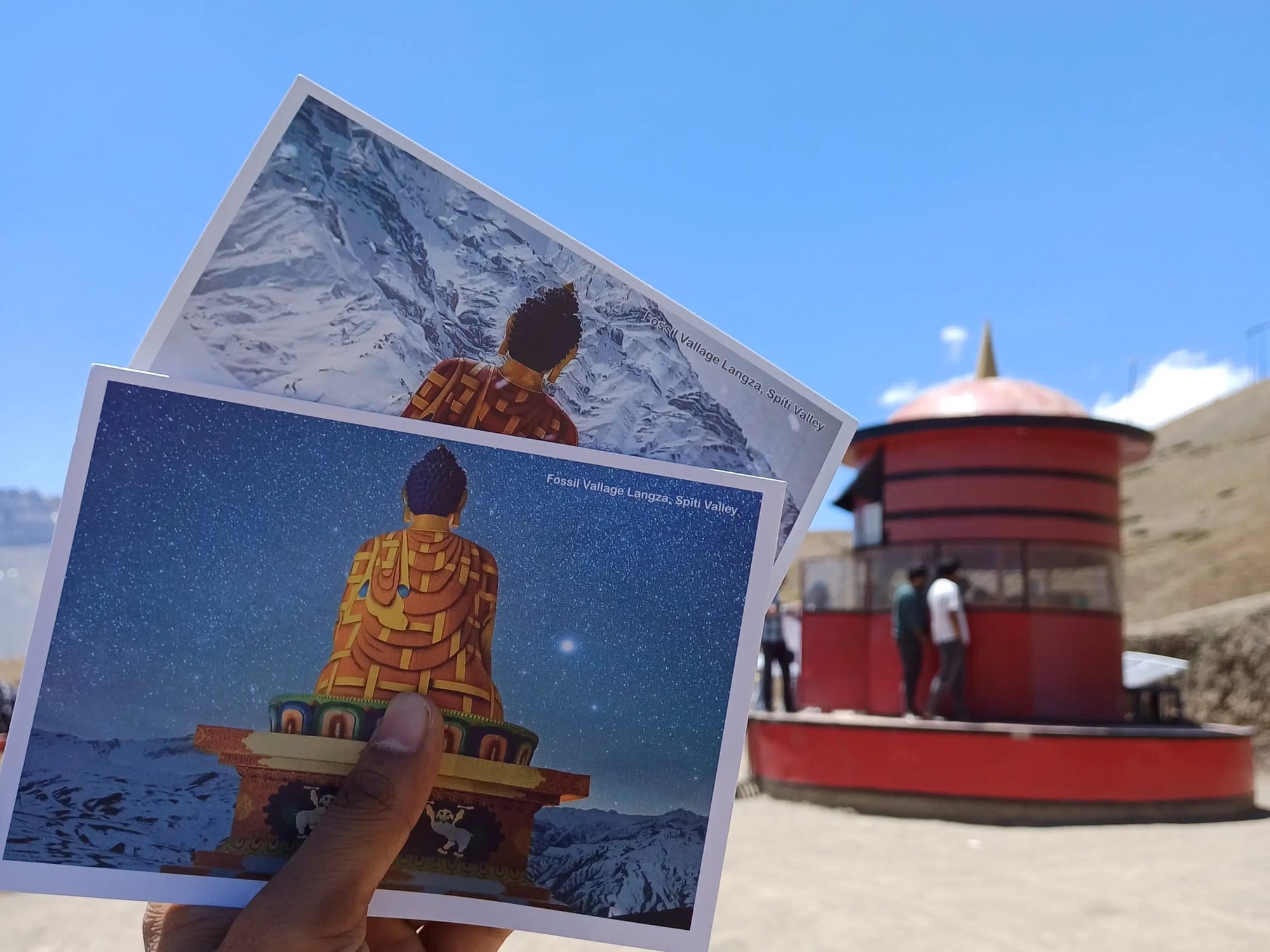
Day six was based around Kaza, covering Key Gompa Monastery in its valley setting, the village of Langza at 14,500 feet, Hikkim, and Chicham Bridge, where the gorge drops a thousand feet below the crossing. The free excursion to Komic, included in the package and reachable by yak ride, is one of the highest motorable villages in the world and one of the more unusual ways to spend a morning.
Chandratal
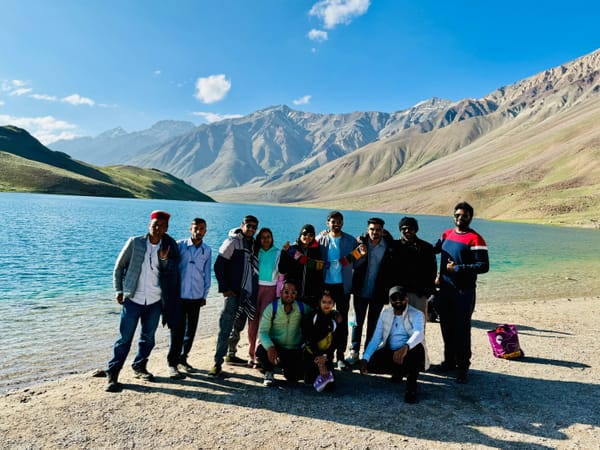
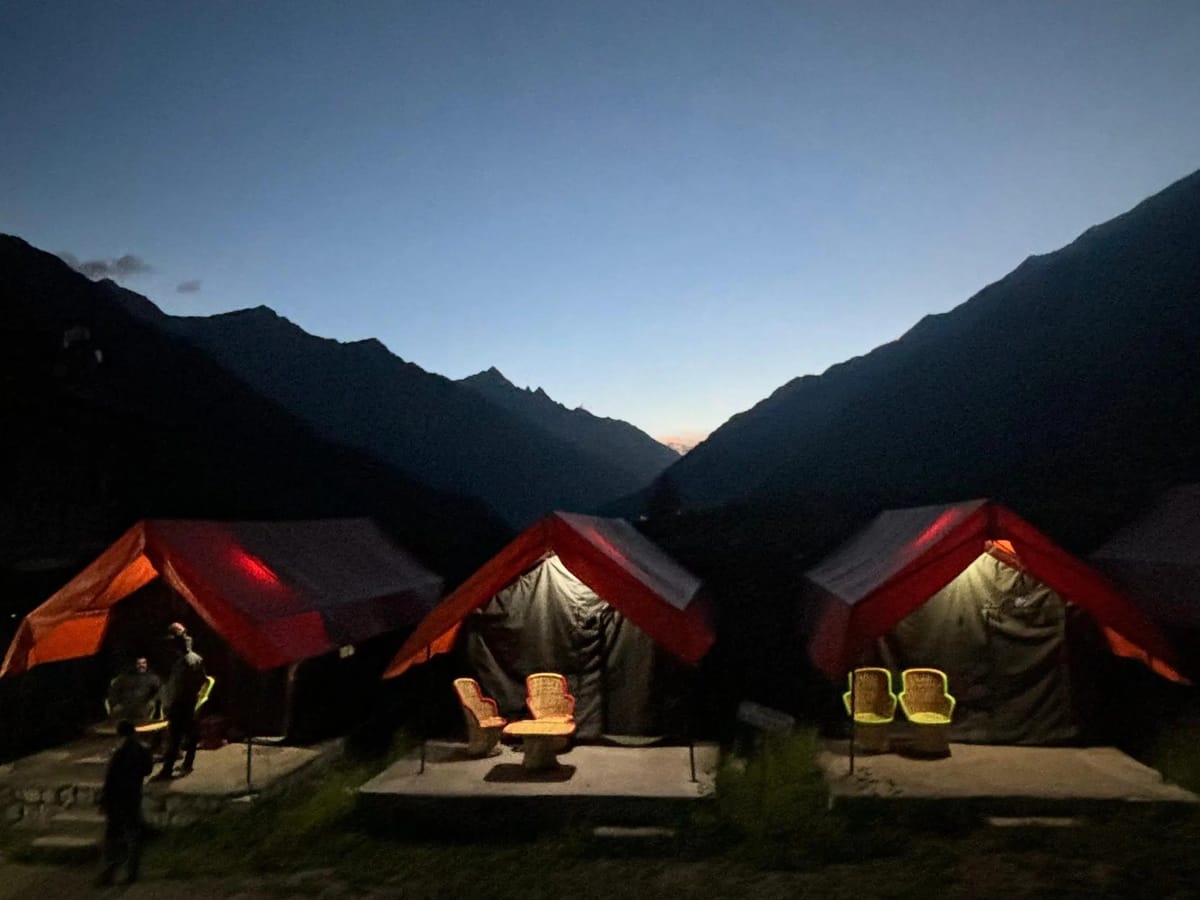
Day seven was the ride to Chandratal, crossing Kunzum La and then leaving the bikes to trek two kilometres to the lake. Chandratal does not reveal itself gradually. You come around a turn in the path, and it is just there, a crescent of impossibly blue water sitting in a cirque with the mountains on three sides. The camp at Chandratal that night, with the lake a short walk away and no artificial light anywhere in the surrounding landscape, is the kind of overnight stay that the entire nine days leads toward.
Back Through the Atal Tunnel
Day eight was the ride to Manali through the Atal Tunnel, the world's longest highway tunnel above 10,000 feet, and the transition it marks is dramatic. You enter from the Spiti side into cold, thin air and stark grey-brown terrain, and you exit into the green Kullu Valley with the Beas River below and the temperatures noticeably warmer. By evening they were in Manali, and the following morning the group rode back to Chandigarh to close out the nine days.
How Thrillophilia Made the Trip Better
A Spiti bike tour looks like scenery from the outside. From the inside, it runs on a lot of logistics that need to be in place before the first wheel turns. Inner Line Permits and Green Tribunal permits for the entire group. A backup vehicle with a mechanic and spare parts following the ride through roads where a breakdown is a real possibility. First aid kits and oxygen cylinders at altitude. Breakfast and dinner arranged across eight nights of remote accommodation. A road captain who has done this route enough times to know where to push the pace and where to slow down.
Thrillophilia had all of it in place for Nikhil and his partner. The group tour format meant they rode with others and met the road captain on the first evening- the kind of trip where you arrive as strangers and spend nine days in some of the most striking terrain in the country together.
Also Read: Vinod Jaiswal & Mayursinh Jadeja’s Memorable Spiti trip with Thrillophilia