
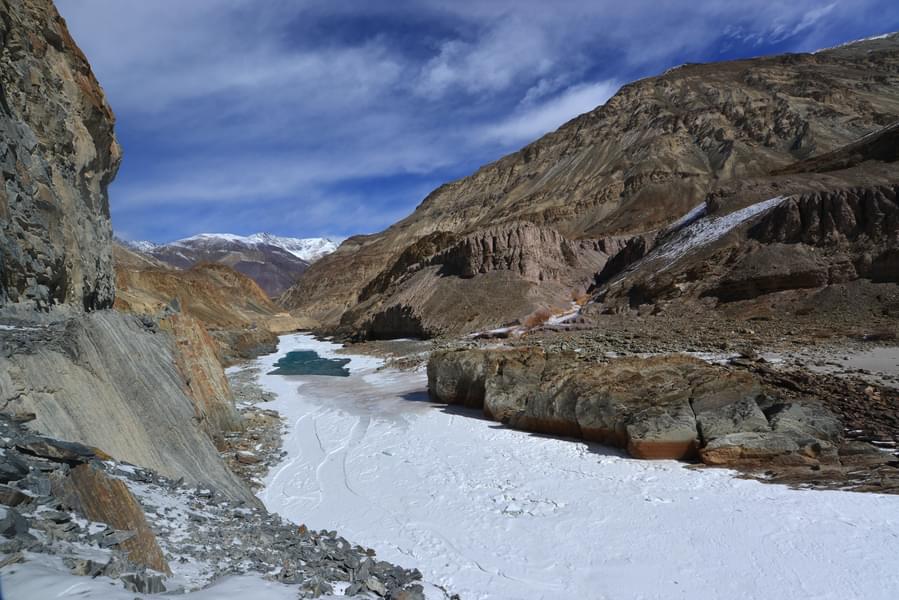
Chadar Trek Ladakh Highlights
-
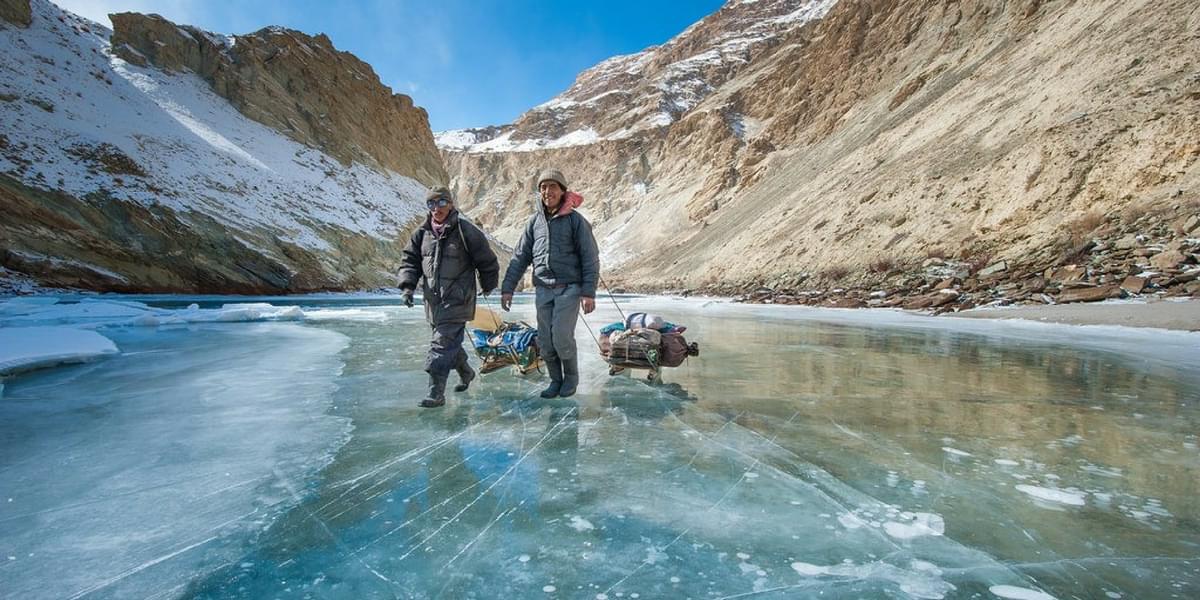
Enjoy walking on ice as you take the Chadar Trek, covering an elevation of 14,000 feet above sea level.
-
Take-in the views of the peaceful valley with green meadows and clear streams as you pass through Tilat Do.
-
Explore Tsomo and get to know about the lifestyle of Ladakhi people living in the mountains as you interact with them.
-
Admire the views of the Himalayas while enjoying your stay at a peaceful campsite in Shingrak Yokma.
Chadar Trek Ladakh Overview
About Chadar Frozen River Trek :
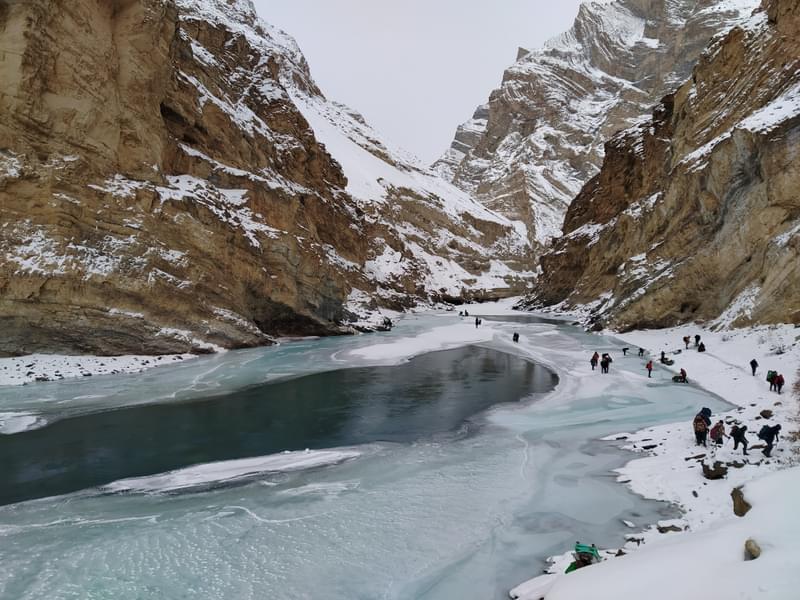
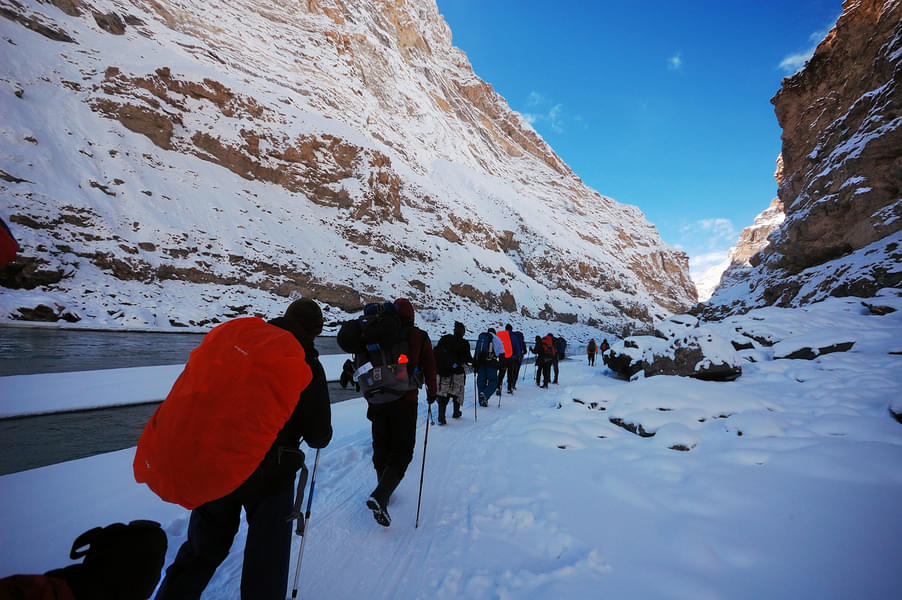
The Chadar Trek, also known as the Zanskar River Chadar Trek, is a thrilling winter adventure over the frozen Zanskar River in Ladakh, India. This spectacular journey takes trekkers through breathtaking landscapes of icy cliffs and snow-covered mountains. Starting near the village of Chilling, the trek unfolds the mystery of the Himalayas as adventurers navigate the frozen river, experiencing the unique challenges and beauty of the region. With temperatures dropping significantly, the trek requires careful preparation and endurance but rewards participants with an unforgettable experience amidst the untouched wilderness of the Zanskar region.
Departure Dates:
- Jan '24: 7th, 8th, 10th, 13th, 15th, 16th, 26th, 29th.
- Feb '24: 1st, 5th.
Chadar Trek Quick Facts:
- Chadar River Trek Duration: 9D/8N
- Chadar Trek Distance: 62 km
- Maximum Altitude: 11,123ft
- Difficulty Level: Difficult
- Chadar Trek Temperature: -5 to -15 degrees (during the day) and -15 to -25 degrees (during the night)
- Chadar Trek Best Time: Early January - Early February.
- Start and End Point of the Trek: Guest House in Leh.
- Nearest Airport: Leh airport. (Kushok Bakula Rimpochee Airport)
- Last ATM: Leh Market and Airport.
How to Reach Leh :
By Air: The most convenient way to reach Leh is by taking a direct flight to Kushok Bakula Rimpochee Airport from New Delhi. This journey can take around 1 hour and 15 minutes and is offered by various airlines including SpiceJet, Air India, and IndiGo.
By Road: Delhi is approximately 930 kilometres and it takes around 24 hours to reach depending on the road conditions. You can take an HRTC bus from Delhi to Leh via Manali which takes approximately 30 hours to reach. Similarly, you can opt for a road trip to Leh from Delhi via NH 3 which can take around 25 hours depending on the route and halts.
Thrillophilia Exclusive:
> Option to change the tour plan
Till DAY 3, If you feel that you can’t do the Chadar River trek or the govt. bodies declare you unfit for the trek, don’t get disheartened as the first 5 trekkers from the group can opt for an alternate package “Flavour of Ladakh” at no additional cost.
( To know more, hit the Send Enquiry button and get in touch with the destination expert )
Chadar Trek Package 2024 Inclusions:
- 4-night accommodations in Leh, that is 2 Night Rooms and 2 Night Camping at Leh guest house on Double/Triple sharing.
- Camp stay and Vegetarian Meals while on trek (Breakfast/Lunch/Dinner). Breakfast on day 4 to celebratory dinner on day 8 in Leh.
- We believe that roughing it out necessarily doesn’t mean sleeping in smelly sleeping bags, compromising on safety by using low-quality equipment, and having unappetizing meals. We focus on your safety, basic comforts, and the environment while camping.
- First aid medical kits, Oxy Meter, because anyone can get hurt during an adventure (our guides are certified in handling first aid situations)
- Qualified & experienced trek Leader, Guide, and Support staff to help trekkers.
- Transport from Leh to Road ahead (on Day 4) and return (on Day 8).
- Porters for carrying common equipment (like rations/tents/utensils/groceries)
- The facility of keeping extra luggage at Leh when leaving for Chadar Frozen River Trek.
- Handpicked Supporting Staff of multiple guides/helpers for the group. This will ensure high safety, accurate information, and personal attention which is necessary for this trek. We will be putting you in the hands of qualified & professional trek leaders, guides, and support staff with multiple years of experience.
- An option to opt for an alternate experience "Flavour of Ladakh" on a first come first basis for the first five trekkers in the group. The option can be availed between Day 1 to Morning on Day 4.
- As the Chadar winter trek takes place at a high altitude, a big oxygen cylinder (15 ltr) will be carried throughout the trek for any kind of emergency.
- Keeping this in mind, the following equipment is provided on the trek:
- Sleeping Bags ( Multi-layered Sleeping bags capable of up to -25 Degree )
- Good Quality Sleeping Tents so the cold doesn’t bite.
- Thick Camping Mattresses provide good insulation between your body & cold ground.
- Kitchen Tents with proper dining arrangements, so you can eat in peace.
- Toilet Tents are pitched at the campsite.
Do's and Don'ts On Chadar Trek
> Do’s of Chadar Frozen River Trek
- It’s always good to plan for an additional day to accommodate any unforeseen conditions like bad weather, broken bridges, flight delays, and casualties that may arise.
- One should inform one’s family before coming for this trek so that in case of an emergency, they can come for help.
- As there won’t be any pharmacies on the Chadar River trek, please do carry the required medications and a first aid kit, in case of any bruises or cuts.
- Abide by the instructions given by the trek leader or instructor in order to enjoy a safe and sound trekking
> Don'ts of the Chadar Frozen River Trek
- Since you will be trekking in an eco-friendly zone, make sure you do not litter the vicinity and carry your leftovers back.
- Flowy and frilly clothing might hinder your movement. It is better to avoid such types of clothing.
- Do not rely on sports or casual shoes as they might compromise grip on the snowy surface.
- When meeting monks or other locals on the way, pinpointing is not advisable as they may take offense.
Chadar Trek Ladakh Itinerary
Select Package Options
Chadar Trek from Leh to Leh (From Airport)
More Details about Chadar Trek Ladakh
Know Before You Go for Chadar Trek Ladakh
- Please carry a valid ID proof.
- Take your time adjusting to high altitudes, as the weather conditions can be different from lower areas.
- Listen to your trek leaders or instructors carefully for a safe and enjoyable experience.
- Carry basic medications and a first-aid kit during the tour.
- No bill will be reimbursed for any missed service/facility.
- Keep your luggage minimum; the more you carry, the more you hassle.
- Any personal expenses, items of personal nature, meals not mentioned, etc. will not be in part of the package.
- Mobile & laptop charging points may/may not be available on campsites at a common point.
- Avoid using plastic bags and maintain the ecological balance of the destinations.
- It is recommended to carry enough warm clothes and the right kind of shoes for the trek.
- Please note that in the event of emergencies or natural calamities, the management reserves the right to modify the trek itinerary. However, any changes due to circumstances beyond our control is not covered in the package cost.
Things To Carry for Chadar Trek Ladakh
- Head torch
- Rain cover
- Water bottle
- Extra pair of socks
- Toilet paper & wipes
- Walking stick
- Backpack with waterproof linings
- Fleece jackets and thermals
- Led torch (with extra batteries)
- Lightweight quilt or blanket
- Mosquito & insect repellent
- Waterproof windcheater
- Woollen cap, socks, mittens & scarf
- Warm clothes
- Caps
- Day pack (20-30l)
